All posts by QueSehraFarm

Week 4 CSA – Doubly-Epic Harvest

During this morning’s harvest, I was quite certain that I knew what the focus of the newsletter would have to be. But then a harvest that had been epic in one way, changed course and became epic in another, and now you get convoluted sentences like this instead of a straight and simple tale of terror at the proboscises of incredible swarms of mosquitoes.

So yeah, first came the epic mosquitoes. A couple of days ago, an insane hatch of mosquitoes emerged, and suddenly the mildly buggy season became the worst plague of bloodsuckers that anyone around has seen in many years.

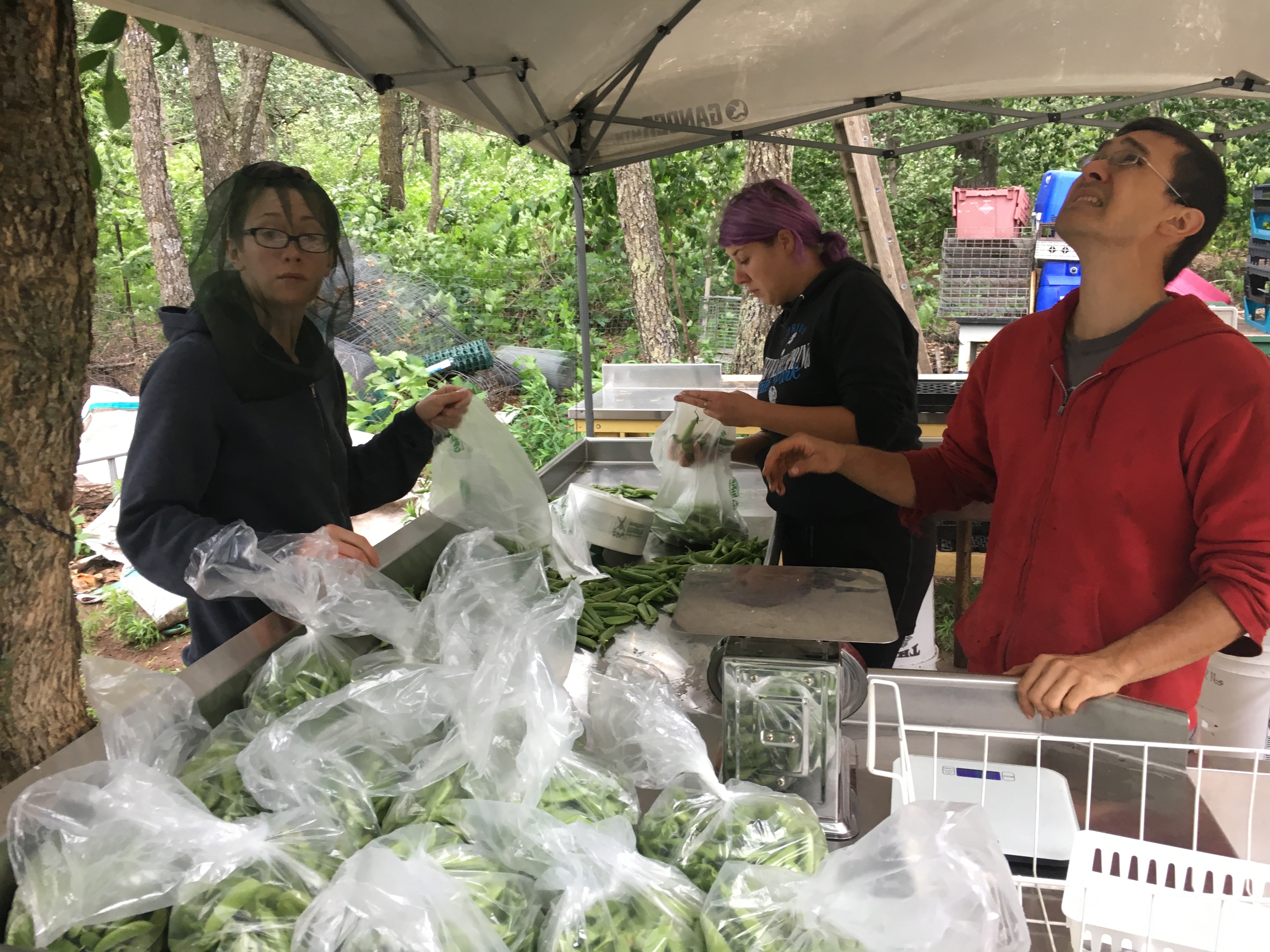
And harvest morning was mosquito heaven – darkly cloudy, damp, and still. Even those who never wear bug spray, did … but found it entirely ineffective.  They swarmed us coming out the door, swarmed us walking through the woods, swarmed us in the field and even worse in the processing area.
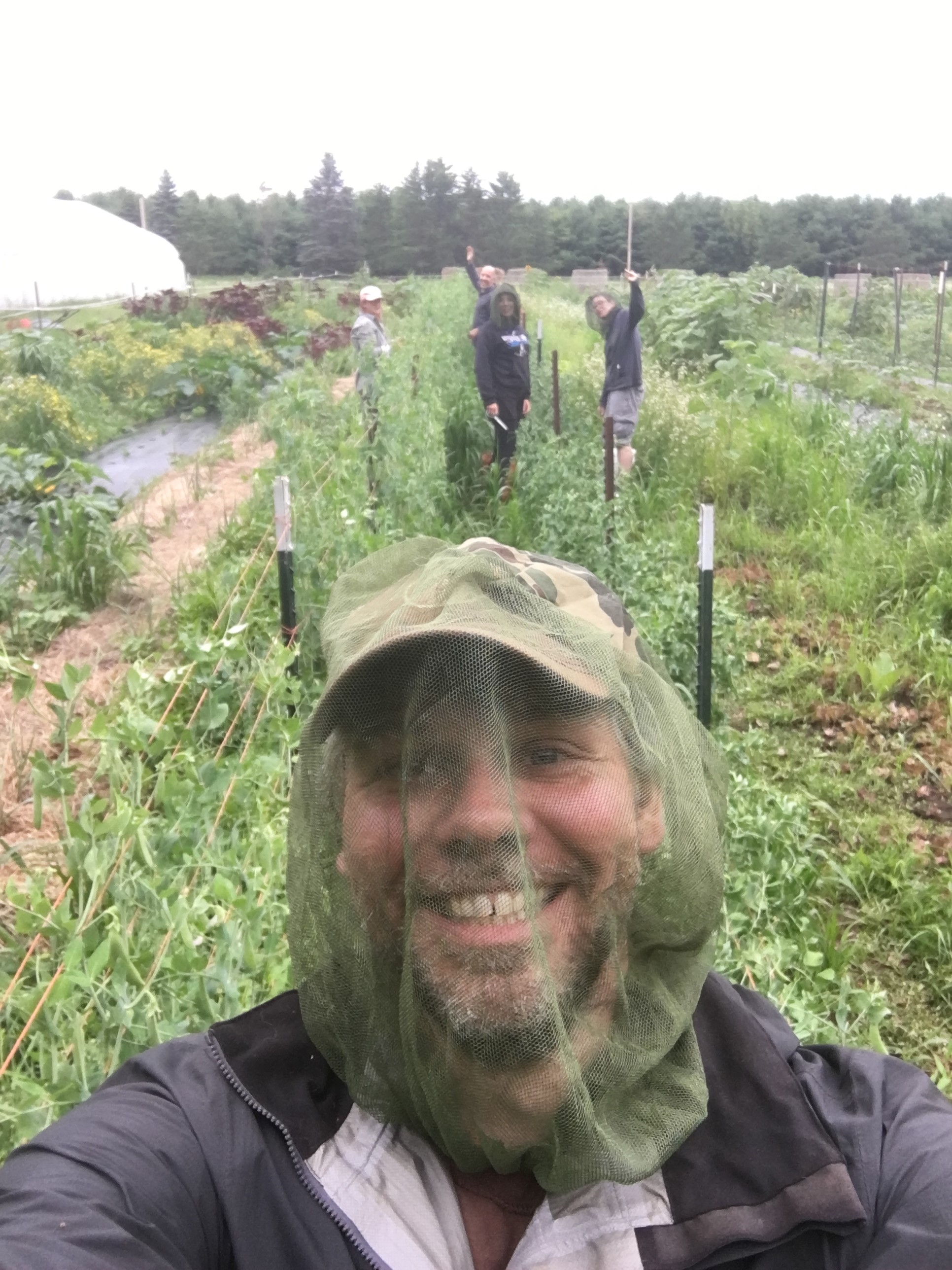
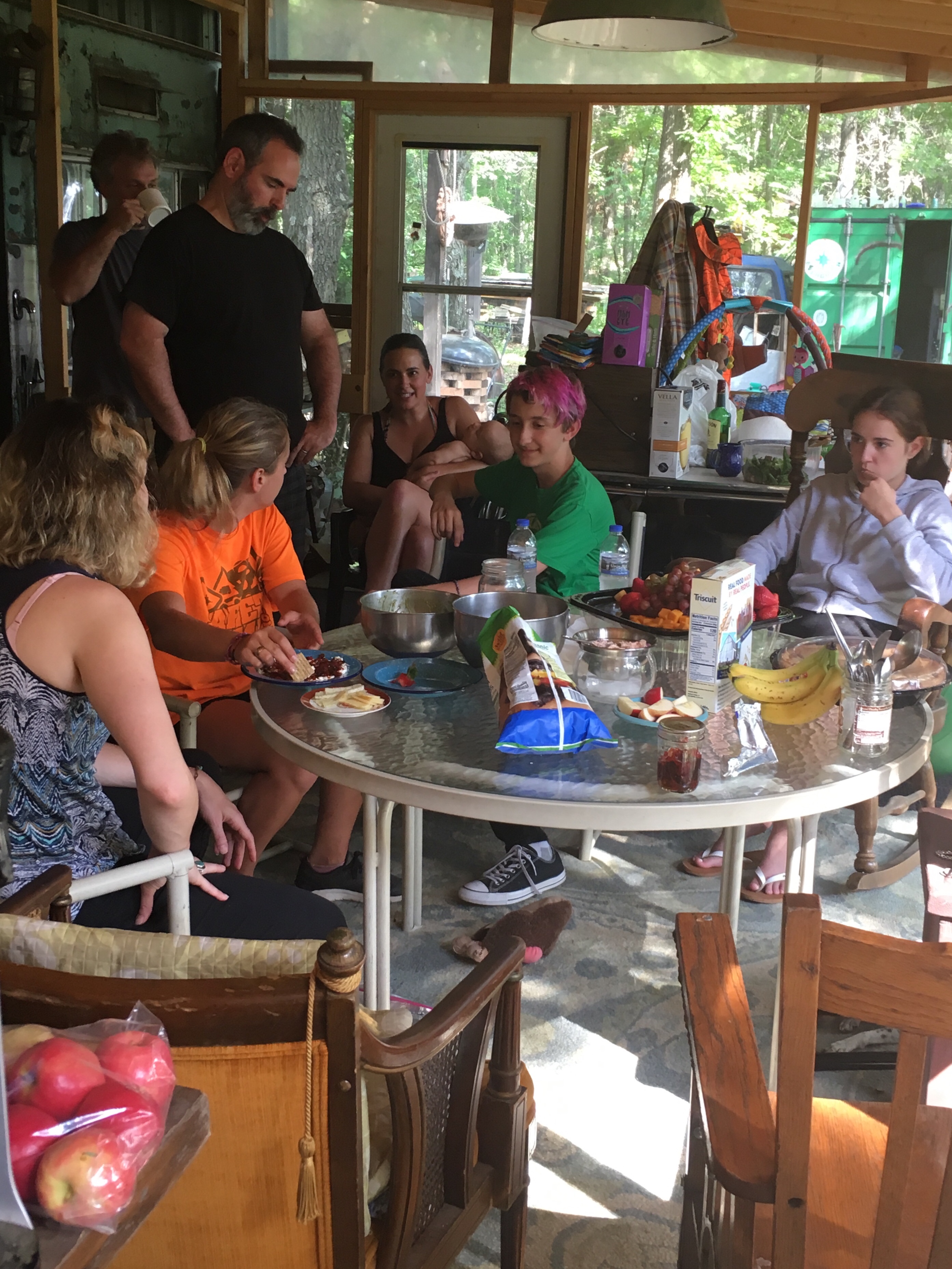
"SAY MOSQUITO!"
“SAY MOSQUITO!”

We each retreated soon enough to put on pants, sleeves, and even head netting. I wondered how many got into the bags as I packed up salad mix and they devoured my hands.

I think some folks must have prayed for relief or something, and some kind of gods took pity on us. But maybe too much pity, or perhaps there was some kind of multiplier effect due to multiple requests and varied compassionate deities working in accidental synergy.

Because when the breeze we wished for to keep the skeeters down came, it was, well,  a bit of overkill.
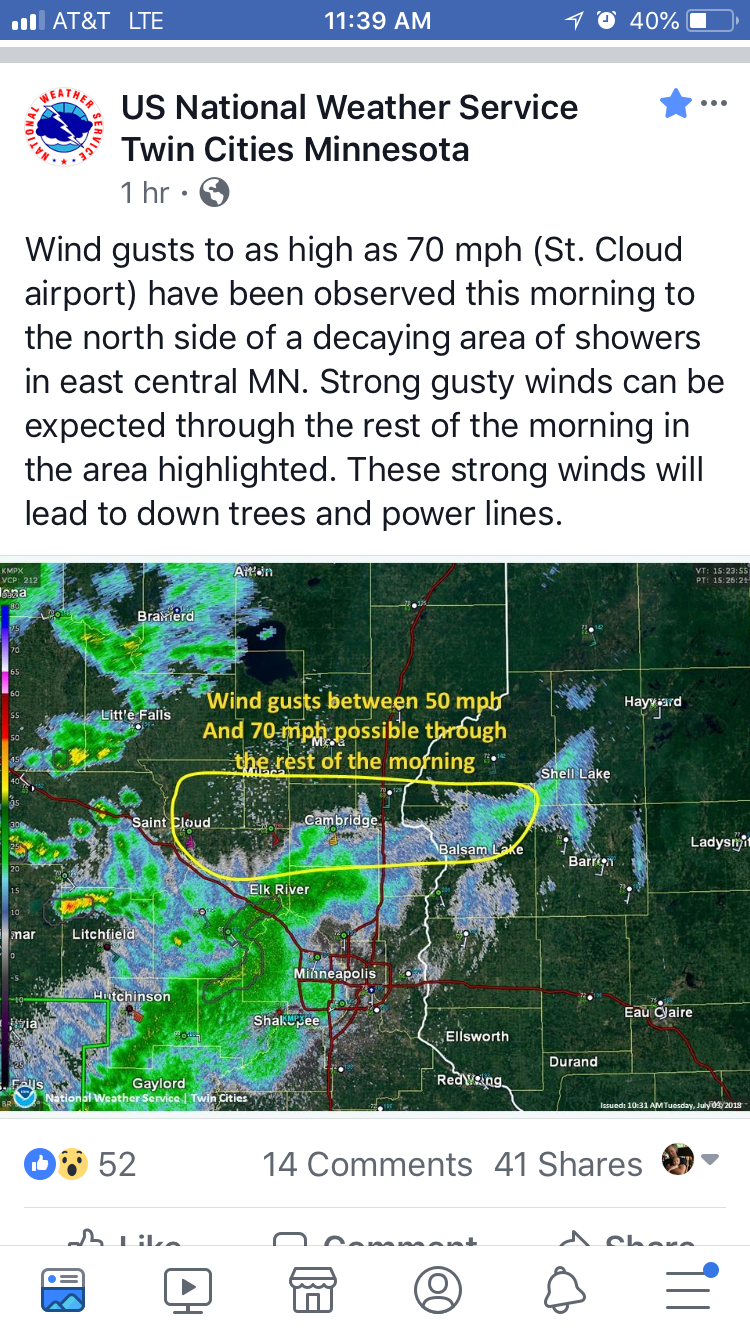
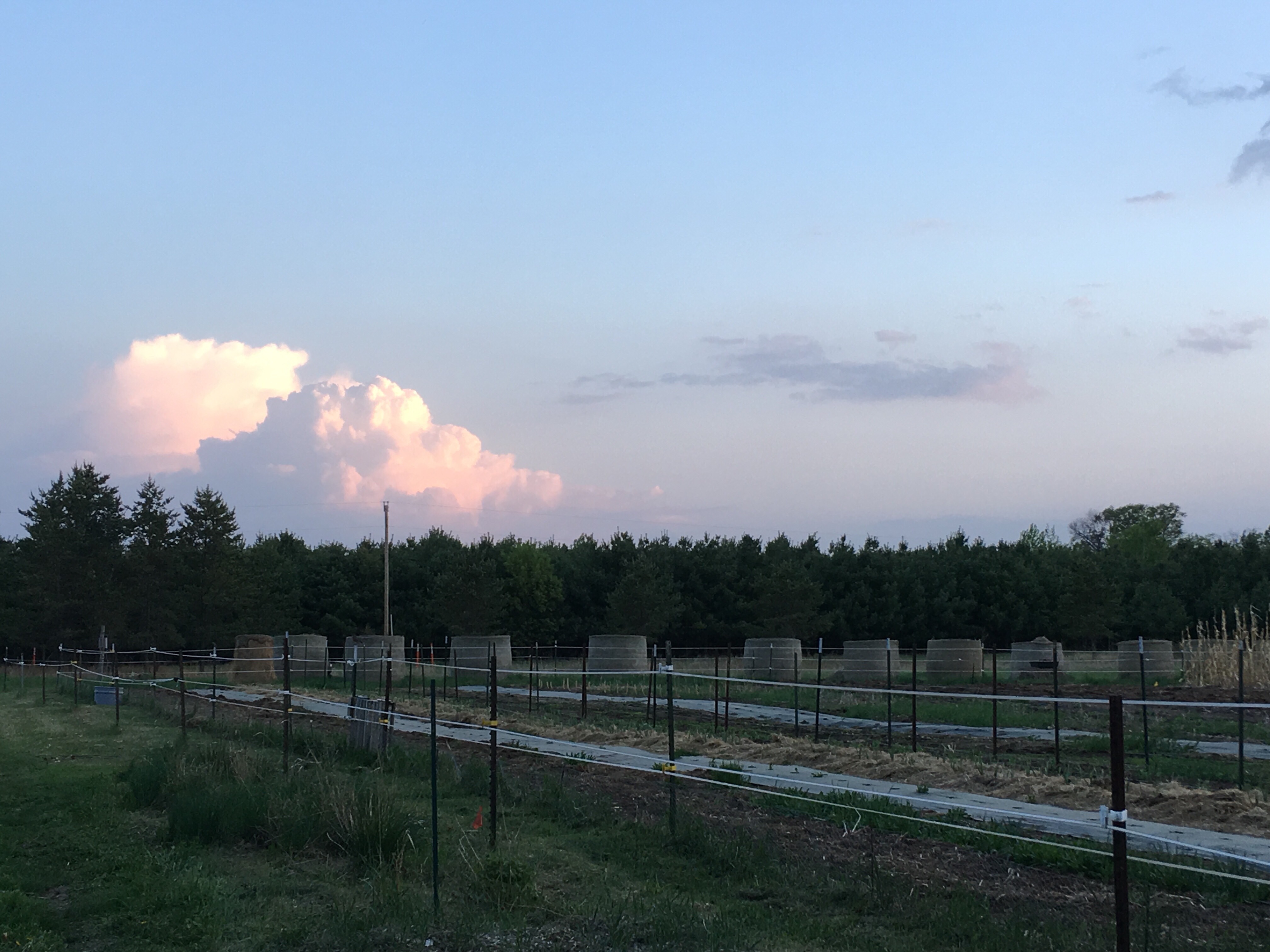
we are right in the middle of it (where the nostril would be in Wisconsin's nose)
we are right in the middle of it (where the nostril would be in Wisconsin’s nose)

And the Epic Mosquito Harvest became the Epic Wind Harvest – a couple hours of strong, steady wind punctuated regularly by gusts that staggered you when they hit you square, shattered sunflower stalks, scattered any loose objects about, attempted to murder the rain canopy, brought down a limb the size of a tree next to the processing area … and completely removed the mosquitoes from the rest of our harvest!

It was awesome; not just the sudden absence of hangry bugs, but the incomparable, refreshing excitement that comes with a wind storm.

Box 4: May Contain Mosquitoes.
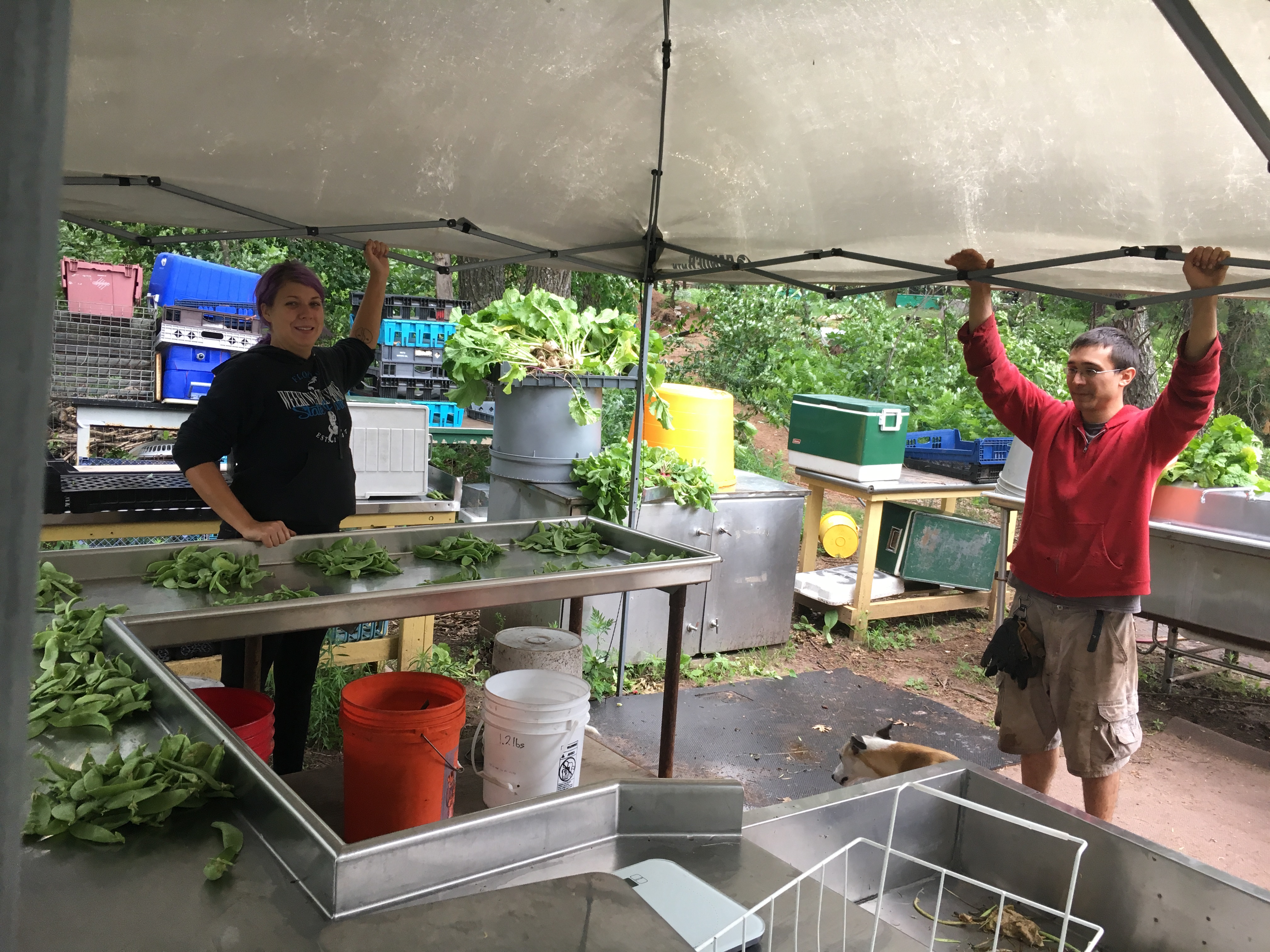
new-helper-Maddie & Steffan holding down the fort

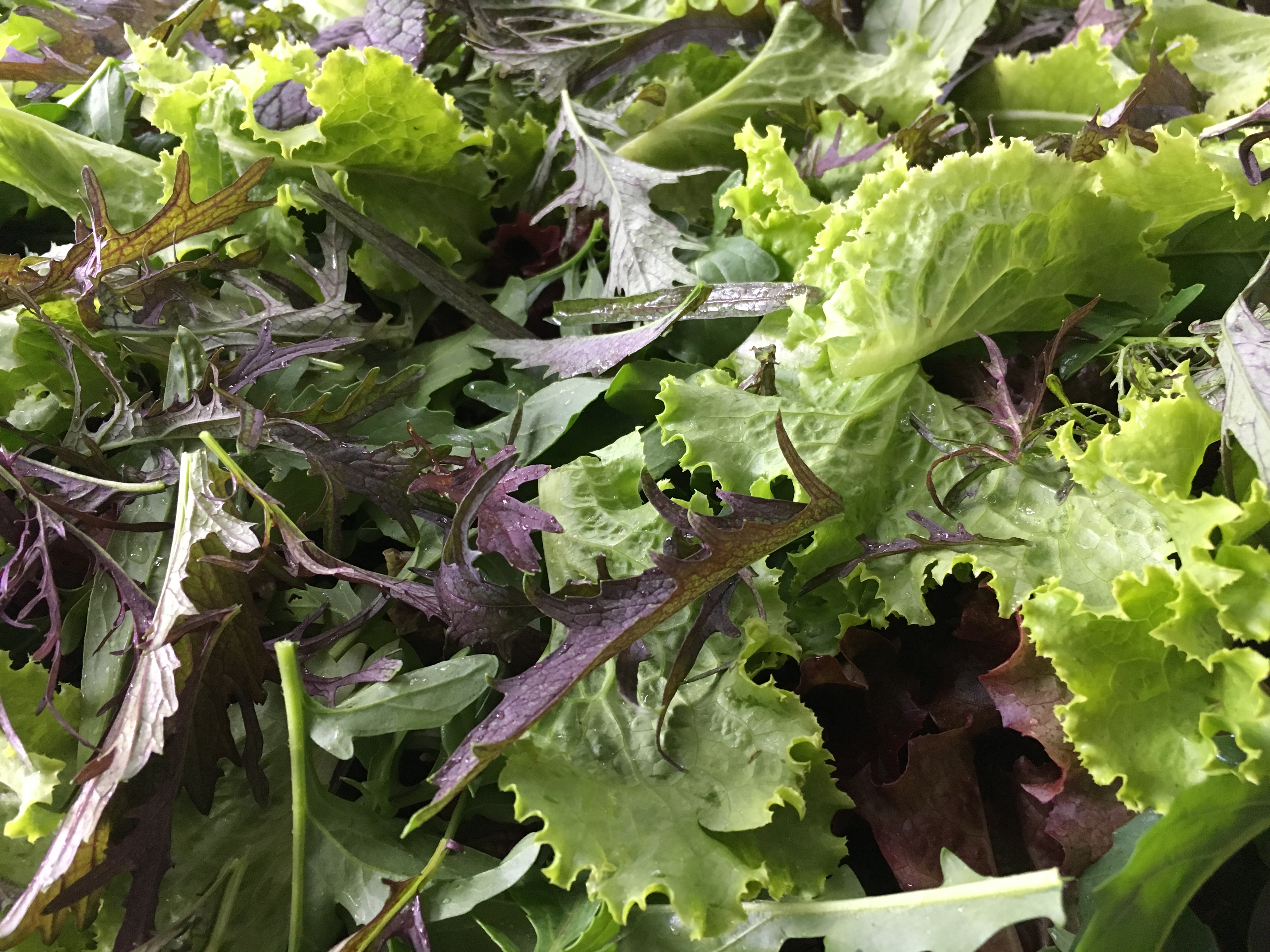
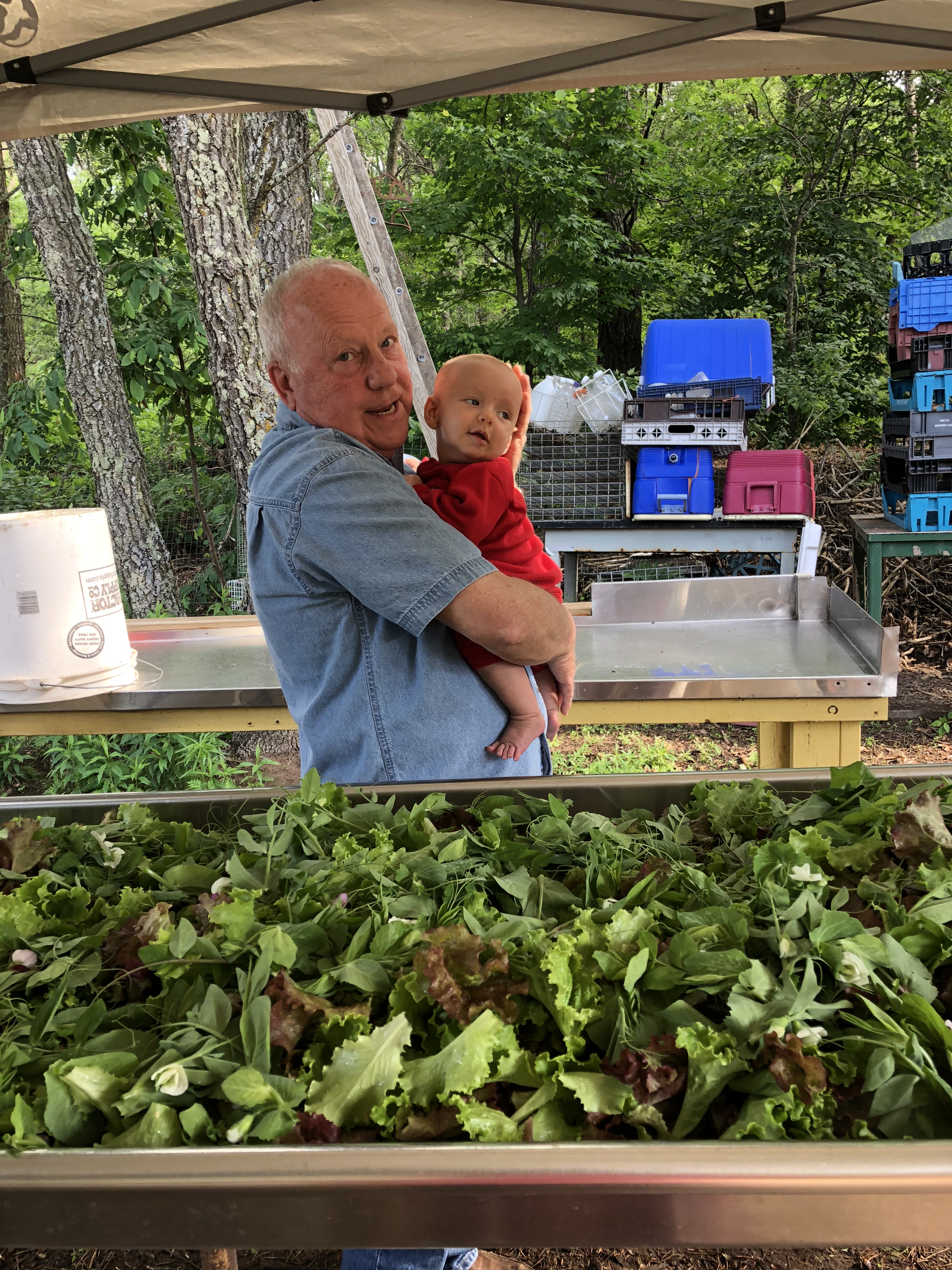
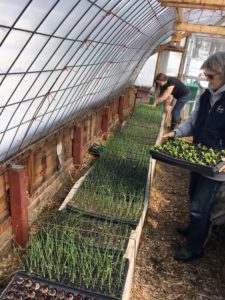
Salad Mix – (Red & Green Lettuce, Arugula, Mizuna, Pea tips)  It’s probably the last salad mix of the spring crop! Officially summertime now …
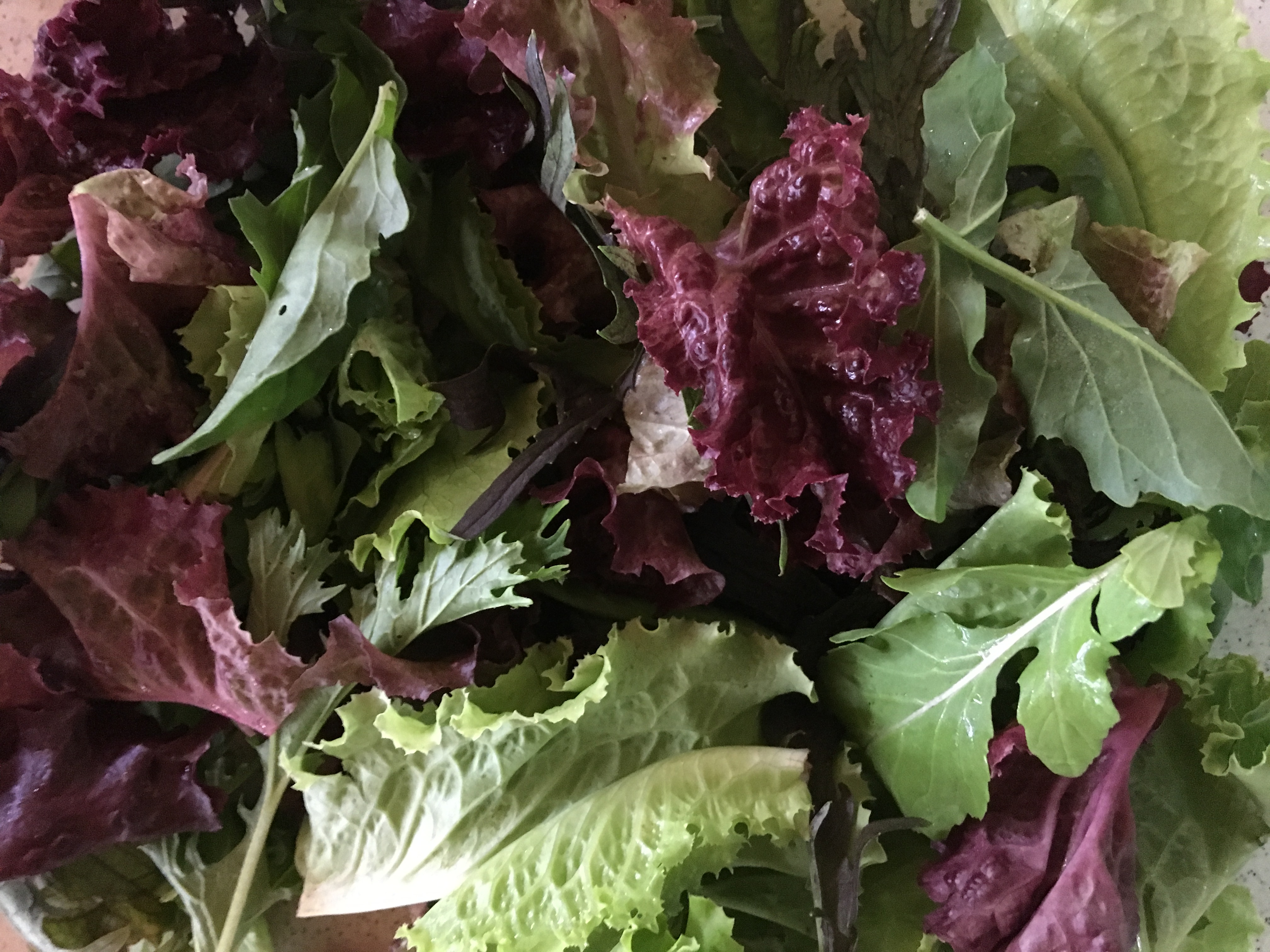
French Breakfast Radishes – You know these. Don’t forget to eat yer leaves! And cut them off before storing them if you won’t eat them soon. They’re pretty over this summer weather and might be a bit hollow inside, hopefully not though.

Radish Pods – those weird bubbly nugget things in with your radishes are edible immature seed pods from radishes that we let bolt. Don’t eat the tough stems. The pods are juicy, crunchy, with a mellow flavor. You can snack on them, put them into salads, or come up with something I can’t even imagine.

Sugar Snap Peas – and lots of them! These sell out every week at the farmer’s market. They sell themselves if you give out a sample …

Snow Peas – these too! Great snacking while stuff grills at a cook out. This week, they share a bag with the:

Broccoli –  Enjoying the side shoots of Broccolini while awaiting the harvest of the full size heads … next week perhaps?

Spring Onions (aka “Table Onions”) –  Slice them in half and grill them for the 4th of July! Maybe with some oil and salt n pepa.
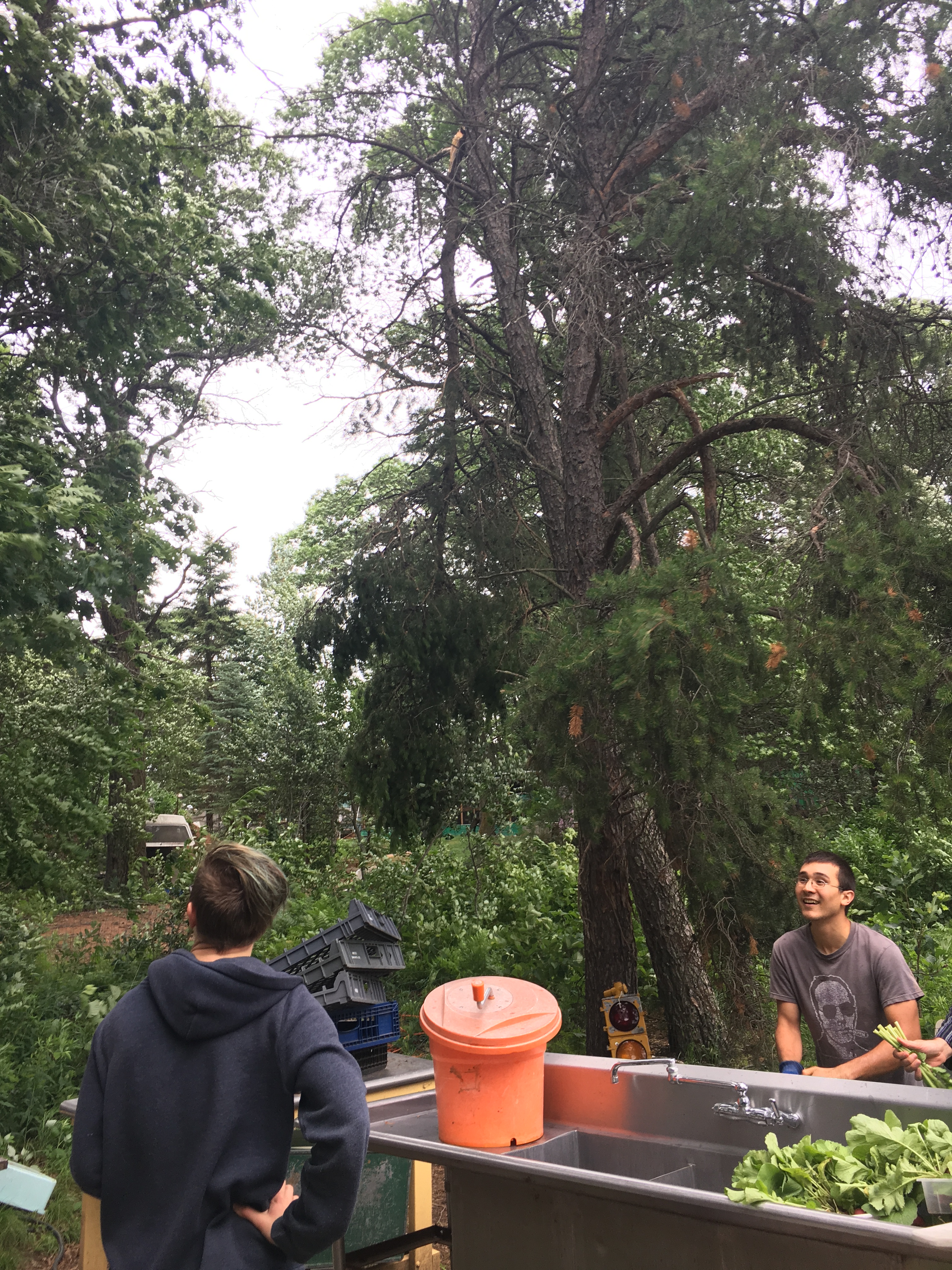
moments after the tree in the background broke (CRACC!CCK!KK! "um, look out.") and keeled over.
moments after the tree in the background broke (CRACC!CCK!KK! “um, look out.”) and keeled over.


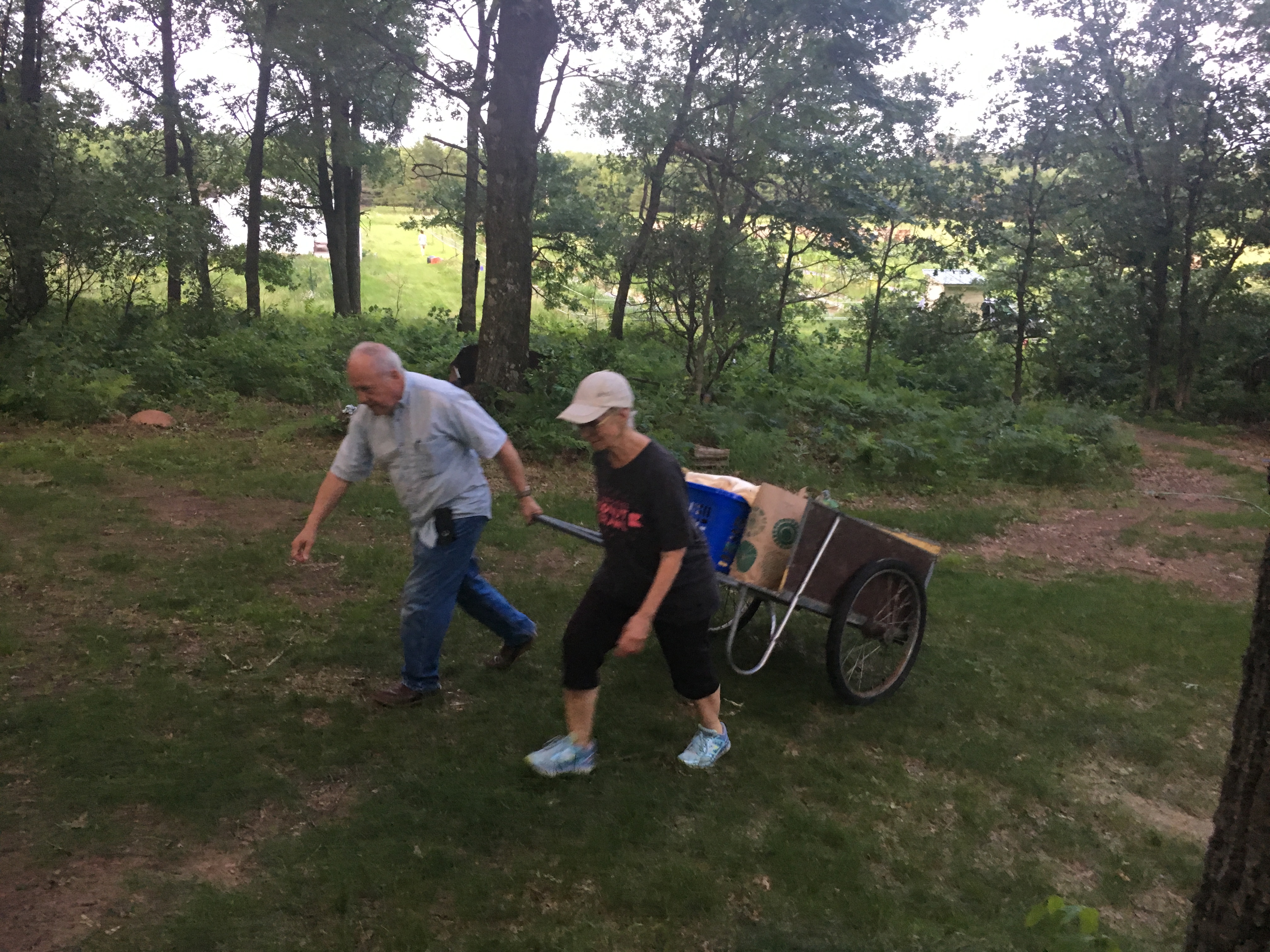
Deb and Jim hauling stuff "upstairs" before the Saturday market

Deb and Jim hauling stuff “upstairs” before the Saturday market


Week 3 CSA News

The week’s work included tomato pruning and trellising, plenty of weeding (they’re getting to be tree-sized out there!), hunting and killing potato beetles. Then more weeding.

We had family visiting for most of the week from all around the country, getting to know the newest addition to the family, so we weren’t able to kick as much weed butt as we’d have liked, but it was still great to connect with our tribe a bit.

In other news, we have a rat! It’s living beneath our chicken coop compost bin, and has evaded all attempts at capture. Neighbor Dave is not going to give up easily though … the battle is on!

Produce-wise, the bean plants are flowering, the high tunnel tomatoes are flowering, setting fruit, and shooting upward quickly, making us question the adequacy of even the new and improved taller trellising. Overall, things seem to be doing pretty well – crops and weeds alike!

Box Three

Today was a rainy harvest – we set up canopies over the processing area, and donned raincoats for our forays into the field. Rainy days are actually pretty ideal harvest days – the crops stay cool and nothing is getting desiccated byheat or sunshine. (You might think the crops would also be nicely pre-washed from the field, but nope – they get splashed with sand & soil and require more rinsing than usual.)

Kohlrabi – They’re beautiful this spring! The greens are edible as well, similar to kale – perhaps chop & sautee them up together?

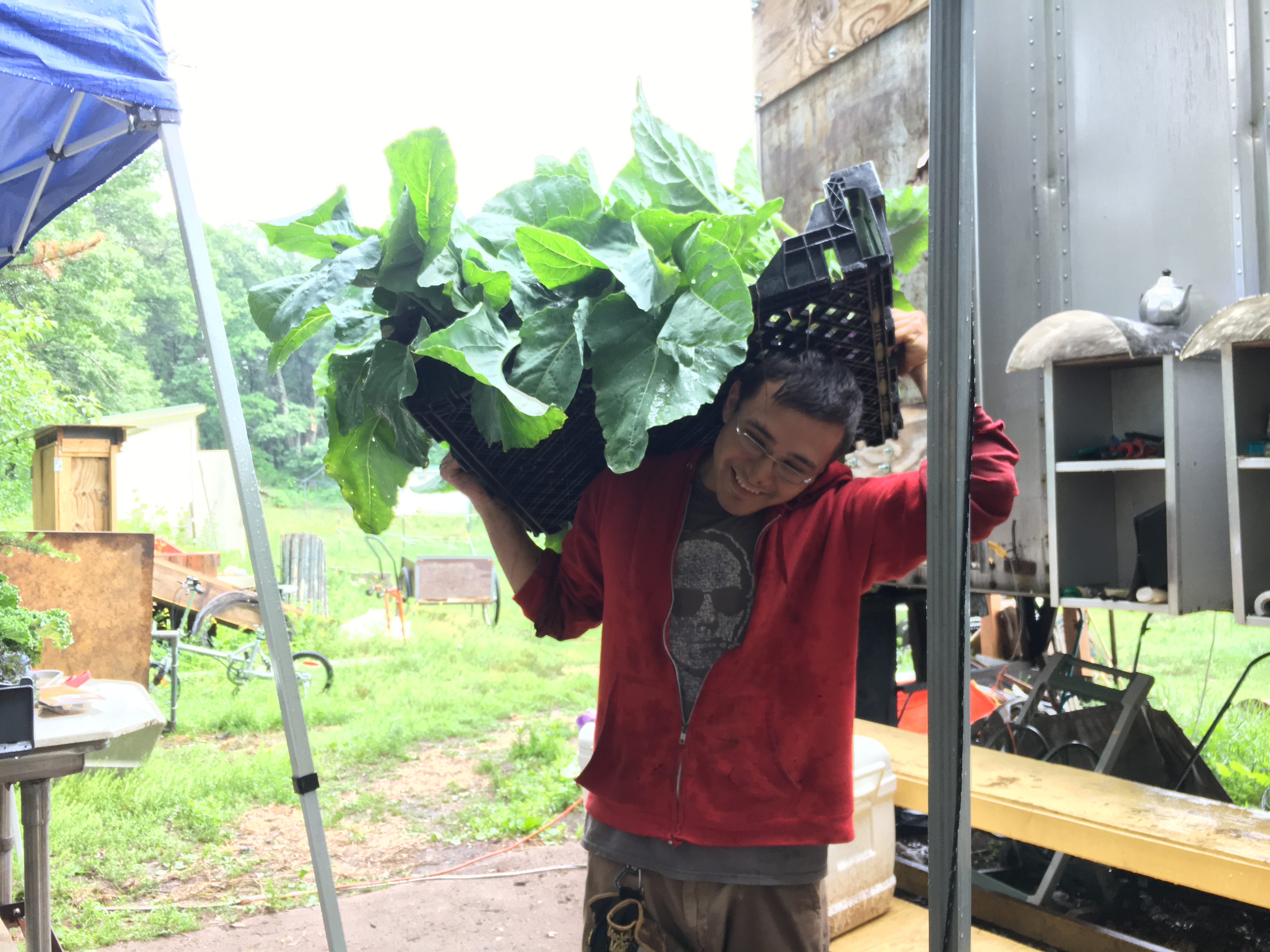
Steffan hauling in a load of kohlrabi from the field this morning

Kale –  A mix of dinosaur, red Russian, Vates, and scarlet varieties.

Salad MixRed & Green lettuce, arugula, pea tips, mizuna

Sugar Snap Peas – EAT THEM BEFORE SOMEONE ELSE DOES

Snow Peas – A classic for stir fries, but also delicious raw or sliced up in a salad.

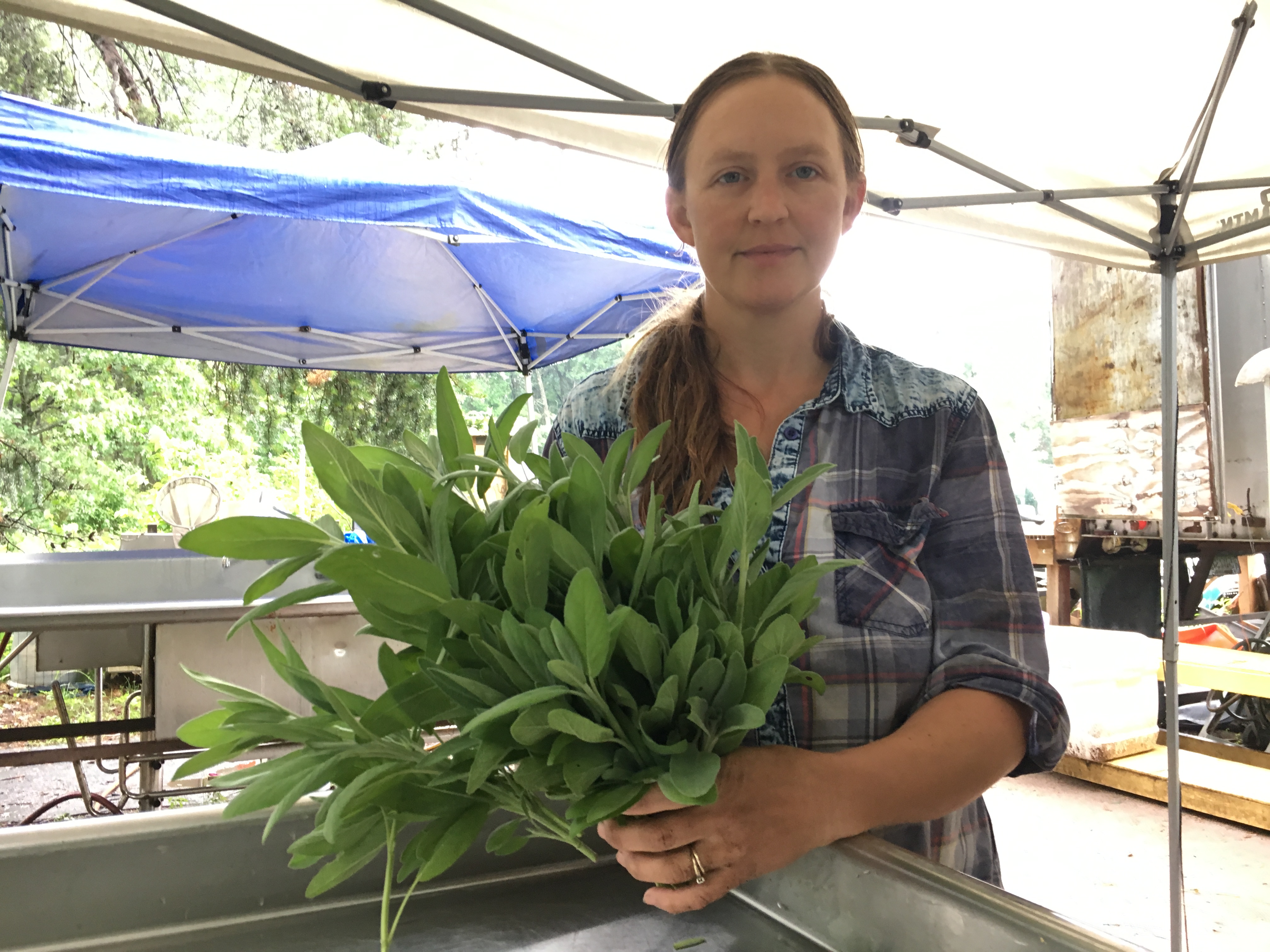
Sage – there are many creative uses for fresh sage, what will you get up to this week? Perhaps when the temps get back up above 90 this weekend, you could make a nice sage iced tea!


Green Onions –  the annual link to this song comes … now:

a bit of broccoli – tucked in with your snow peas … waiting for the brocollini to get rolling!


CSA Week 2

We got more rain this week, but it seems that the weeds rejoiced harder than we did. To be honest, it’s tricky not to be disheartened, walking through the field and seeing how beastly the weeds are, how little the crops are, and how behind things are in contrast to last year’s field – when we had more help, no baby, and several additional weeks of springtime to work with.

But hey, it’s another great opportunity to practice our “que sera, sera” perspectives,  be reminded that the struggle IS the blessing, that our stresses take place within a context of amazing luck … and hey, it’s kind of fun to conceive of our harvests from the overgrown garden as more akin to foraging than farming. Silver linings abound!

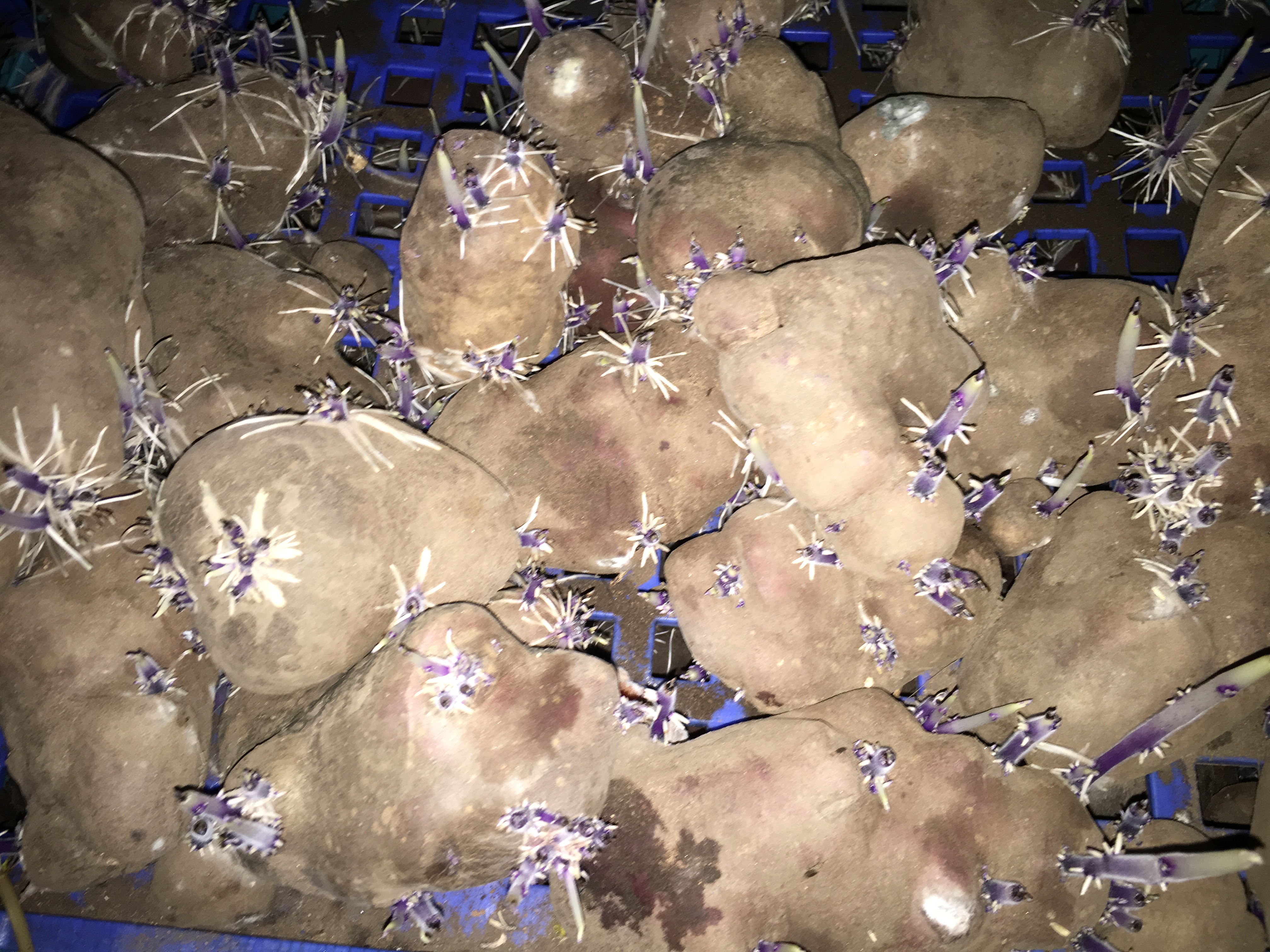
We got the potato rows weeded and started making potato beetle genocide patrols. Got our first tow hay mulched – the brassicas and edge of the adjacent bean row. We transplanted out flowers, ground cherries, garden huckleberries, and filled in gaps in the potato rows with the sprouting taters still lurking in the back of the root cellar.

Late season crops were seeded – fall broccoli, cabbage, cauliflower, etc got started  – and we’ve now started summer squash in trays as well to transplant out – we’d direct seeded it into the field twice but both times almost literally the entire crop was mysteriously destroyed (voles definitely had a hand in some of the losses, but they can’t explain it all) – so, there will be a delay of our zucchini game this year.

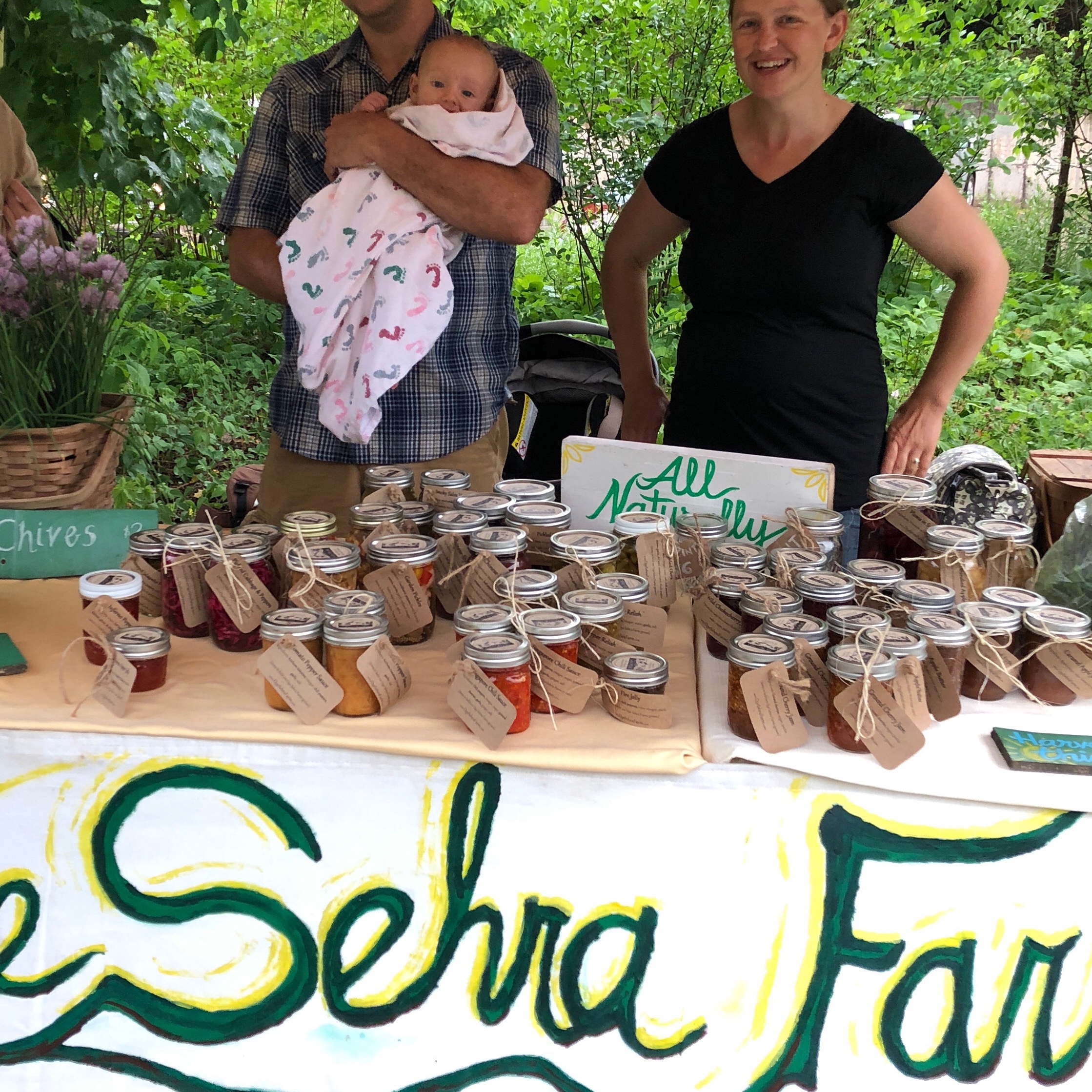
We attended our first farmers’ market of the year – and Otis experienced the first farmers’ market of his life! It went well – although we didn’t have a ton of variety of fresh produce to sell, we had lots of canned goods from last fall to offer. And it was WWOOFer Amelia’s last week on the farm – so next week we’ll be even less-handed. Should be interesting!

CSA Box 2

A little of this, a little of that

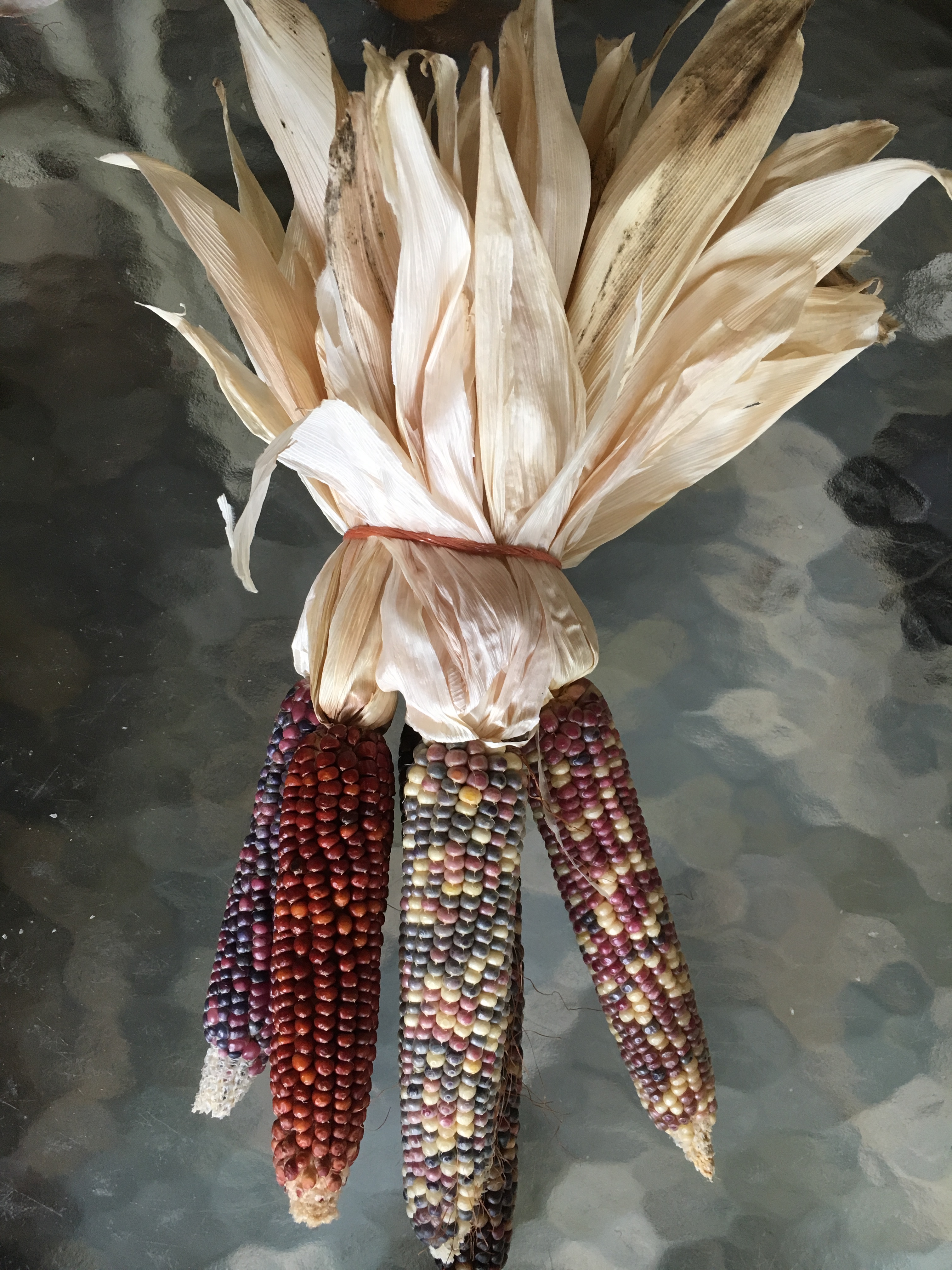
corn we grew, dried, shucked, ground, and sifted for this week's box
corn we grew, dried, shucked, ground, and sifted for this week’s box

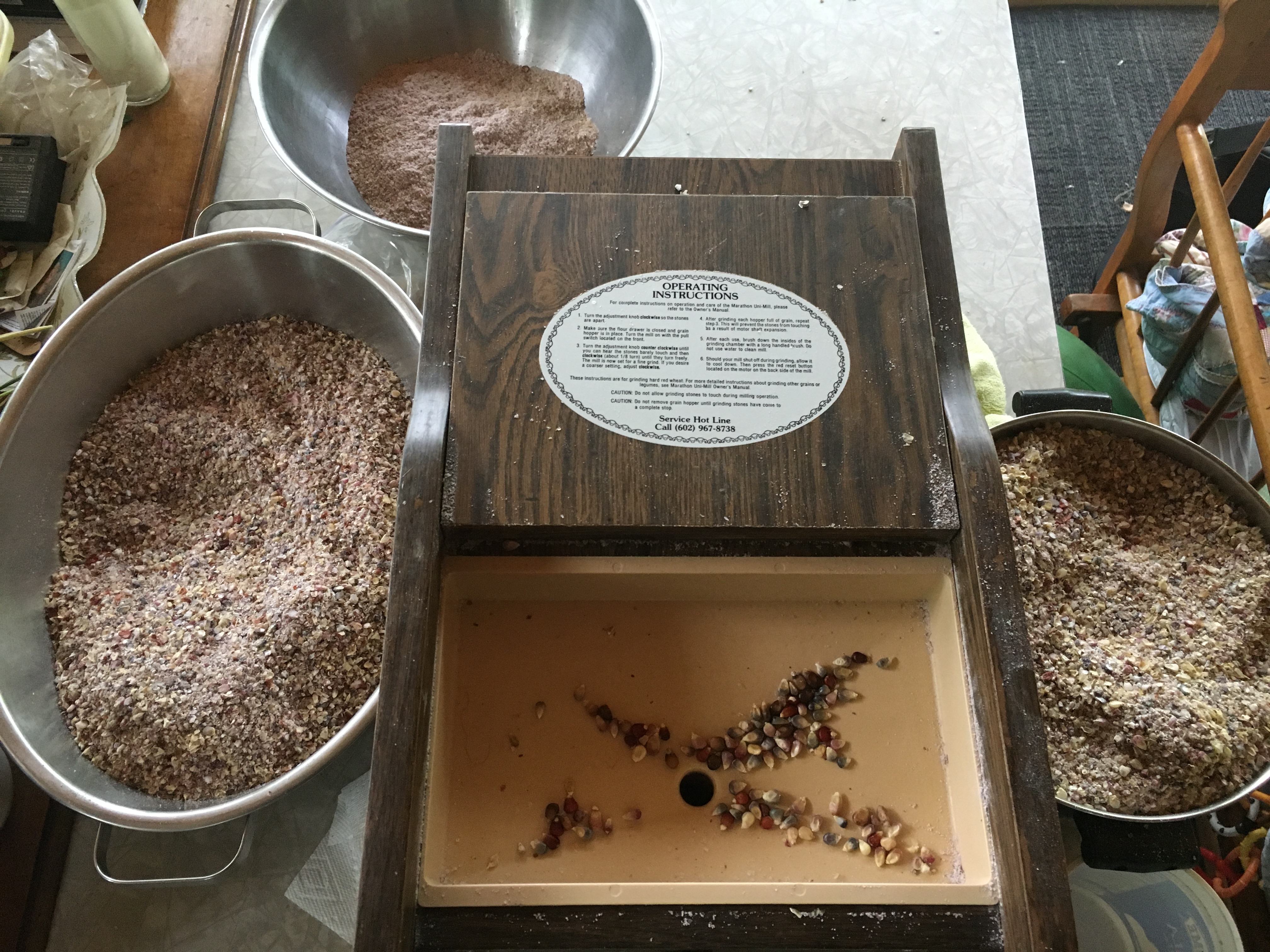
Cornmeal – Last autumn’s corn, field-dried, and stone-ground fresh yesterday for your baking enjoyment.

When we were in Mississippi I came across a locally produced cornmeal that promoted itself saying it ground corn “no older than a year.” Isn’t it remarkable that less than a year is considered notably fresh? Corn has such a fascinating history, and has changed so much in our lifetime alone. Ok, here is a good recipe that I’ve used to make satisfying cornbread:

https://www.seriouseats.com/recipes/2015/11/southern-unsweetened-cornbread-recipe.html

And it has a good link to read too if you are as interested in corn as I (apparently) am.

https://www.seriouseats.com/2014/08/why-southern-cornbread-shouldnt-have-sugar.html

You could also try making cornmeal pancakes or johnny cakes.

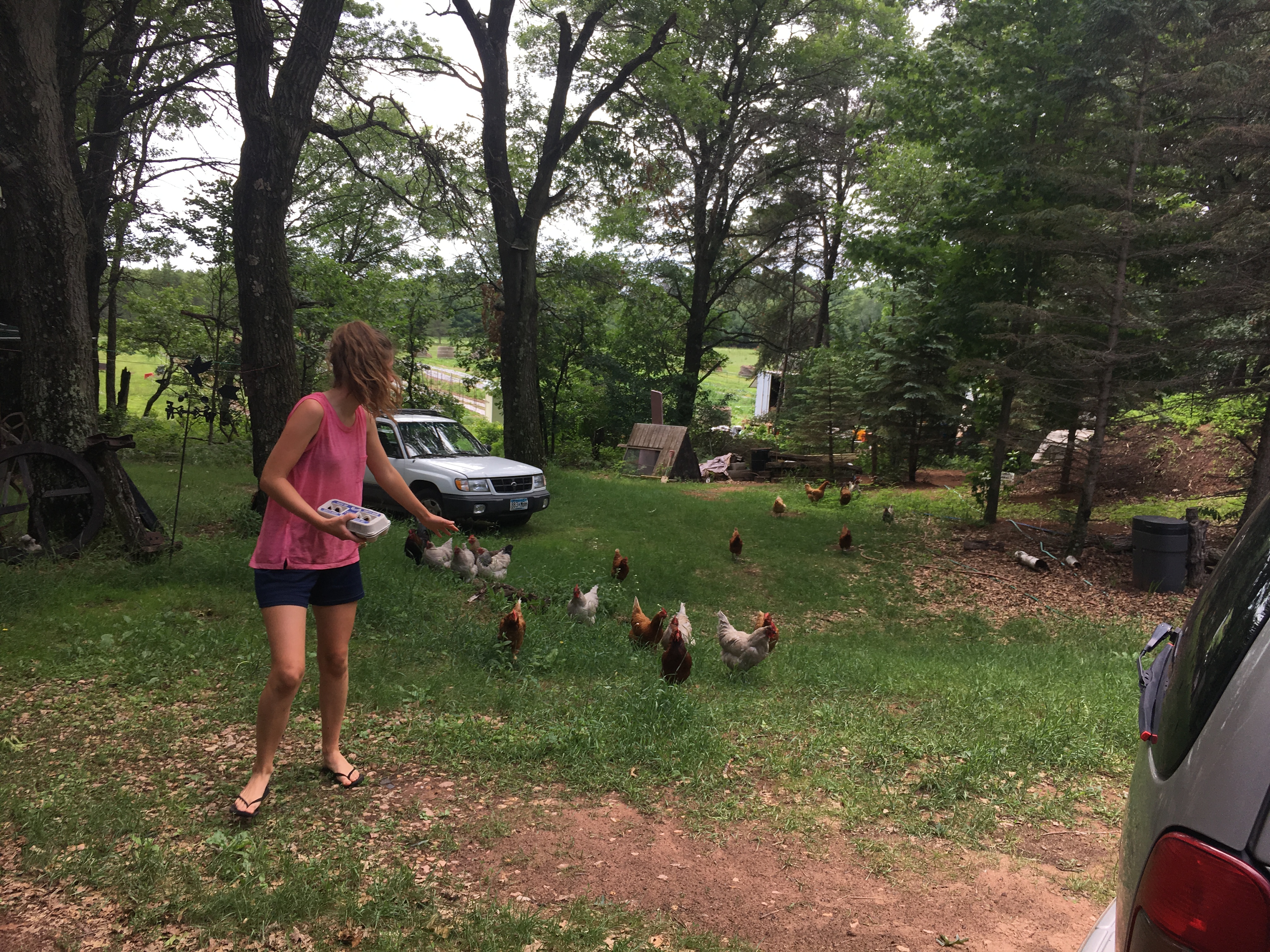
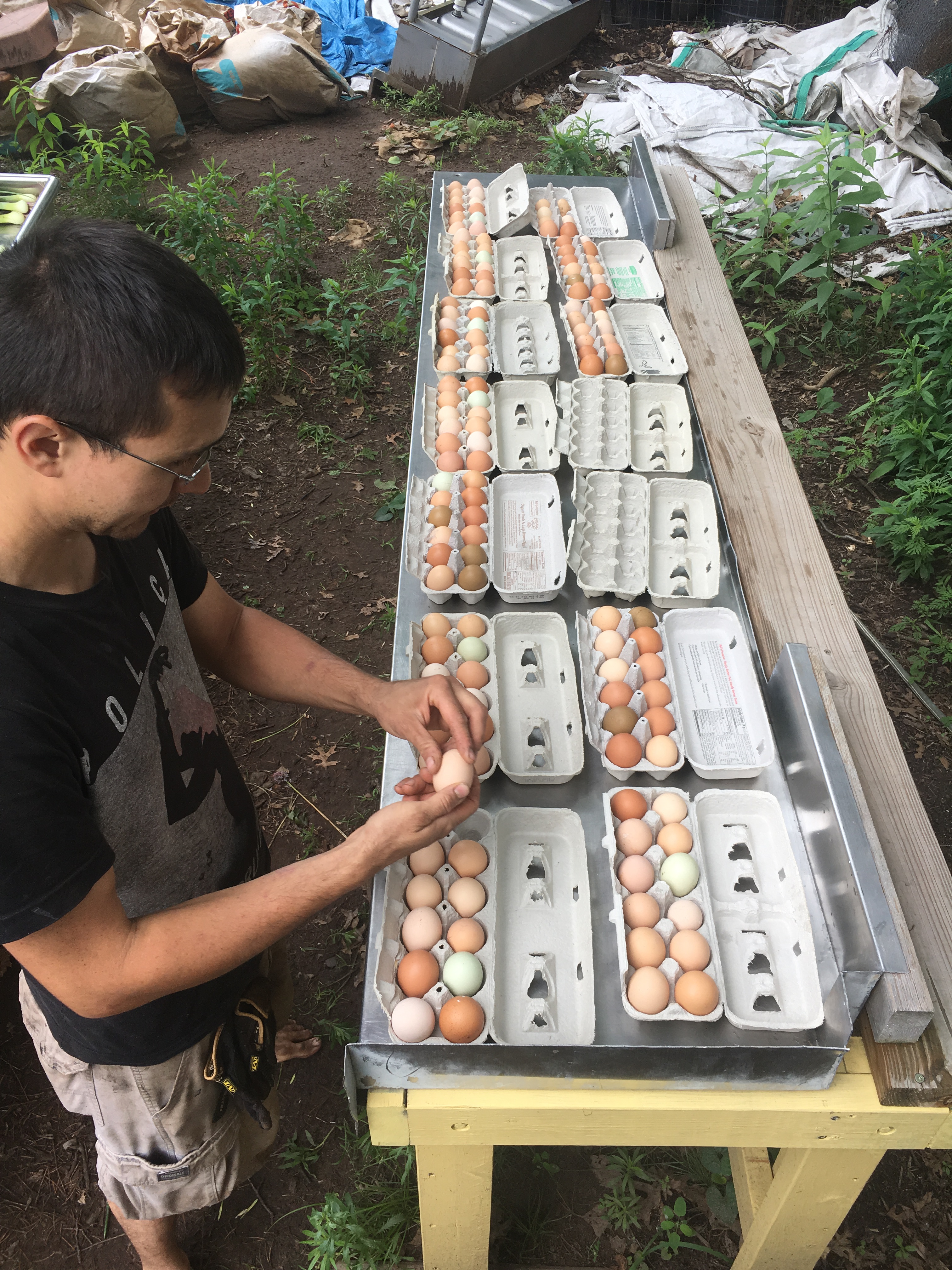
a Dozen Eggs – A mix from our motley crew of hens. Smaller eggs were likely laid by our newest flock members that hatched last fall.

WWOOFer Amelia pursued by hens after gathering eggs

(Hens lay bigger eggs as they age. Something you don’t realize until you have chickens.)

RadishesFrench Breakfast & Crimson Giant varieties – The cute, little spring radishes that precede the intimidatingly large fall radishes.

Green onions – Sometimes called spring onions or table onions. They’re mild enough to eat fresh but good cooked up too!

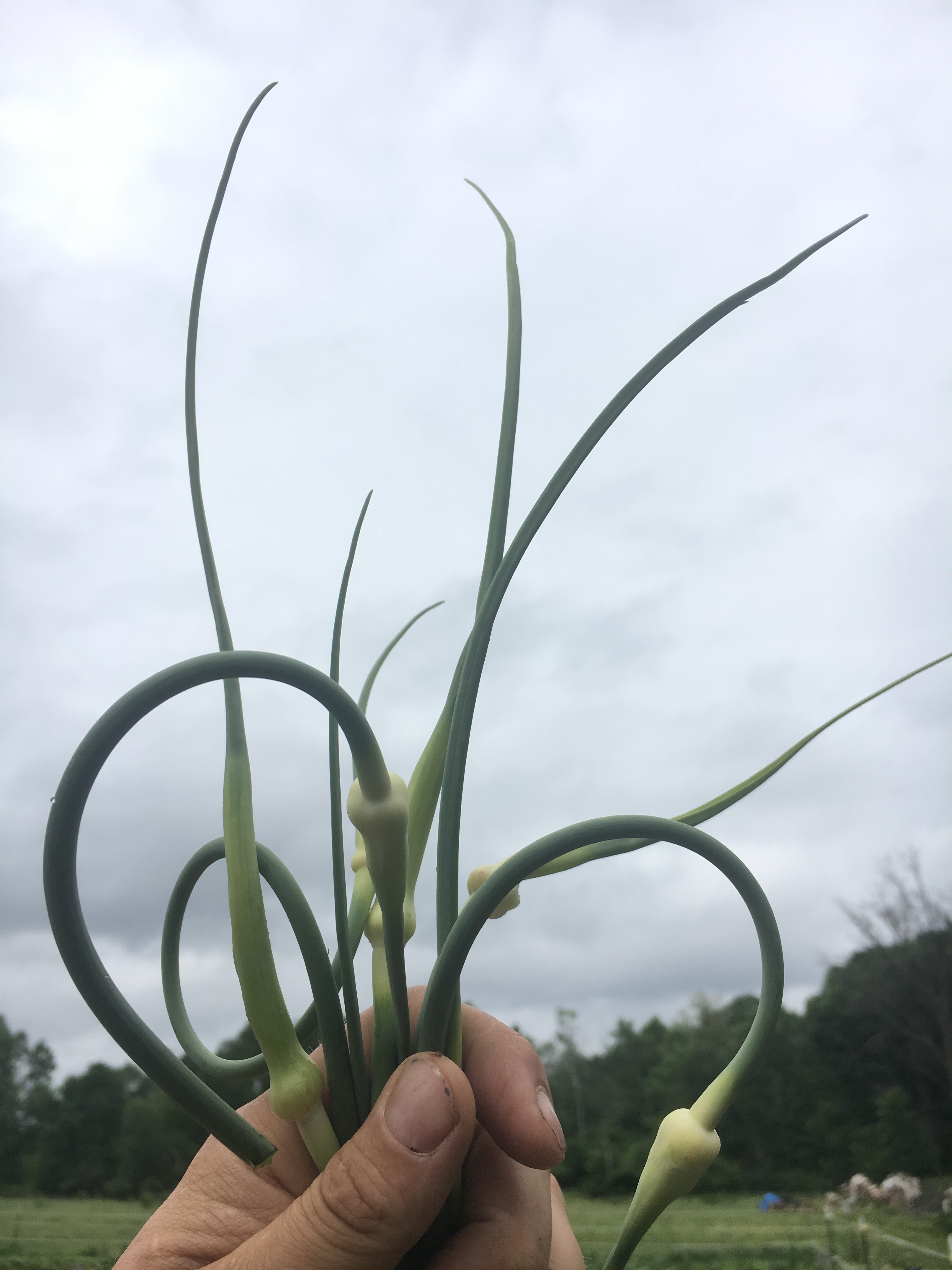
Garlic scapes – nomnomnom

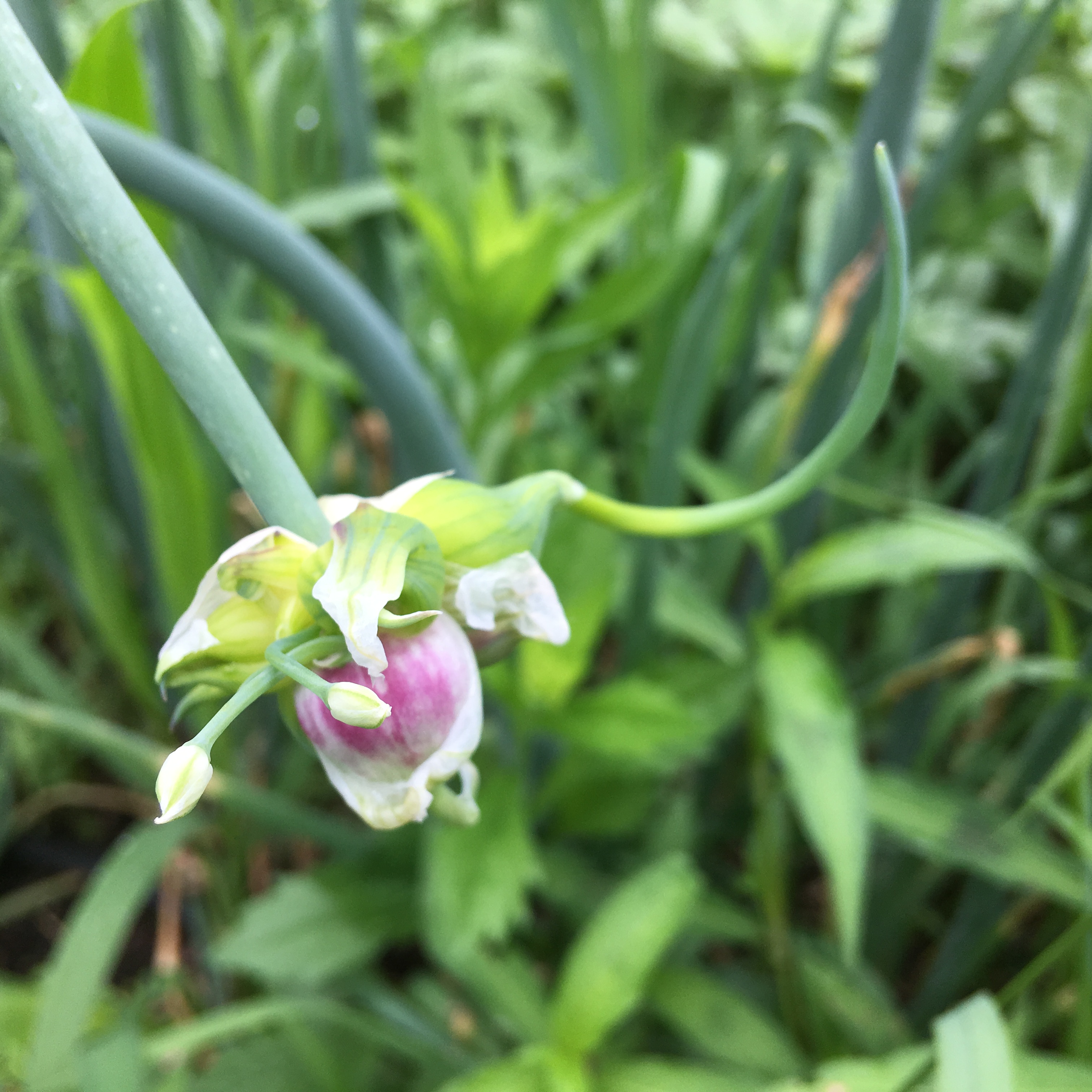
– bundled with the green onions, the sproingy looking things are the flowers of our garlic crop.

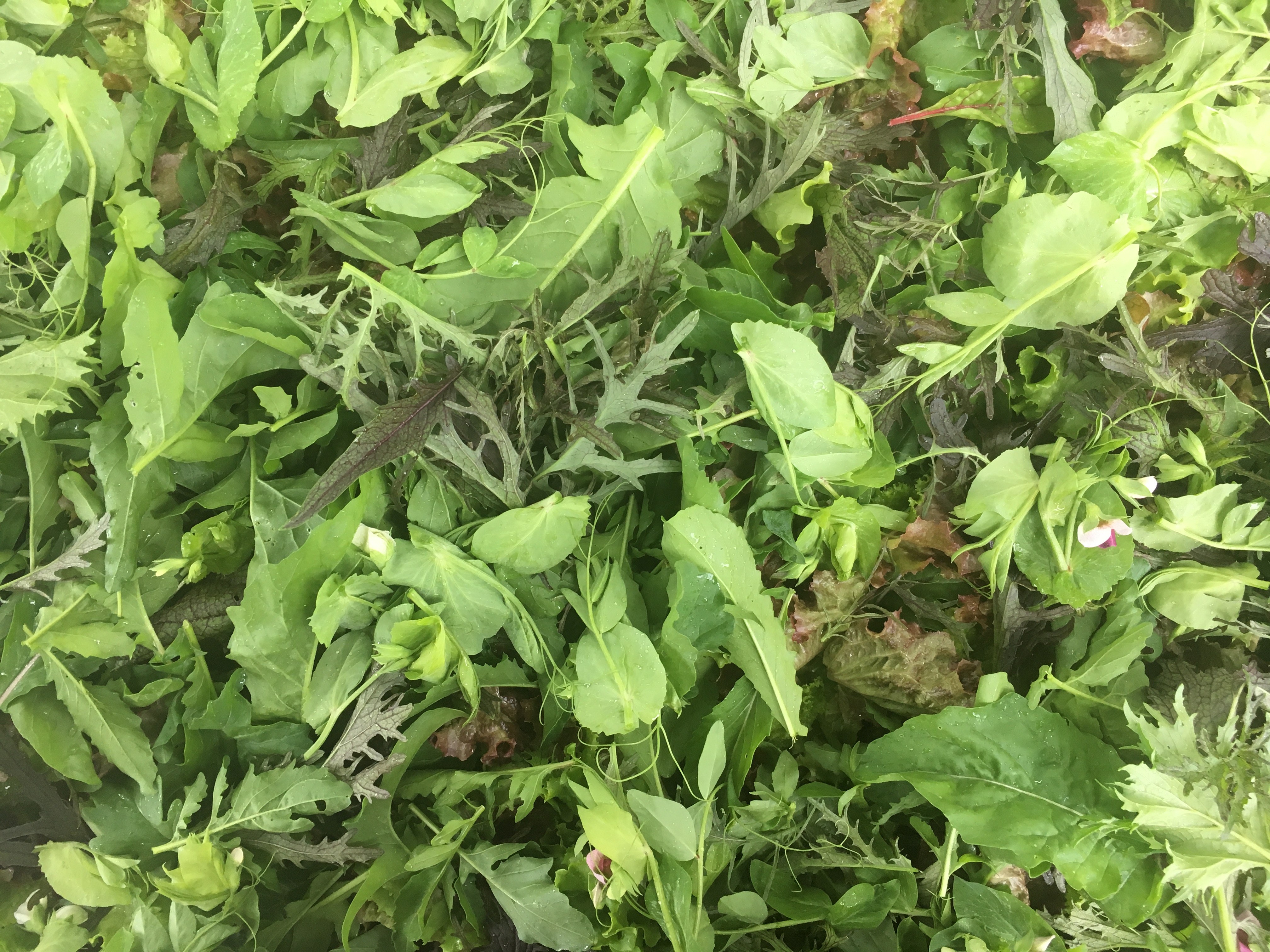
Salad mix – another bag of delicious assorted leaves … red and green lettuce, mizuna, pea tips, arugula.

Peas – First pea harvest of the season! Most of ya got sugar snaps, but 3 boxes received equally-delicious snow peas.

Bok Choi – bagged with the ….

Broccoli – A sprouting variety known as “Broccolini,” we cut off the heads early in order to induce side sprouts of little broccolinis for the rest of the season. The main crop of broccoli is still coming …

CSA 2018 Begins!

Well, we got off to a slow start this year … but start we did. As predicted, a newborn put some brakes to our processes – Otis usually requires someone’s undivided attention, and on top of it, our powerhouse Kristin had to take things easy while recovering from the unplanned c-section surgery at the 43-week  mark.

But we knew, more or less, that this kind of thing might be an issue with a new human’s entrance into our family  -which is why we did a limited membership this year.

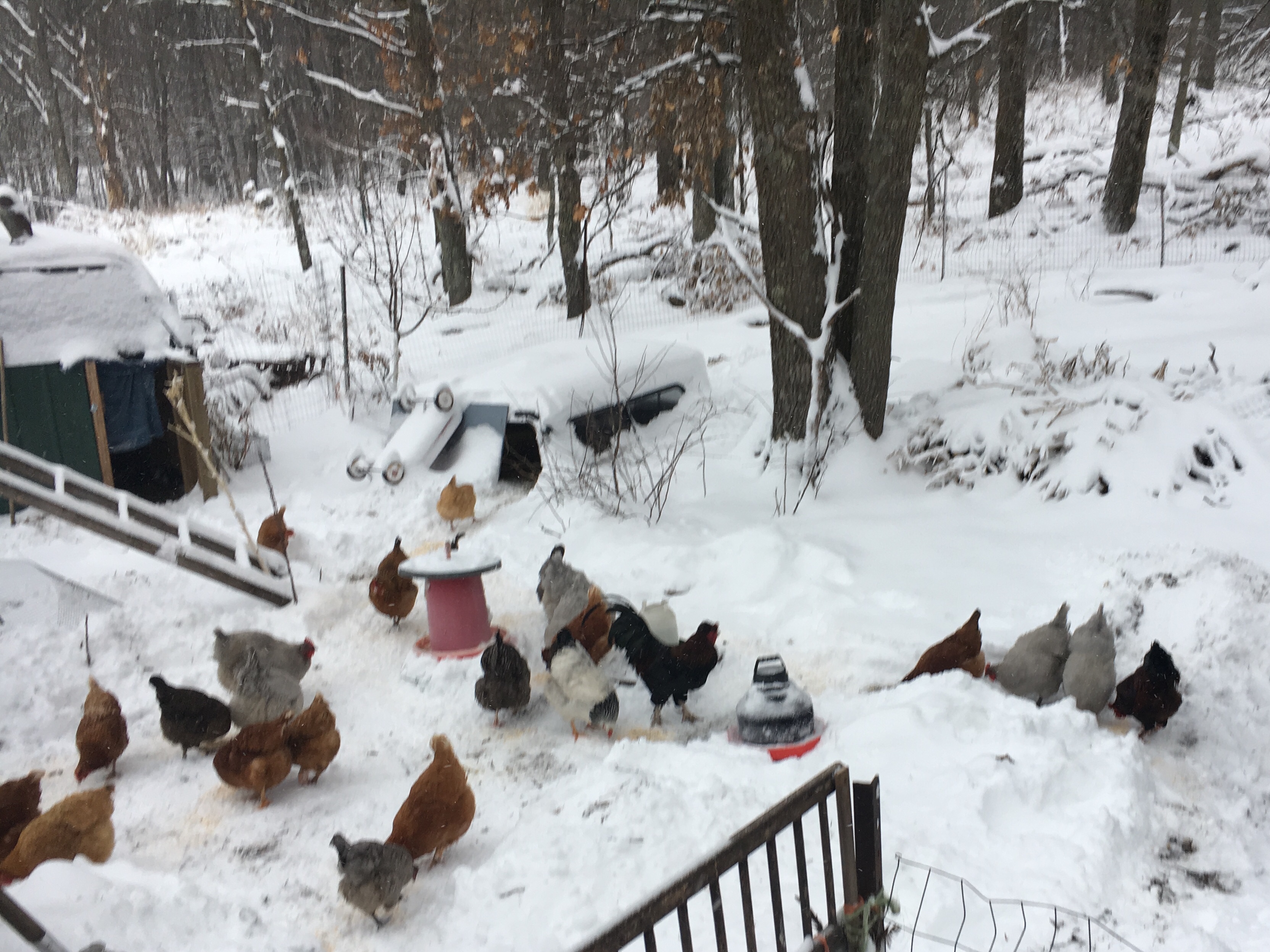
What was less expected was the predictably unpredictable beast – the weather. First, winter refused to release its hold on the farm – we had snow cover on the ground well into April.

snowy chicken yard on April 15th

Once it finally melted, things quickly heated up to summerlike levels. Not only did we miss out on Spring temperatures, we missed out on spring rains. Week after week, rainstorms slide past us to the south, the north, the east and west … never hitting our field.

It was Memorial Day before we finally had a measurable rainfall, and we rejoiced. We weren’t the only ones, however – the weeds had been waiting too. And with a little but of rain, they sprang into action, threatening to swallow up the struggling seedlings throughout the field. A battle for the future of our food crops ensued – one that I didn’t feel confident we were going to come out of alive until recently … but now, things are looking up!

I want to write more, but Otis is super upset in the back seat right now and I can’t think – so enjoy the pictures and Kristin’s write up of the week’s veggies below!


Box #1!


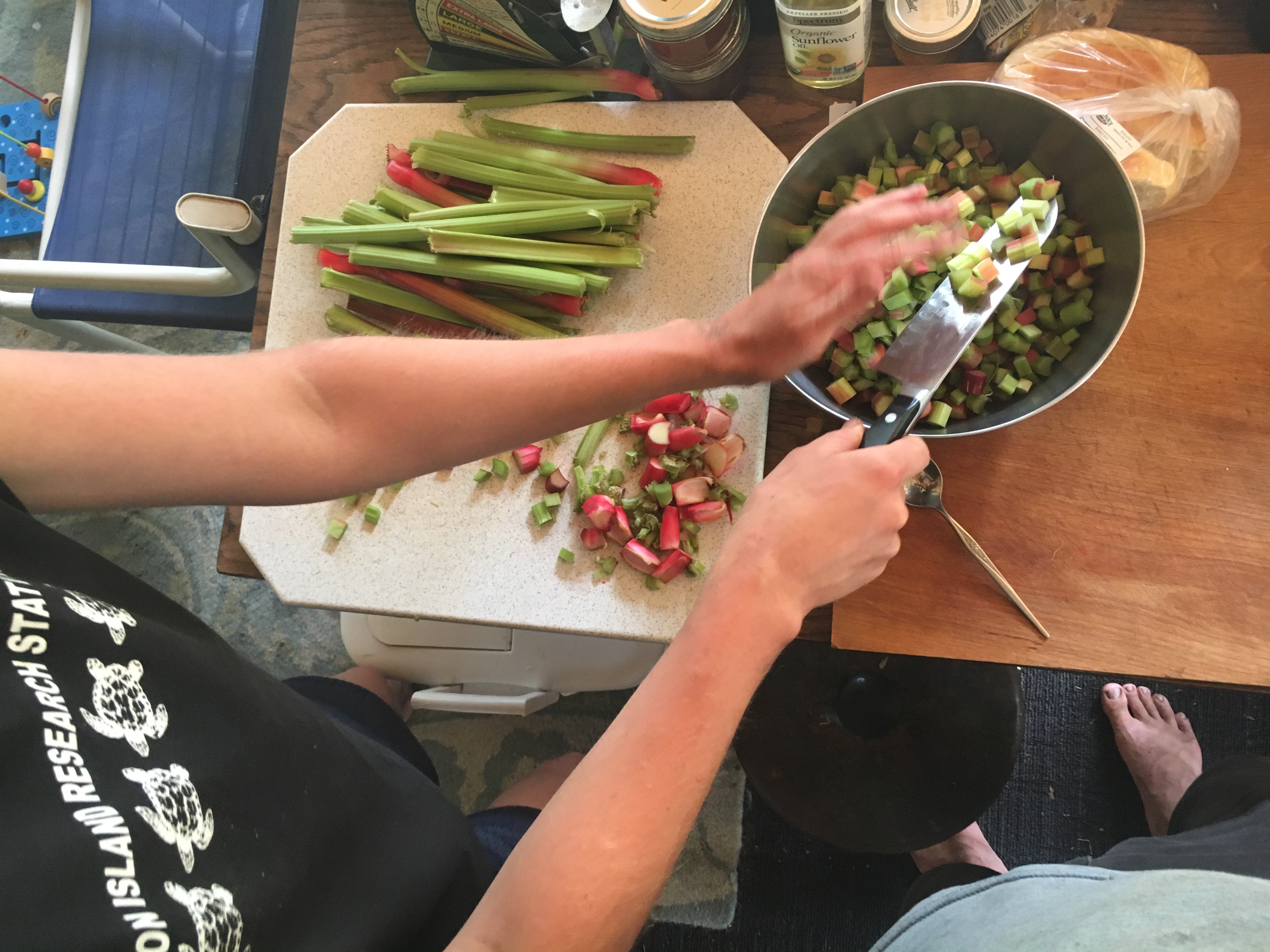
Rhubarb preserves

A tart spread made with rhubarb from our neighbors patch, organic cane sugar, and homemade pectin made from apples.

One batch has grated red beet in it as an experiment in natural food coloring. It didn’t work!

Salad mix

Or unique mix of greens (and reds) includes lettuce, peppery arugula, two kinds of pea tips, zippy red & green mizuna, and tat soi.


Chop it up if you like reasonable forkfuls.

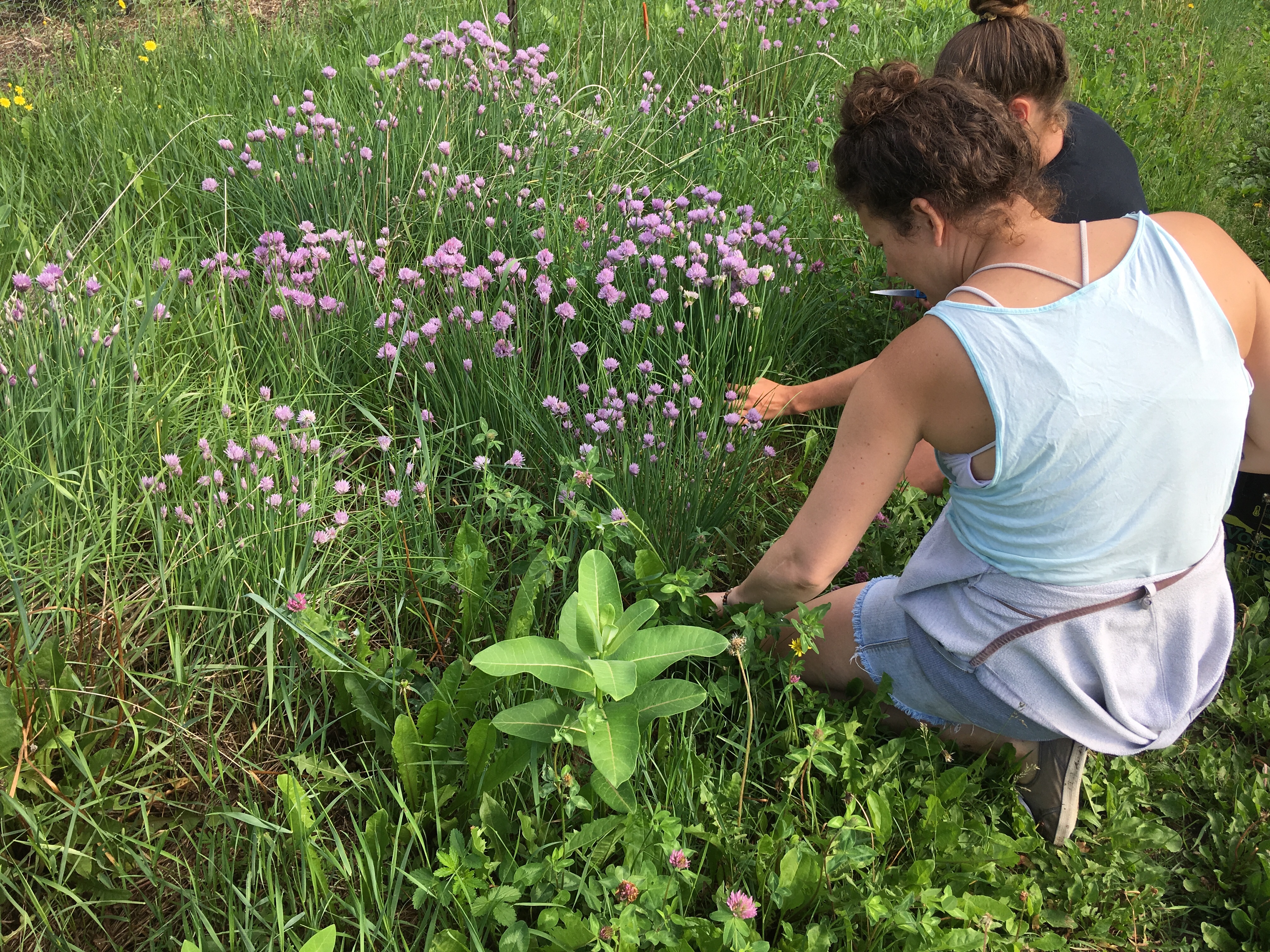
Flowering Chives

The flowers make fun salad confetti. You could also infuse white wine vinegar with them

The flower stems might be tough though so stick to the chive leaves for eating. Eggs, baked potatoes, sour cream dip, pretty much any savory dish would be good with chives.

Radishes

Little but intense. A nice salad topper. Cut the greens off and cook them, too!


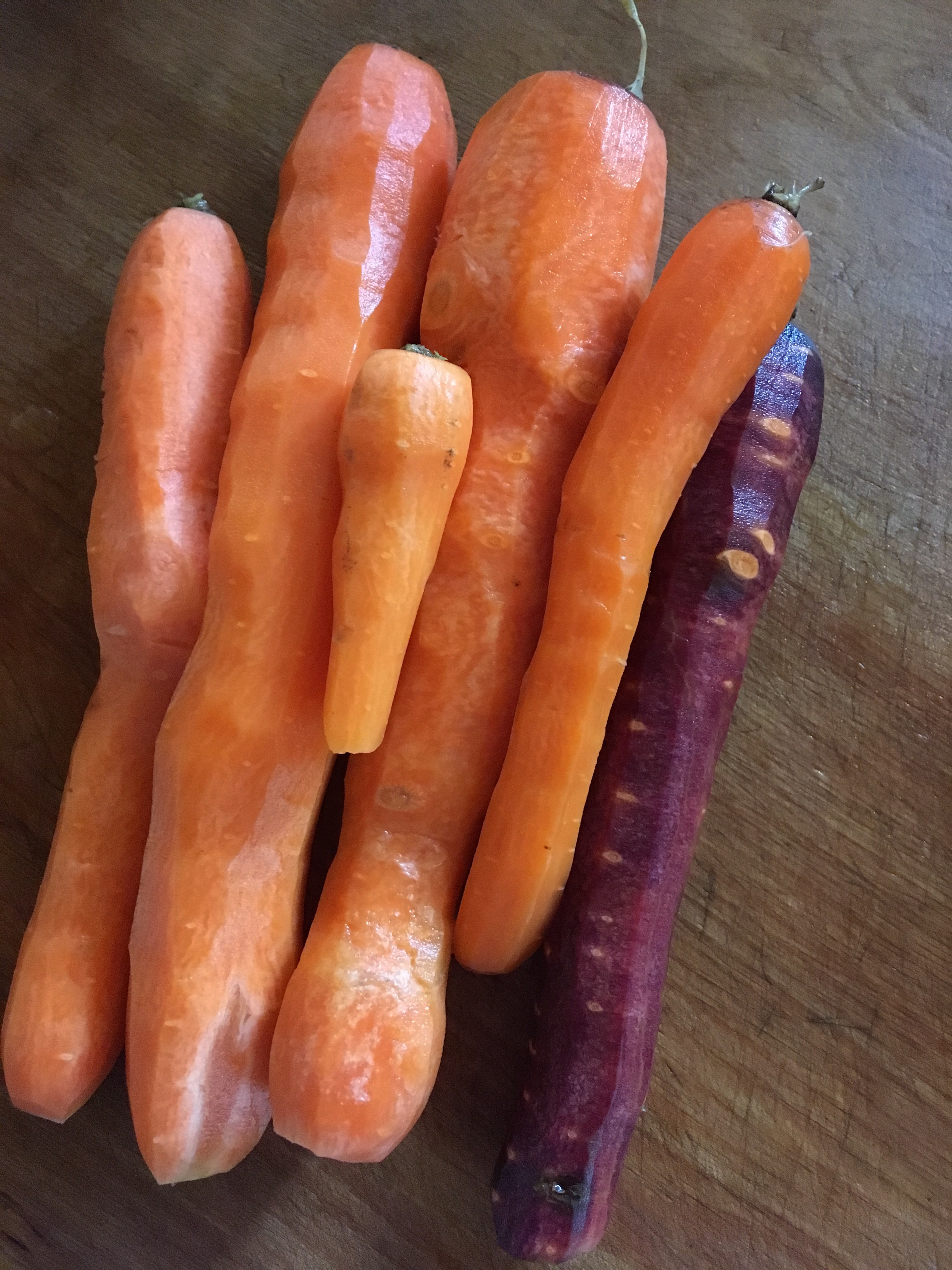
Carrots

Harvested late in the fall, carefully packed and stored in the root cellar we built last year, and still looking pretty good! We’re impressed and thought you’d enjoy them too.

I’ve been peeling them to make them look pretty. I like stir frying them and roasting them, quartered the long way, with coconut oil, honey, thyme, and salt.


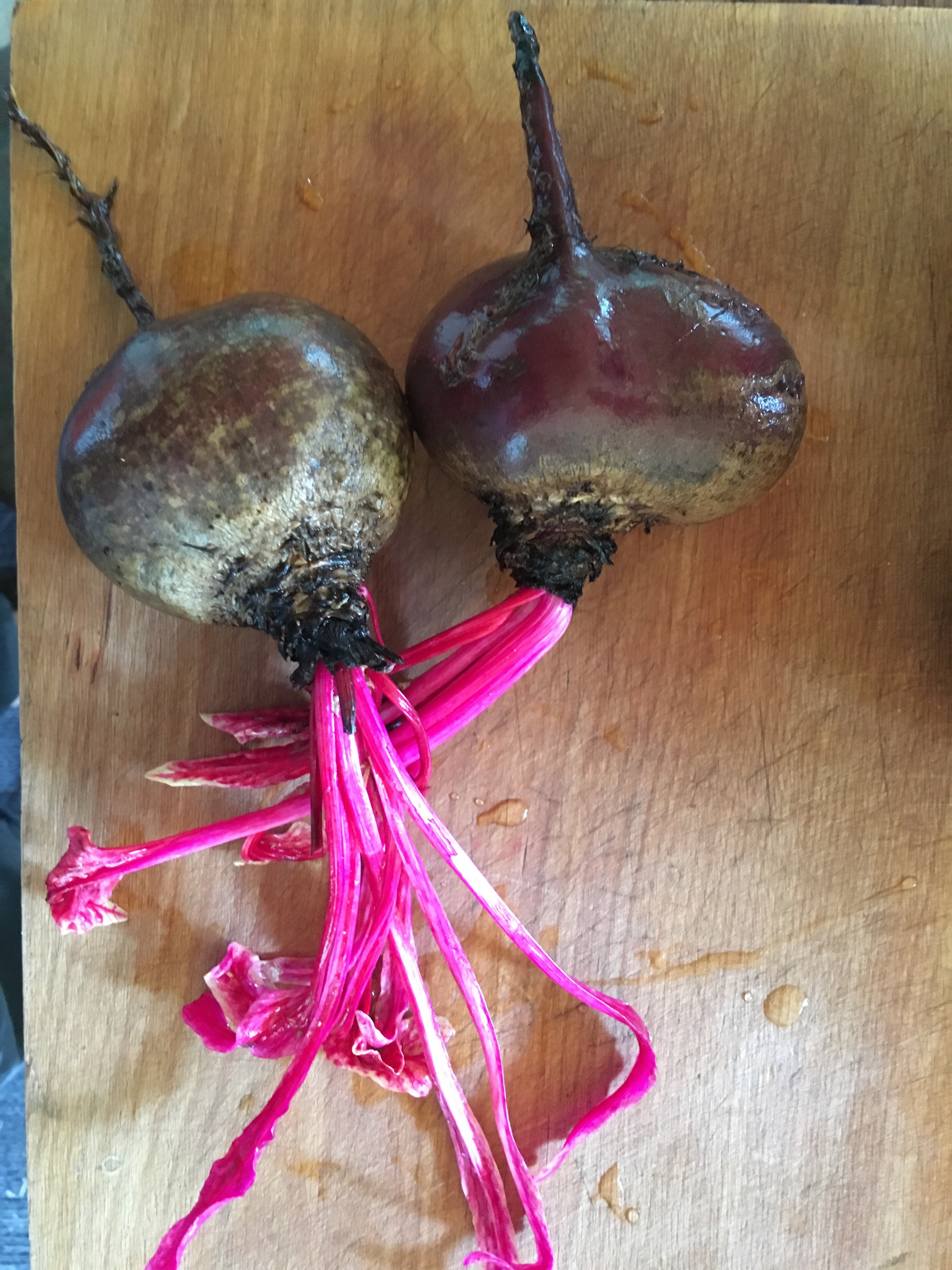
Beets

These spent the winter with the carrots, and they would be good roasted the same way.

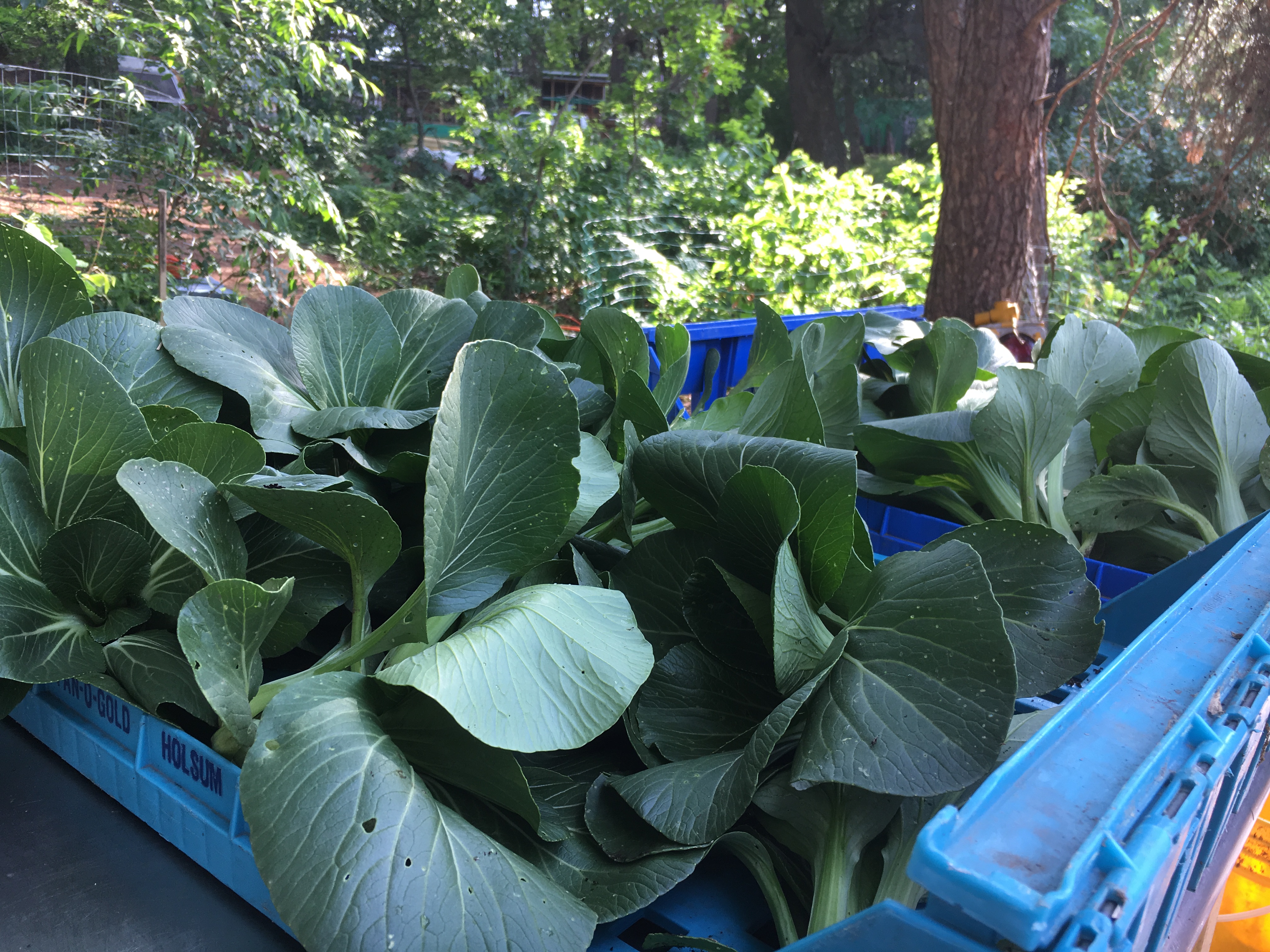
Choi

Do we harvest it now, kind of small or hope it doesn’t bolt and maybe harvested it bigger next week? Seems like we have a tendency to let things go too long so we’re going to pick it small instead!

More flavorful! More tender! Cuter!


That’s it for this week, hope you enjoy it – let us know if you make anything awesome with it!


Operation Root Cellar

Although the field has been frozen and dead for months now, we’ve been enjoying meals from it every day –  we had kale that was indistinguishable from fresh-picked in December, and we’re enjoying perfect potatoes, carrots, beets, shiitake mushrooms, parsnips, cabbages, peppers, onions, leeks, cilantro, and parsley – all pulled as needed from the the cool humidity of our newly-completed root cellar.

There are some details to be completed still – the ventilation pipes need finishing, and the onset of hard freezes happened before we could build out the shelving or the internal door between the two rooms – but it’s likely always going to be a work in progress, like everything else here on the farm. It’s being used, and working as intended – so, done enough!

Click through the photo gallery to see how it was built …

We were awarded a grant from WWOOF-USA’s Small Farm Grant Program that helped cover a good chunk of the construction expenses – as part of it, they required that we submit a 3 minute video … so here it is for your viewing pleasure! Sorry about the awful lyrical pun.

… and if you’re really curious, here’s the grant proposal we submitted – if we hadn’t received it, I really don’t know if we would have gotten the project off the ground!

Project Proposal

As an off-grid farm, we face unique challenges in vegetable production at every step of the process.

The storage of harvested crops has been a significant obstacle, without access to the modern convenience of electric refrigeration. We have handled this as best we can for the past four years by leaving root crops in the field until ready to eat or sell them, harvesting in the early morning the same day as farmers markets and CSA deliveries, time-intensive and time-sensitive canning, avoiding crop rotations that require mass harvesting, and through cooperation with an on-grid neighbor.

We seek a more efficient and sustainable, less energy-intensive and wasteful method of food storage.

Rather than connect to the electric company or attempt to build an off-grid version of the modern solutions used by other farms in our area (i.e. a walk-in refrigerator powered by a much larger solar panel/battery system), we are looking at the age-old methods used by traditional agriculturalists across times and cultures – using the stable temperatures and moisture of the Earth itself to keep the food we grow fresher, longer.

Toward this end, our research has led us to an earthen-floored root cellar, to be built on the wooded slope near our field. This will allow us to harvest when weather and growth dictate, and store crops protected from temperature extremes, precipitation, desiccation, animals, insects, and decay until they are to be used.

Project goals:
  • Creation of a 12×12’ two-room root cellar with required temperature and humidity provided by the earth, appropriate for the off-grid short and long-term storage of crops grown on our farm
    (the front room will provide a drier storage space which is cooler in winter and warmer in summer. The variation between sections allows for better storage conditions for different crops.)
  • During severe thunderstorms and tornadoes, the root cellar will serve as storm shelter for farmers and WWOOFers.
  • Follow best practices and design considerations from the book “Root Cellaring: Natural Cold Storage off Fruits and Vegetables” by Mike and Nancy Bubel
The Que Sehra Farm Root Cellar furthers WWOOF-USA’s mission:
  • By working with next year’s WWOOFers to build the root cellar, and with future WWOOFers to work with the root cellar (storing fresh produce, making meals using root-cellared produce, monitoring and adjusting stored food, etc.) the Que Sehra Farm root cellar will serve to re-connect all who live, work, and eat on our farm to a pre-industrial practice found across cultures. This provides an ongoing educational exchange, reviving knowledge of essentially lost cultural practices to the young farmers of the future.
The Que Sehra Farm Root Cellar will benefit:
  • Kristin and Gabe Sehr as farmers and homesteaders, and our growing community of WWOOFers, shareholders, family, friends, neighbors … our tribe, striving to reduce our dependence upon systems which we’d prefer not to support or engage with. We will be able to produce more in our small field by harvesting storage crops as soon as they reach maturity and using the freed up space to plant another succession of crops. We will provide fresh food for our community later into the fall and winter, a major goal for our short growing season.
  • The experience we gain in root cellaring (principles, construction, use, maintenance) with be shared with WWOOFers for many years to come, and we all will bring that with us as we travel through the world to other WWOOF farms.
  • Finally, our root cellar will serve as a storm shelter for ourselves and our hosted WWOOFers. We currently have no safe space to go in the event of a tornado; the trailer homes and simple shacks that we and our guests stay in are notoriously dangerous in severe weather. This is not an insignificant concern; in our state we average 30 tornadoes each year, and many more severe thunderstorms. In 2015 we had a WWOOFer suffer a full-on panic attack when a big thunderstorm came through. I’m writing this proposal while WWOOFing in south-central Georgia, where two days of tornadoes have just killed over a dozen people in the vicinity – and we were grateful for the brick structures our host farm had for us to shelter within.  Storm safety is a meaningful secondary benefit that a root cellar would provide for us, as a WWOOF host farm.
The Que Sehra Farm Root Cellar will affect positive change:
  • By making off-grid, organic farming more economically viable, more labor-efficient, and sustainable, and by serving as an example of how this can be done for others who wish to avoid the costs and burdens of dependence upon the power grid.
  • By making it possible for us to bring a significantly greater quantity and quality of organic produce to our network of local food consumers.
Que Sehra Farm Profile

Kristin and Gabe Sehr both live and work full time on our farm from early March through late November with the help of WWOOFers, and when our land freezes, we WWOOF throughout the southern United States on other organic farms, learning new approaches & networking with like-minded people.

Our farm is on a small parcel of Sehr family land, which had been used previously for camping and hunting. With what we grow on the land, we feed ourselves, our WWOOFers, and a 25-member CSA, as well as sell produce through our local farmers market, and wholesale to local restaurants. We keep just over 1 acre in outdoor vegetable production, in addition to a 70×30’ high tunnel greenhouse, various perennial and fruit trees, and mushroom cultivation logs. We value the uncultivated areas as wildlife habitat.

Que Sehra Farm is not connected to the utility grid; our water comes from our well, our heat from the red oak trees that grow on most of our land, and our electricity needs are met by our modest solar energy system. Although we are not certified and are not interested in becoming so, we grow organically. We focus on low input methods. We hand pick pests, weed with hand tools, rotate crops for disease prevention, and apply abundant amounts of organic mulch and compost.

2017 will be our fourth year of hosting WWOOFers on our farm. When we started in 2013, WWOOFers had to sleep in tents, and we barely had enough solar power to run the lights. We’ve made many improvements since then, but still work, eat, and live side by side with the WWOOFers who come here.

We have hosted over twenty WWOOFers through the program, and plan on continuing to serve as hosts for the foreseeable future – from our first conception of radical lifestyle change, WWOOF has been the central pillar making it all possible – living simply without expensive winters or employees, forming a shifting tribe living in mutually-beneficial cooperation, depending on one another more than corporations and government.

We plan to remain small scale – avoiding the increased debt and expense that scaling-up is accompanied by. We plan to remain off grid, and continue to focus more on how we can thrive with less money, rather than how to make more, as is the standard path in our culture. A root cellar will provide security for us as homesteaders who grow as much of our own food as possible, and as farmers who earn our living from the land.