All posts by QueSehraFarm

Week 2 CSA Newsletter – We, Biocides

This week, we bodyguarded baby plants.

The Field is filled from side to side with rows of fragile plants, some grown from seeds planted right there, others plugged into the outdoor soil after a sheltered childhood in the greenhouse. It’s not an easy place to be a small plant, bred for traits that have little to do with survival.

The day after last week’s CSA harvest, we began to weed.

Weeding is calm, satisfying and meditative work – remarkably enjoyable for a repetitious task. Satisfying moment to moment, and to look back down a row and see a clean row of nothing but crops, and later, satisfying to see those plants flourish and shoot up once freed from competition from wild and wily weeds.
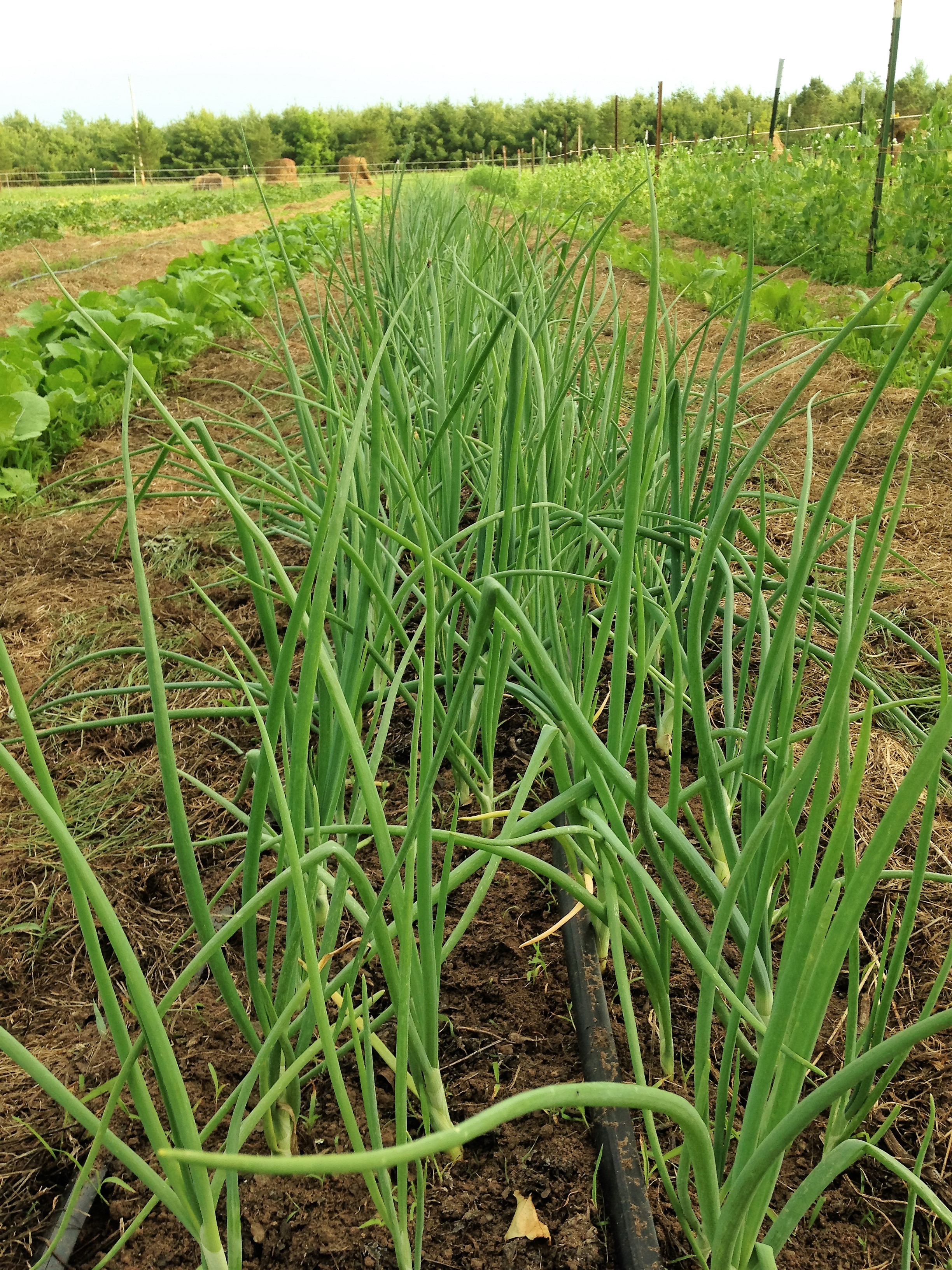
a well-weeded onion row is a delight to behold

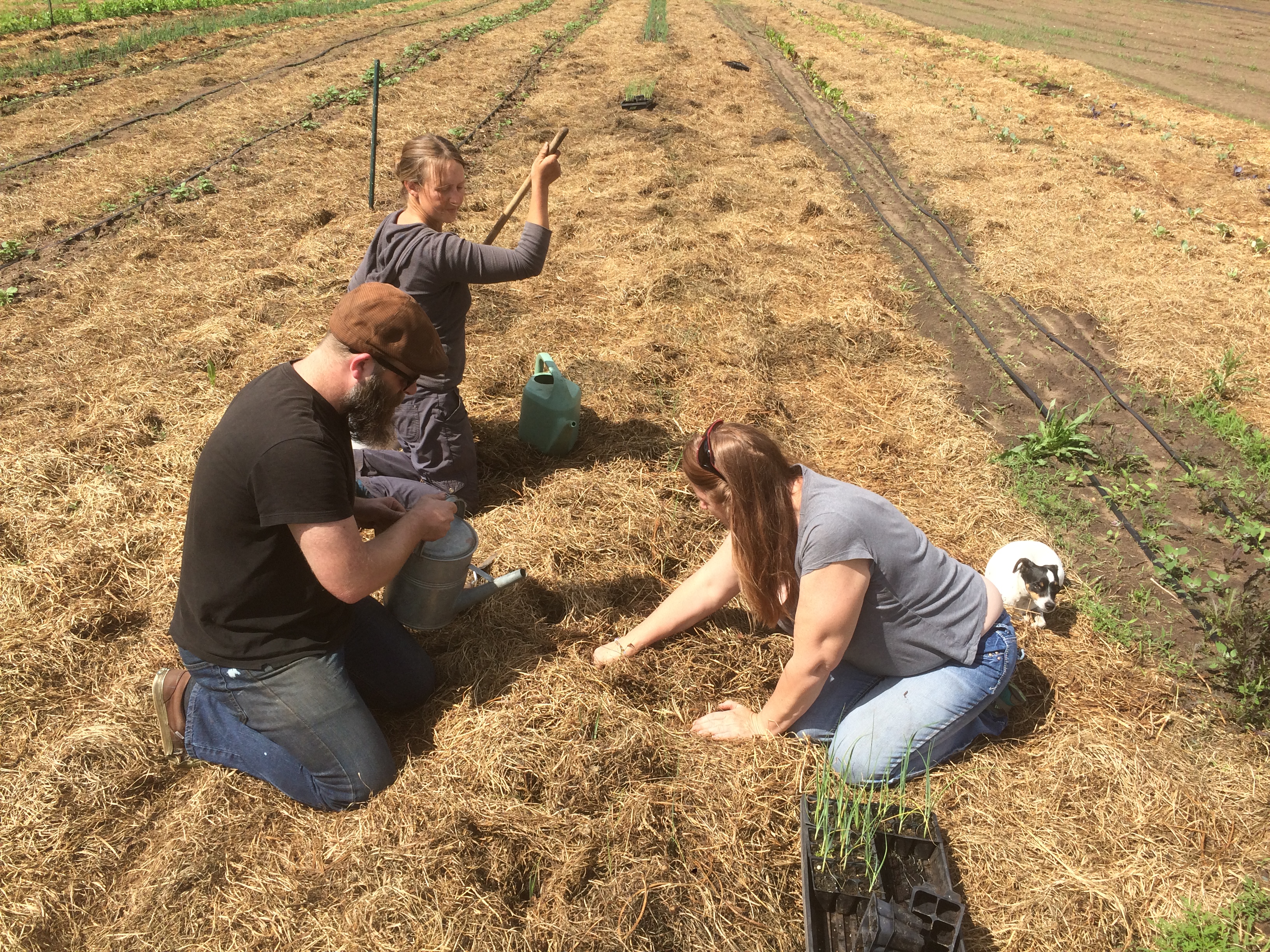
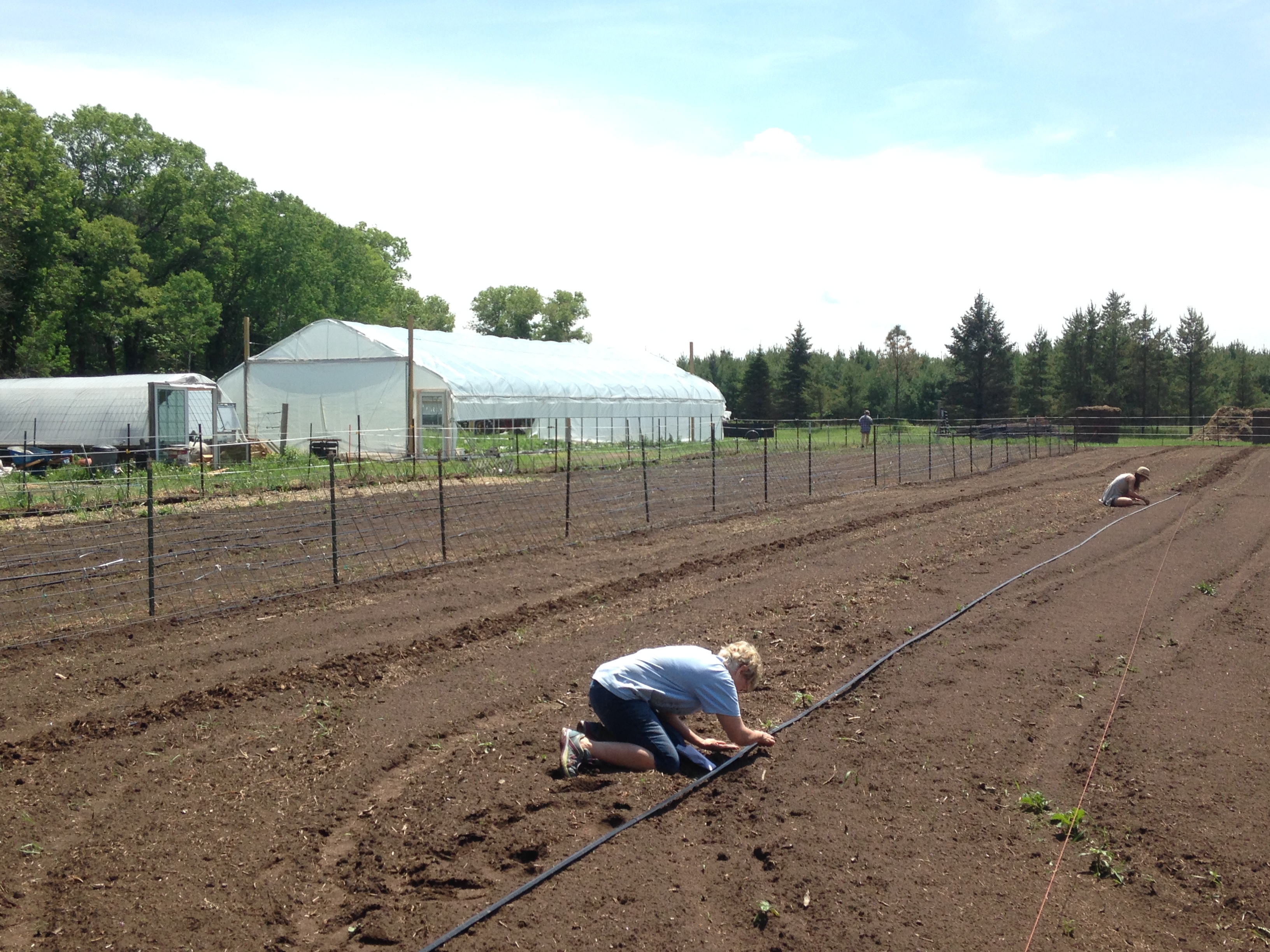
We methodically deleted the vigorous weeds that had sprung up in a thick climbing canopy over any and every unmulched place. Our fingers traced backward along the cords of bindweed, along grasping twining feelers to the base of the stem, and popped them out by the roots, Ragweed,smartweed, lambs quarter and grasses were plucked up and left laying on the mulched walkways, no longer spreading shadow over the soil. Row by row, foot by foot, pluck by pluck, we brought the emerging little seedlings back into the open sunlight they needed.  That sun grew hot and hammering.
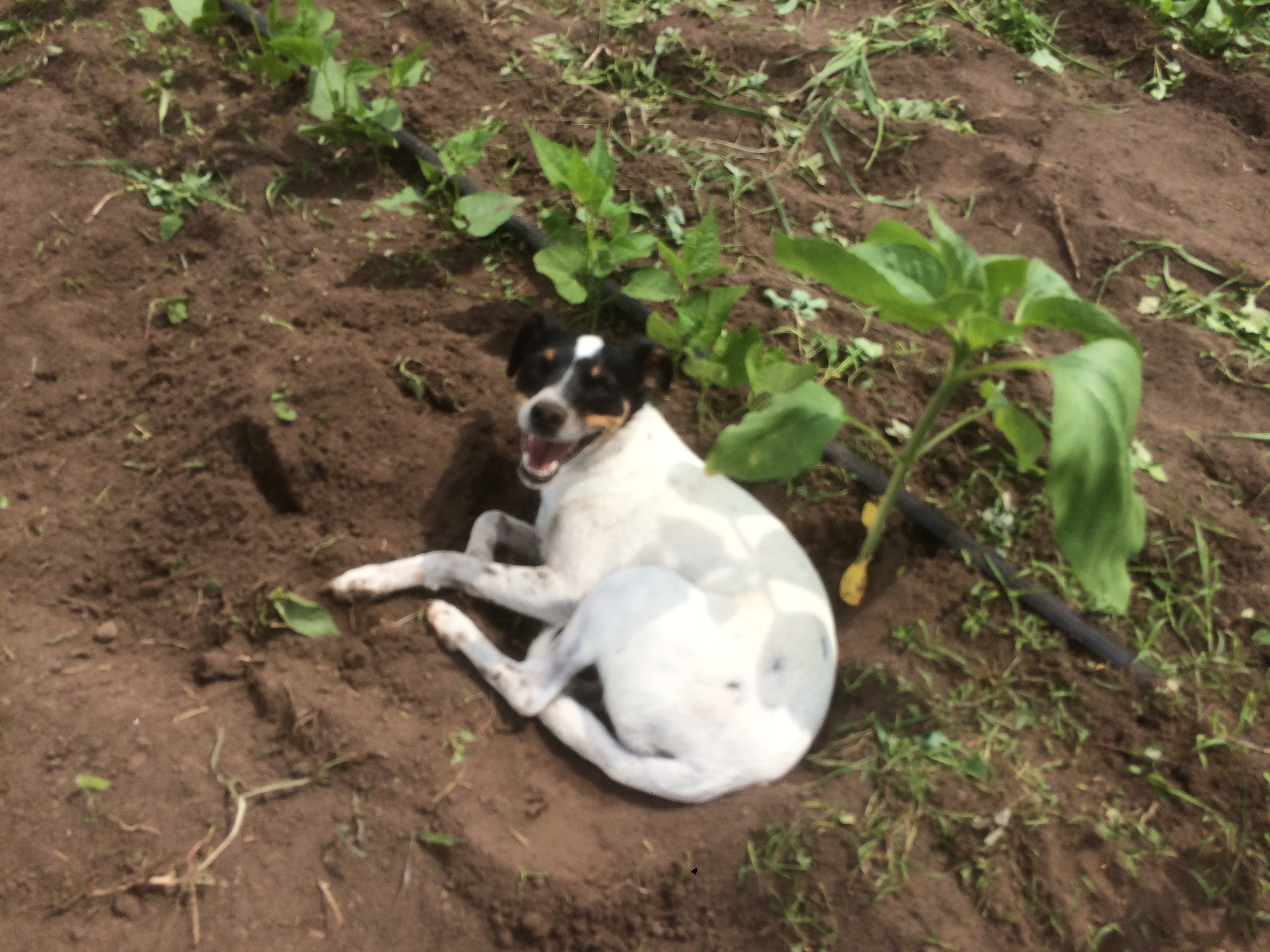
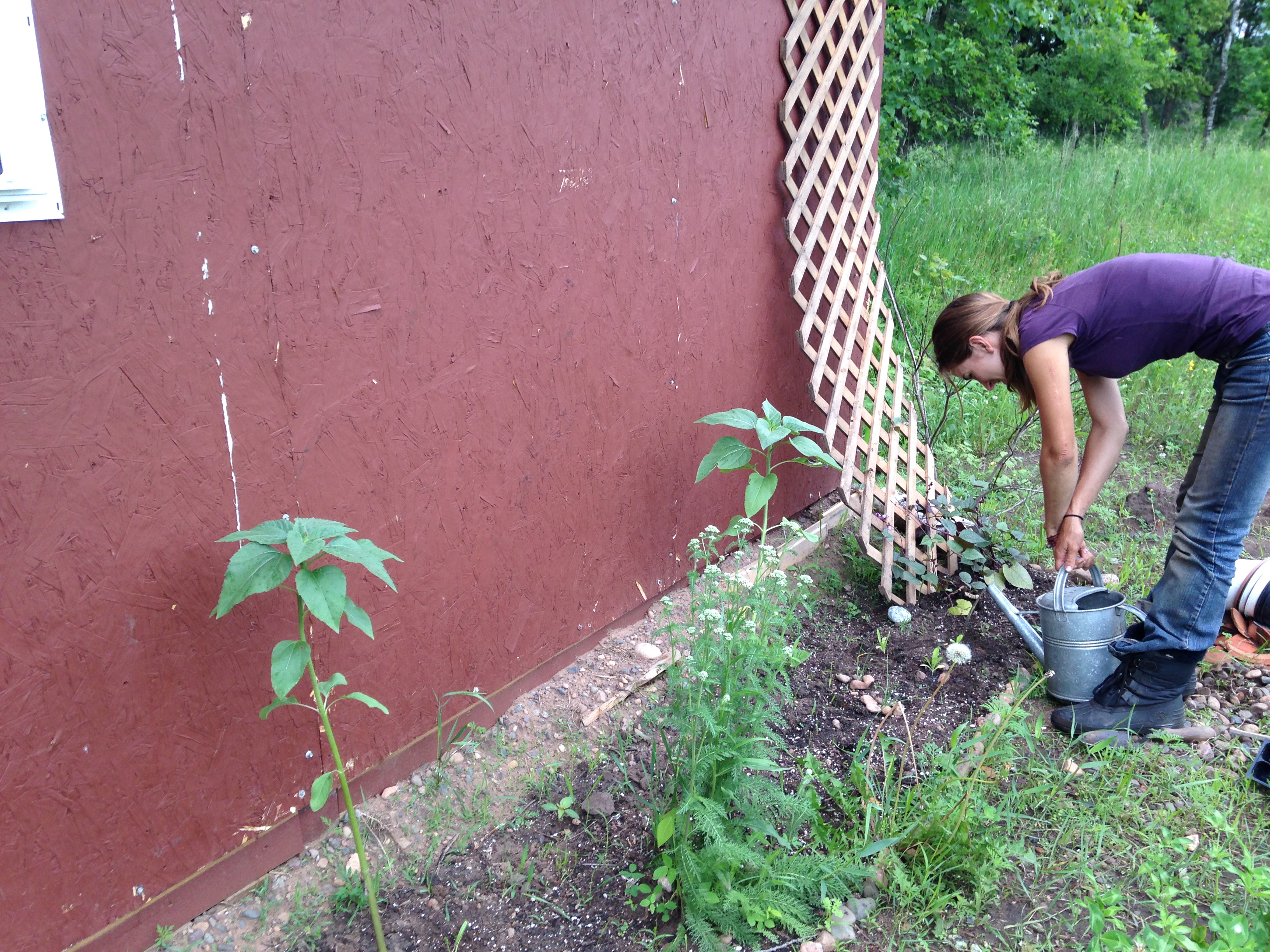
Widget seeks shelter in the shade of a little sunflower

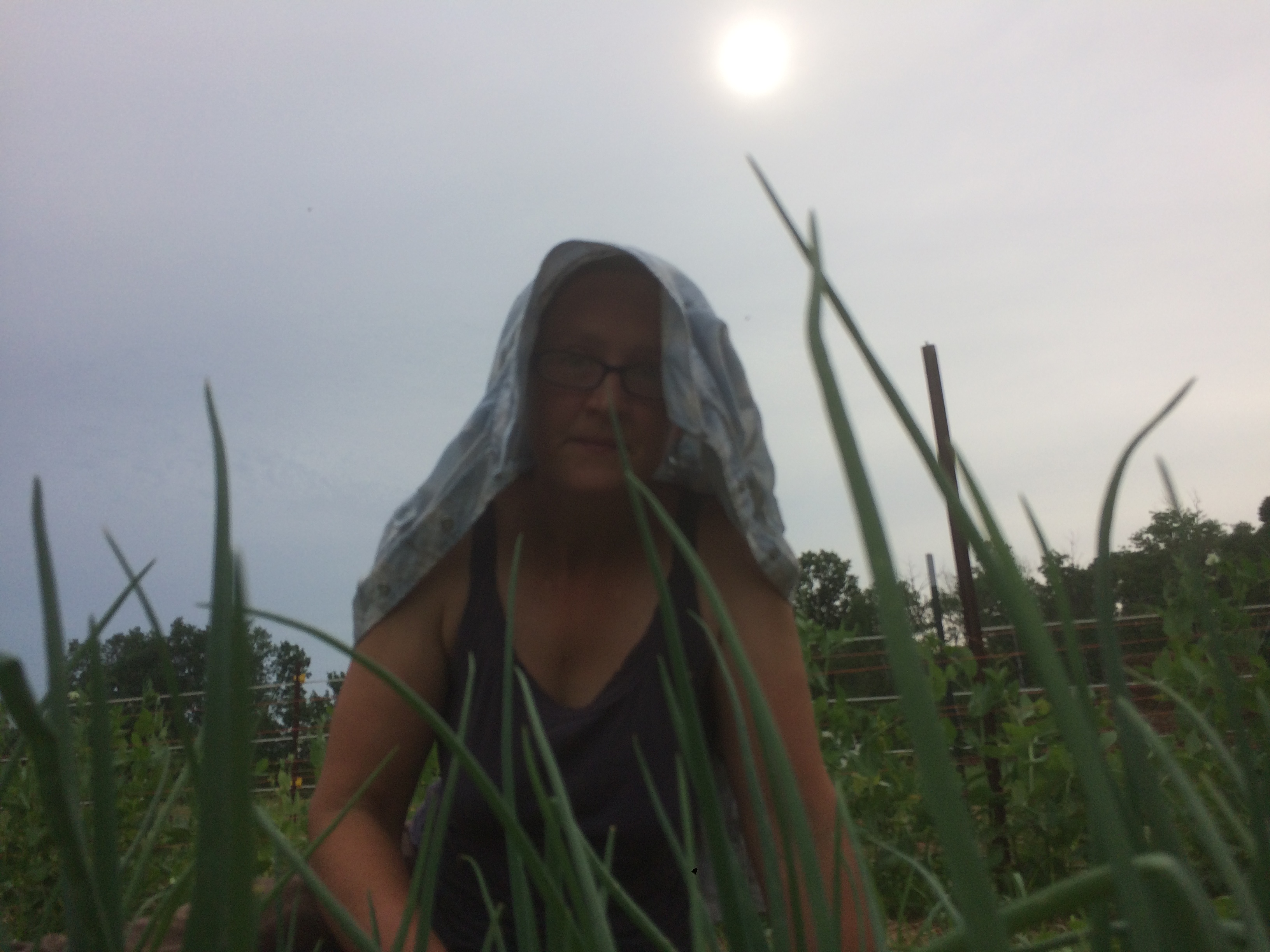
We watered  where we weeded; bare soil dries out readily. Our skin scorched and sometimes burned; we swam in the River. Eventually, clouds blocked the sun… but the heat and humidity remained. We sweated into the dirt in the grayness while we weeded.
IMG_4885 (2)

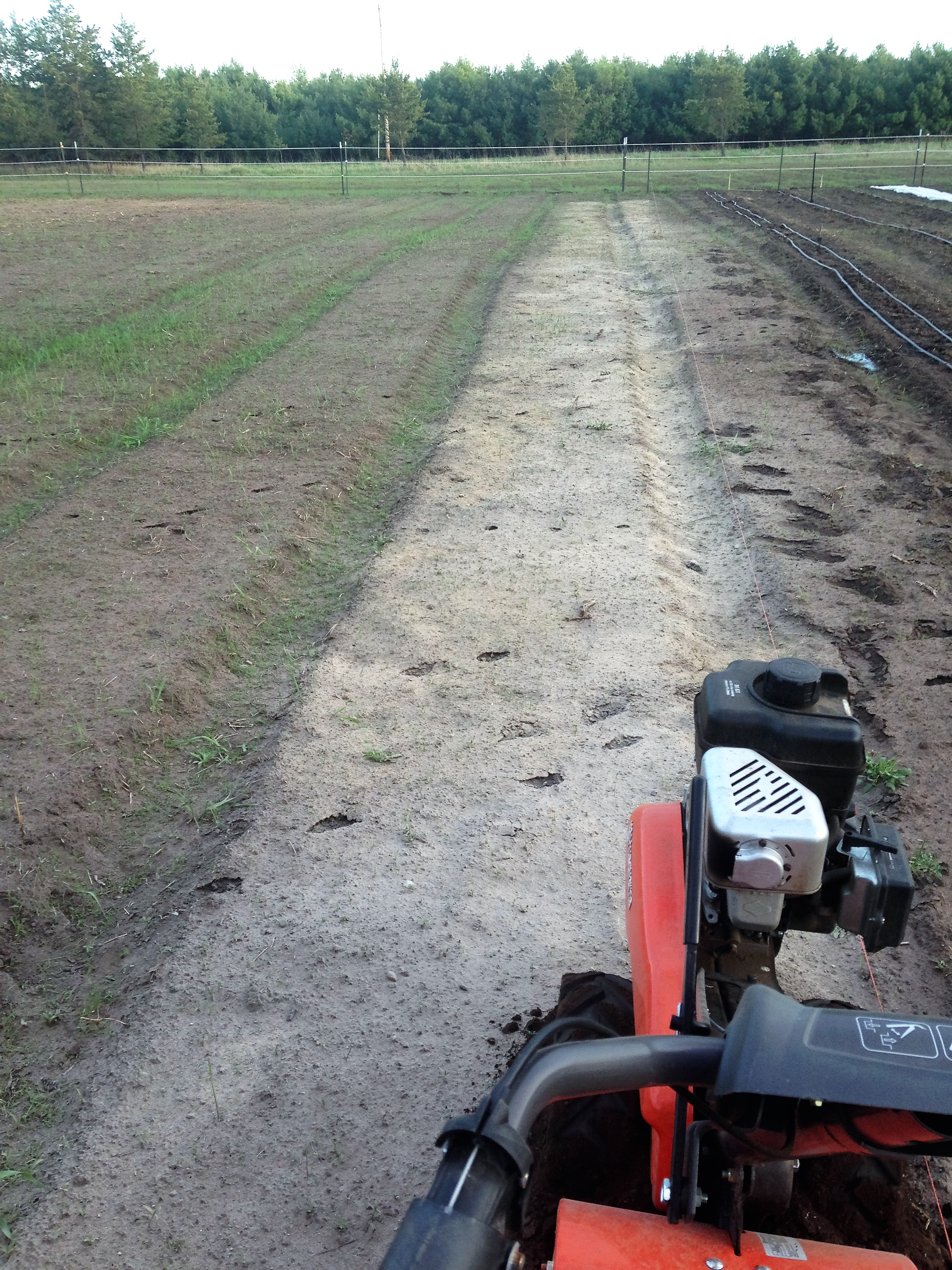
Sometimes, I machine weeded – tilling as close as I dared to the plants, and weedwhipping the fenceline (where weeds love to ascend along the chickenwire and touch the lowest wire in the electric fence, allowing the fence’s zap to be diffused into the ground).

But not all our protective efforts were based upon being organic human herbicides – the second half of the week, we found ourselves spending just as much intensity into being organic human pesticides. Getting pesticidal. Committing mass pesticide.

When you grow organically, there are limited options for dealing with bugs that want to devour and destroy your crops. The option we rely almost exclusively upon is hand picking / bug squishing.

It was a mild winter, which works out well for certain bug populations.

There are swarms of leaf-eating, root-nibblng, disease-spreading cucumber beetles, eating not only the cucumber plants you’d expect them to, but also the squash, the melons, and the zucchini.  Cucumber beetles are tricky ones to squish – they are small, fast, and quick to take flight when approached.We got better at snatching them quickly between finger and thumb and grinding them up, ideally with a bit of sandy soil. We can only hope to put a dent in their numbers, prevent some eggs from being laid. There are always more, but it does seem there are less every trip.
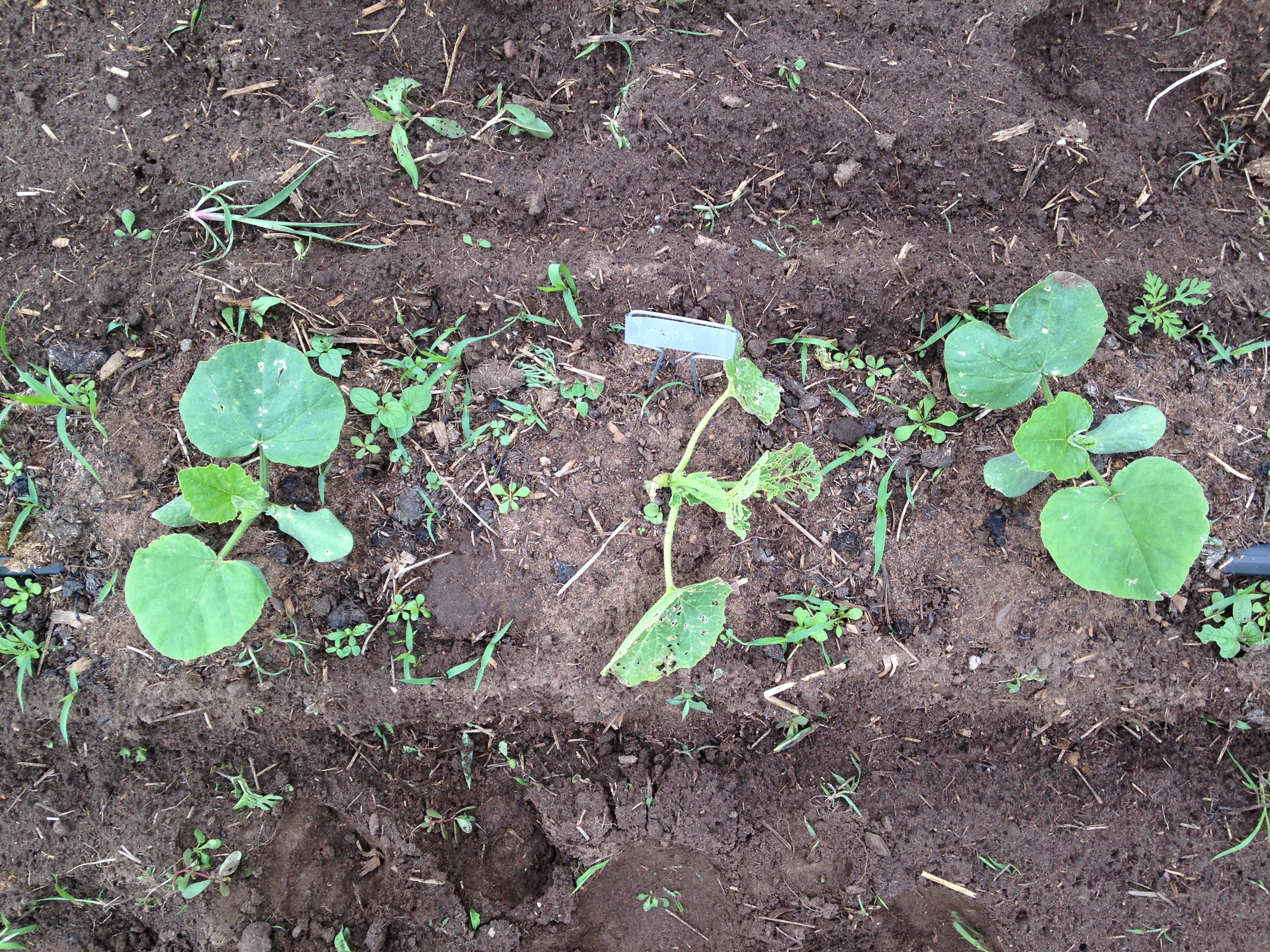
insect "trap crop" - a super-appealing hubbard squash we planted to lure in and destroy the squash vine borers ... turns out they are also a trap crop for cucumber beetles! Can you guess which squash is the hubbard?
insect “trap crop” – a super-appealing hubbard squash we planted to lure in and destroy the squash vine borers … turns out they are also a trap crop for cucumber beetles! Can you guess which squash is the hubbard?

Potato beetles have been out for some time now – we’ve been crunching their big bulbous beetle bodies up for a couple of weeks at least. But now the eggs of the first-wave survivors are hatching out on the potato leaves, and gangs of soft bodied orange larvae are spreading across their birthplants, munching up tender new leaf growth and growing almost visibly larger as they eat. They are smeared across the leaves when tiny, picked off and squished when large enough – pea sized or more. You quickly learn how to aim them down and away from your face when you dispatch them. (My dad and others report that as kids, they were tasked with collecting these marauders and dropping them int a can of kerosene – which was burned at the end of the bug harvest, more for satisfaction than out of need I think.)

The other bug we battled this week were the squash bugs. Yep, they’re on the squash plants … and on the cucumbers, and even some in the melons. Kristin is a woman of steel in most circumstances – however, she shudders, squeaks, screams, and just generally cannot stand squash bugs- especially when they surprise her in numbers …. four huddled together under a leaf tends to do the trick. They have great camo, and are far too aware of human activity, slipping around the backside of a stem to avoid your gaze as you come bug hunting. They are vaguely cockroachesque, and smell like a strange candy flavoring from childhood when squashed … all the more disturbing to find it vaguely pleasant.
IMG_4670

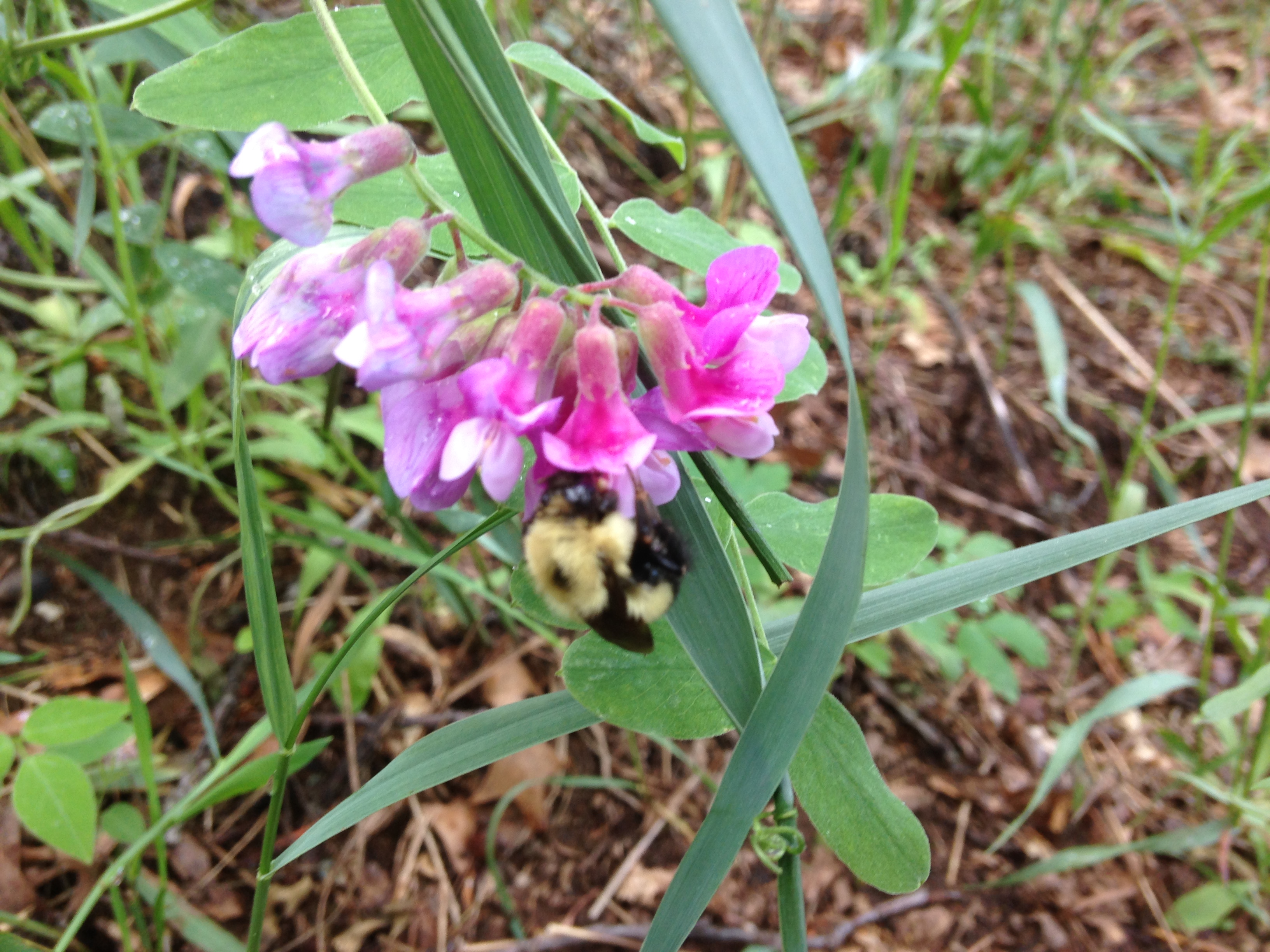
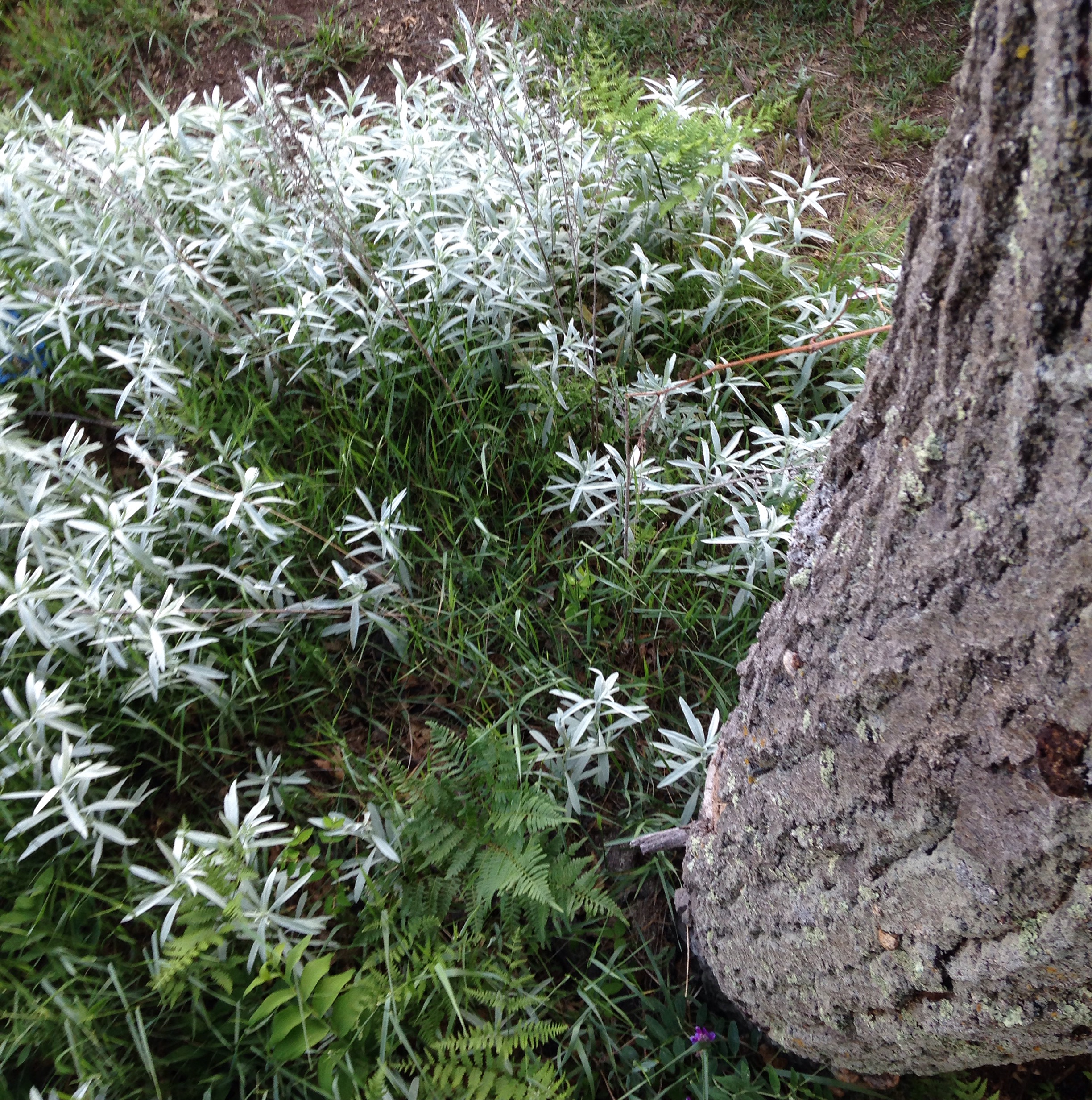
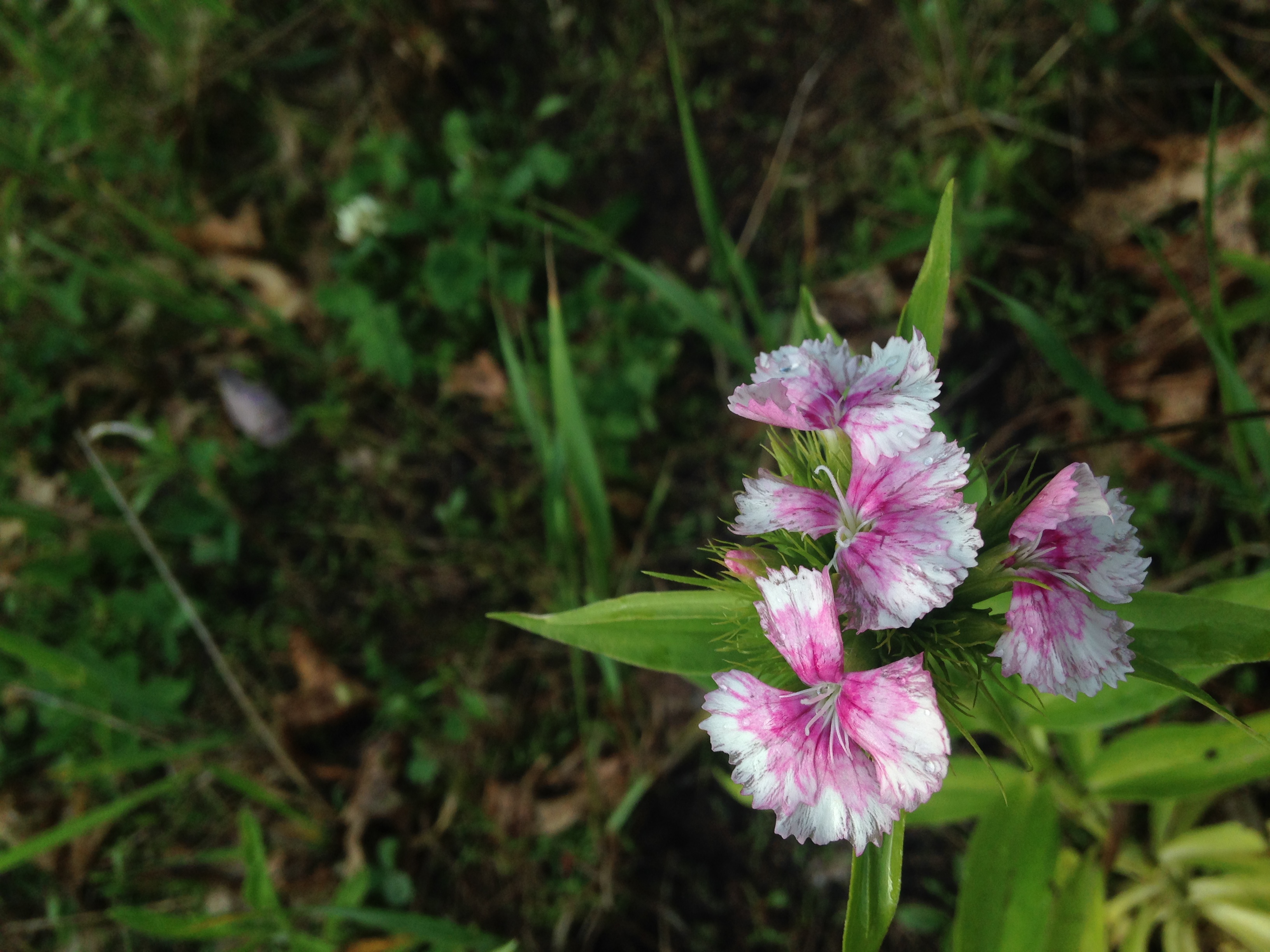
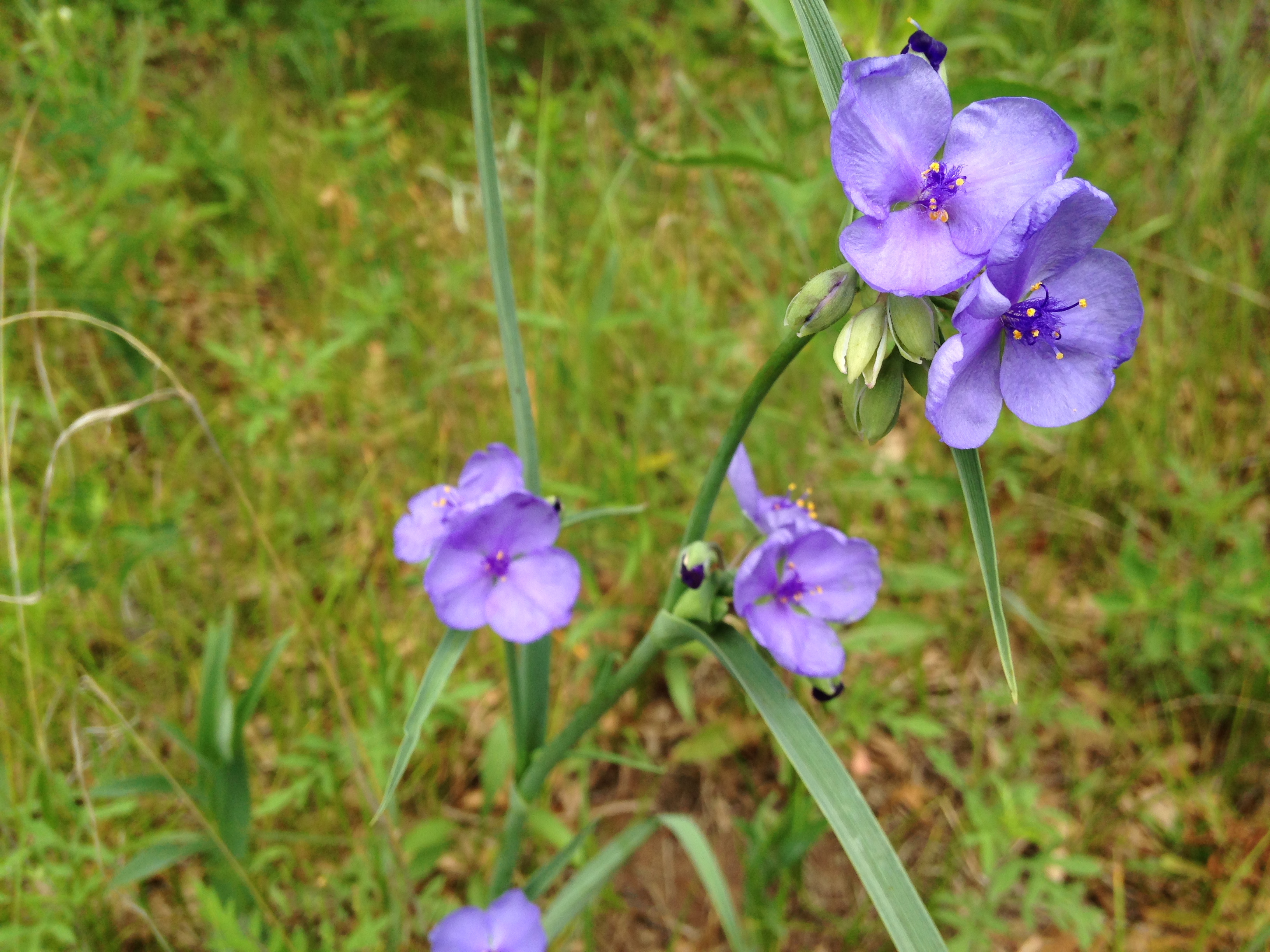
(Not all the bugs are bad though. We saw our first monarch butterfly, and lots of morning cloaks. And some “weeds” are wonderful – spiderwort, calengula,  and valerian are blooming, the anise hyssop is tall and beginning to form their purple flower spikes.)

IMG_4665

So, yeah. This week was weeds and bugs. mostly. Good times, actually! Hope you enjoyed your battles too.

WEEK 2 BOX:

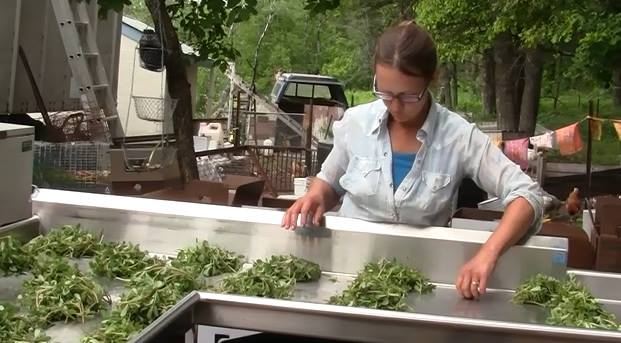
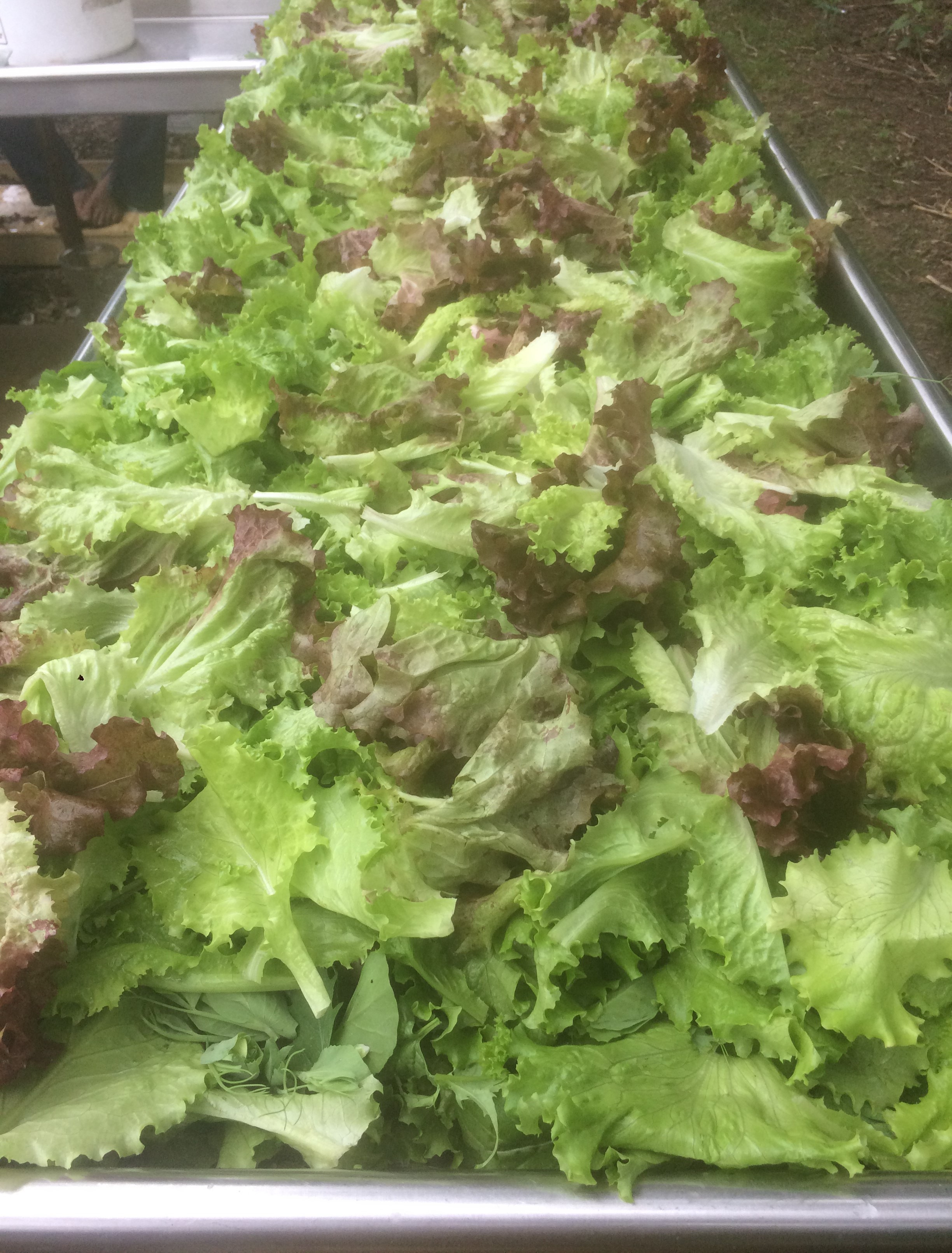
  • Spring Salad Mix 2: Red & green lettuce, pea tips, spinach, baby kale, green and red mizuna, arugula, and some lambs quarter (aka “wild spinach”).
IMG_4963 (2)

  • Purslane – this is a succulent edible garden weed – we don’t plant it, but we don’t weed it much – allowing it to grow and spread. It can be cooked but we prefer it raw. Can eat the leaves and the stems as well, although you’ll likely want to chop those up finely. We have enjoyed the crunchy, tart, lemony flavor on sandwiches and in relish. It’s said to be good in pesto but we haven’t tried that yet ourselves. Purslane is more nutritious than unicorn milk.
  • Cilantro – Would go well with the green onions in a salsa, or in a dip, If you want to make a cilantro dip, do it now – this is the most cilantro we’ll get from the field until fall’s second crop comes in.
  • Sweet Basil – This harvest was a salvage operation – the dread Basil Downy Mildew critters found us right away this year, and we had to take out all the basil we’d planted. Perhaps some of the new planting coming next will fare better …
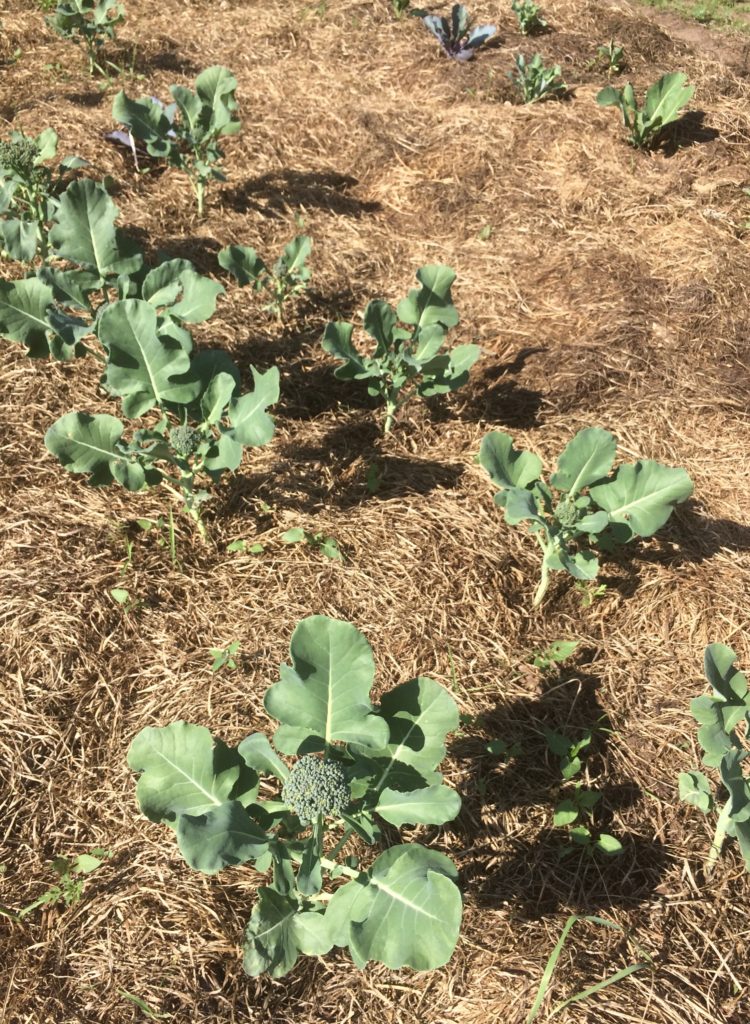
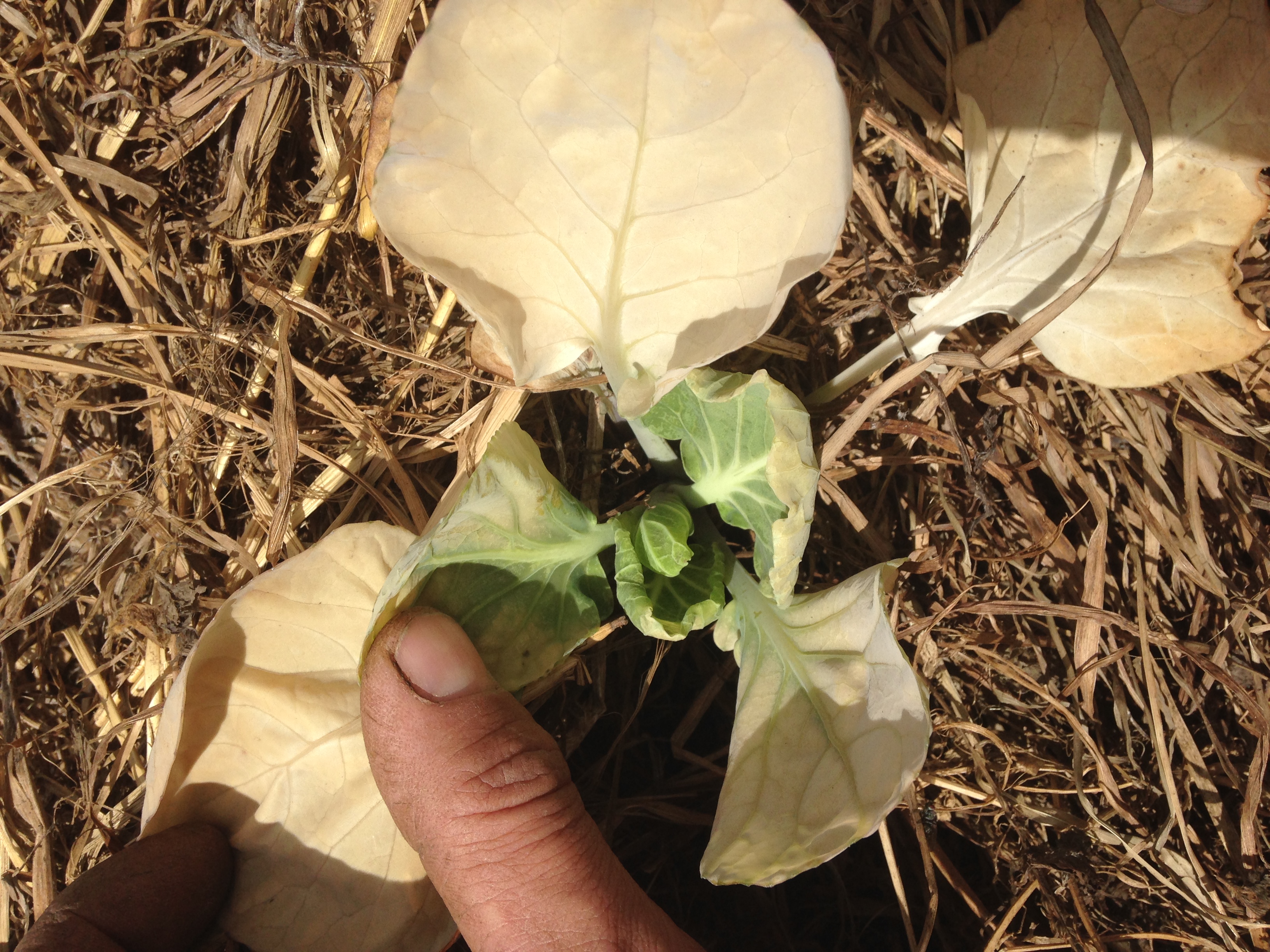
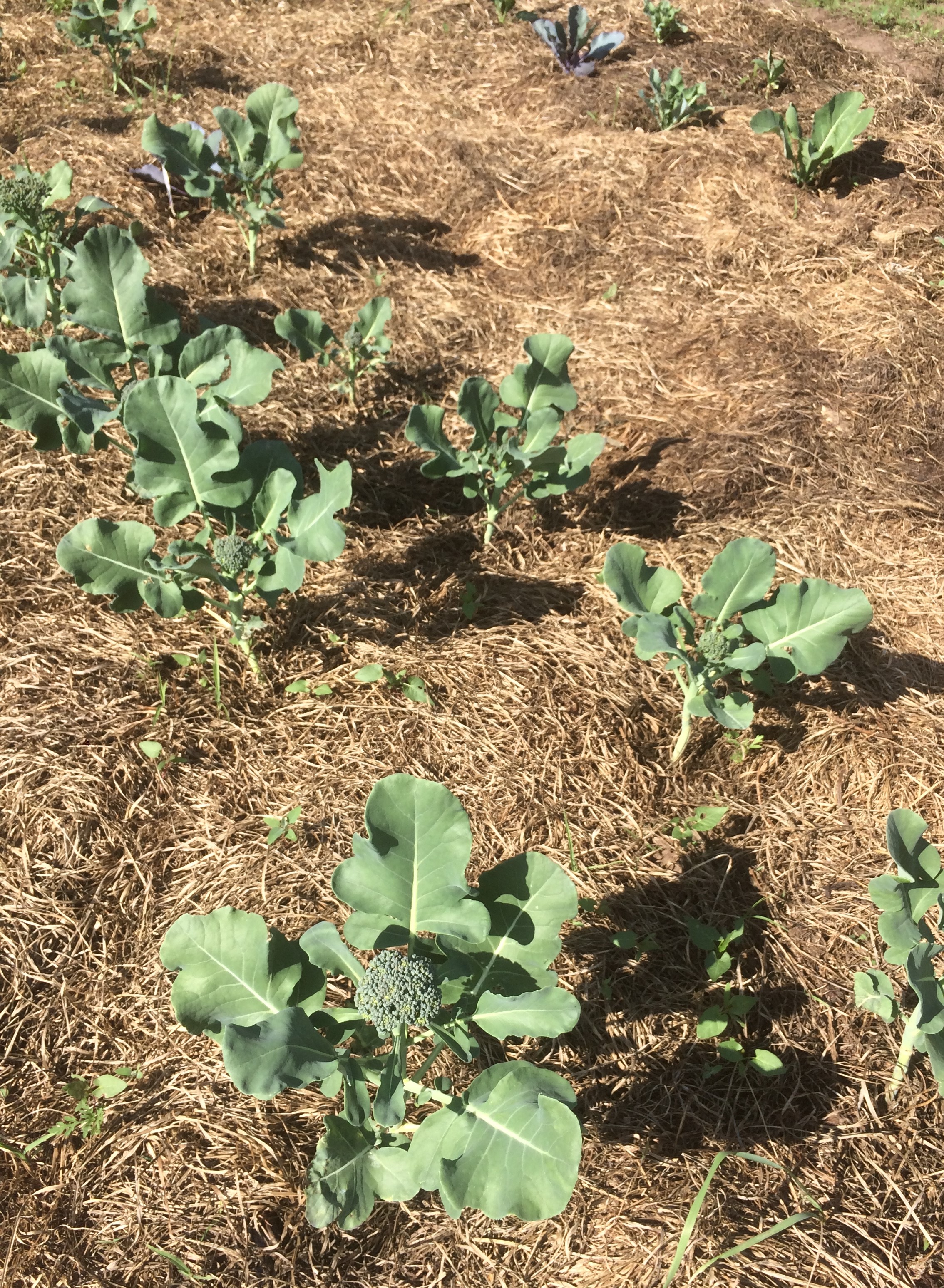
  • Broccoli – a little cute bag of broccoli. As mentioned previously, we had an unexpected late freeze put quite a hurting on our cool weather crops. Many of the broccoli plants managed to survive in spite of losing almost all their leaves … however, they went straight to work forming flower heads the moment the had a few leaves.IMG_4864So the plants and the broccoli are small – but tender and delicious! I’m grateful to have gotten anything from them after the beating they took … so much time and work went into those plants, and while it’s too bad they won’t be providing much return, getting anything at all feels like a positive thing after thinking all were dead!
  • Radishes – better eating quality than last week, thanks to a better weather mix leading up to harvest
  • Radish Greens – try to use them within the frst couple of days for best results! See last week’s newsletter for some ideas on that … but don’t try eating them raw I’ll repeat!
  • Green Onion – aka scallions – the tops are mild, the white bottoms more potent.
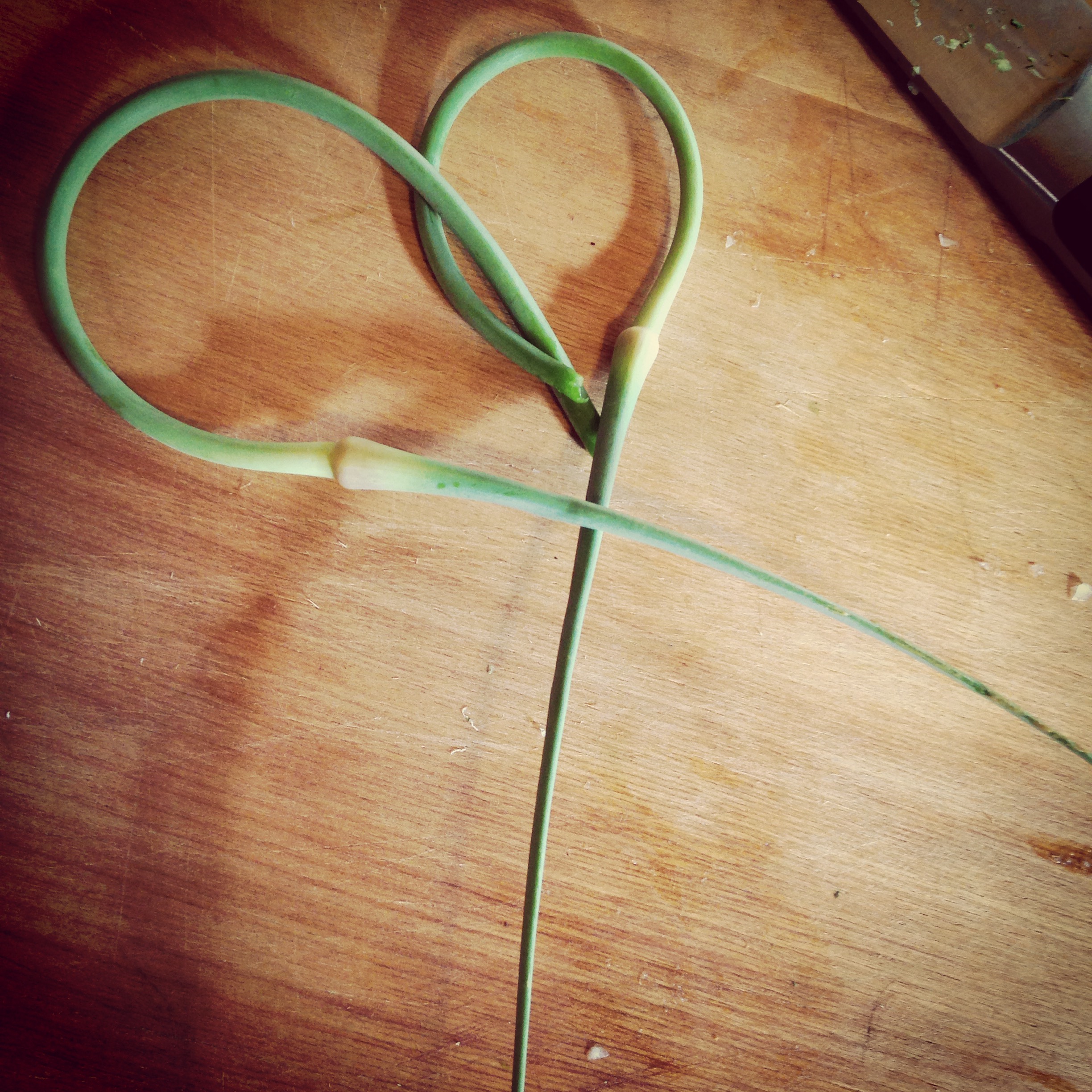
  • a Garlic Scape – It’s the curly thing bundled with your onions! You can use this garlc flower like a scallion, chop them into salads or as a topping.
IMG_4654

  • Zippy Sprouts (large shares only) – Grown with special secret powers by Neighbor Marcia – sprouted clover, fenugreek, radish, broccoli, alfalfa
 

 IMG_4900 (2)
 IMG_4668  IMG_4877    IMG_4673 IMG_4661IMG_4642

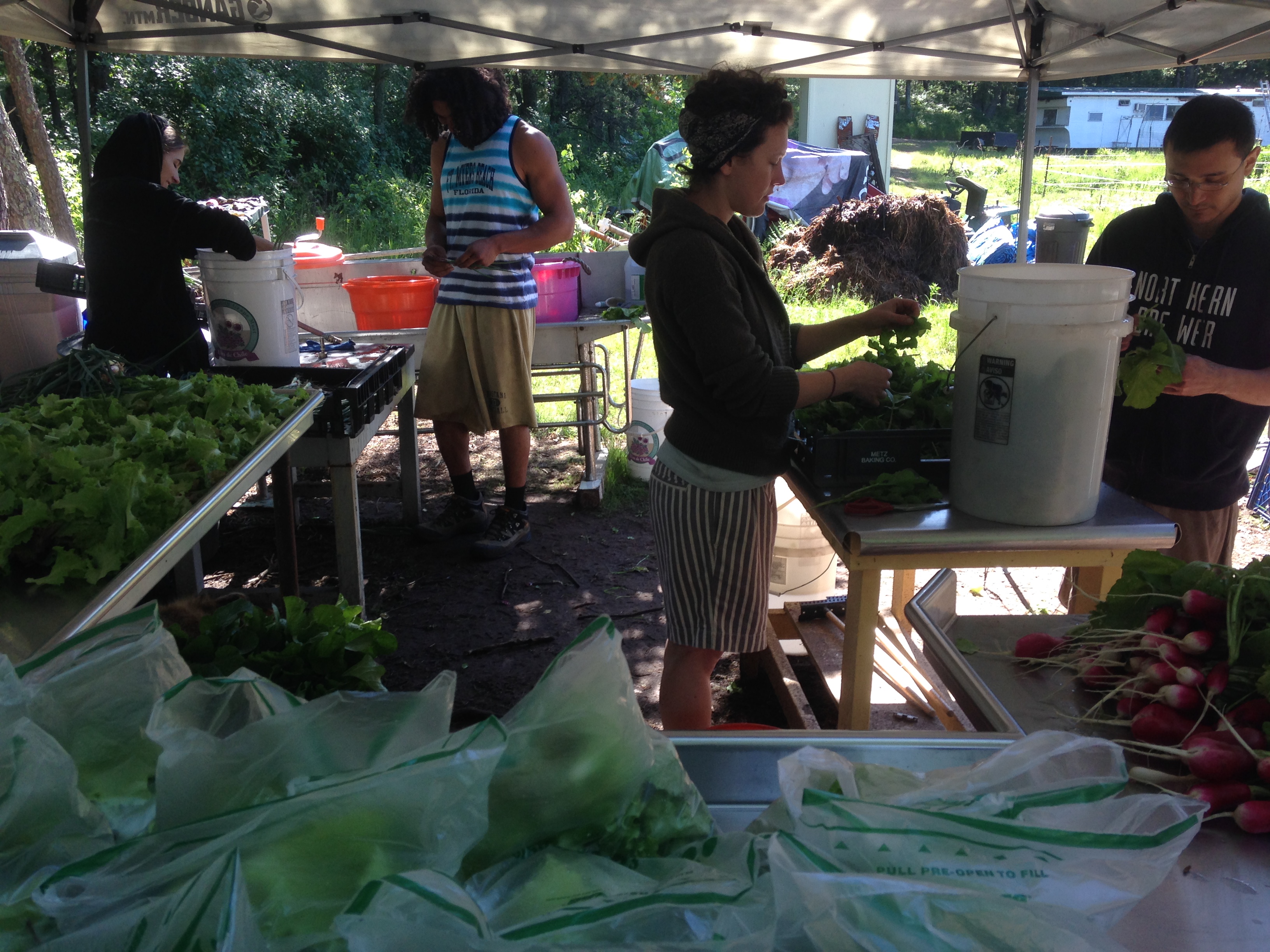
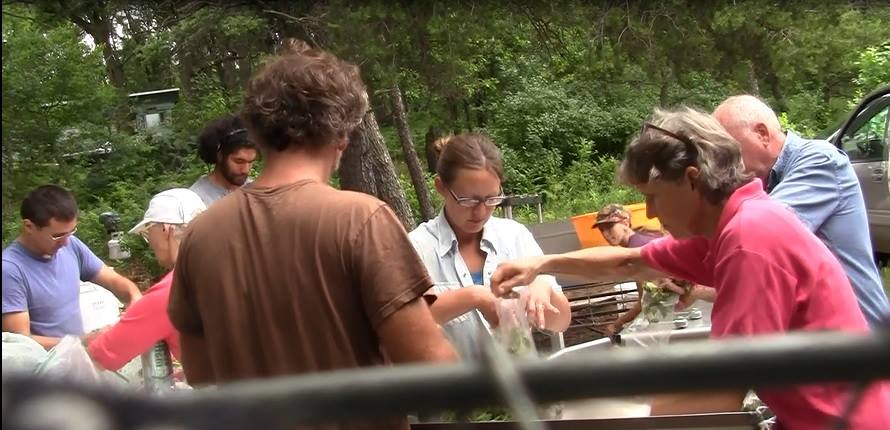
Photos from the Harvest (thanks Nora!)
13442252_10209752522910283_607996159379303996_n 13417640_10209752521950259_7219390297534884182_n 13442251_10209752520990235_7159459680428295690_n 13450938_10209752520110213_254141880298605984_n 13435347_10209752519670202_9091667780443092326_n 13450113_10209752519470197_8214495080251546533_n 13435468_10209752518630176_2776493125855093573_n 13423781_10209752518190165_2819920644483378420_n 13394132_10209752517790155_8898457498570851223_n

So it Begins! CSA Newsletter #1

There is an unreasonable but implacable anxiety, a fear even, as the first CSA boxes and first farmers’ markets draw nearer.

IMG_4572

Spring is giving way to Summer, and the nature of our lives and work changes with it – suddenly, it will matter what day of the week it is, what day tomorrow is, and we’re back into the grid of weeks and cyclical responsibilities, after months of only paying attention to what the weather will be and what needs to be taken care of.

IMG_4578

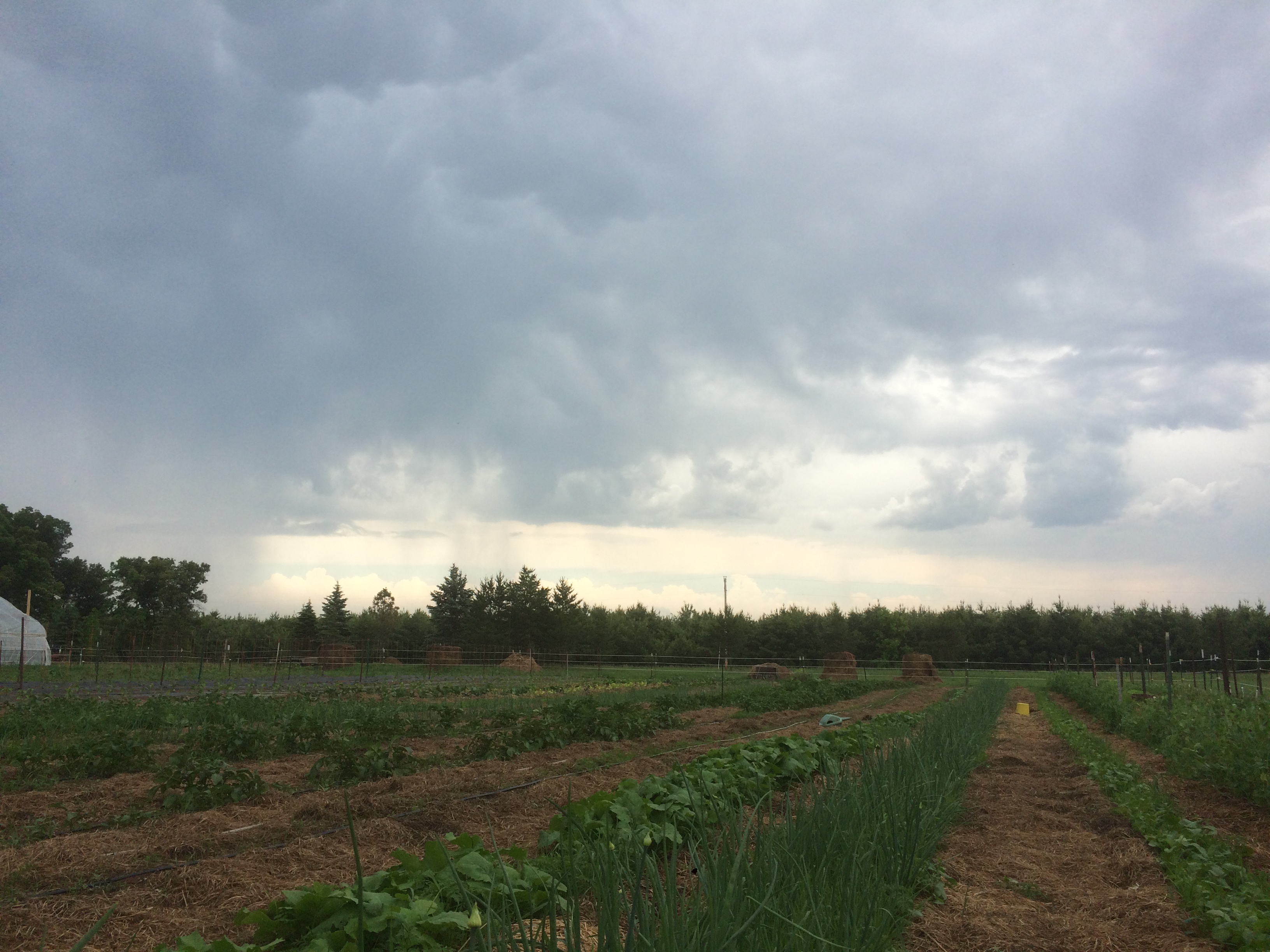
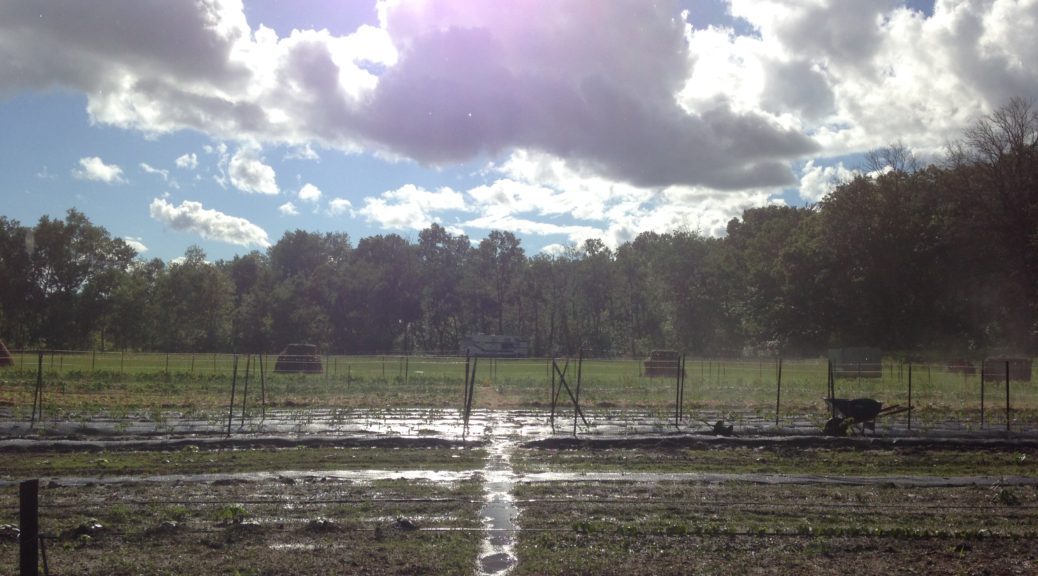
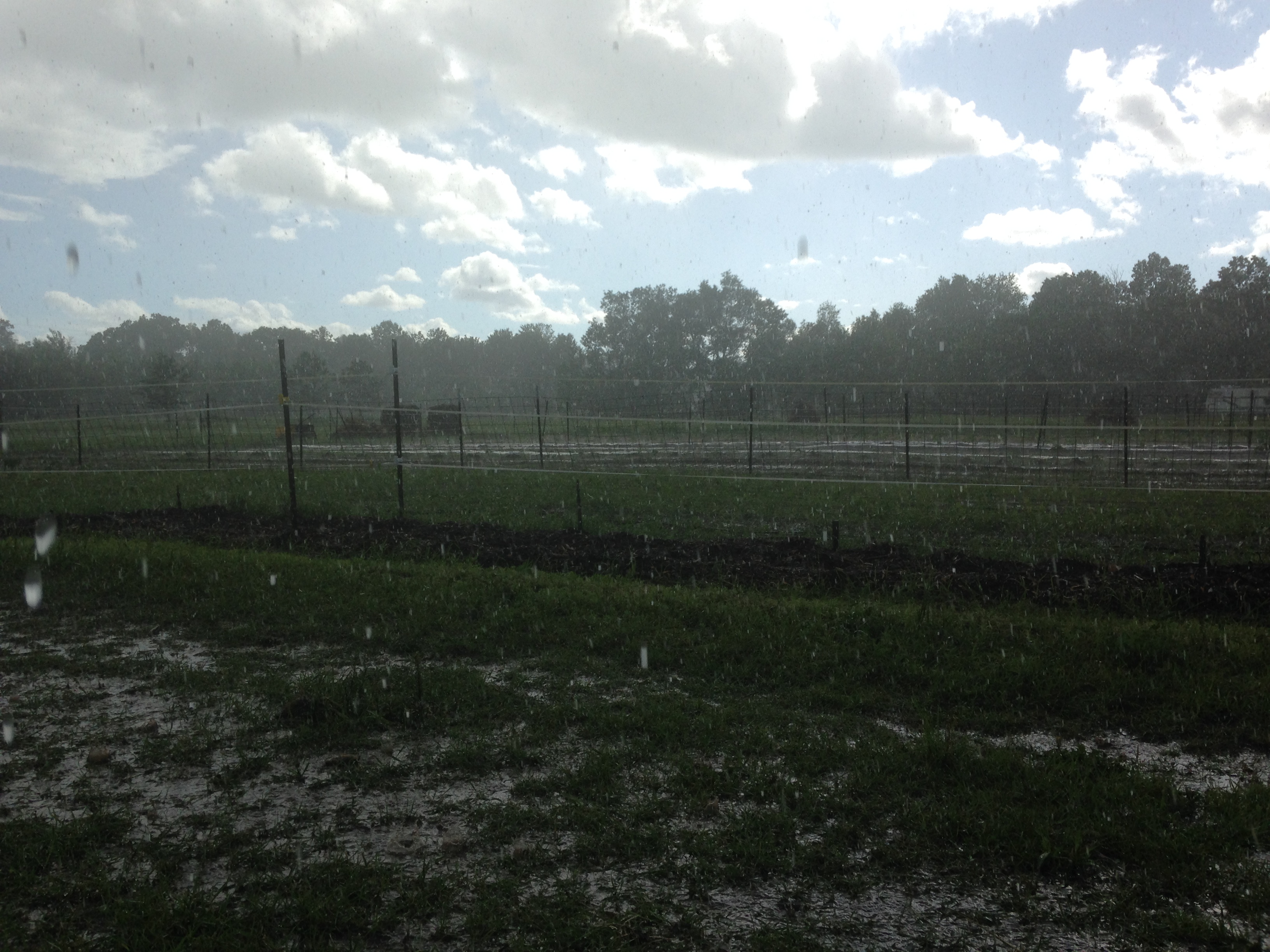
The transition this year was marked with oh-so-apt weather – yesterday, two air masses danced to and fro overhead, bringing alternating sunny heat and drenching rain and hail, over and over throughout the entire day.

IMG_5893

Deluge, then bright sun that brought curtains of steam up from the field … then minutes later, the cycle ran again. It was actually lovely to work in, stimulating and beautiful – and the plants couldn’t have been happier with it.

IMG_5902

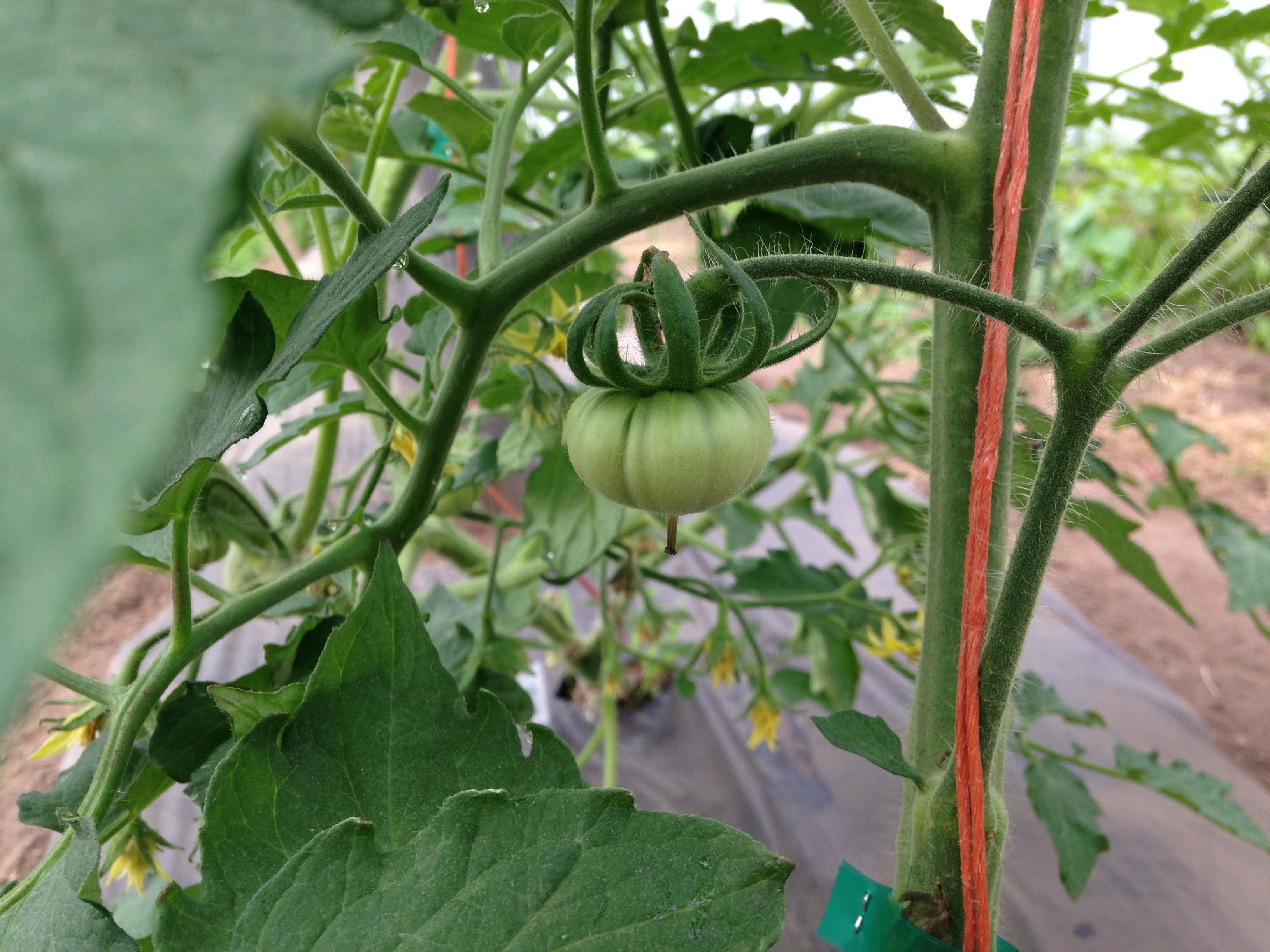
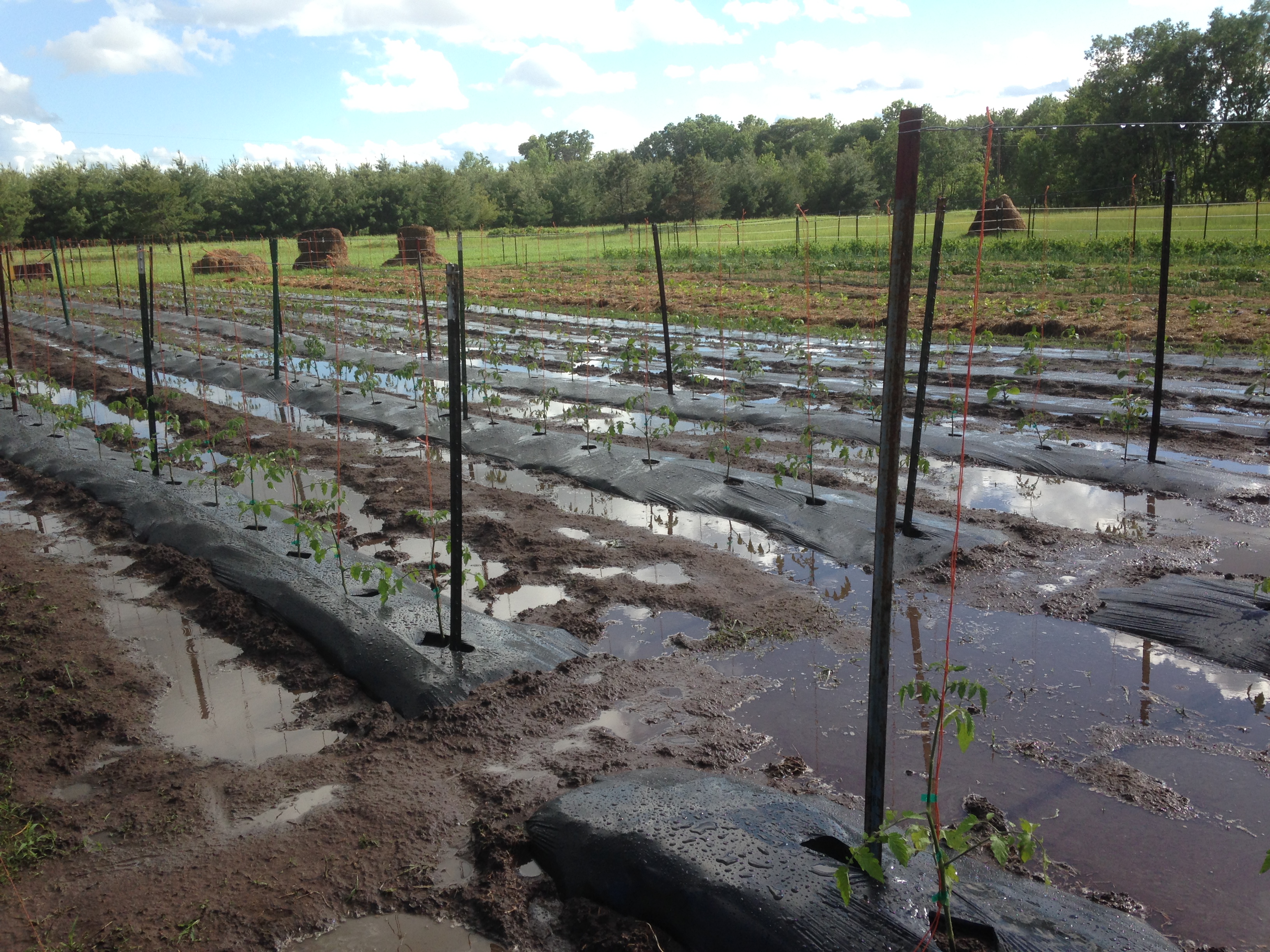
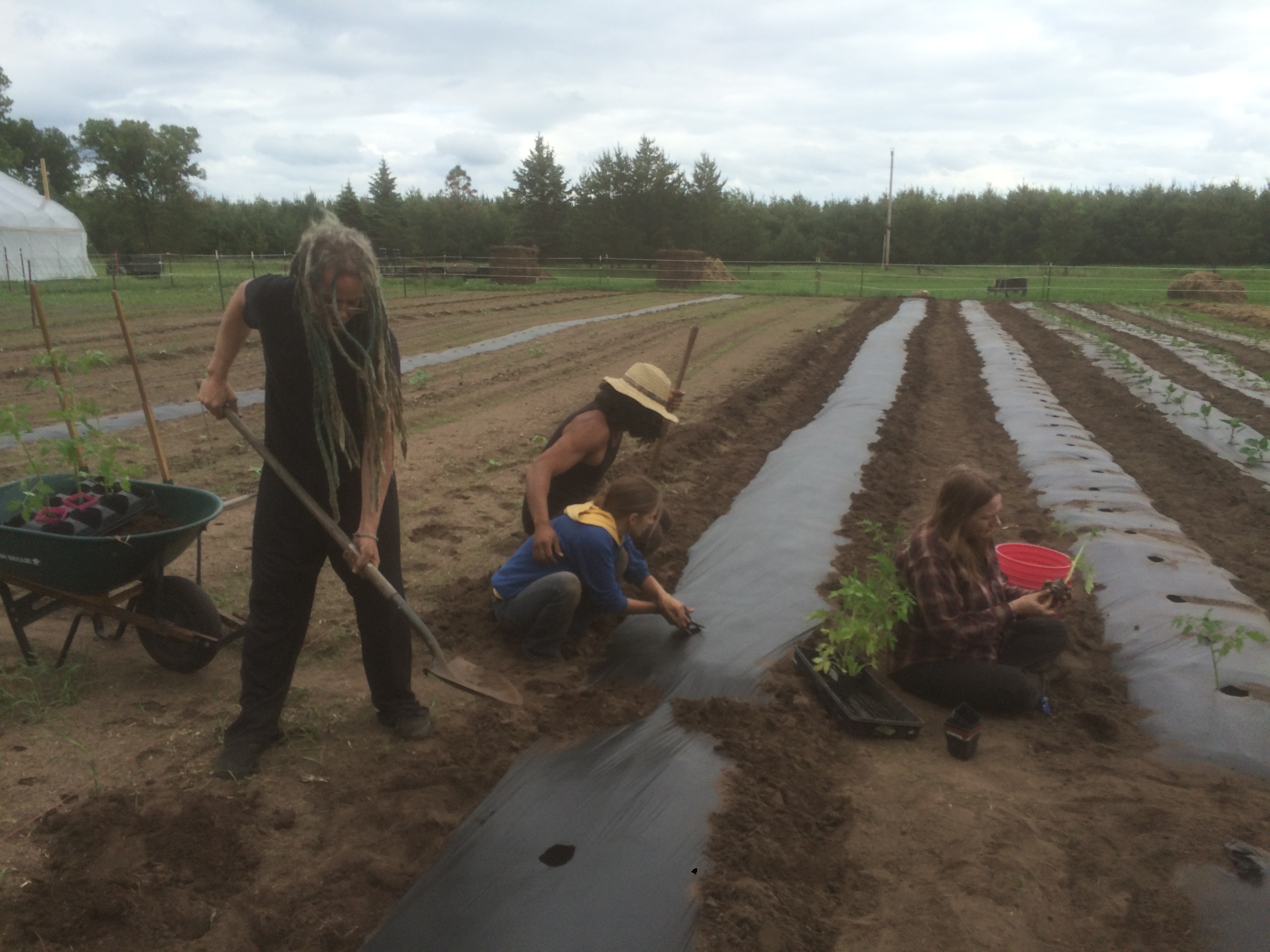
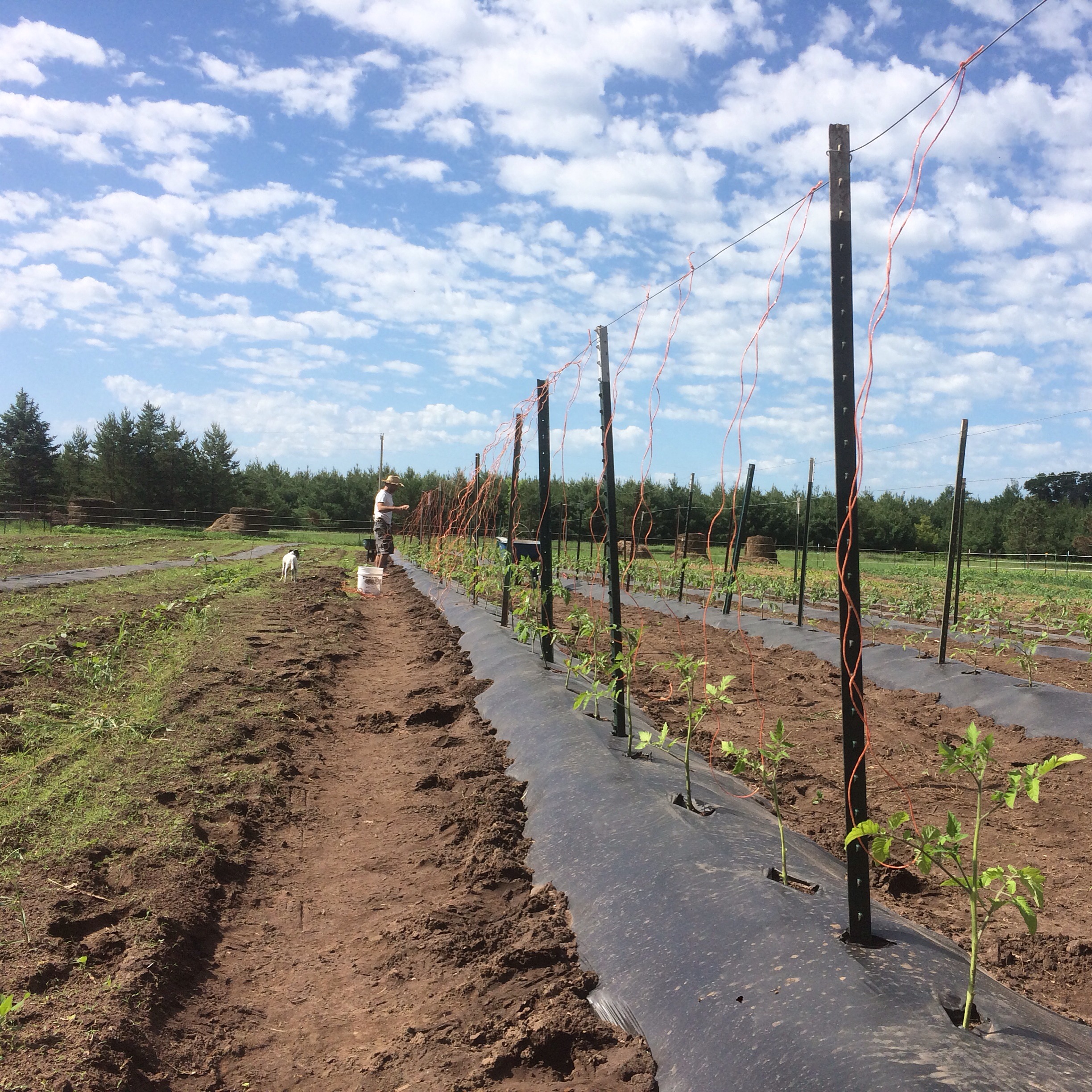
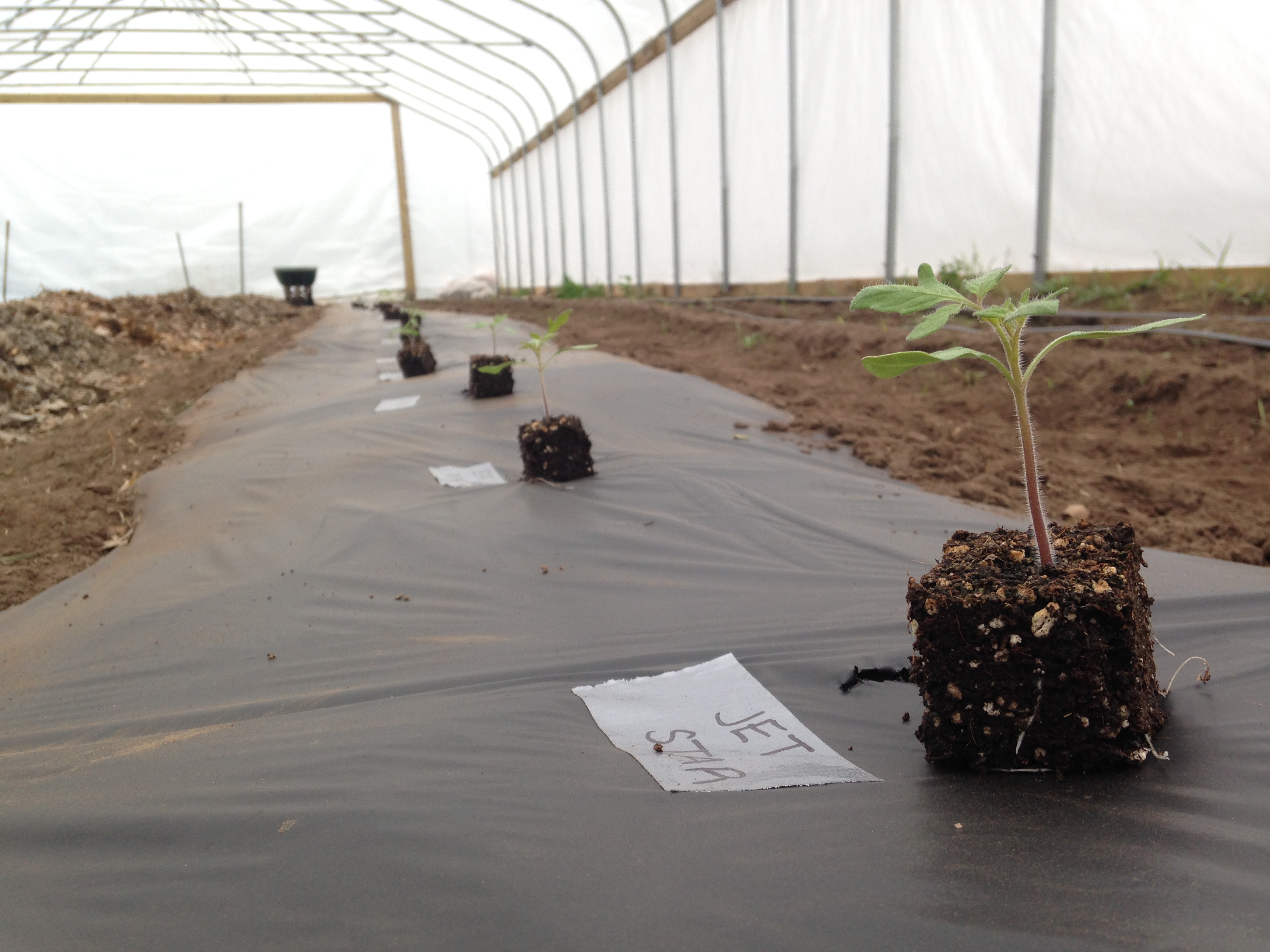
(The timing was perfect; we’d just finished trellising up our hundreds of sensitive, vulnerable tomato plants – so the stormy winds, soaking rain, and scattered hailstones couldn’t drive them down into the dirt. They stood proud and happy after the storms passed among the steaming puddles.)

IMG_4717

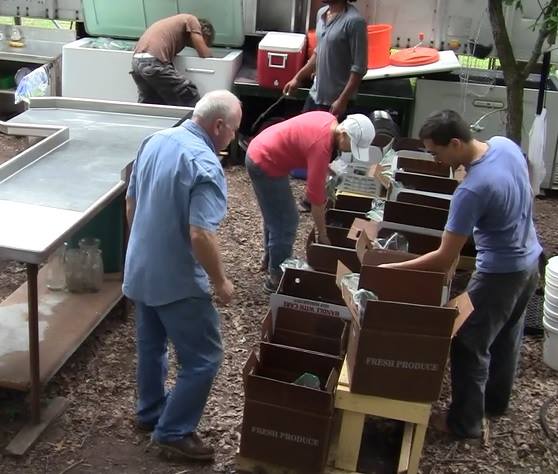
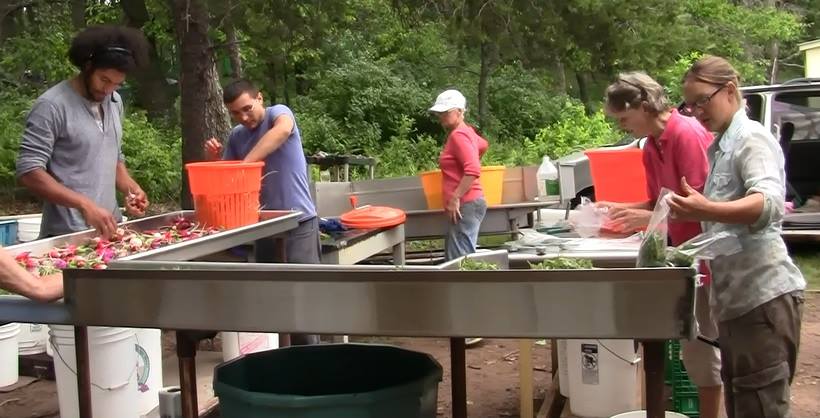
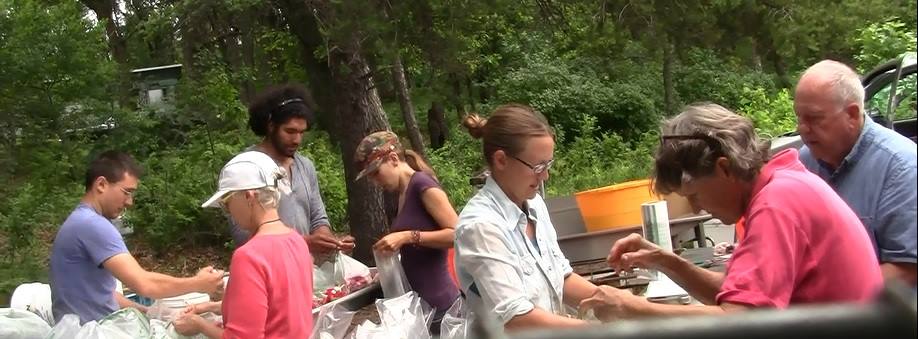
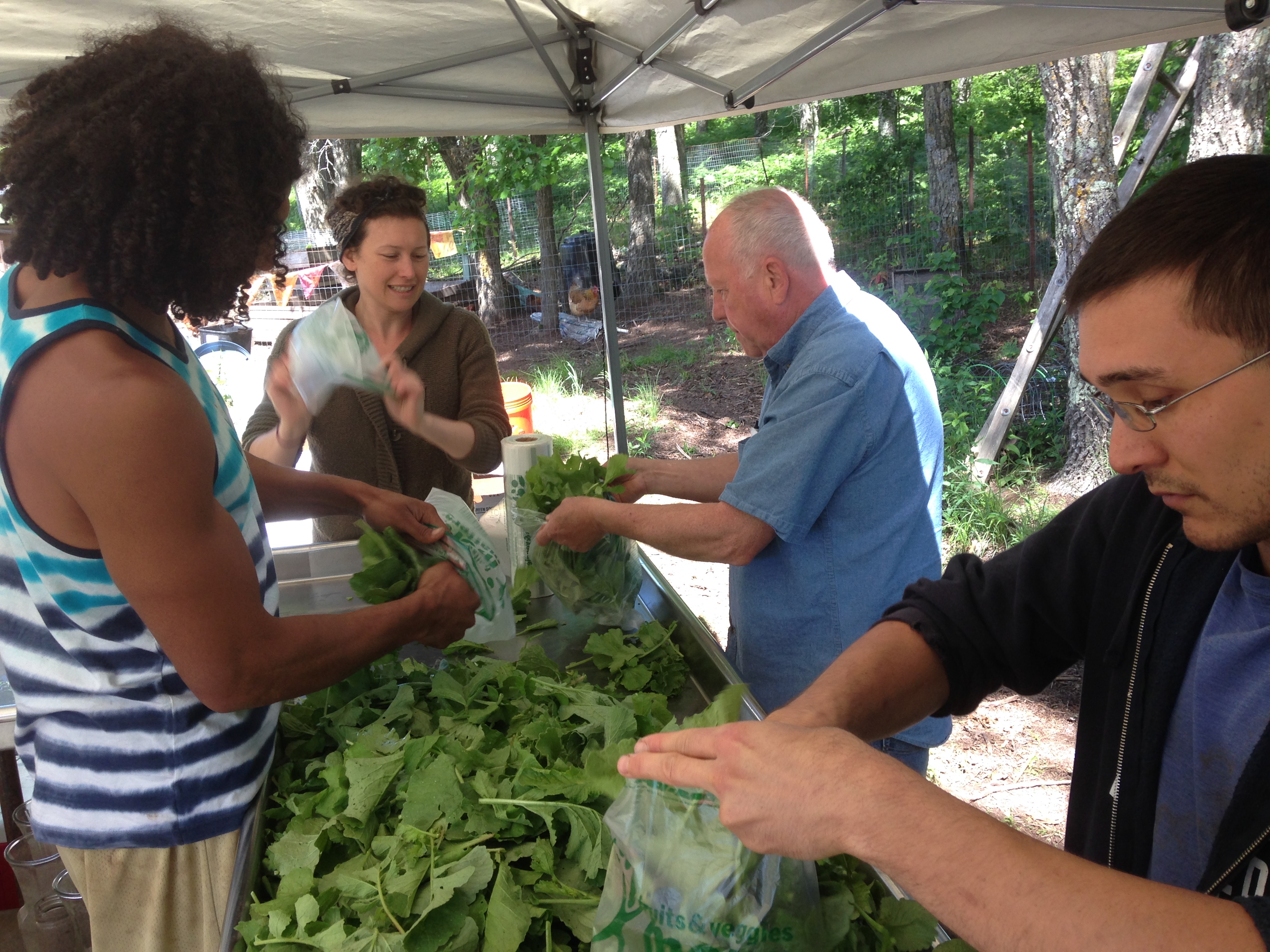
The past week has been gentle on us – lots of work, but good help – B & Nora are still with us, several good friends from the Cities came out repeatedly to help, and Shareholder Tara brought her organized mind and willingness to work to bear on projects ranging from weeding to tons of tomato trellising – as well as with today’s harvest!

IMG_4840 (2)

Speaking of bears, there’s been plenty of them afoot in the ‘hood. I chased off two or three big ones with skyward shotgun blasts, and those two haven’t returned. Young Master Bear, the fridge raider, hasn’t been spotted on our land, but he’s repeatedly raided Neighbor Marcia’s bird feeders, coming at odd daylight hours to get them before she can put them away for the night. There are frogs and birds everywhere, but hardly a mosquito to be found – I think I can dare to hope now that it’s really going to be a mild year for biting bugs (although now that I typed it, we’ll see what happens).

IMG_5888

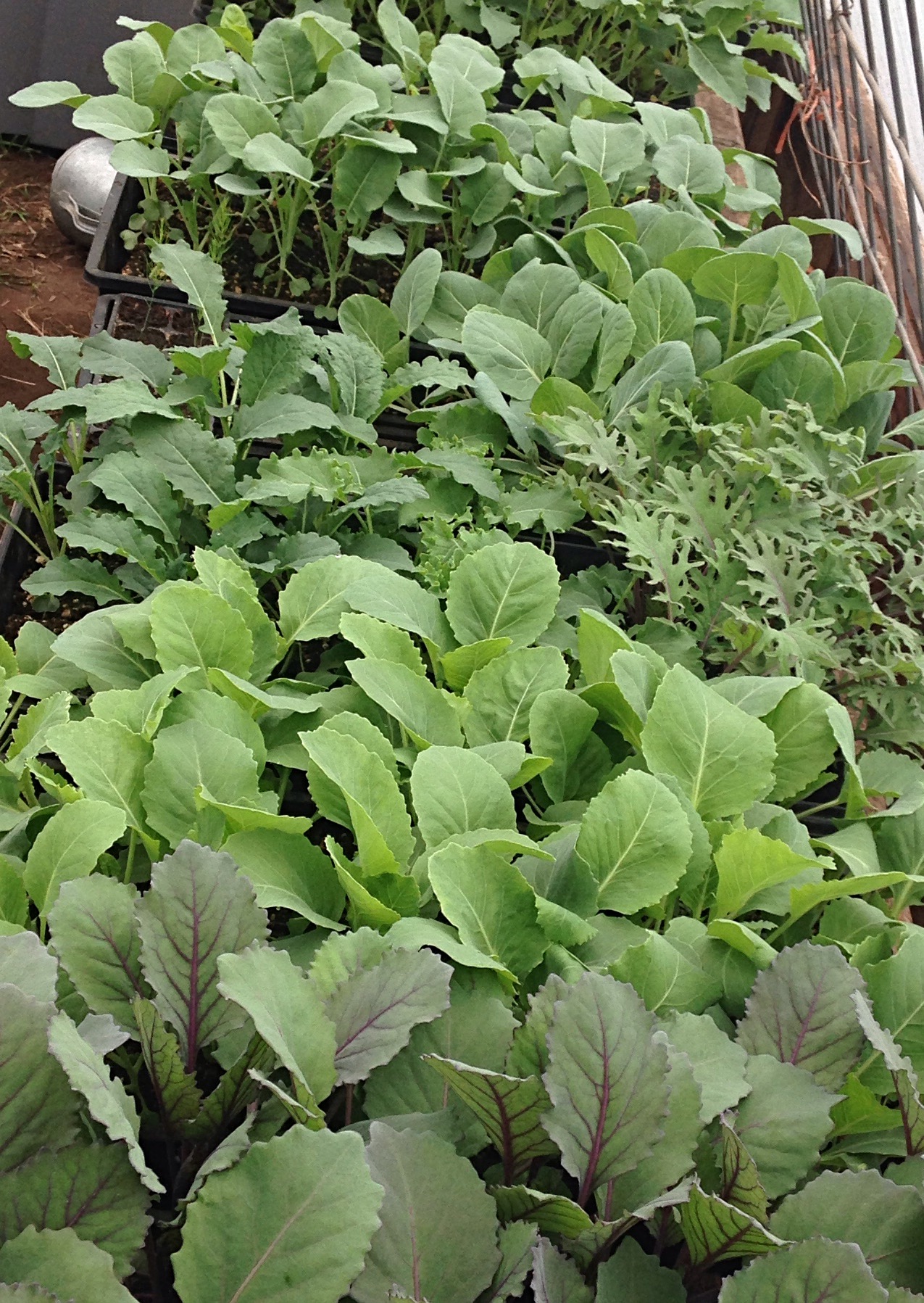
The freeze-damaged plants survived, but they’re small – and most of the broccoli and cauliflower has already started forming teeny tiny heads, as a result of the stress of being frozen, they go into full on survival mode, and work to ensure they can produce some seed no matter what – and they don’t dare spend time getting big before they do it. Alas! But the collards, kale, and cabbage are making good comebacks, and we’ll be planting late-season crops of the broccoli and cauliflowers shortly, so barring another surprise from nature, we should all have some to enjoy this season regardless!

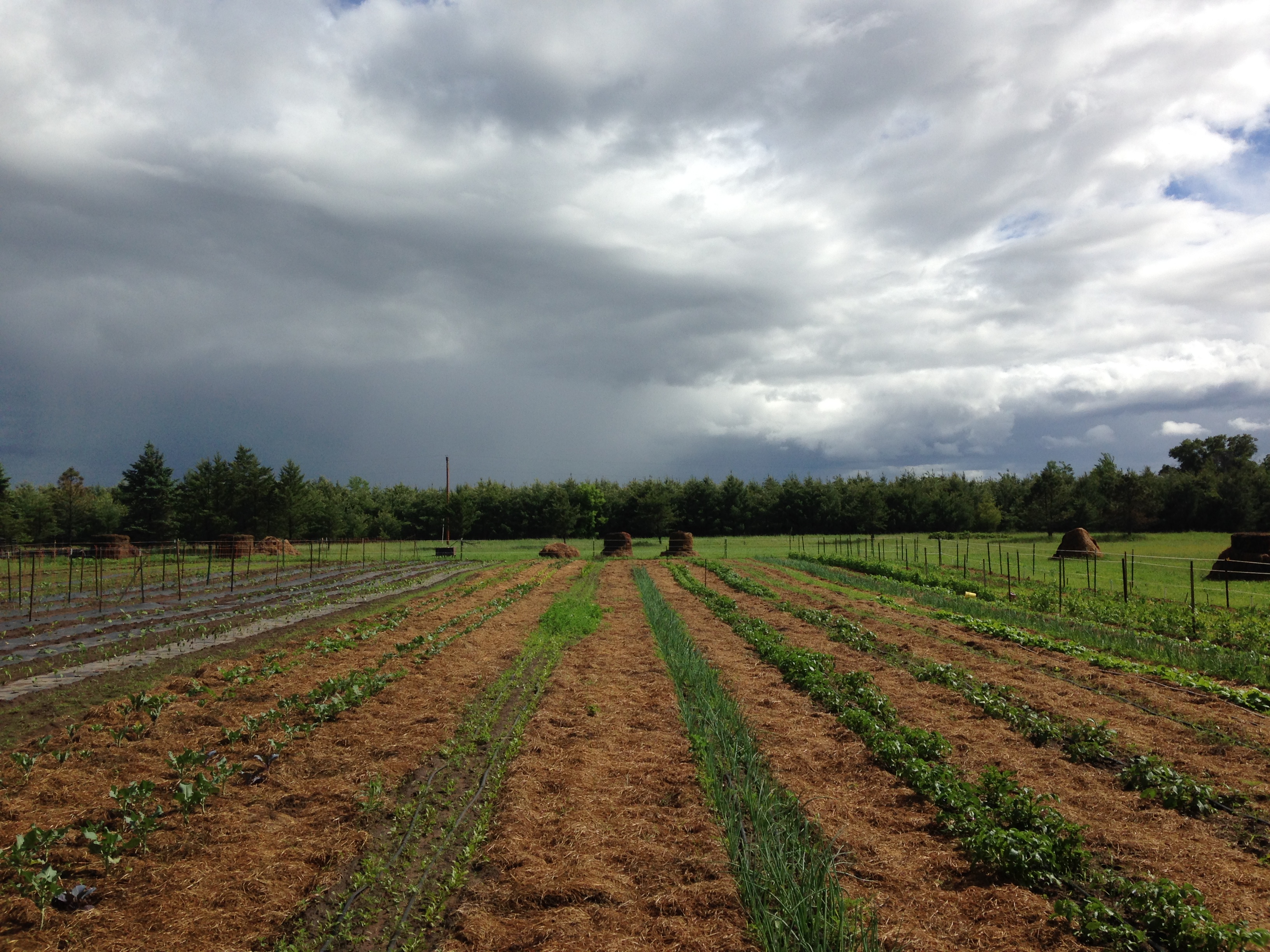
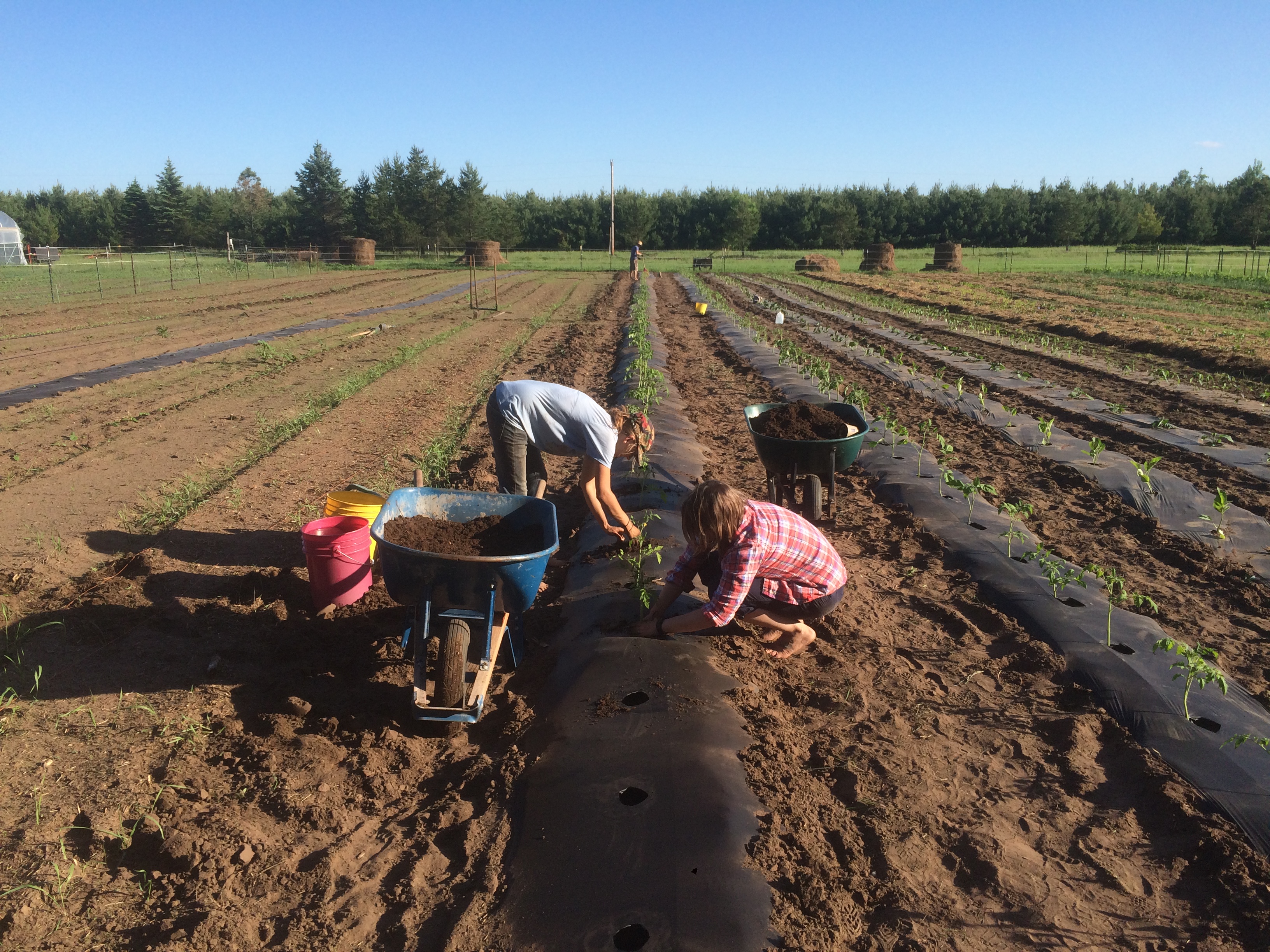
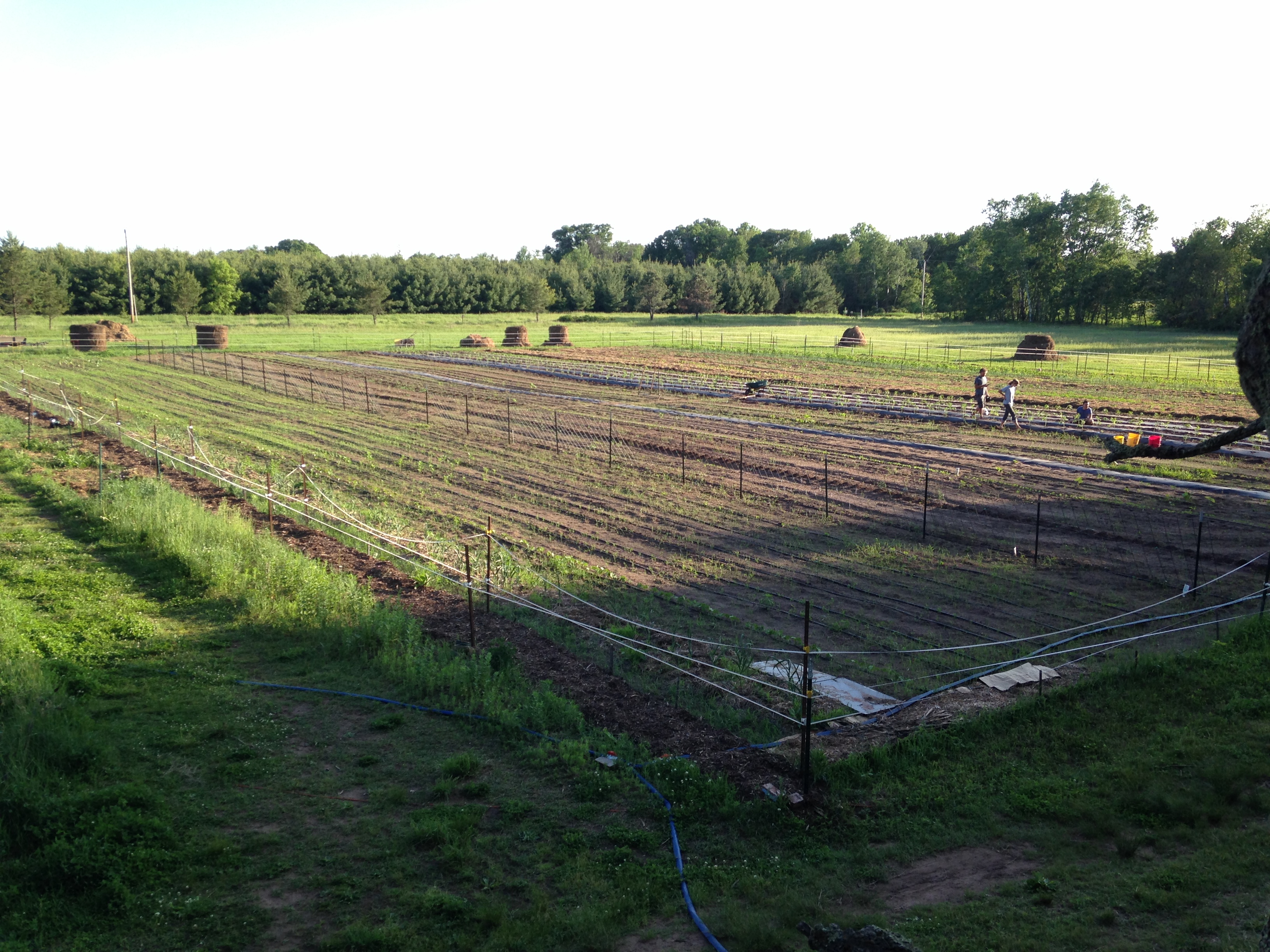
The field is all filled up now – it’s amazing how quickly it went from a vast blank canvas to an increasingly lush composition, glowing in hundreds of subtle shades of green. Now it’s time to start emptying it back out again, and delivering it to ya’ll, one box at a time.
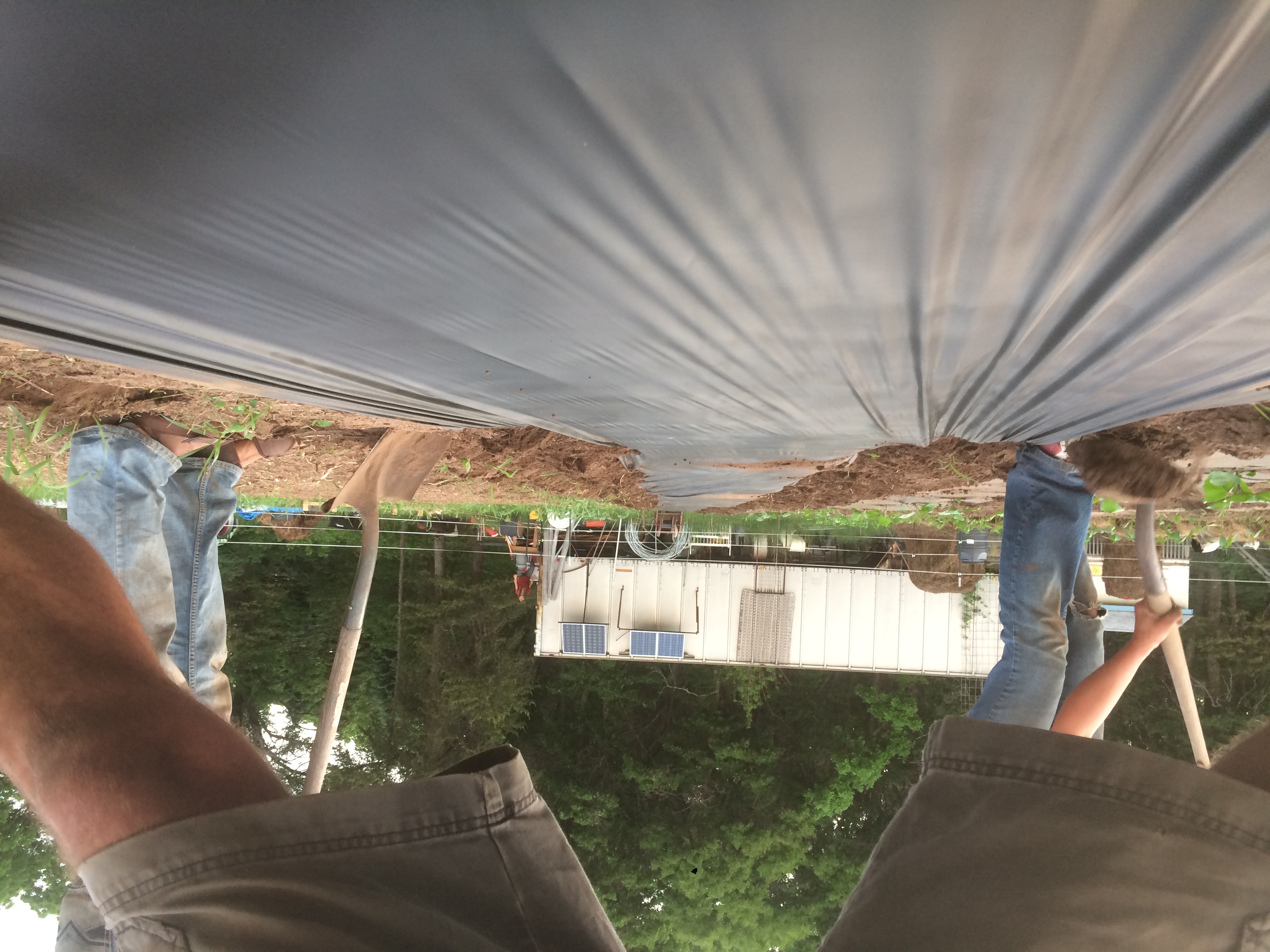
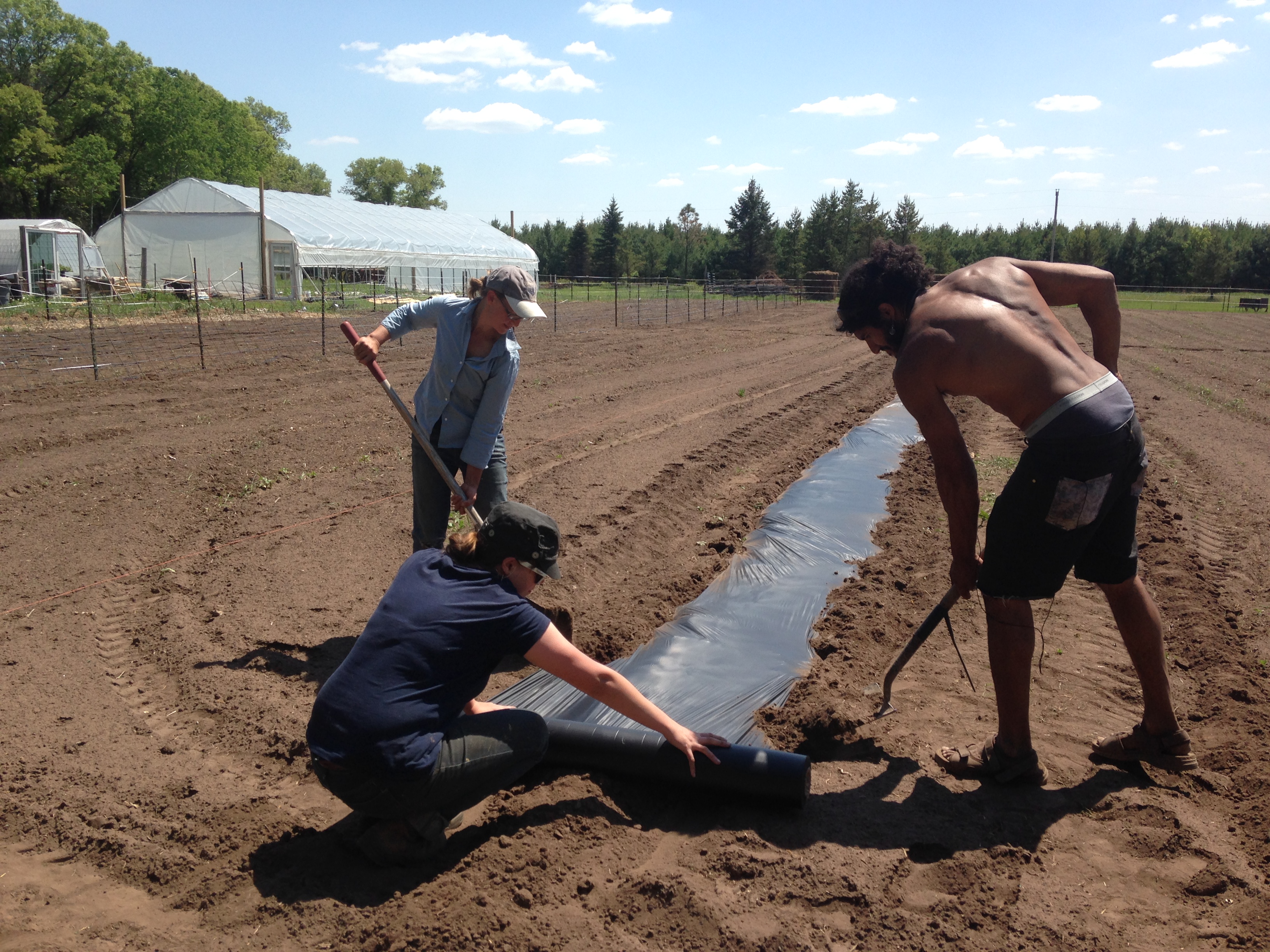
the view I had for days, manually laying out the plastic mulch for the tomatoes

CSA BOX #1

Some general storage info – twist/fold plastic bags to keep things from desiccating. Use the crisper drawer in your fridge – it maintains humidity better than the rest of the fridge. Actually, let’s save me some typing- here’s a link to some good info on storage.

IMG_5917

  • Spring Salad Mix – Red Ruby lettuce, Waltman’s green lettuce, pea tips, arugula, baby kale, green & red mizuna (red is a bit spicy).  If you’re like me, dig in as it comes – if you prefer smaller and neater bites, chop it up just before eating.IMG_4568
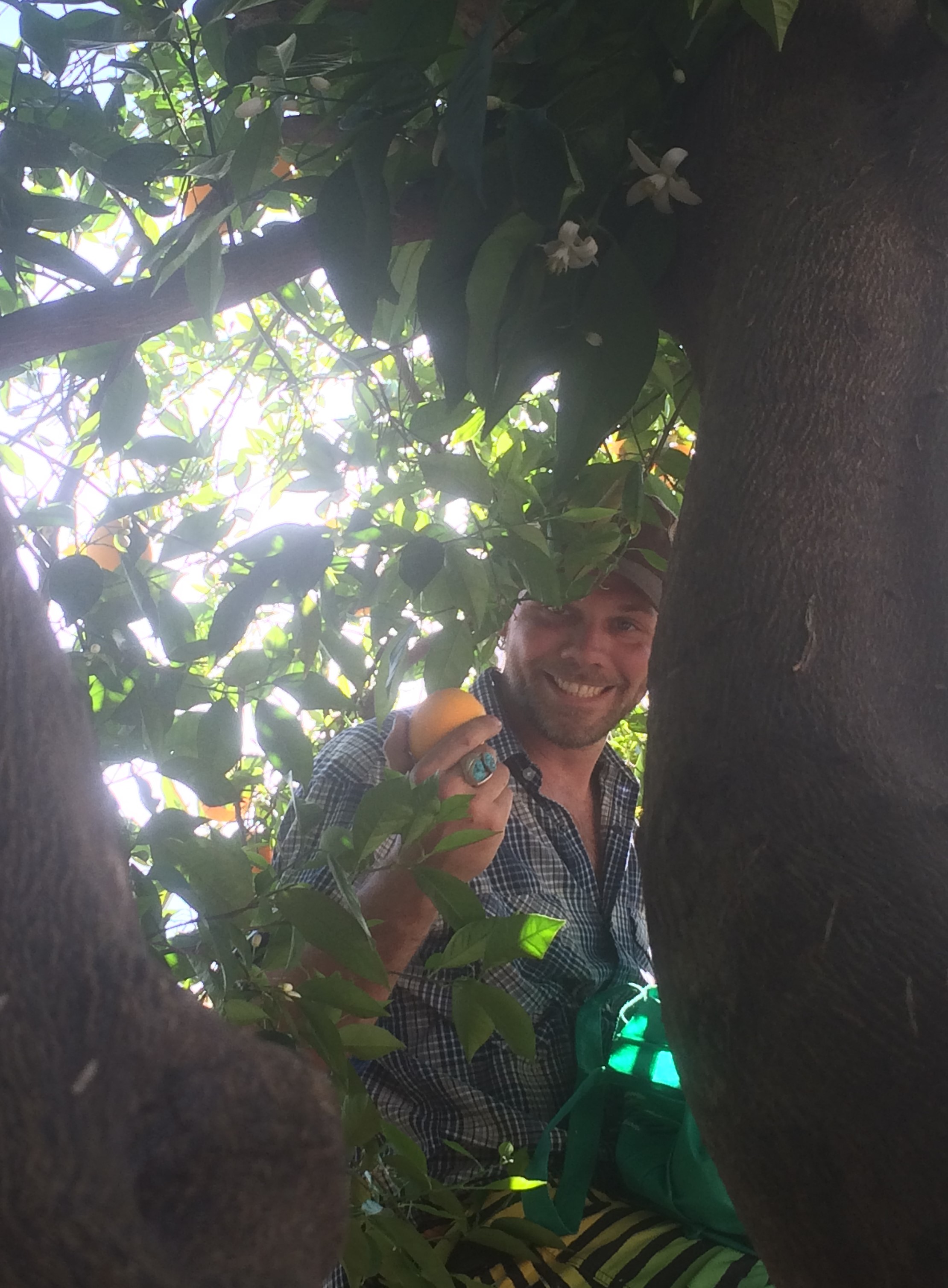
  • Orange Marmalade – When we were down south this winter WWOOFing on other farms, we spotted an ad on Craiglist for free oranges – a guy had a tree in his yard that produced super abundantly, but he was unable to harvest them – so we went over armed with several empty boxes, climbed up, and got to work transforming his burden into dozens of jars of preserves to bring North to share. (Please return the jar when it’s all gone!)
IMG_4201 (2)
  • Radishes  Tasty zingballs in your salad, whole or sliced. If you’re not a fan of that radish zing, you can roast them to create a mild side dish, with a flavor similar to roasted rutabaga or turnips – perhaps you’ll find that roasted radishes are the vegetable that’s missing from your life!

  • Radish Greens – Don’t try to eat them raw: that’s gross (unless you blend them into pesto). Don’t be intimidated by the size of the bag – you’re going to cook these down, like veggie shrinky-dinks. Being a good CSA member means learning to cook greens and love it: fact. We didn’t eat many cooked greens before we started the farm, but they’re now a large part of our diet and it’s awesome. They hold sauces and flavors really well, taste great, and are as nutritious than the roots they’re plucked from. Ways we’ve enjoyed them: chopped up with beans, in soup, sauteed in butter or bacon fat, with soy sauce, garlic … or green onions! We usually sautee them only lightly to maintain more of the green nature, especially since they’re not that tough. (We washed and spun them for you, but you might want to rinse them one more time because these leaves tend to hold onto grit better than most.) Here are some idears to consider.

IMG_5922

  • Green Onions – The green tops are milder, good to use fresh or add at the very end of cooking. Good in salad dressing, on eggs, or as garnish on a baked potato. The white part has a stronger onion flavor, and can be used anywhere you’d use regular onion.
  • Oregano – We threw a couple of sprigs in – use it to flavor a salad dressing or on eggs …
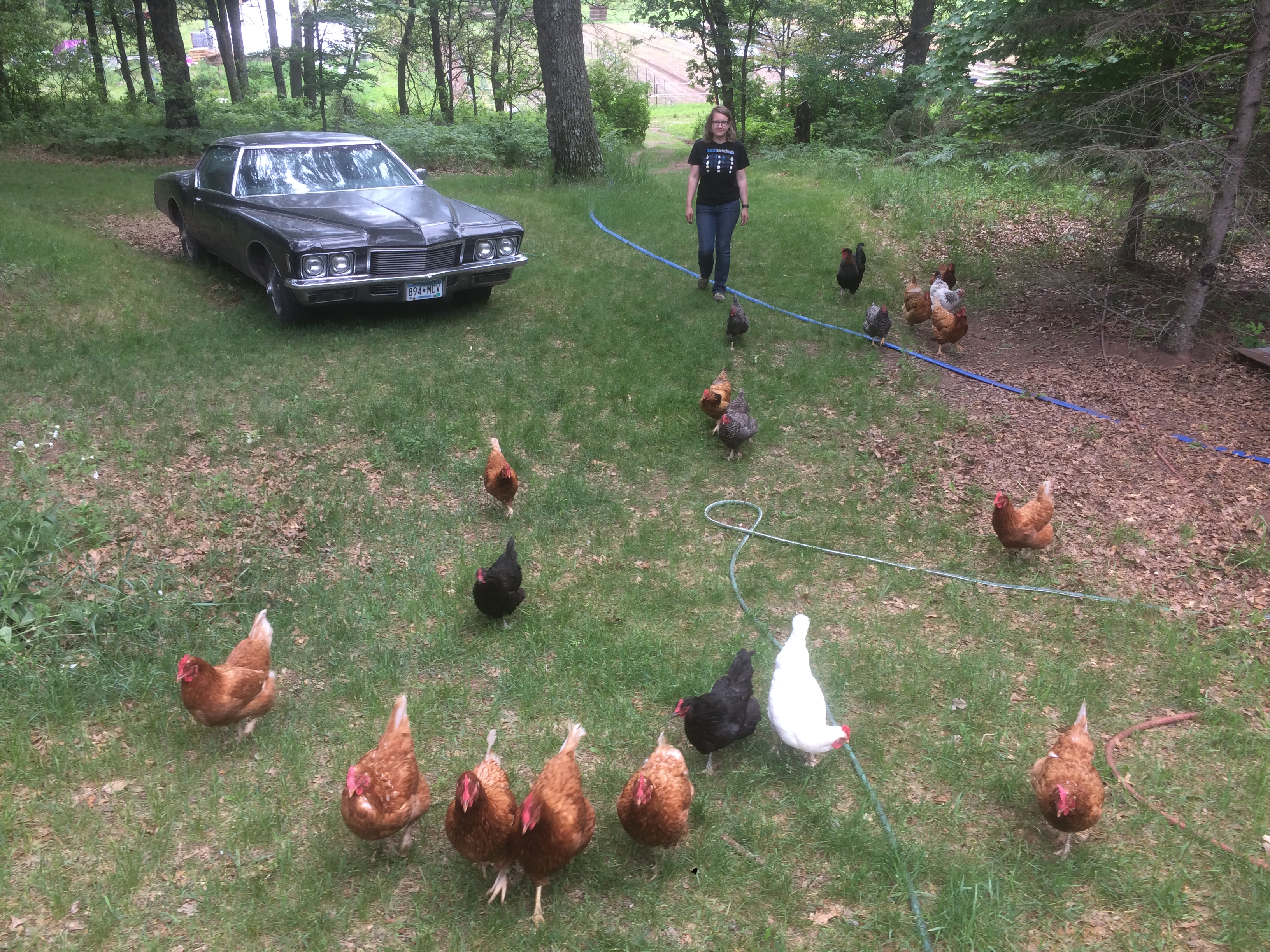
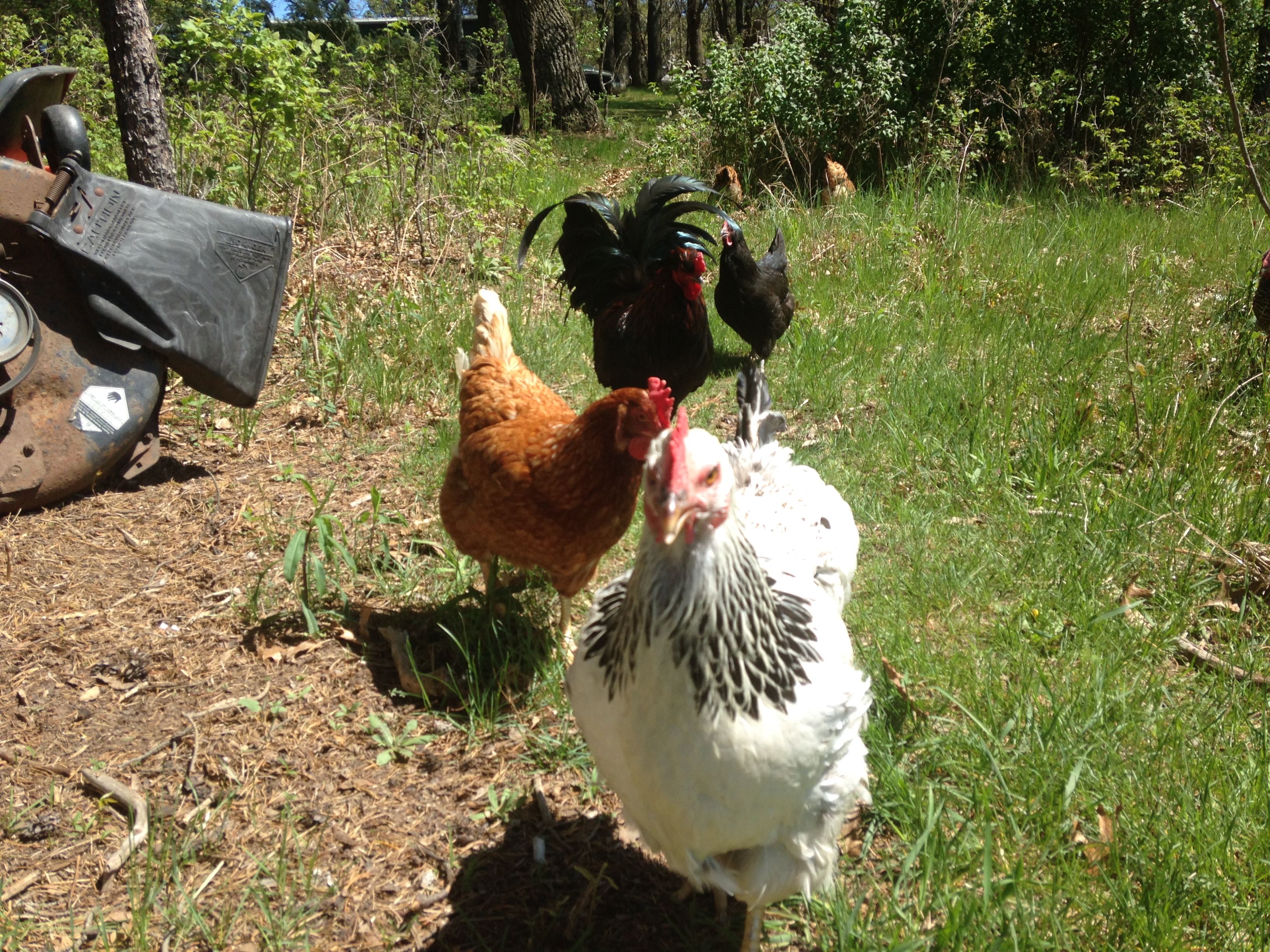
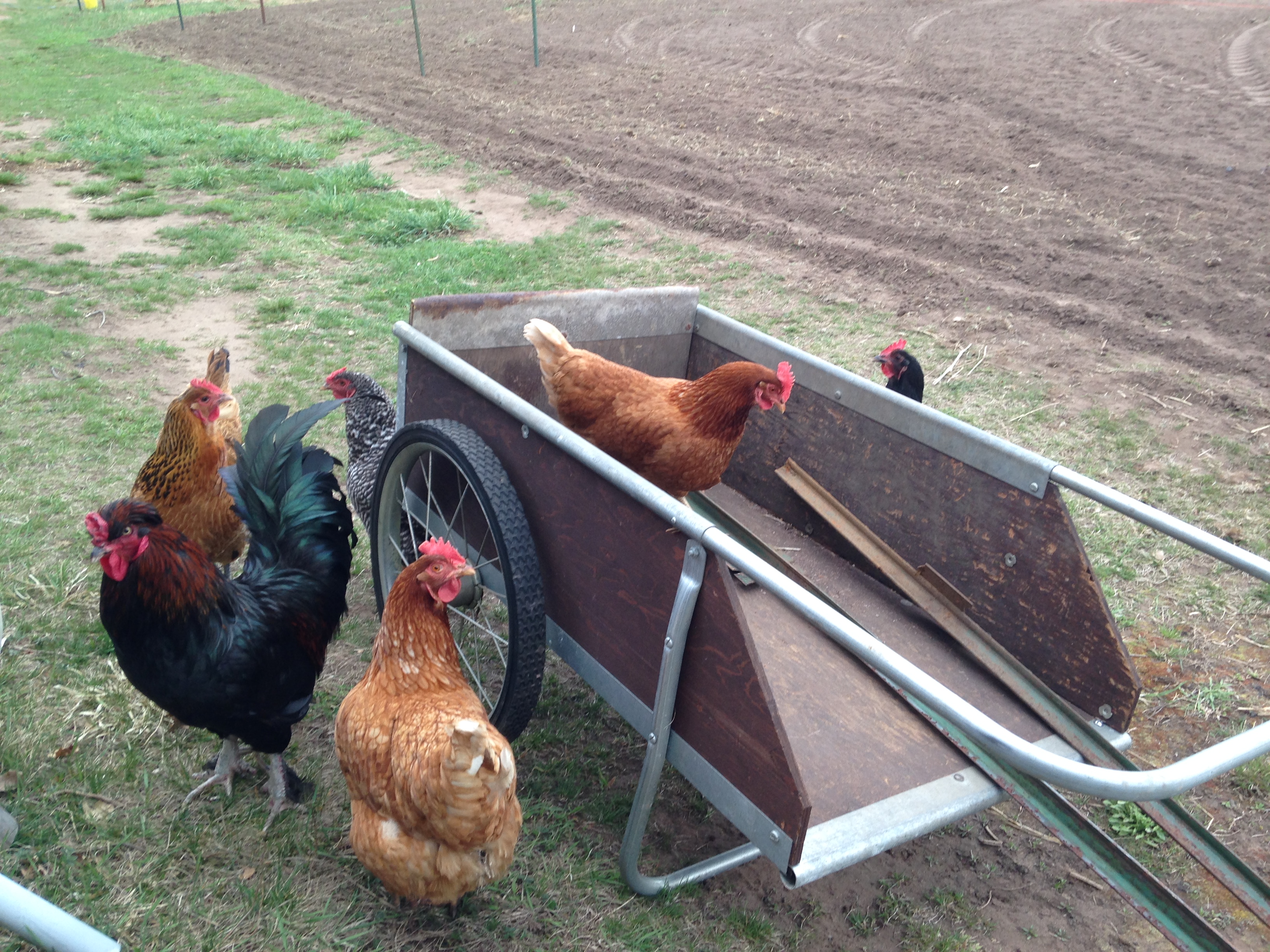
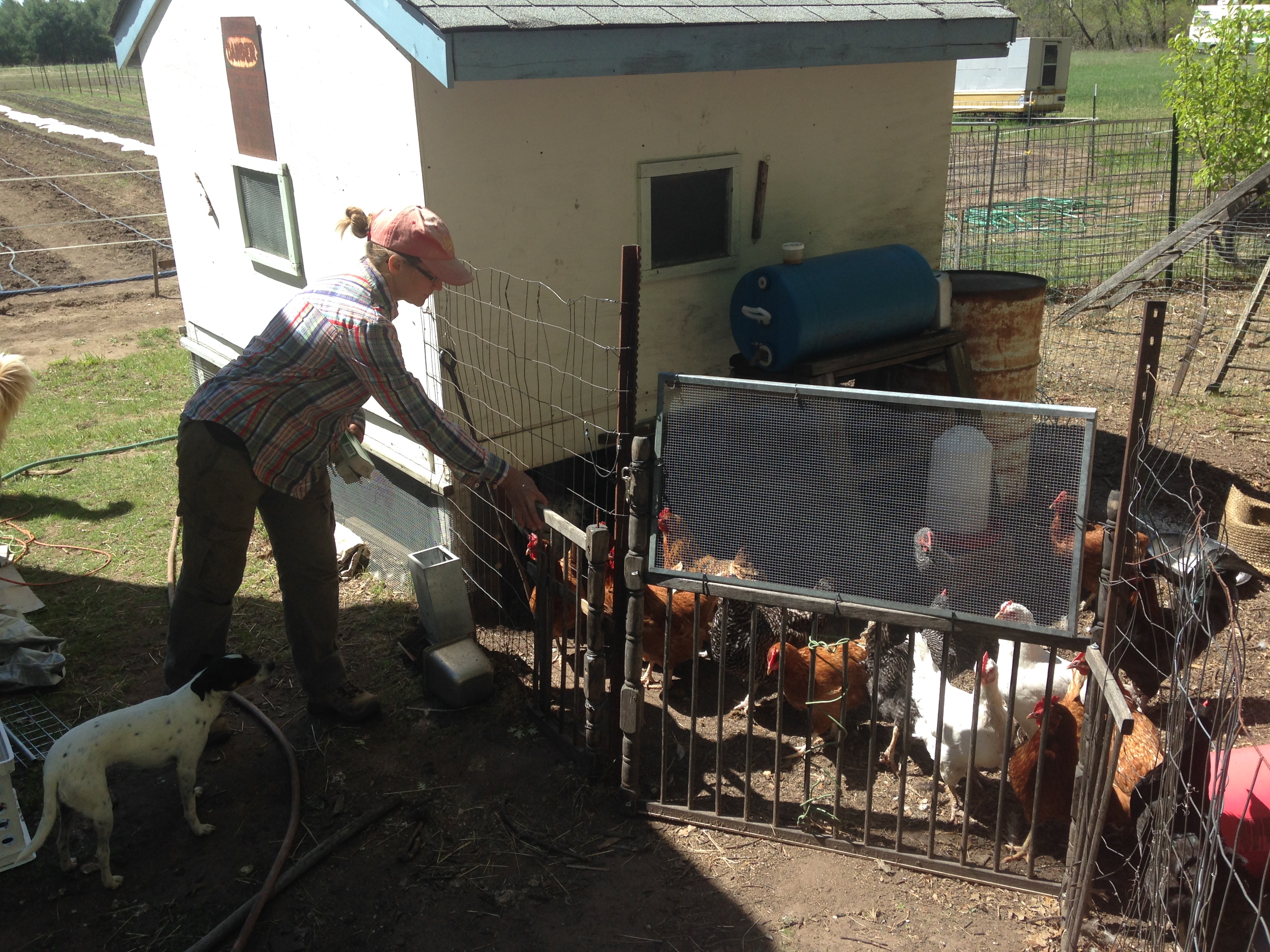
  • Free range eggs (large shares only) – Our flock spends most of every day foraging in the woods, begging for scraps, jostling with Widget for dominance in the animal pecking order, and learning to jump up and eat from our hands. They’ve got it pretty good, and we love their antics – we don’t have a TV, but we have plenty of entertainment watching the Chicken Show go down all around us.

IMG_4838

Oh, and that pre-season dread I mentioned at the beginning? It’s gone, replaced by a mix of excitement, pride, satisfaction, and even awe – it’s ON, we’re doing it, and it’s beautiful.

IMG_5881

Hell. Yeah.

It’s gonna be a great year.

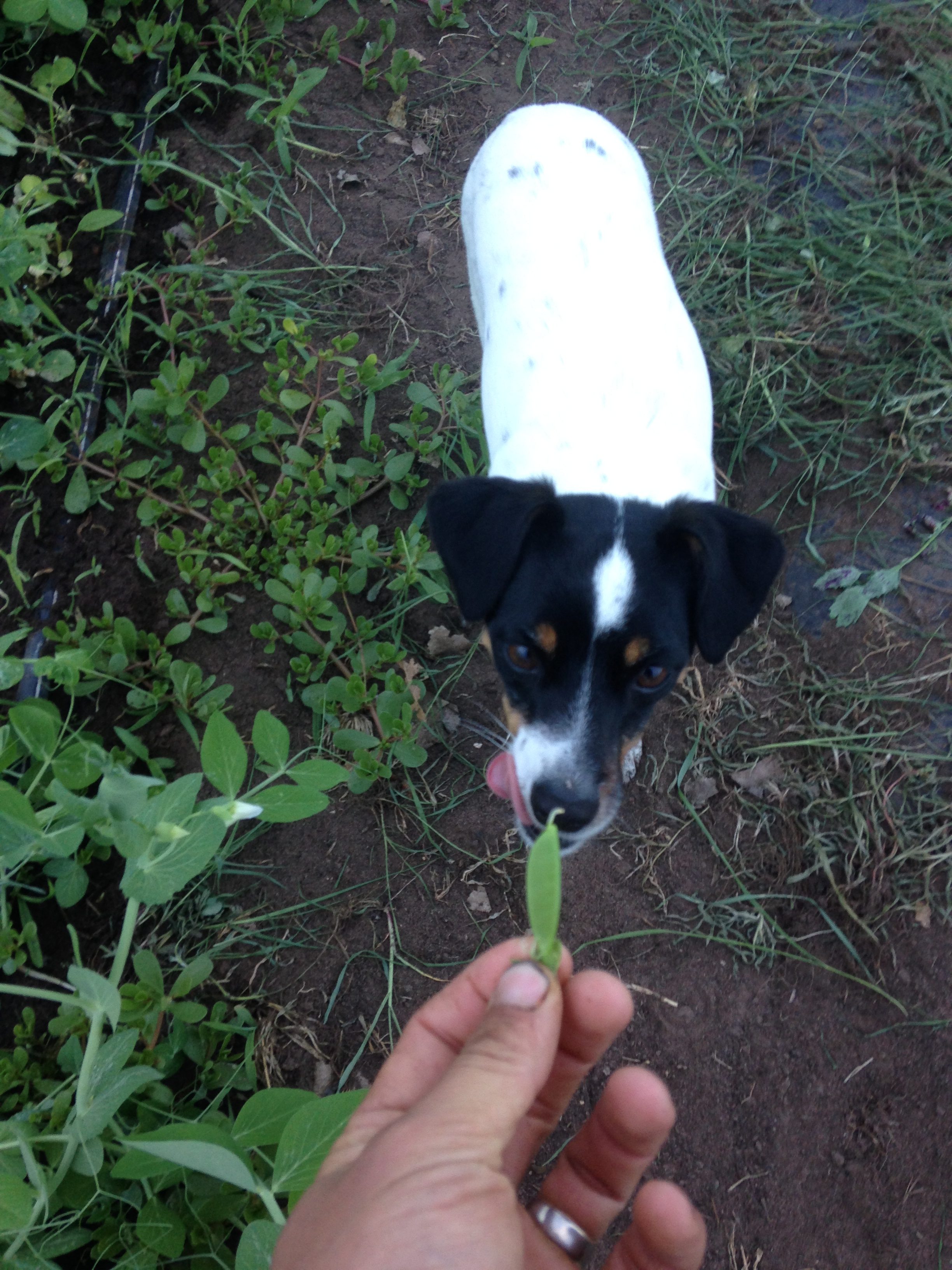
Widget knew I was harvesting from the pea plants, and begged for me to find and provide the baby peasWidget knew I was harvesting from the pea plants, and begged for me to find and provide the baby peas
Widget knew I was harvesting from the pea plants, and begged for me to find and provide the baby peas. She loves them.

IMG_4774 IMG_4603 IMG_4833  IMG_4729 (2) IMG_4600 IMG_4596 IMG_4801 (2)  IMG_4631  IMG_5900 IMG_4635 IMG_4551

IMG_4622  IMG_4625IMG_5912

Bear Necessities – another pre-season CSA Newsletter

Overall, things are going great on the farm. We’ve had WWOOFers (B, Nora, and now Megg) helping since early on, which has really helped us keep on top of the weeding and mulching and planting and fencing and such.

IMG_5644

The field looks great, the high tunnel hasn’t blown away, and your farmers are feeling much less stress than we were last year at this time.

IMG_5839

Up until yesterday, it had not rained here for weeks – but we’ve been running the drip irrigation daily, and being glad that the weeds and mosquitoes have been dry too. But yesterday, enough was enough and the heavens finally opened up and gave us a much-needed inch of glorious rain. Without coordination, all 5 of us ran outside to bask in the deluge … as good as it felt for us, I have to imagine the crops were just about in heaven.

IMG_4520

The Big Freeze:

May 15th is officially the Last Frost Date for our zone – in theory, we can expect that it’s safe for plants to be outdoors overnight past then. It’s just a rule of thumb (we had frosts past that date last year), but the weather took it seriously this year – the lows ever since then have approached a balmy 60 degrees … but on the night of the 14th, we were thrown a wicked curveball. Not a frost – a full-on freeze – and one that was not predicted by the weather forecasts we relied upon. It got below 25 that night – and stayed there, for hours.

The budding oaks were ravaged, the neighbors greening vineyard and Christmas tree farm were rendered brown-tipped and sad, our asparagus drooped over limply, plants inside greenhouses were nipped even under cover, our grapes and raspberry plants lost their leaves … but the worst of it, for us, was the impact on our cool weather plants we’d lovingly nurtured all  spring from seeds. After weeks of shuttling them into our home at night when they were young, keeping them toasty on the new rocket mass heater, carefully hardening them to sunlight and wind, we had transplanted them out into the field, and tucked them all in with a blanket of hay mulch. Hundreds of feet of plants that would have been fine with a little frost – but which were not able to withstand a true freeze.

The devastation was depressing to behold: row after row of colorless limp leaves, their very cells exploded by the freezing water within. The dead included kohlrabi, cabbage, cauliflower, broccoli, and even the hardy arugula and kale plants.

IMG_5561

Not all was lost – for some reason, the peas and lettuce (which I thought would be less hardy than the kale and arugula) were mostly just fine – and even among the worst of it, life and hope spring eternal – a good number of the plants that initially looked to be utterly lost unfurled brave, tiny green leaves from their centers that over the following days, the robust root systems working to keep the system alive and receiving the power of sunshine.

IMG_5589

We won’t have the abundance of spring crops we’d hoped for, but it’s gonna be alright. Que sera, sera!

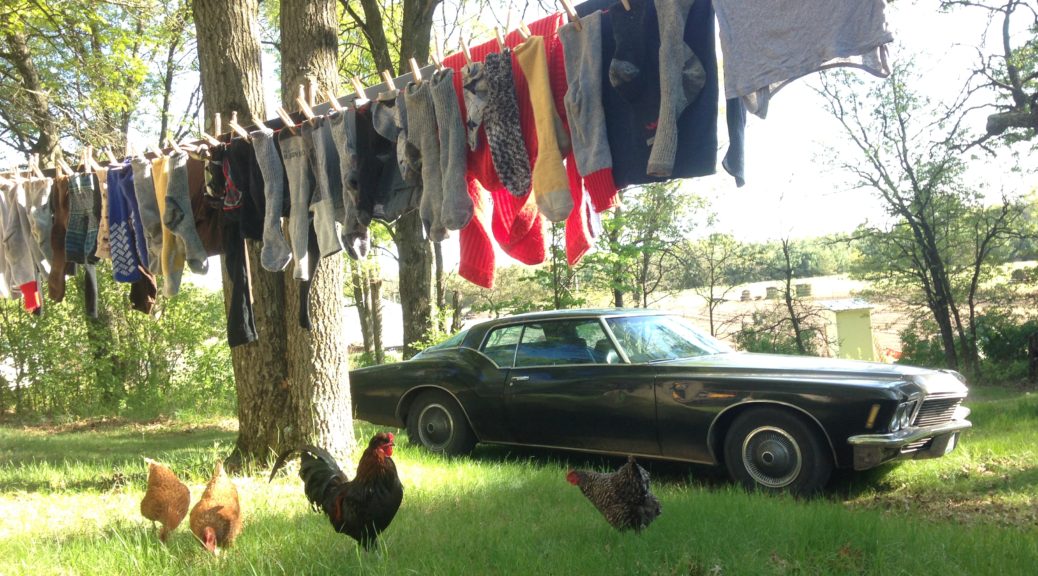
After the freeze, Spring set in for real – swimming in the Saint Croix, laundry on the line, frog choruses and darting dragonflies, and the end of wood smoke scents.

IMG_5565

Under Siege!

Up here, the coming of Spring also means the coming of bears – and this year has been just beartastic. The Neighbors reported a lot of sightings and raids on their birdfeeders, but we only caught a few glimpses … until this week.  A young male, just kicked out by his mom, has been bumbling around trying to figure out how to survive in our neighborhood. He finally got the nerve up to start raiding us at night, and my sympathy for him is wearing thin …

laundry soap chew toy

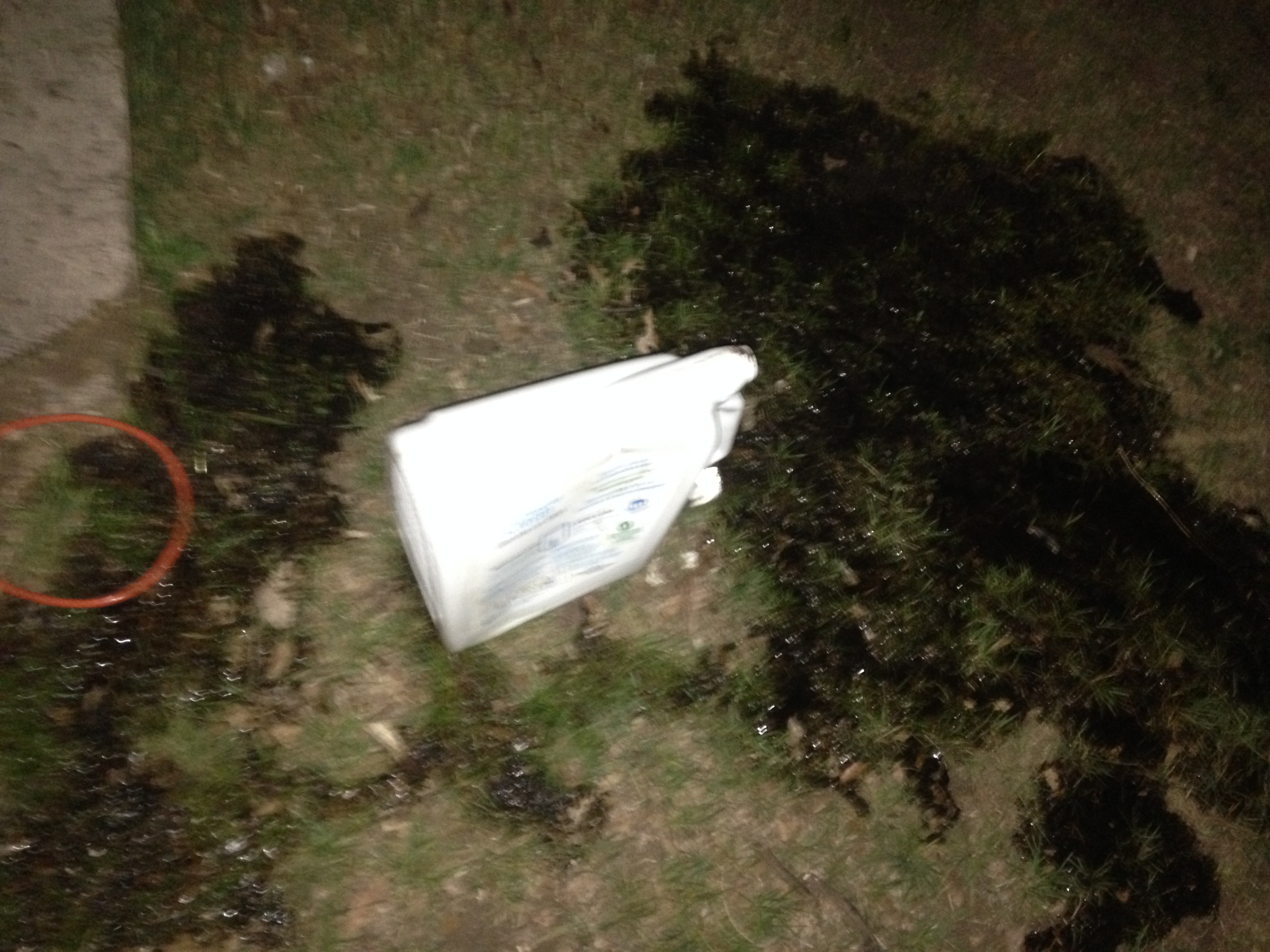
The first raid didn’t work out very well for young Mr. Bear – he tried to get into the composting outhouse, got into a big gross barrel that was on its way to the humanure pile, dined on used fryer oil from a 55 gallon drum he knocked over, and chewed open a brand new big jug of unscented laundry detergent. After this trifecta, I know that the answer was that yes, indeed, bears do shit in the woods. I suspect he was doing plenty of that the next day …

We didn’t see any sign of him during the immediate aftermath of his first foray into our turf, but we still had our bear encounter quota met the next day – Kristin and WWOOFer Megg were out doing dishes when all ten pounds of Widget came hurtling past them barking ferociously – drawing their attention to the big momma bear and her cub that had just strolled into the driveway. The gals screamed “BEARS!” and then screamed at Widget to come back, I ran out the door and bellowed like the hugest most badass beast I could feign, mama bear took off into the woods – but the baby climbed a tree on the edge of the driveway. Fortunately, Widget came back to us, and mama bear ordered the baby down the tree and out of our property.

“And don’t come back!”

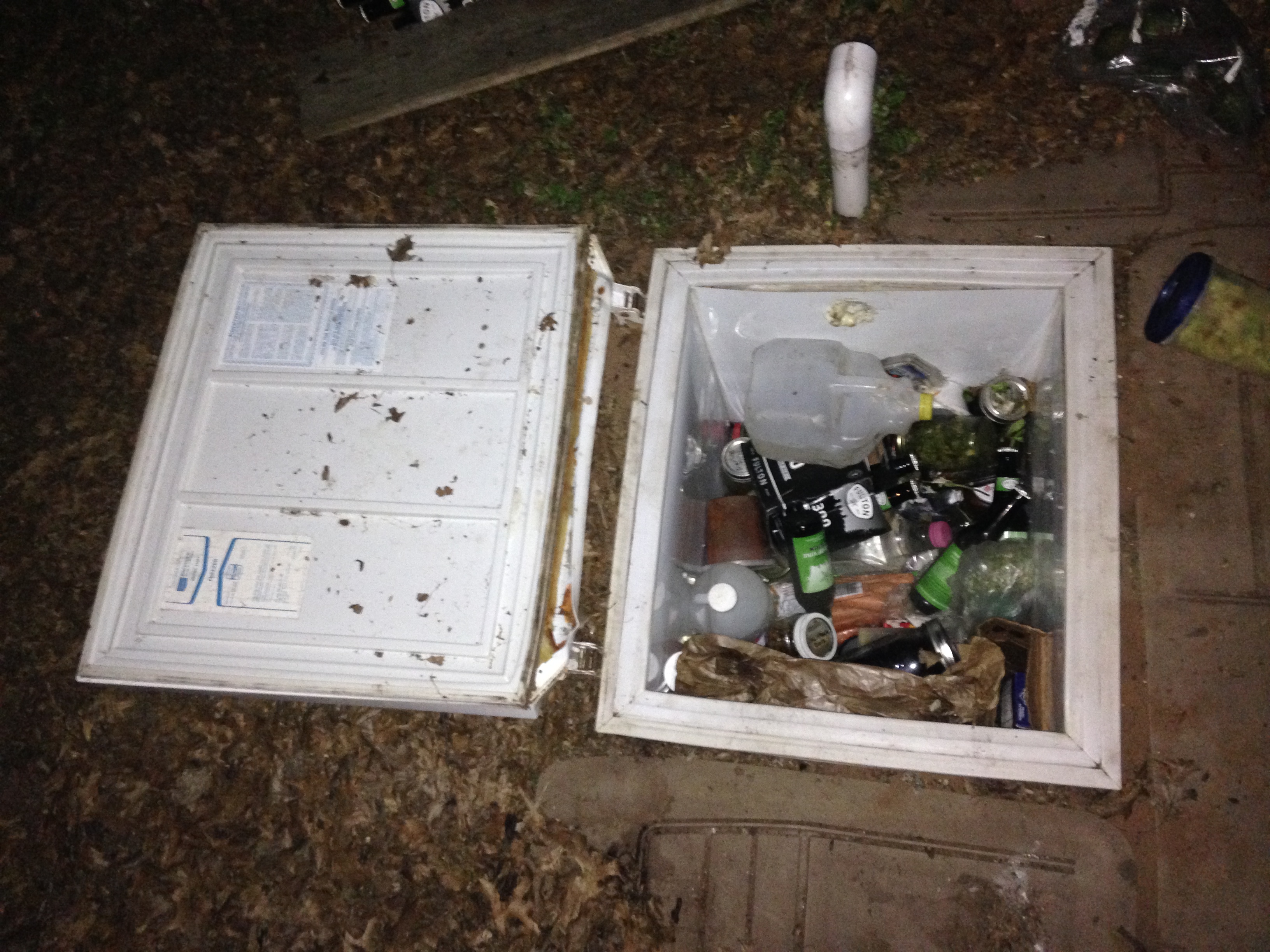
The next night, Mr. Bear Junior came sneaking back while were were all celebrating at the Neighbors’ … and this time, he did much better for himself. We had friends from the Cities visiting, and they’d brought a bunch of bacon and cheese to share – and left it in our “fridge” – the buried chest freezer we use to keep our food cool. Unfortunately, the bacon was wrapped loosely in paper – and the fridge is ventilated, allowing delicious smells to waft to the nostrils of munchies-stricken bears.

IMG_5683

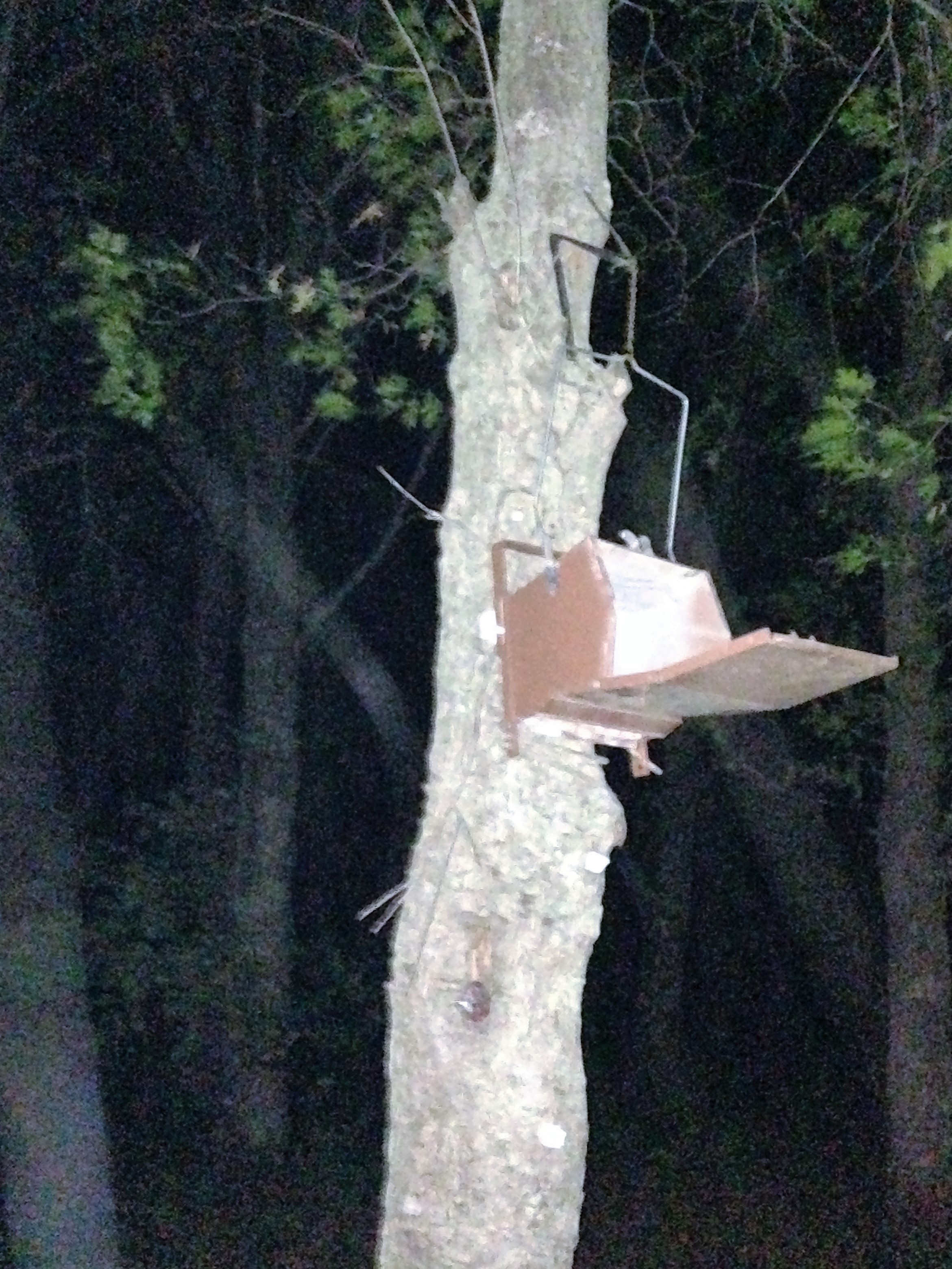
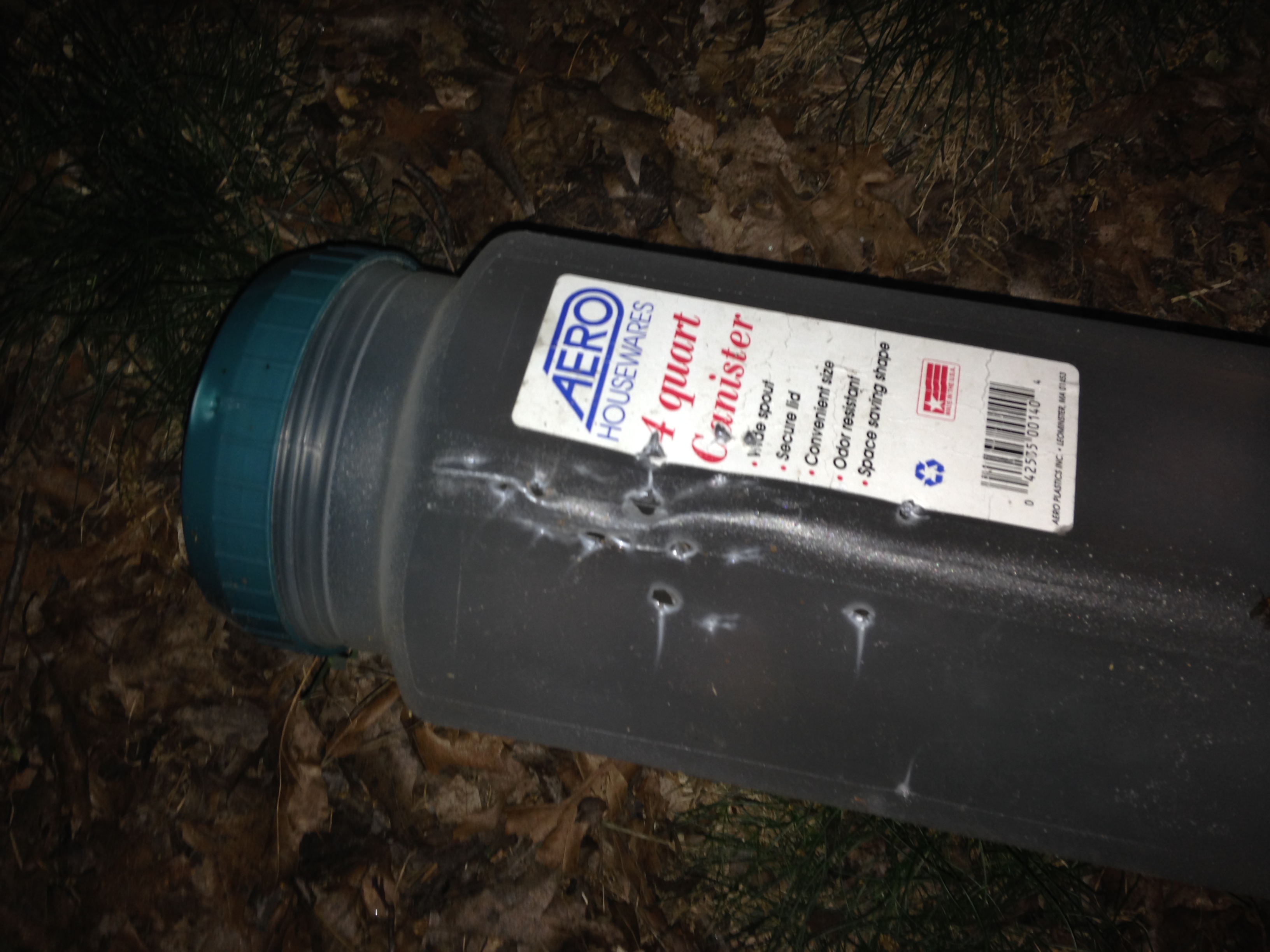
Mr. Bear could not refuse the invite … and he destroyed our fridge, ransacked the contents, leveled our rocket stove grill to get to the meat drippings within, tore down and chomped our birdfeeder, and dragged a cooler into the woods and mauled it.

IMG_5753

We heard him tear off into the woods when we returned home to the remnants of his party – and later, he came back and was spotted leaning against a tree about 15 feet from the trailer in the middle of the night, trying to look innocent and nonchalant.

IMG_5756

No. We chased him off … but we know he’ll be back.

IMG_5684

And I’ll be waiting for Mr. Bear with Mr. Shotgun – not to shoot him, but to scare the holy hell out of him with the loudest sound we have the capability to make …. hopefully that will be enough to send him foraging for less frightening food sources.

IMG_5687

(The destruction of the rocket grill and the fridge has a silver lining, really  – both had issues that begged for redesign upgrades, but since they functioned well enough, these rebuilds never attained priority, and they just kept getting used as they were … now, we’ll rebuild them better! Future Us will thank Young Master Bear, even though Current Us would rather kick him in the butt.)

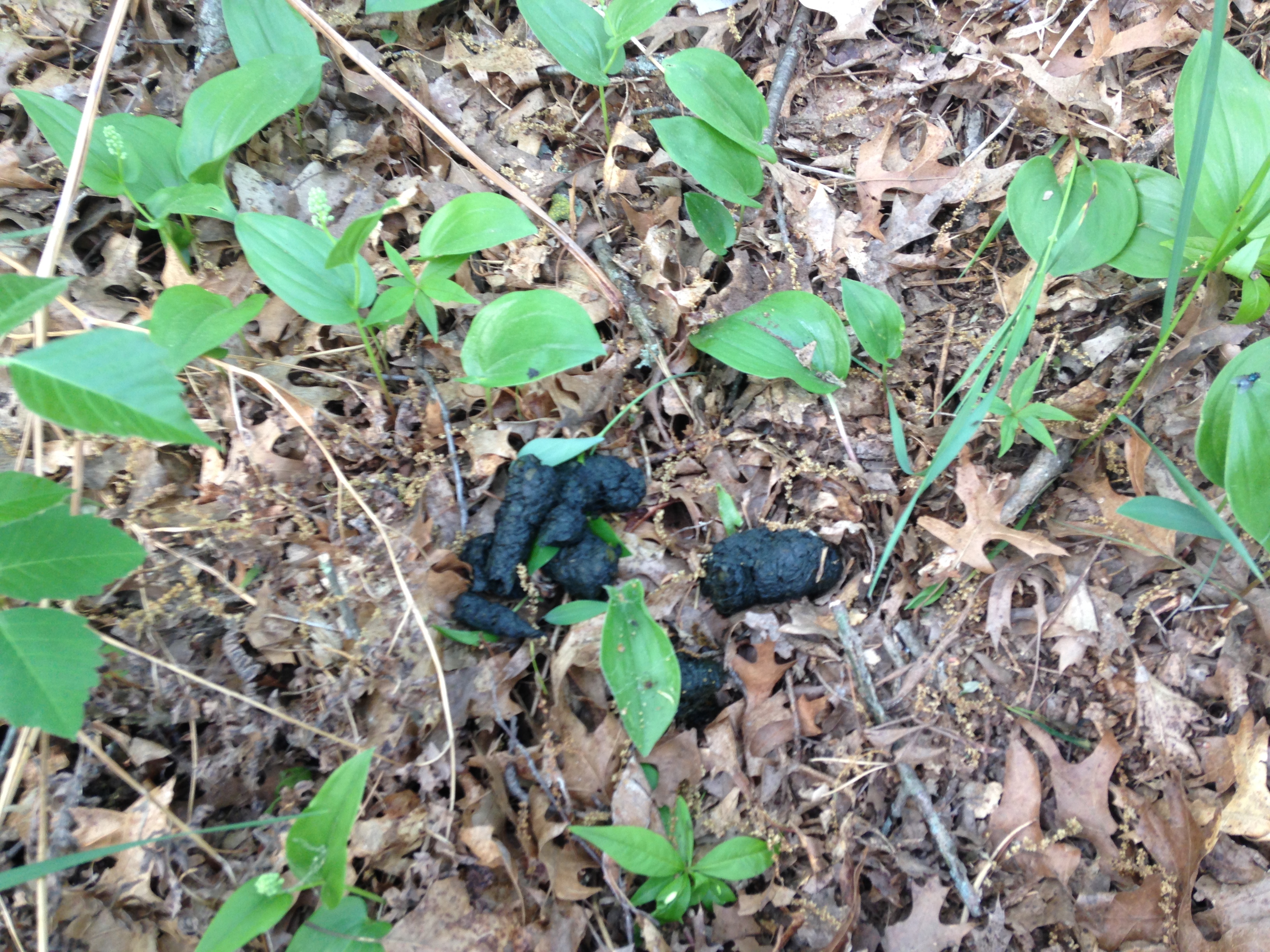
Mr. Bear's scat in the woods near the cooler
Young Master Bear’s scat in the woods near the ransacked cooler

Today is our friend Megg’s last day on the farm – we actually met her while we were all WWOOFing down in Mississippi two winters ago, and told her to visit us sometime during her Full-time Traveling – and so she did!

IMG_5836

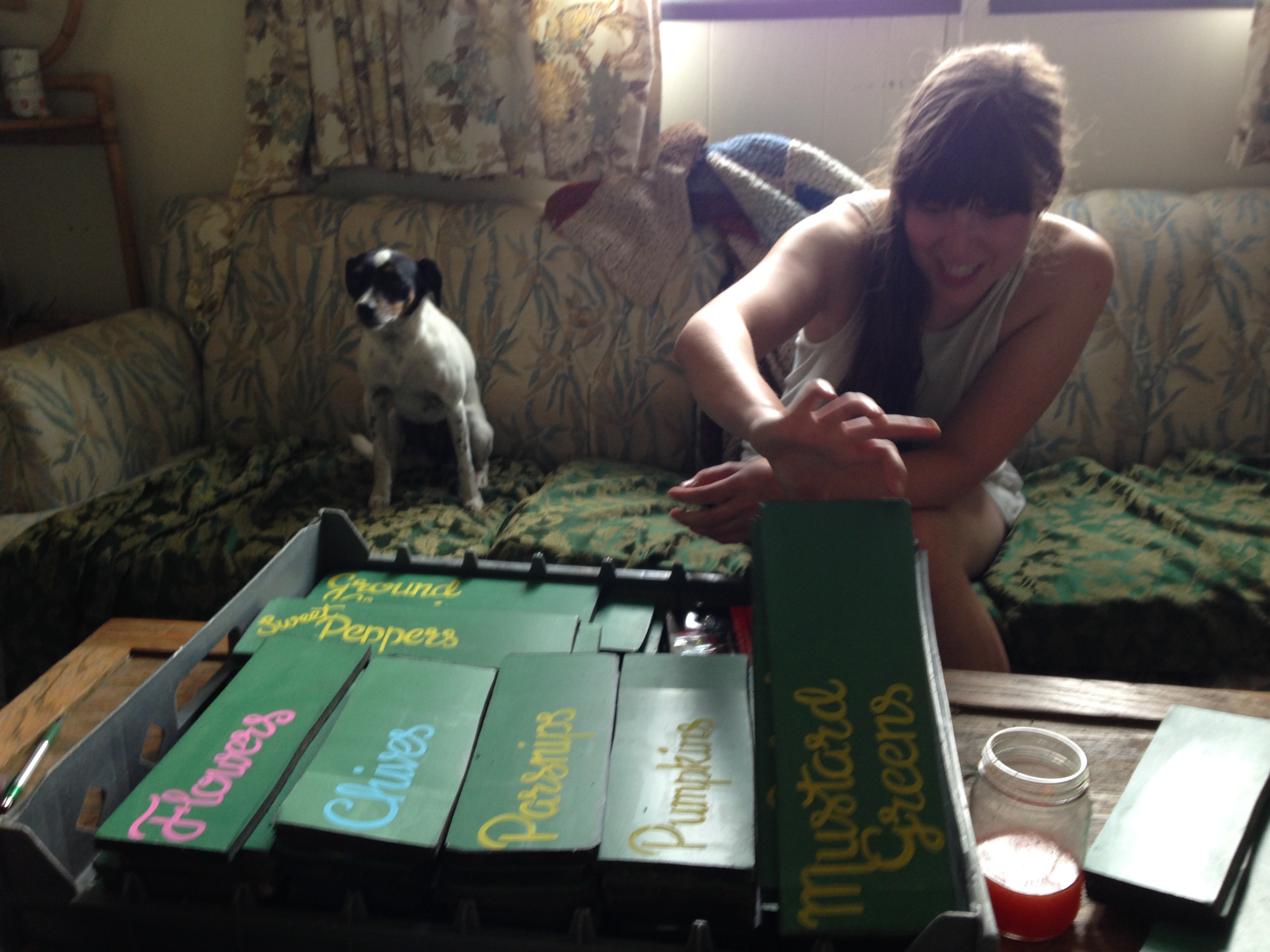
In addition to all kinds of help with the usual farm work, she tapped into her past as a signmaker for Trader Joe’s, and helped us make some sweet signs for the farmer’s market with her freakishly good lettering.

the boards are sawed up chunks of a huge blackboard that we scored for free off of Craigslist)
the boards are sawed up chunks of a huge blackboard that we scored for free off of Craigslist


… as for everything else we’ve been up to, I’ll let the pictures do their thousand words thing:

planting beans alongside the garlic


look closely - the Swiss chard has colorful roots, too!
look closely – the Swiss chard has colorful roots, too!
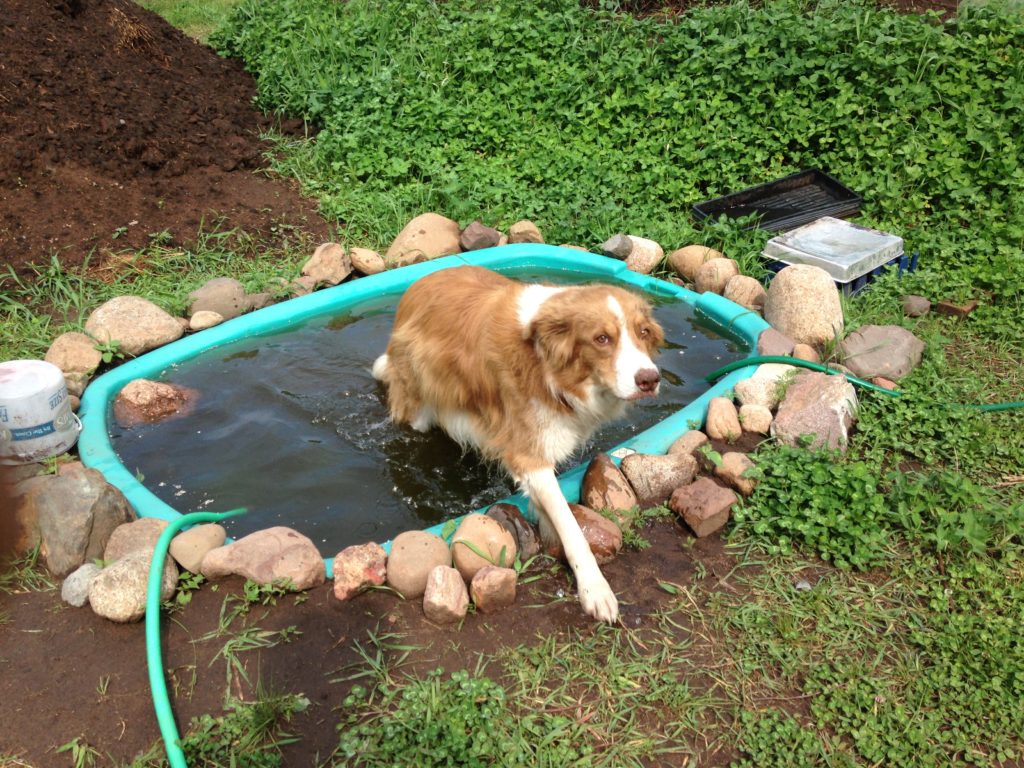
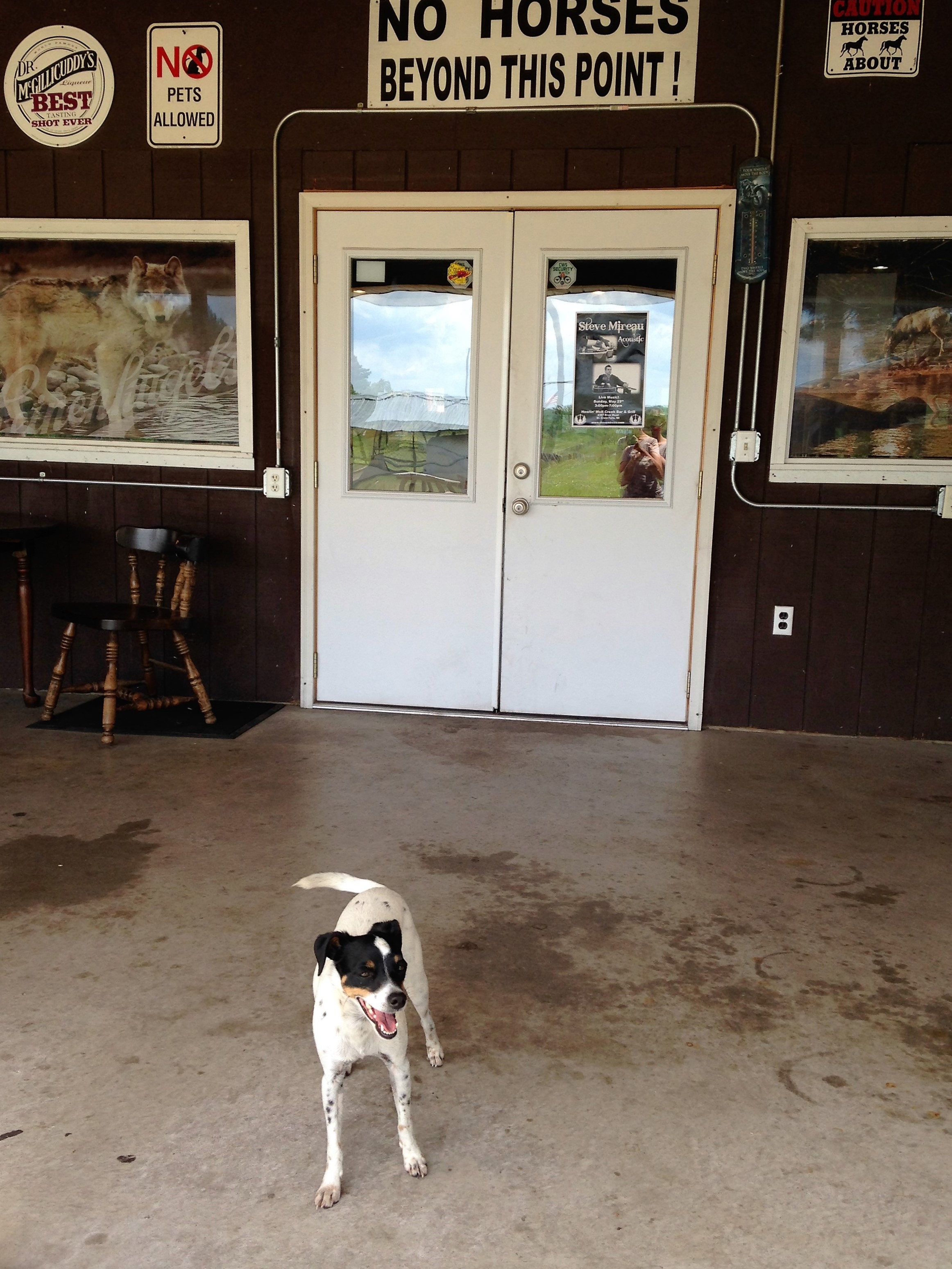
Widget partying at the Wolf Creek Bar
Neighbor Marcia, the Chicken Whisperer
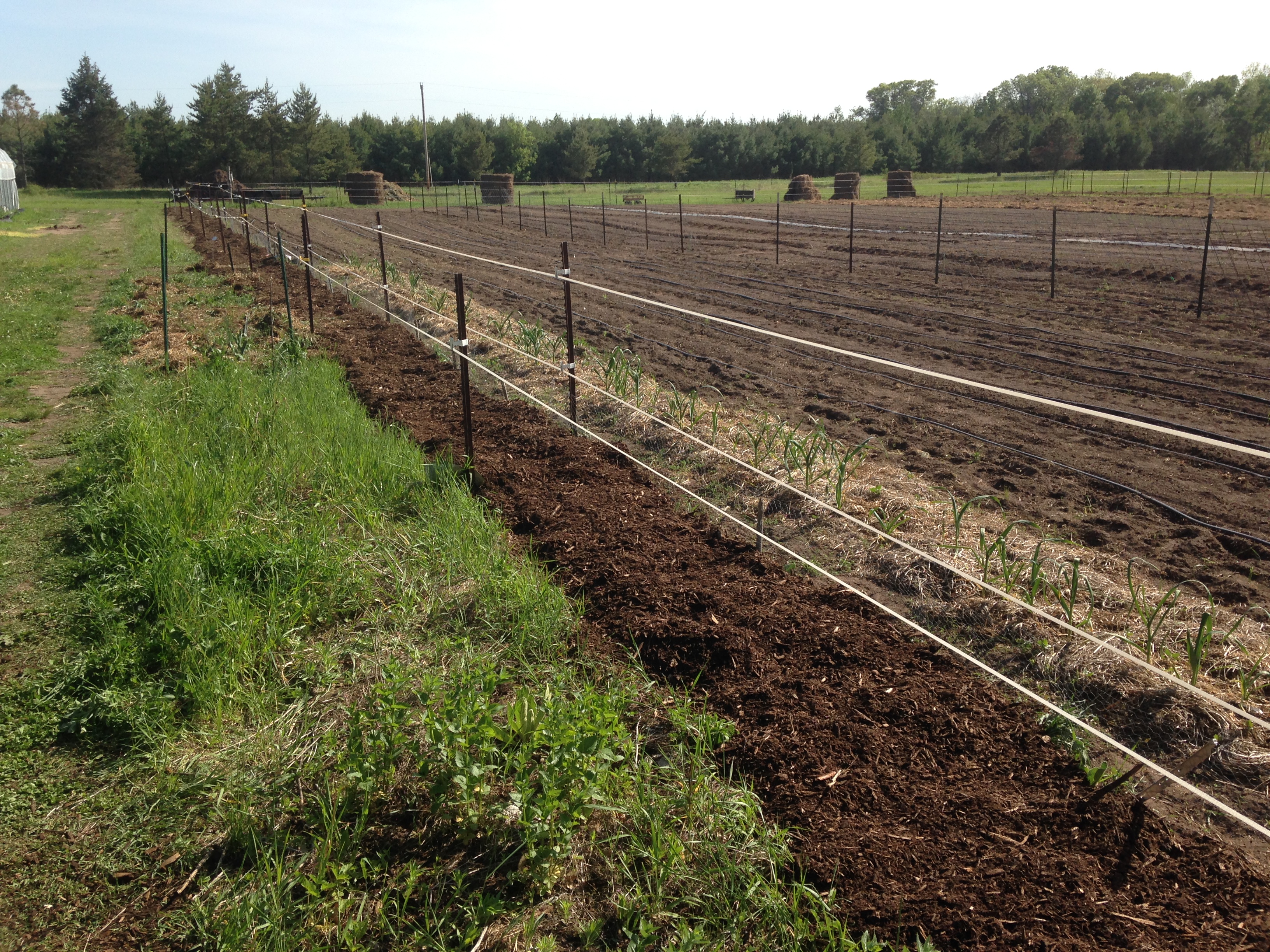
the front line on the War on Quack Grass - this edge of the field is where it's the thickest - we tilled it when it was dry, then mulched over the border with cardboard and woodchips. You don't understand how satisfying this is to me ....
the front line on the War on Quack Grass – this edge of the field is where it’s the thickest – we tilled it when it was dry, then mulched over the border with cardboard and woodchips. You don’t understand how satisfying this is to us ….
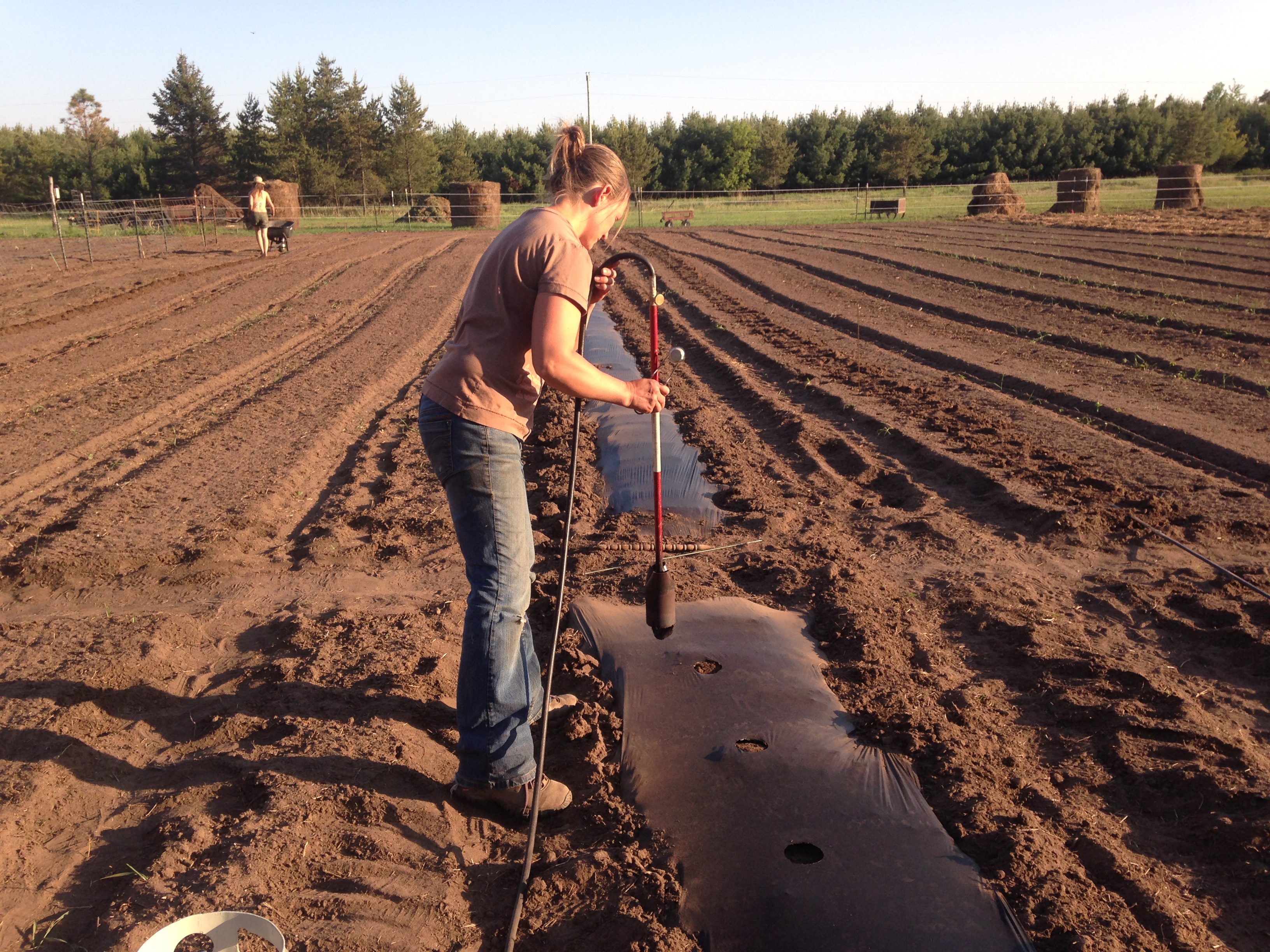
the propane flame weeder also serves as a wonderful hole-maker for the plastic mulch
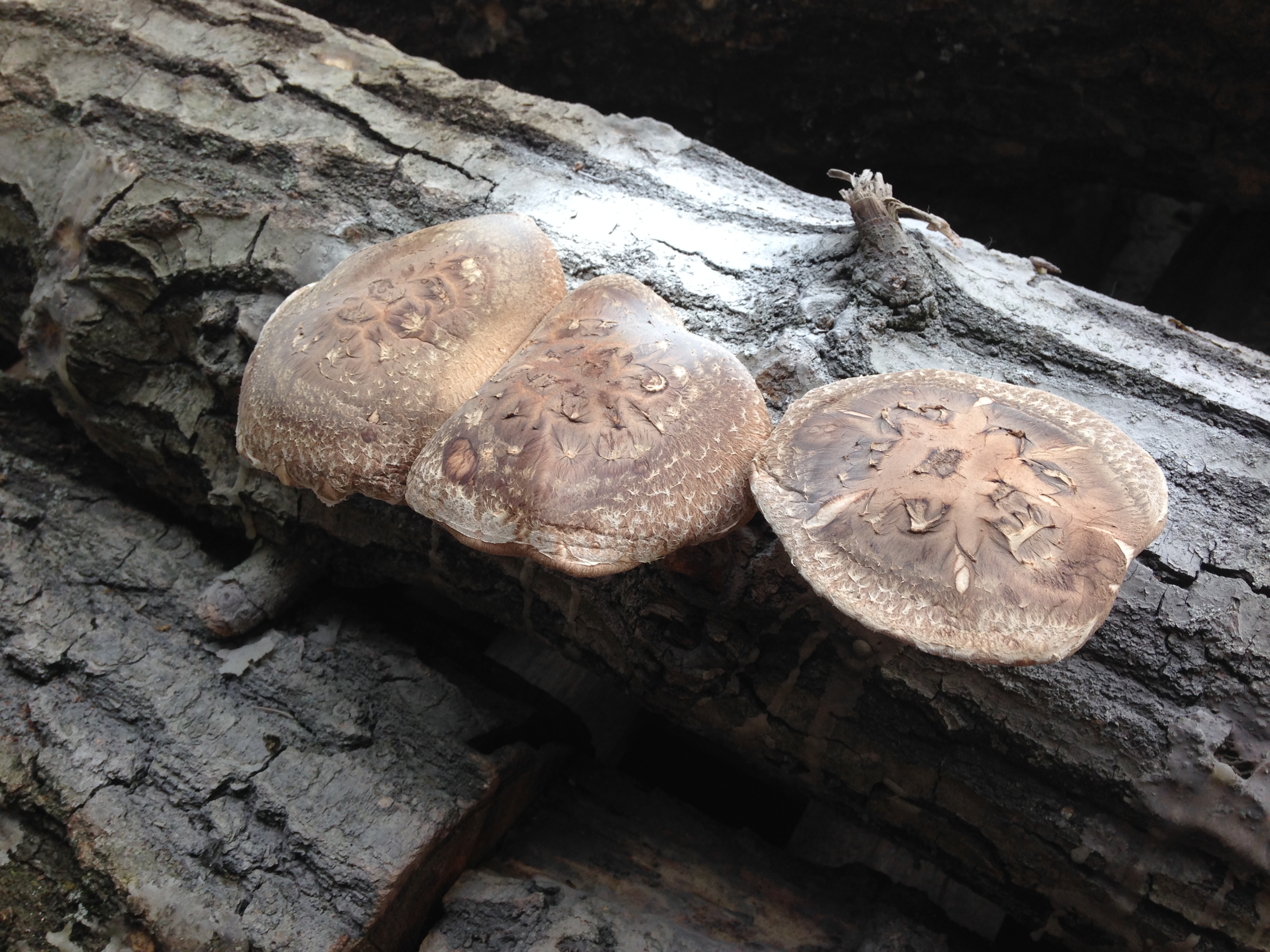
surprise shiitakes - they wre discovered just in time to make for a great breakfast, the morning of the bacon bear
surprise shiitakes – these and a few others were discovered just in time to make for a great breakfast, the morning of the bacon bear

IMG_5765

Super Poop Scooper
Super Poop Scooper
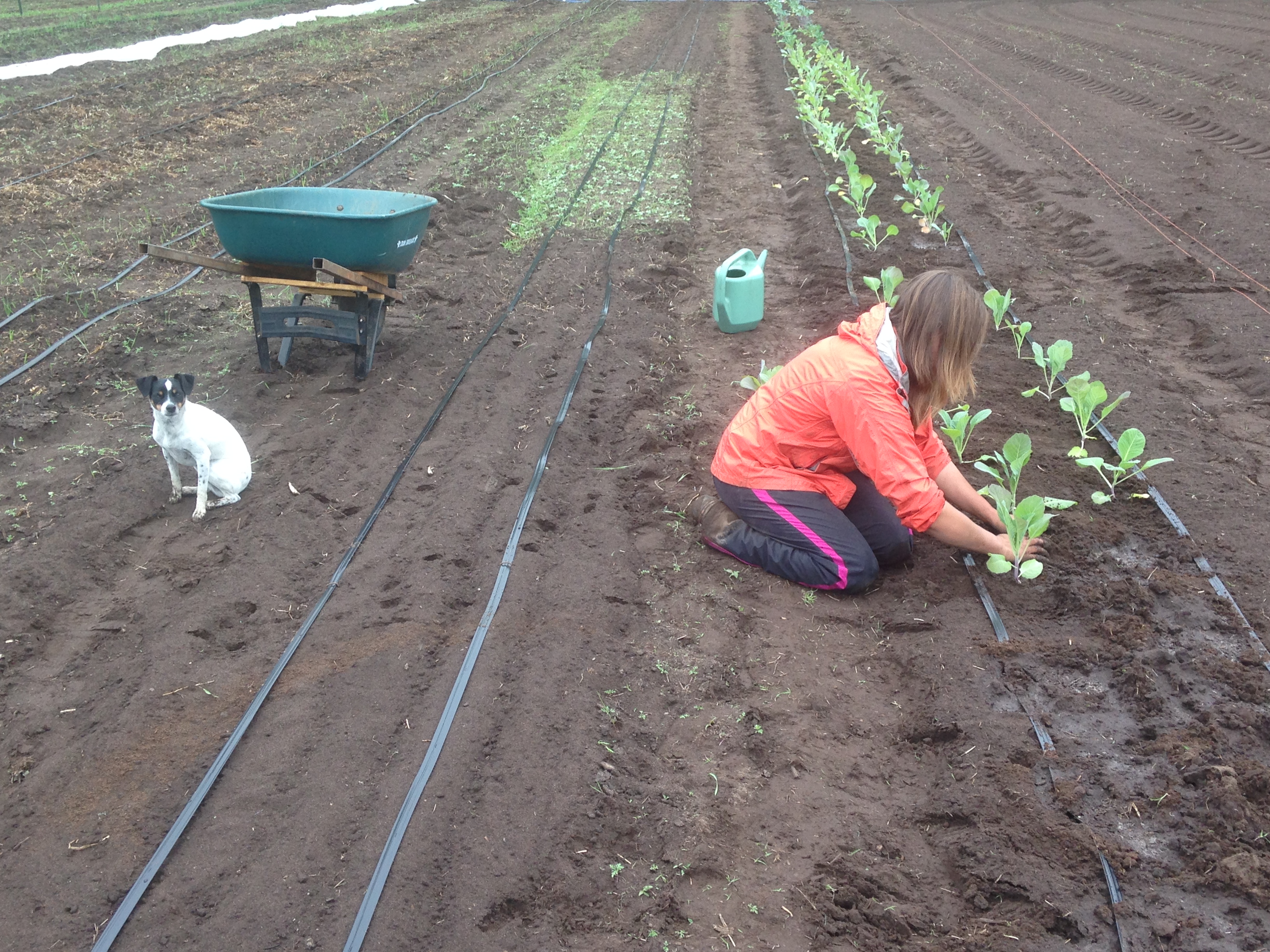
Deb & Nora transplanting cauliflower & broccoli
Deb & Nora planting beans


putting plants out to freeze to death later :P
hay mulching the cool weather crops

IMG_4526

IMG_5615

the Way to May – CSA Pre-Season Newsletter

IMG_4341

Holy wow, it’s already well into May! Signs of the season surround us, reminding us just how lively this landscape is …  greenery is bursting forth from every tree, every patch of earth.

IMG_5326


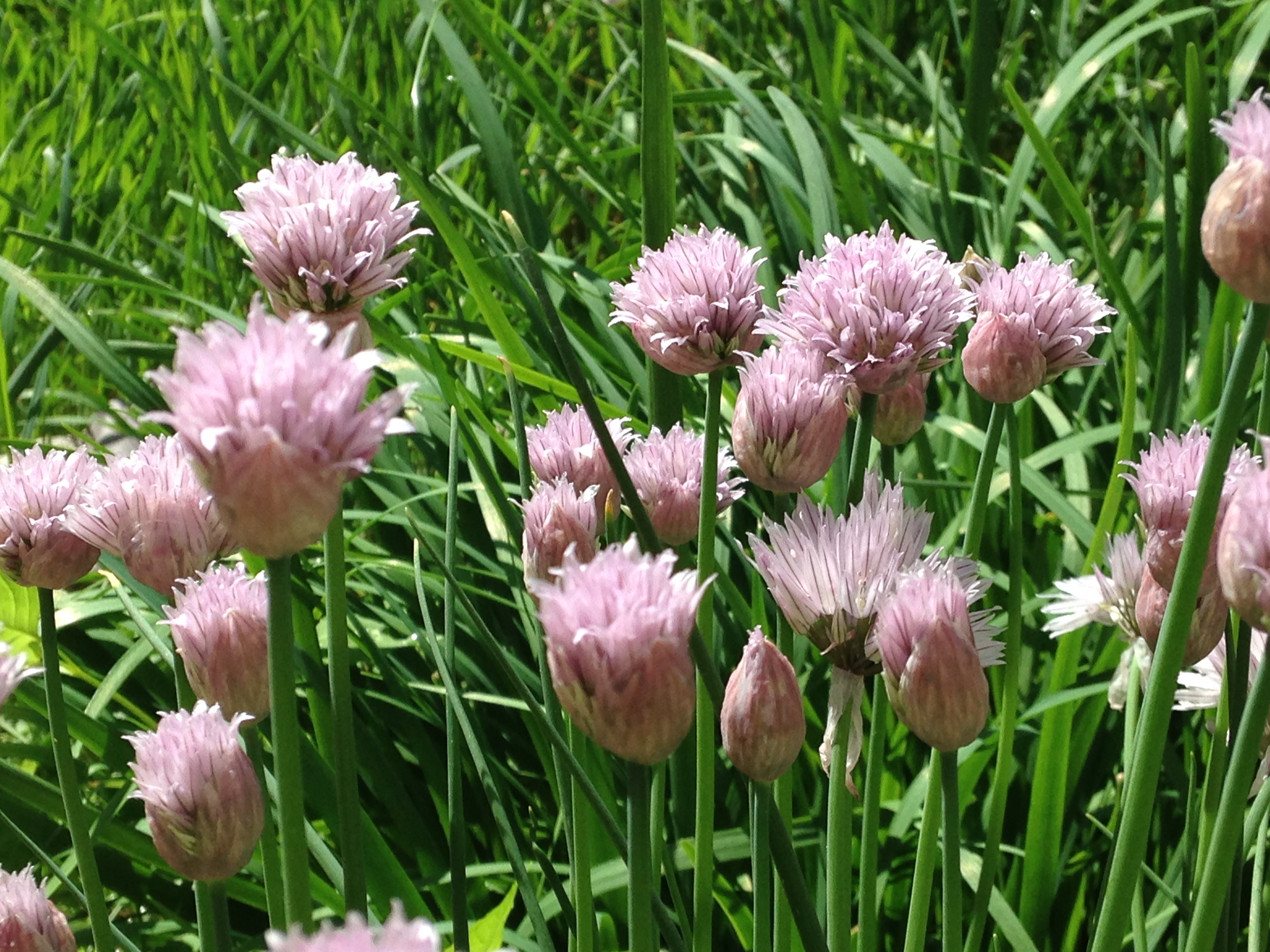
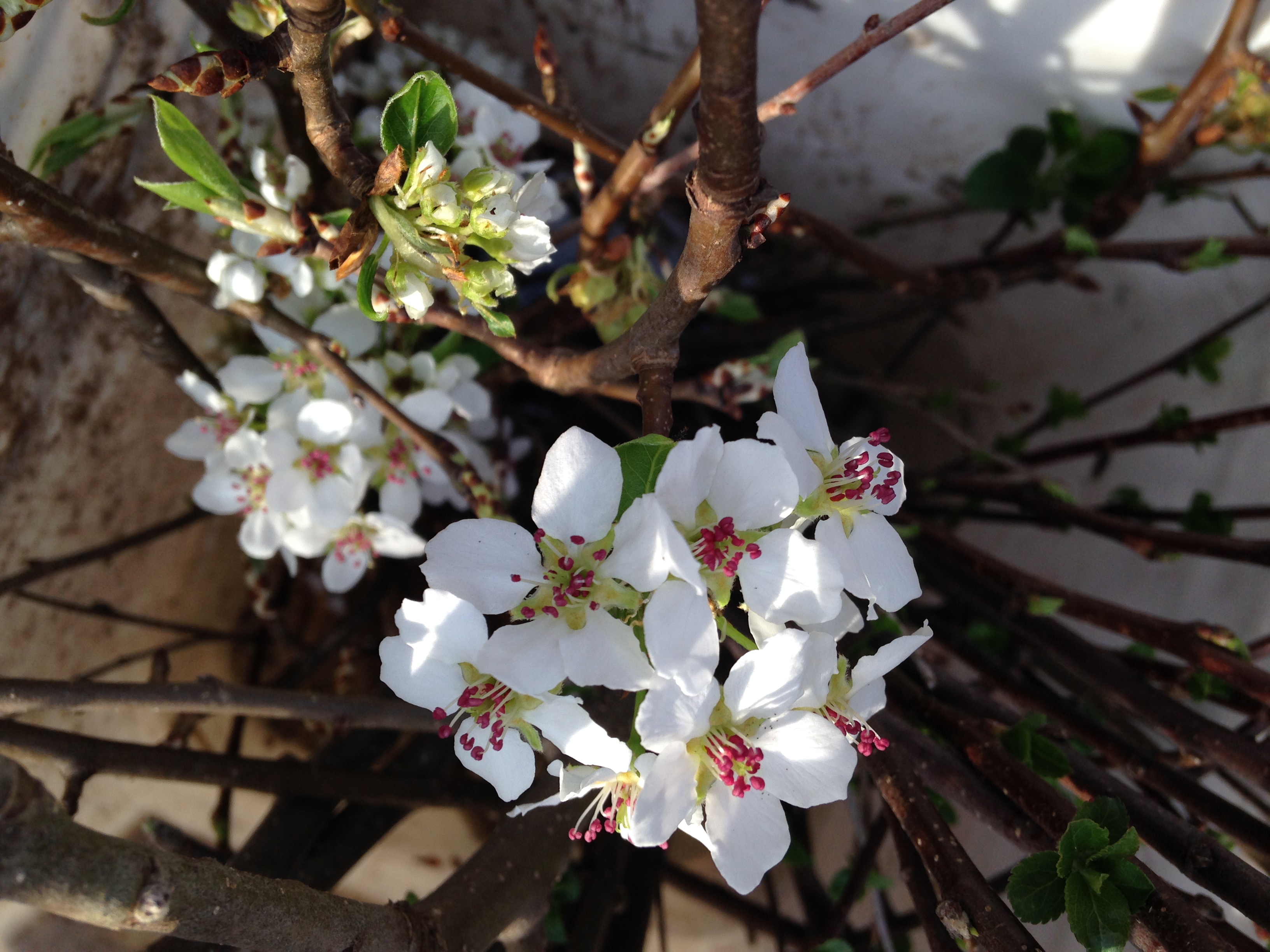
Our apple and pear trees are blooming, as are the trillium, violets, and wild plum trees. The perennials are coming up – chives, rhubarb, raspberry, mint, lemon balm … and we ate our first fresh asparagus of the season last week.

after a full day working in the 90 degree sunshine, a dip in the Saint Croix was refreshingly perfectly chilly

Throughout the nights, mystery critters crunch through the undergrowth or scramble across our trailer, coyotes caterwaul in chorus, barred owls demand to know “who cooks for you?“,  and once in a while a fox or civet makes a freaky womanlike scream. My favorite night sound is the abundant whip-poor-wills – nocturnal bug-eating birds that I only hear here.

IMG_5255

The black bears are out and about, scavenging for treats  – a young male has been knocking over Neighbor Marcia’s birdfeeders, and the momma bear and her three cubs from last year were spotted in the woods behind us – the cubs are huge now, in their second year, and about ready to set out on their own.

IMG_4397

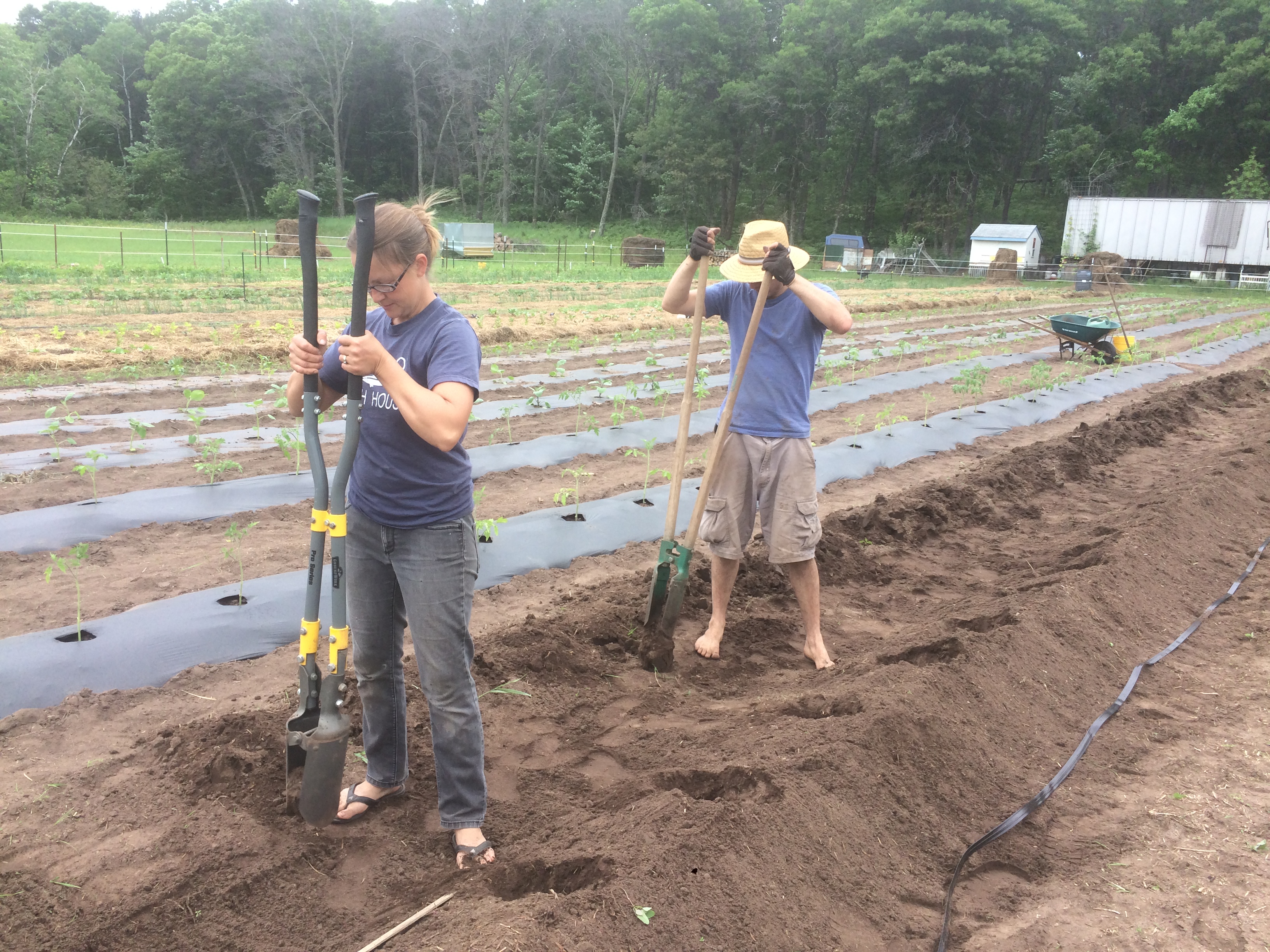
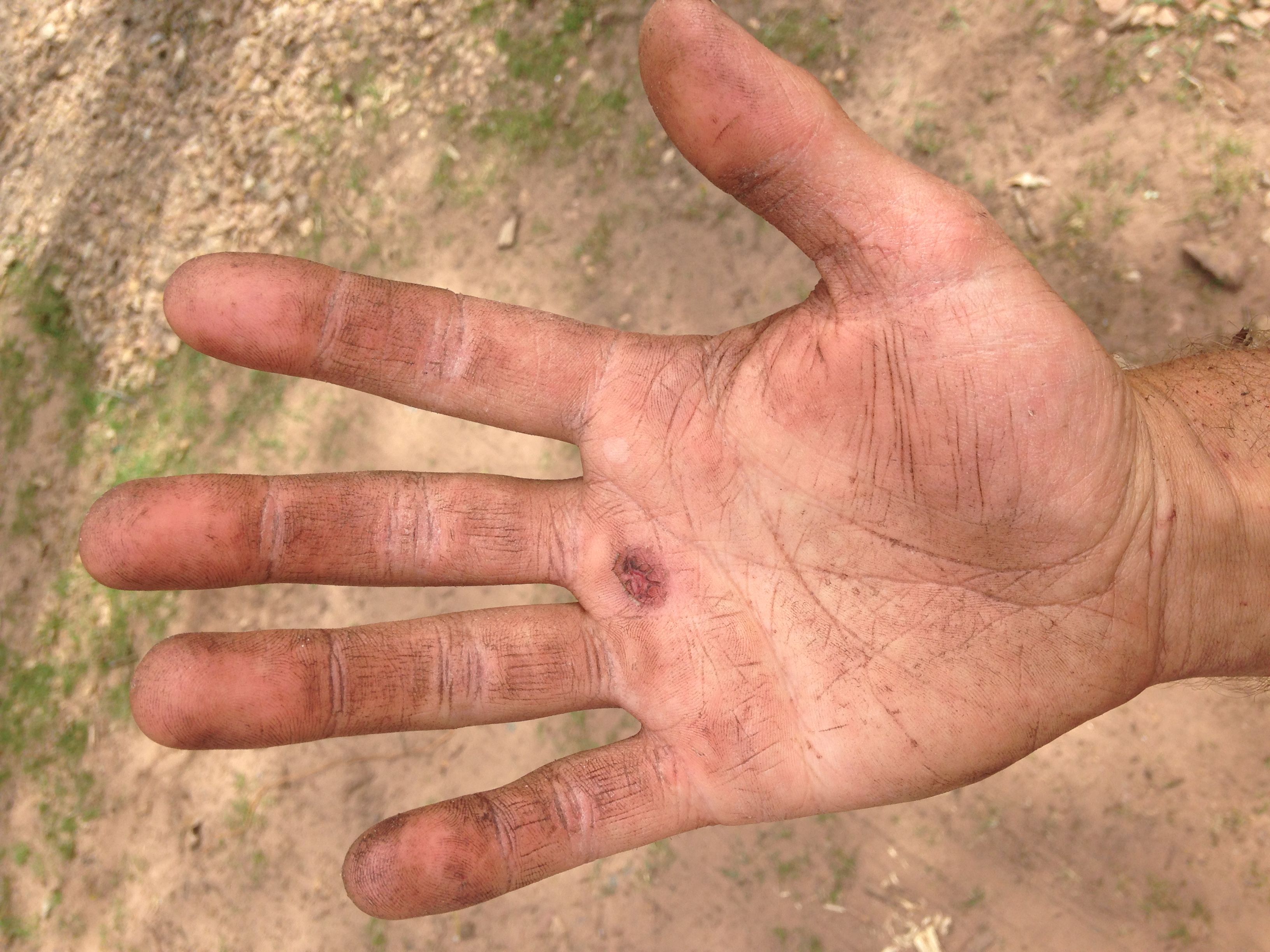
As always, Spring has been an incredibly busy time, as we get everything ready for the season. My hands are stained black with soil, and feature a wound on each palm, from ignoring Kristin’s sage advice and pounding in a row of t-posts without gloves … which led to blisters that didn’t hold up well to the continued post-pounding I subjected them to.

IMG_5367

Starting seeds, nurturing baby plants, preparing the field, keeping ourselves and the tender plants alive and warm through the chilly nights … it’s an intense time of the year, filled with all the opportunities for hope and fear that you could want!

IMG_5166 - Copy

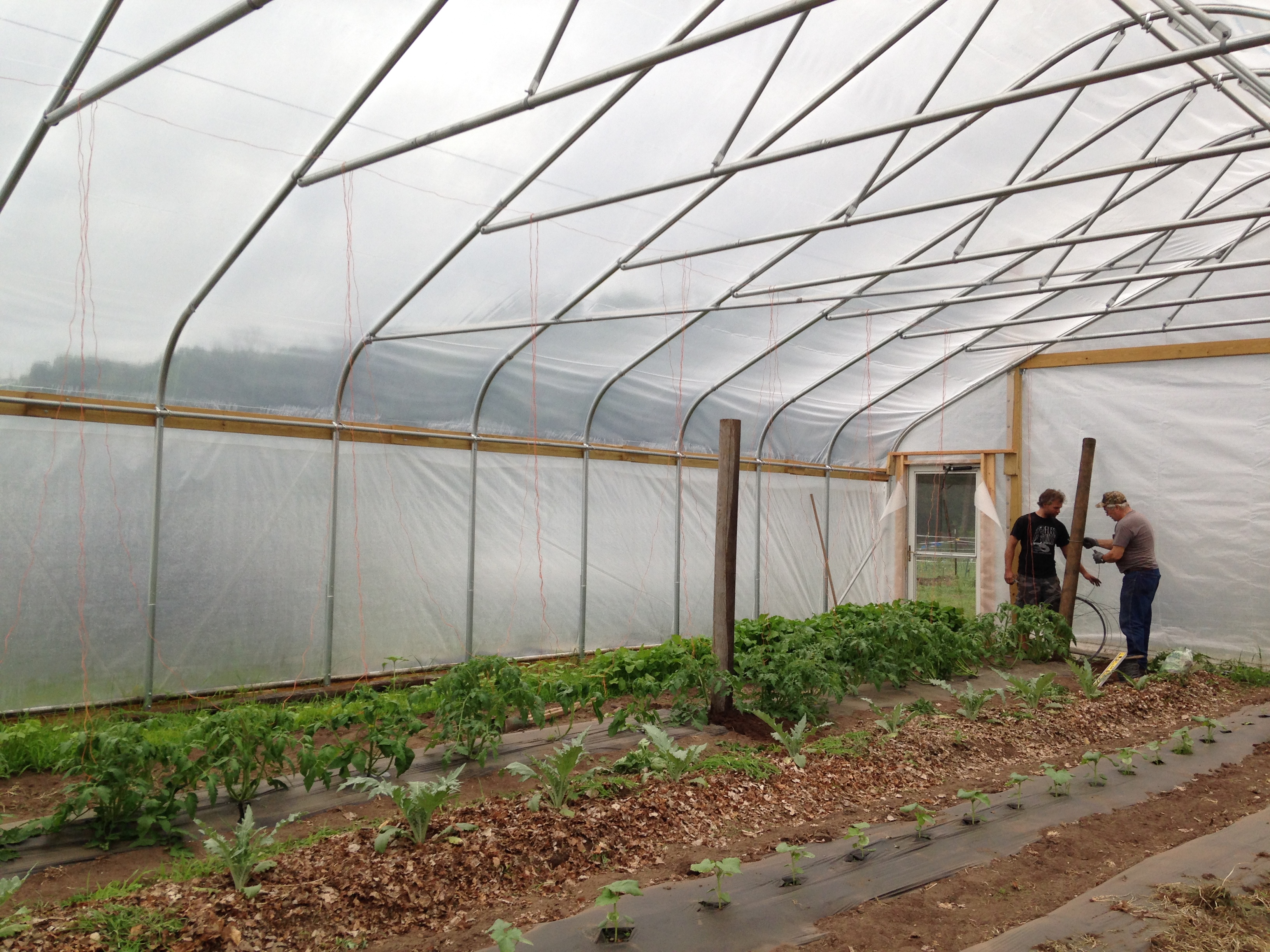
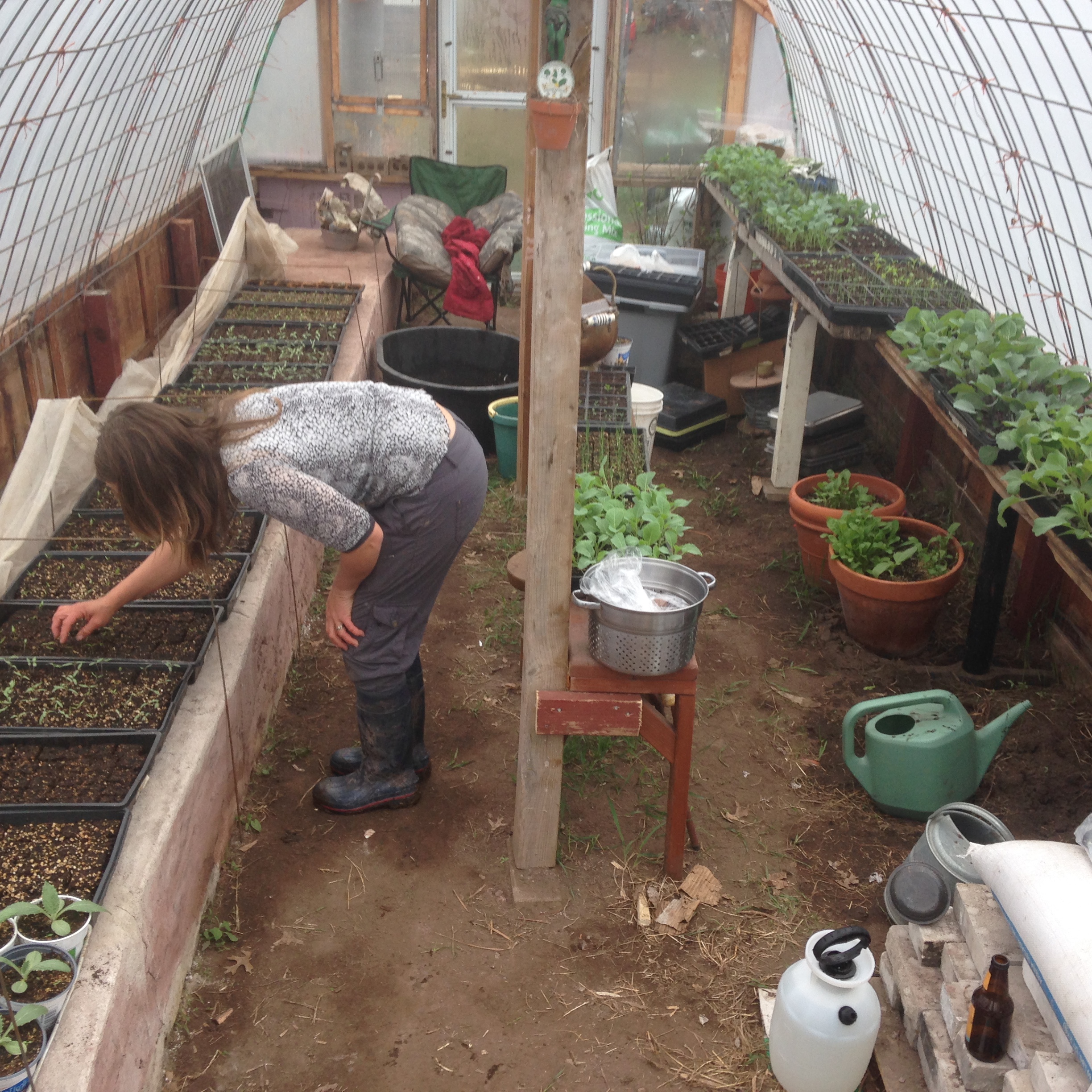
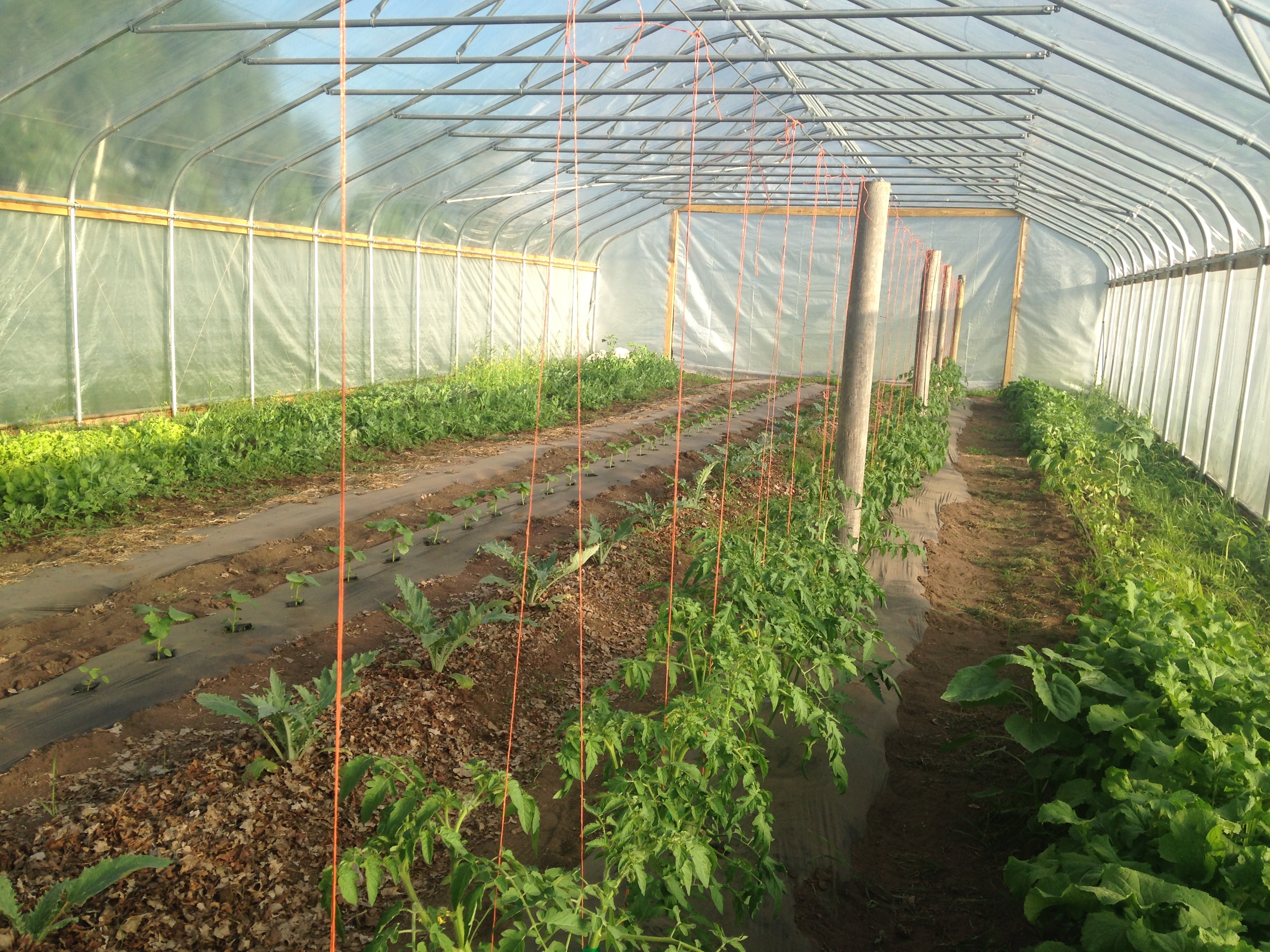
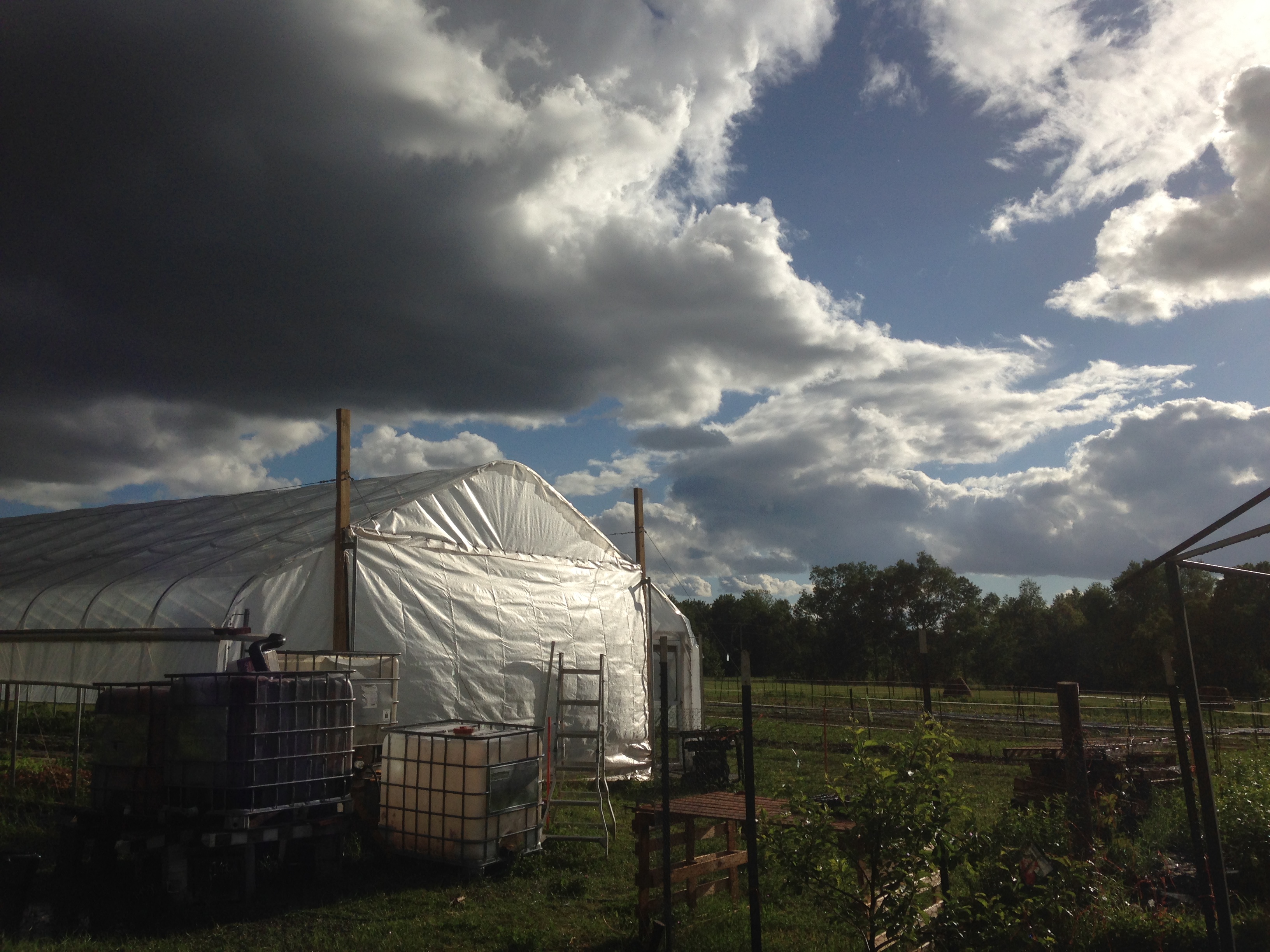
The biggest change this year is the High Tunnel greenhouse we completed at the end of last autumn, thanks to a USDA grant.

IMG_4390

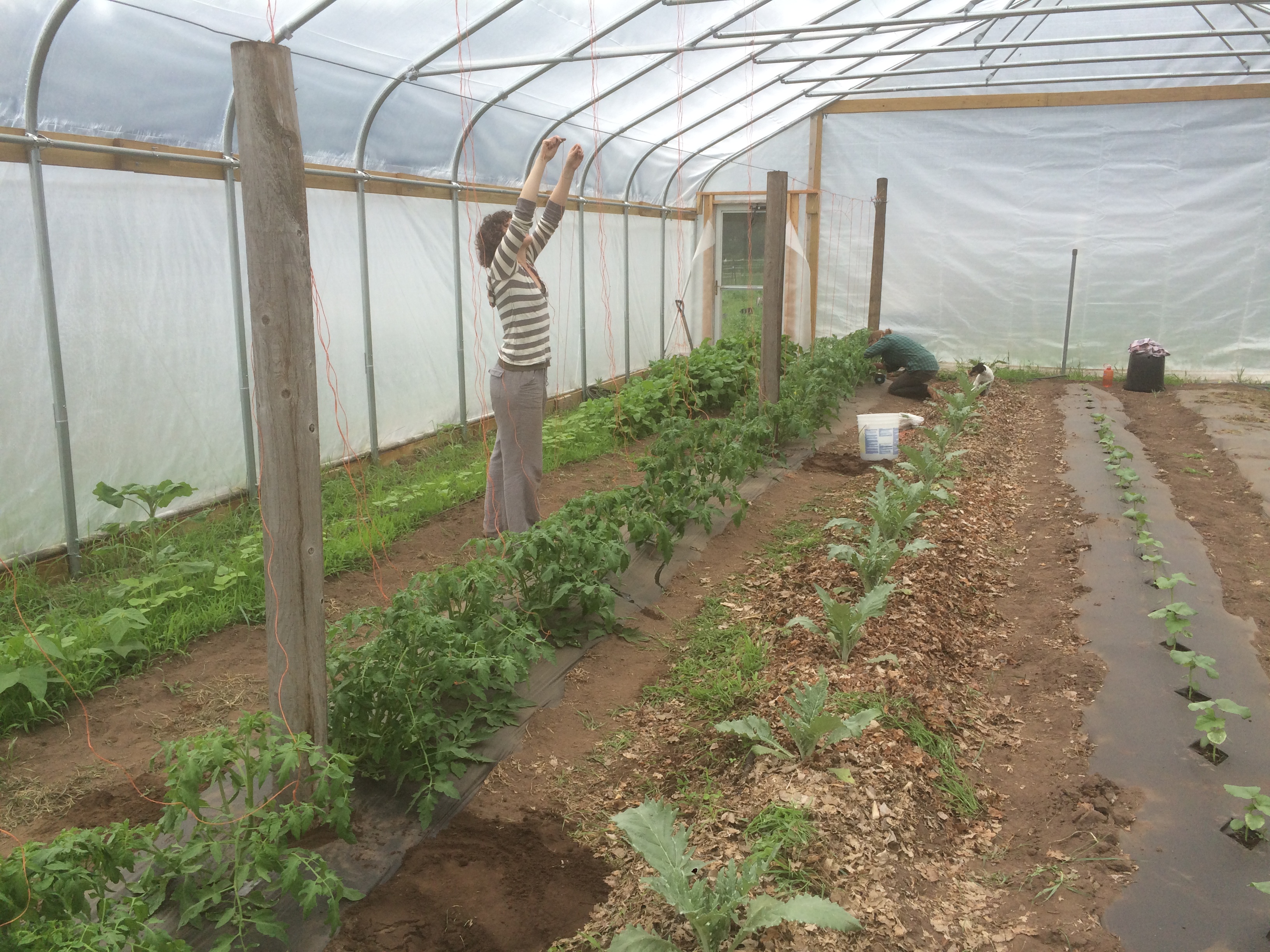
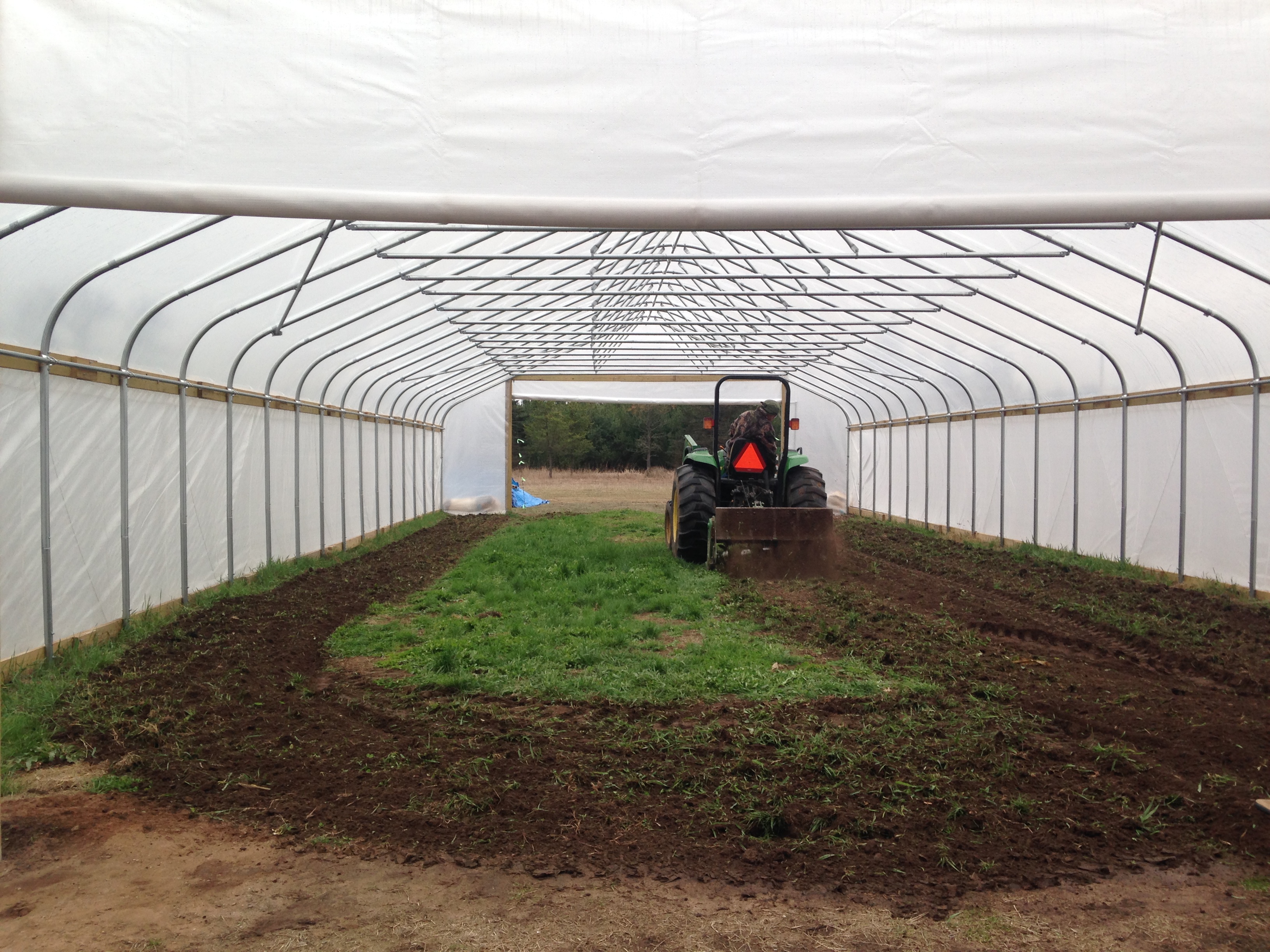
It’s a powerful and complex 72×30′ tool that we’re learning to use. After the winter, we returned to find the ground inside it totally green with grass and weeds – a beautiful lively space to hang out in, while everything outside was barren and brown! But soon enough we had to till the green under to prepare the soil for planting.

IMG_4255

We then laid out irrigation throughout – since no rain falls inside, all the plants’ water needs must be delivered by us. There are soaker hoses that are gravity-fed by our rainwater collection tanks up on the hill, and drip irrigation lines in each row, fed by the well. We’re also adding an experimental rainwater collection system on one edge … which should be able to collect over 600 gallons of water from a 1″ rainfall.

IMG_4445

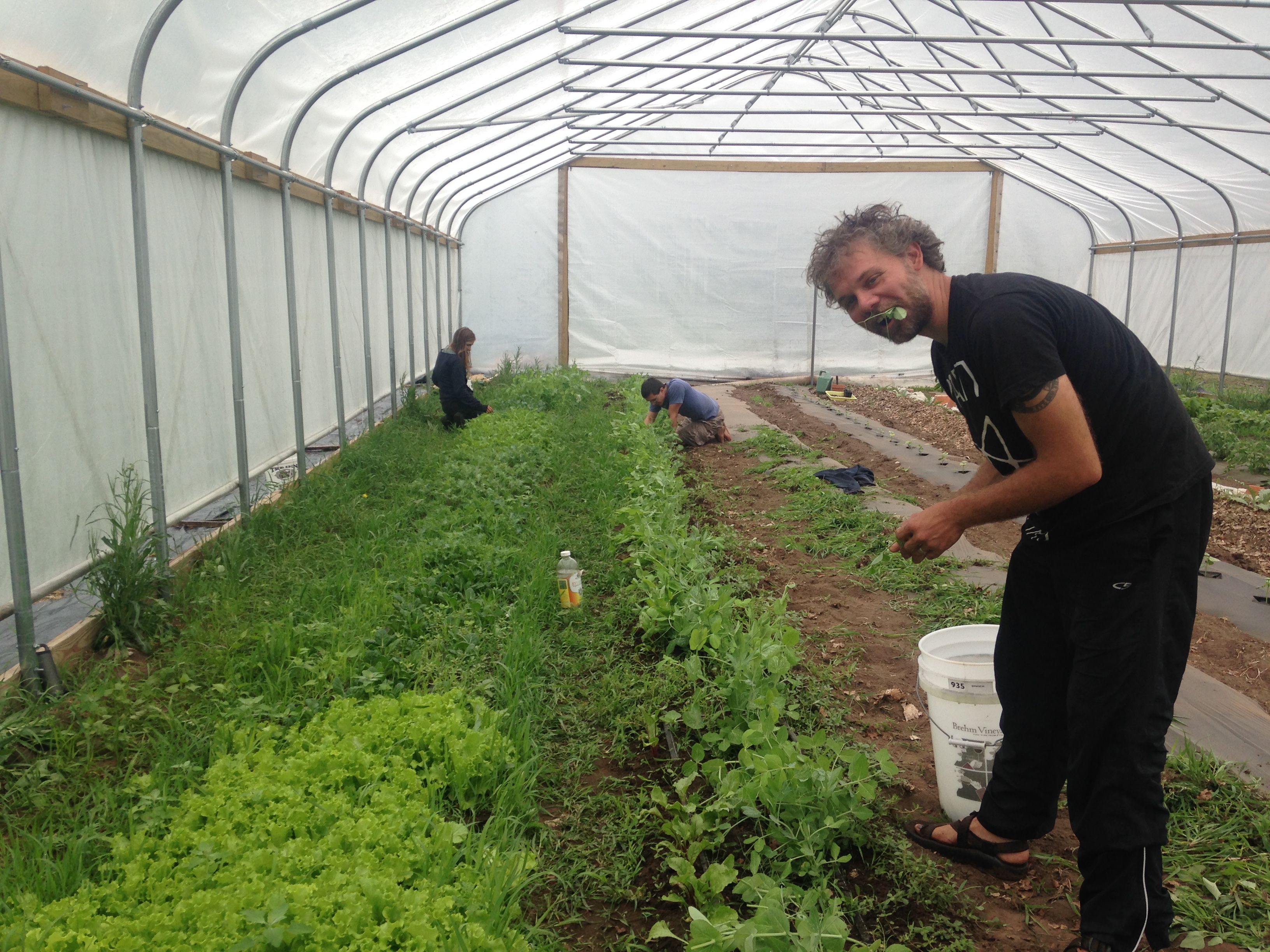
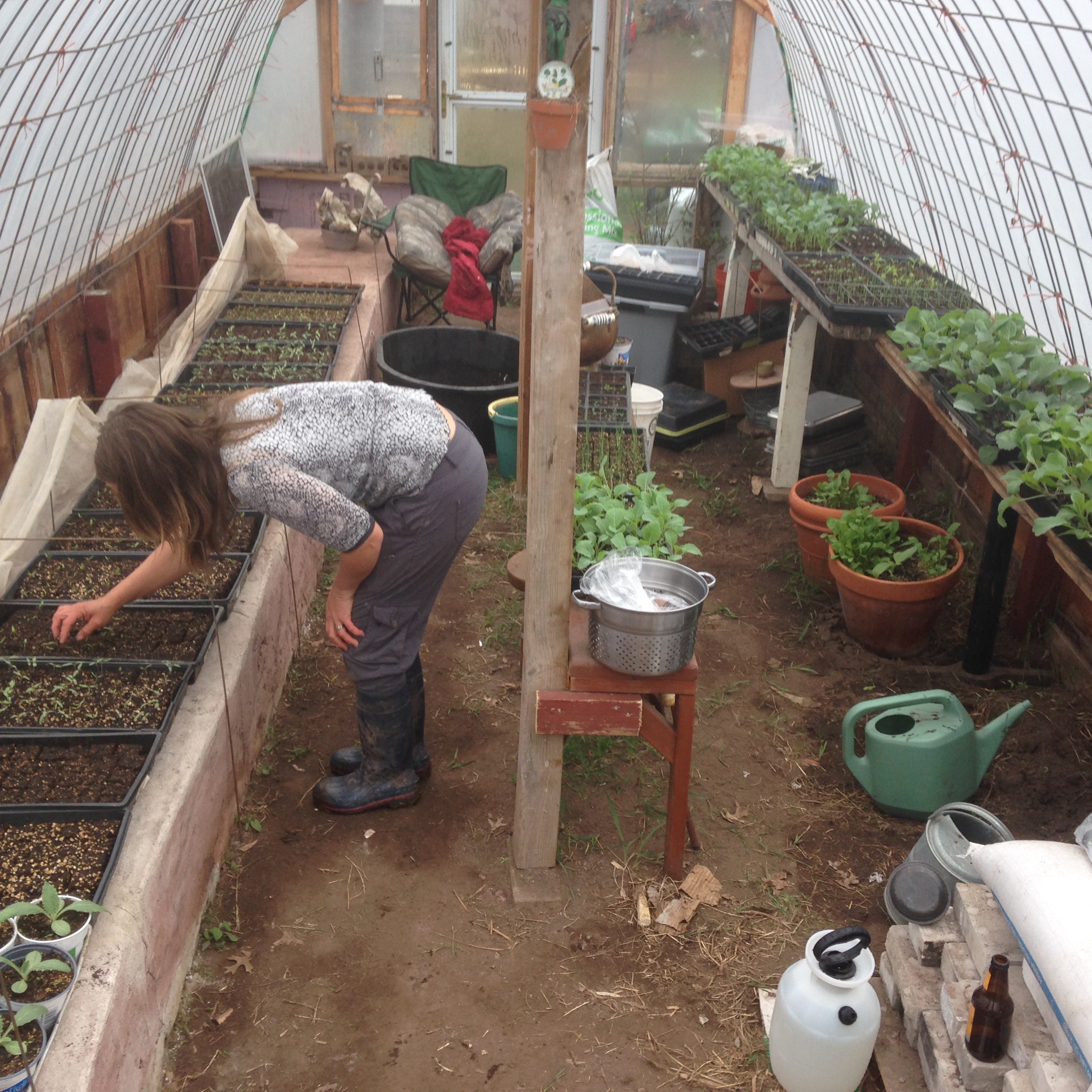
We primarily plan to grow hot weather crops inside, but to get things started while nights were still going below freezing we planted some salad mix and peas. They survived the cold nights just fine – but now the challenge is to keep them from overheating during the sunny days, when temperatures in the high tunnel can easily reach triple digits if we aren’t careful. To ventilate the high tunnel, we roll up the 70-foot long side panels, permitting a cross-breeze to move through. This works pretty well, however, if it’s not merely breezy but windy (basically anything over 10mph), then we have to close at least one side up to prevent damage to the structure. It’s been a learning experience trying to balance wind minimization with heat regulation – and it will get even more interesting when the hot, sunny days of summer are upon us. (We plan to add additional ventilation in the peaks on both sides to help move hot air out even when there is no breeze.)

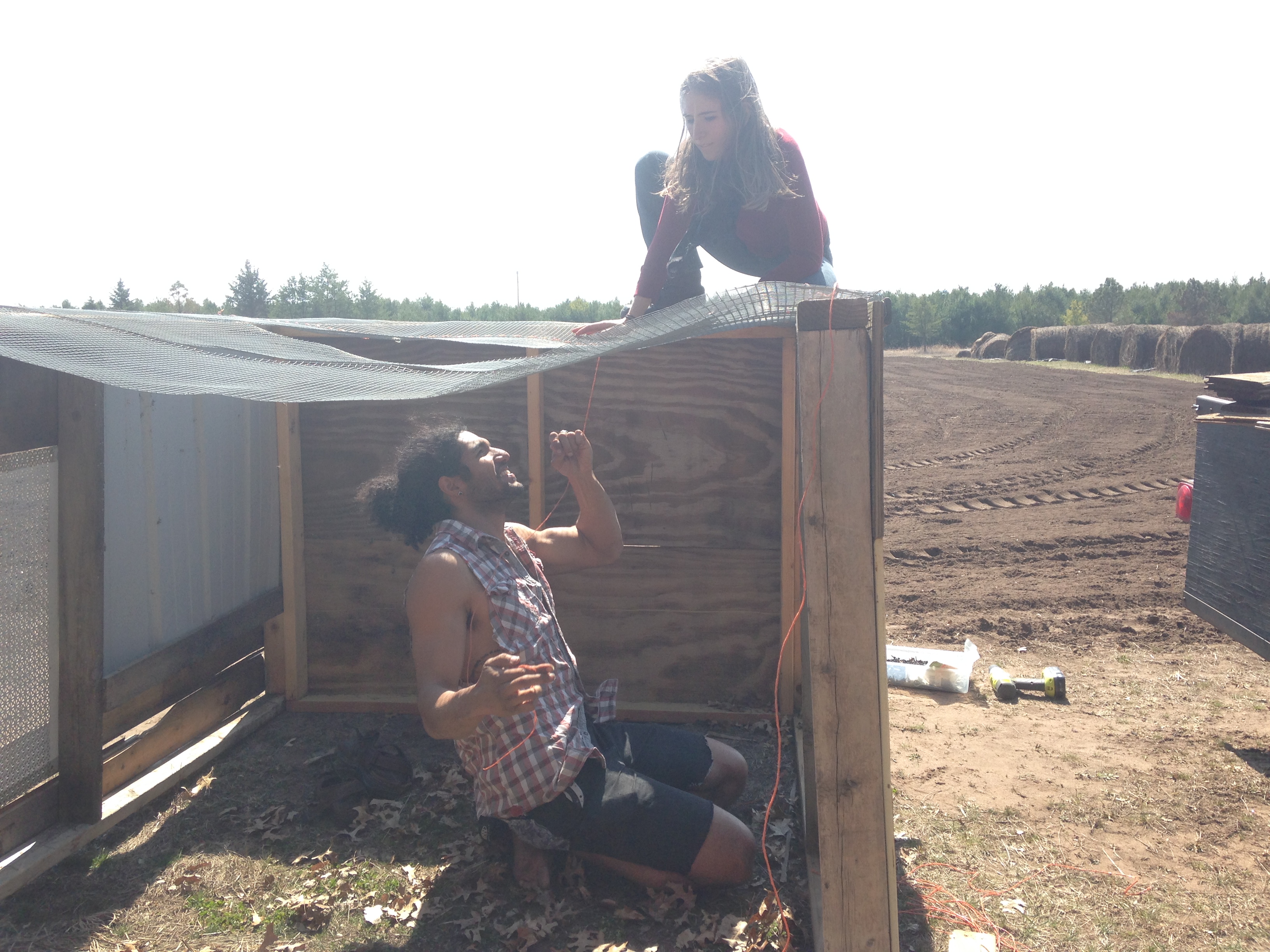
Nora & B help build a second chicken coop to house the 14 free craigslist hens we added to the flock in April

We’ve been very fortunate to have plenty of help this Spring. It would be a ridiculously long blog post if I tried to list it all, but I’ll try to hit some highlights …

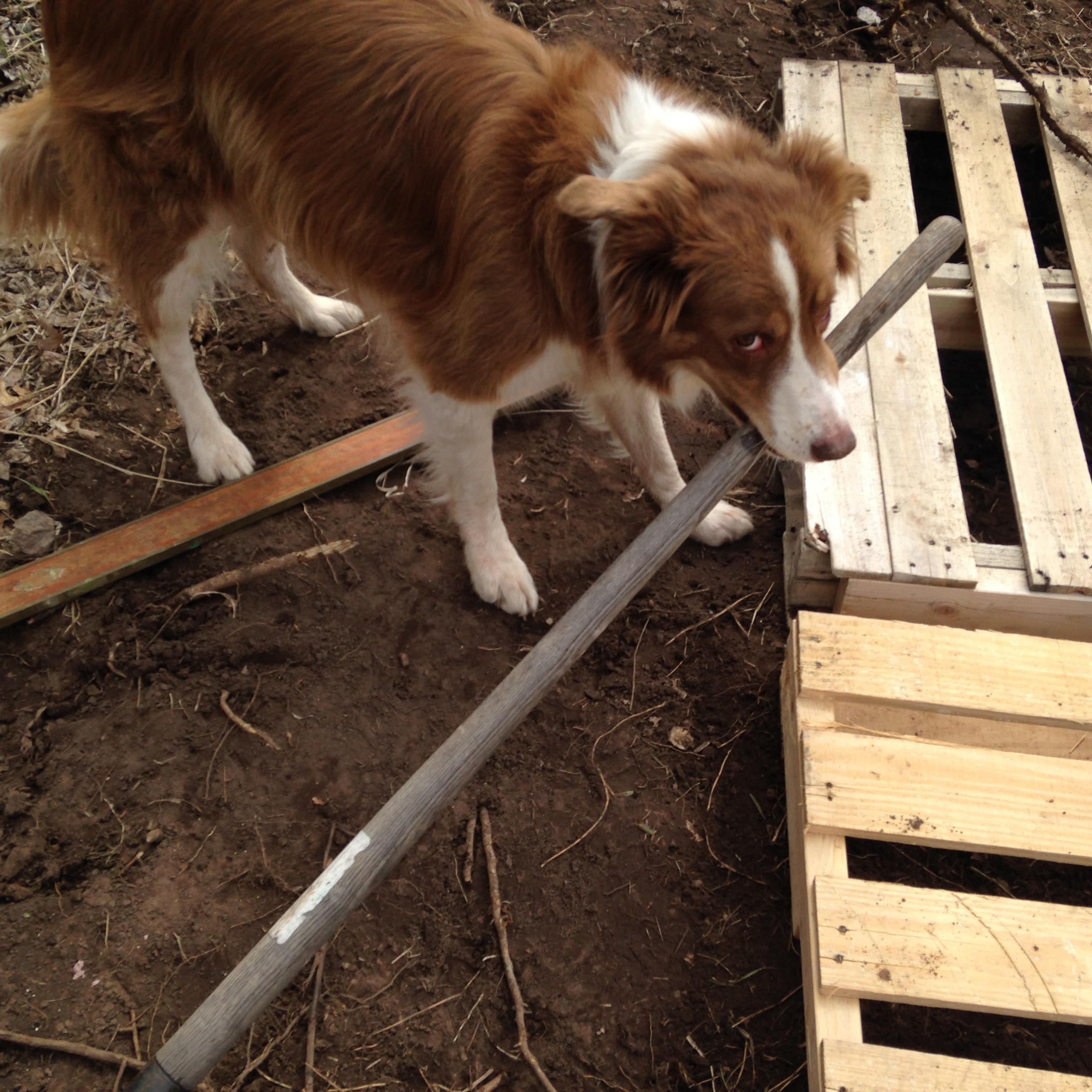
Ace helping with some shovel work .. actually he just wants us to throw that "stick" for him
Ace helping with some shovel work .. actually he just wants us to throw that “stick” for him

Kristin’s dad Patriarch Jim Sehr has been helping us out a ton with various construction and repair projects – he added a service door to the high tunnel for far easier access, engineered the rainwater collection on there, got the riding mower working, and plumbed in our new and improved well pressure tank. And Matriarch Deb Sehr came out to cut and plant potatoes – and even do some dishes so we can stay on top of the field and construction projects.

IMG_5388

Neighbors Dave & Marcia kept our flock of hens happy throughout the winter, provided us with additional firewood to fuel both the greenhouse heater and the new WWOOFer cabin (more on that a bit), lent us gopher traps, tools, and best of all, their tractor!

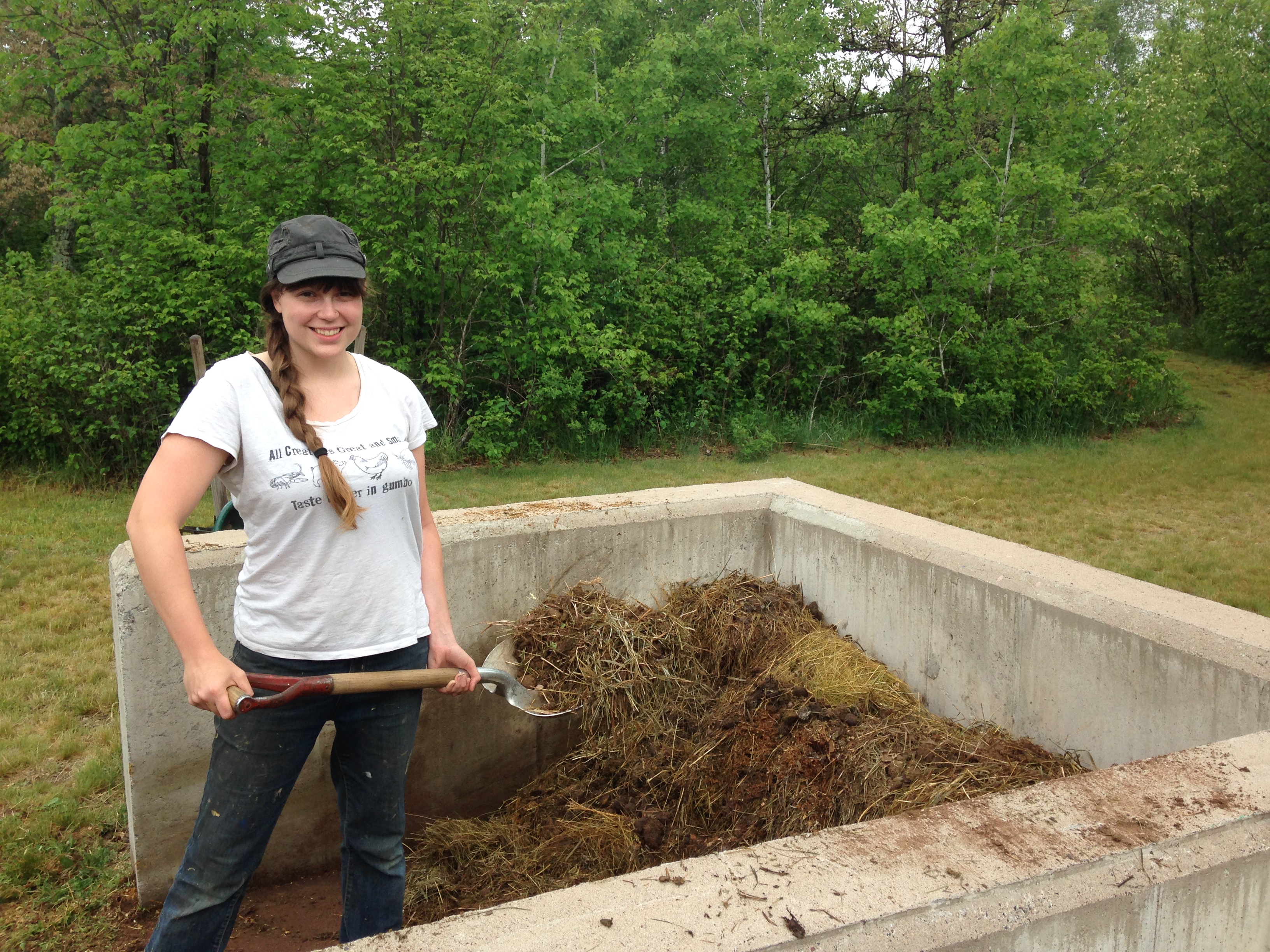
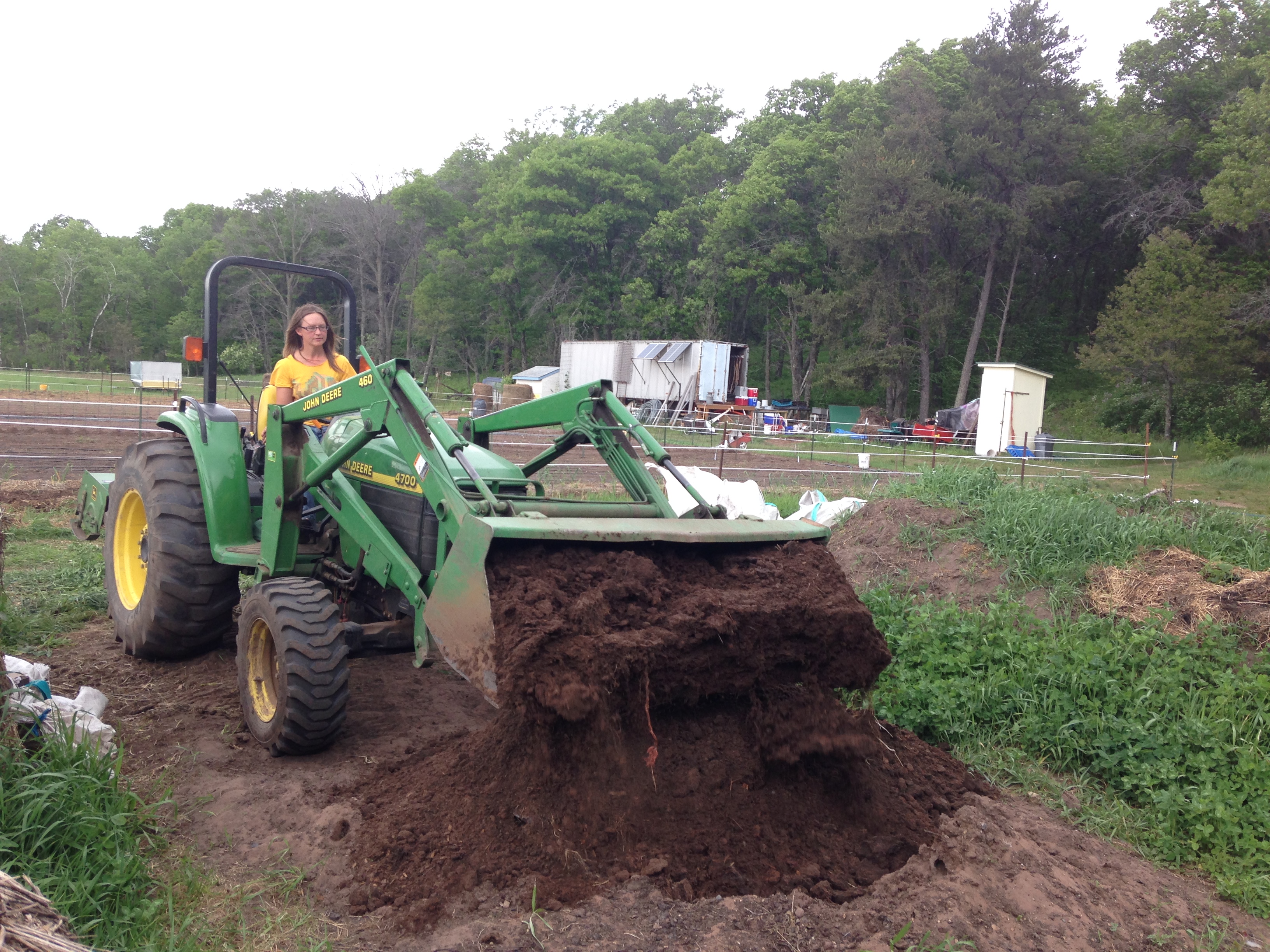
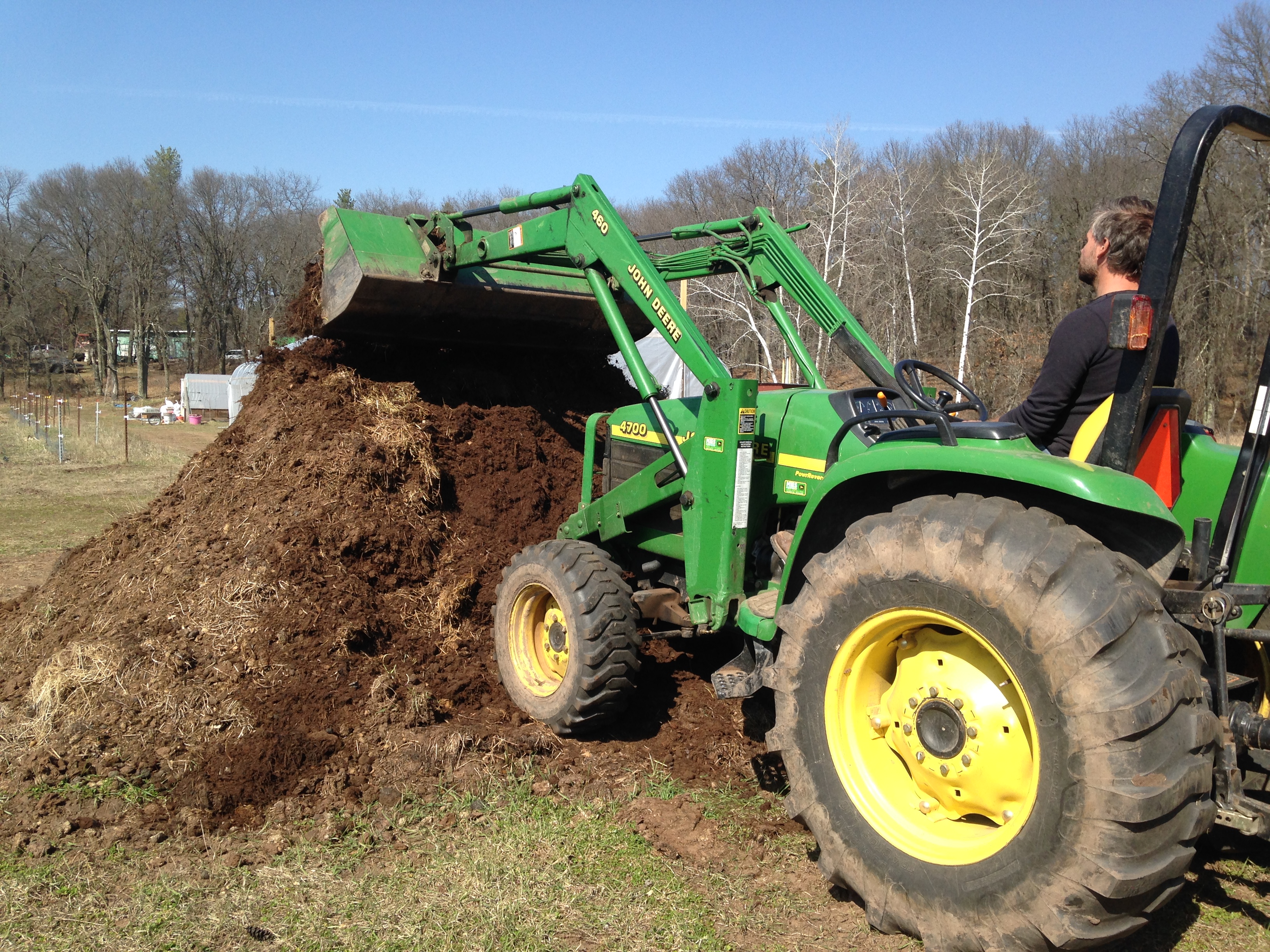
turning the pile of old horse manure with Neighbor Dave's tractor
turning the pile of old horse manure with Neighbor Dave’s tractor

Plus, when I was despondent thinking I’d killed our well pump (it turned out to just be a flipped breaker in the generator), Marcia brought over rhubarb custard dessert and ice cream; I literally cannot imagine better neighbors to have.

IMG_4809

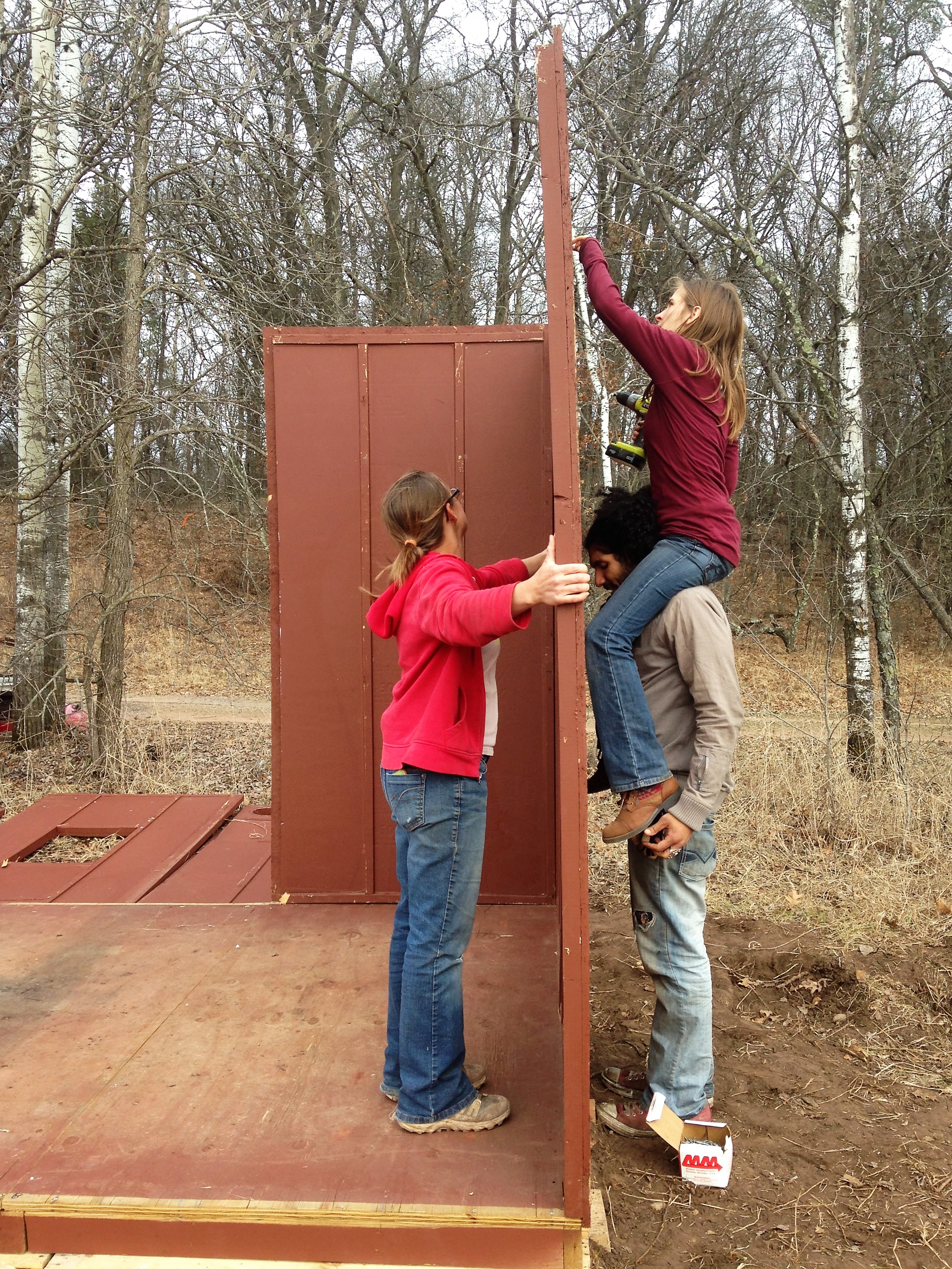
Our friends from the Cities have come out to work with us (thanks Tyler, Amy, Steffan, & Eugene!) , and we’ve had lots of help from B & Nora – the WWOOFer/musician couple that worked here throughout the end of last season, and then returned early this spring. We got a free ice fishing shack off of Craigslist – insulated and complete with a little wood stove.
IMG_4759

This turned out to be a perfect solution for them to sleep in throughout April – they helped us build it, and then made it their home – although they’d been prepared to just rough it under huge piles of blankets, the heated, insulated Fish House worked out much more pleasantly. Oh, and their Maine Coon cat, “Bucket,” is working with us too – keeping the vole population down.

IMG_5246

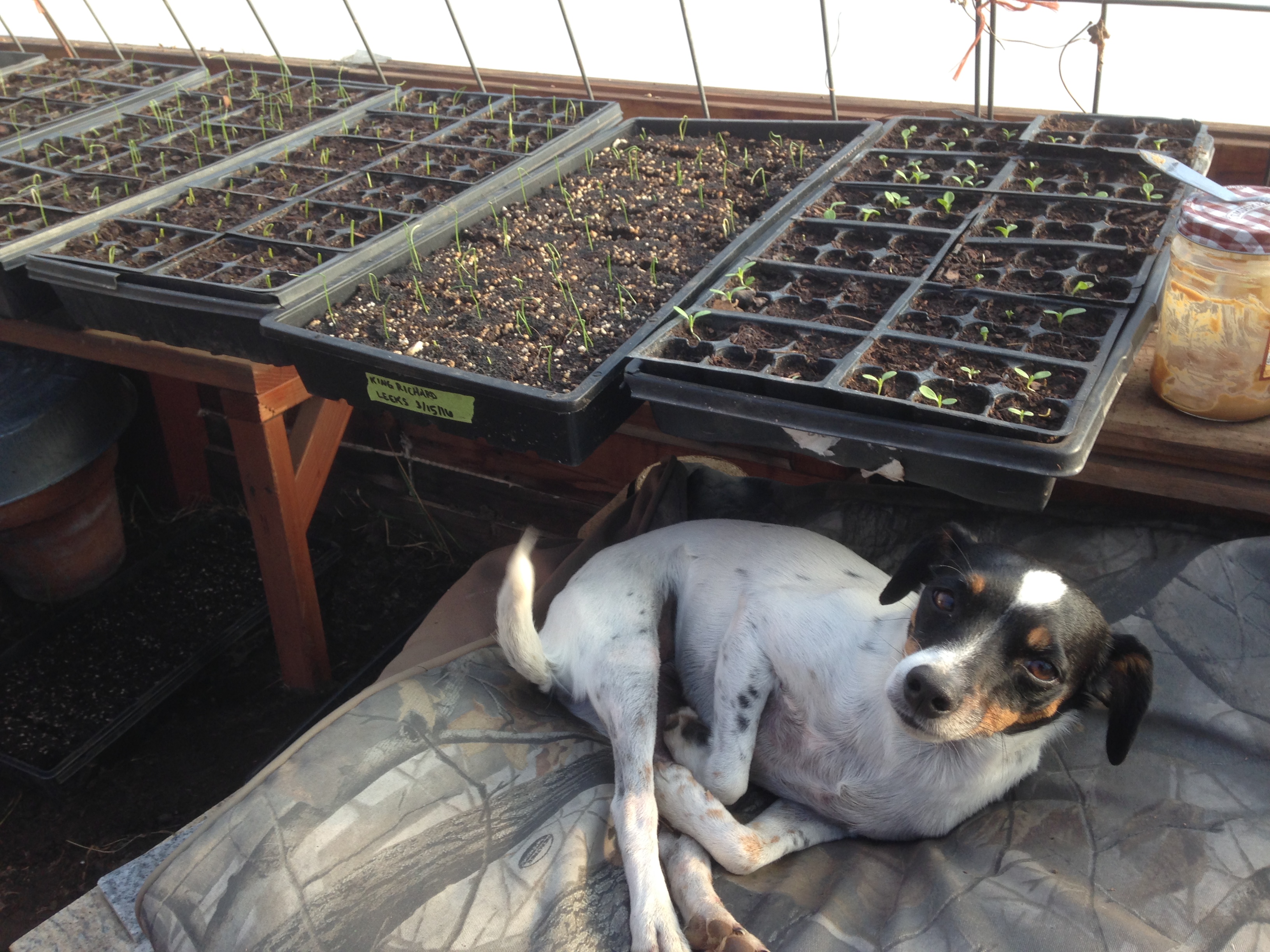
The field still looks pretty empty, but the first wave of food is taking root out there – potatoes, peas, onions, radishes, turnips, and various salad greens have begun to stir, stretch, yawn, and emerge into the sunshine. And of course, there are many hundreds of plants growing in the greenhouse, awaiting suitable weather to be transplanted out.

IMG_5234

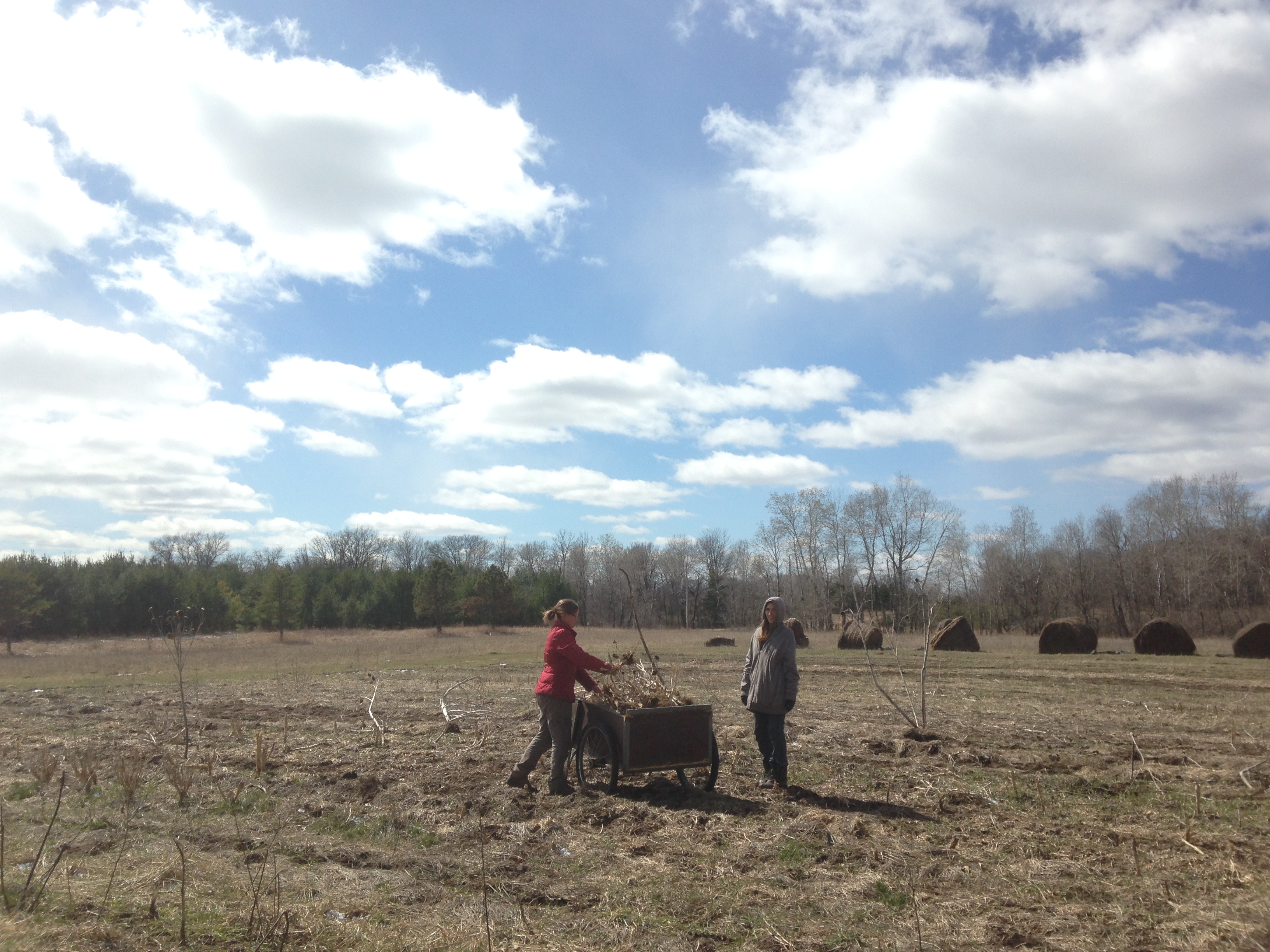
The eternal battle with the evil quackgrass is back in full swing – we till or broadfork the soil of each row before planting, and then pull out as much of the tenacious, ropey, unkillable rhizomes as possible.

tilling in wood ash from the woodstove, in advance of planting beets (which appreciate the lowered ph)


We’ll be using thick layers of mulch to slow down what doesn’t get pulled (it regrows from every tiny piece of root left behind) … it’s not a war that we ever really win, but we hold it at bay enough to get our crops for the year.

We give it the good fight and it reminds us that our farming here is not about efficiency … or even being reasonable.

IMG_4303

Like all of life, it’s absurd and irrational –  and we love it.

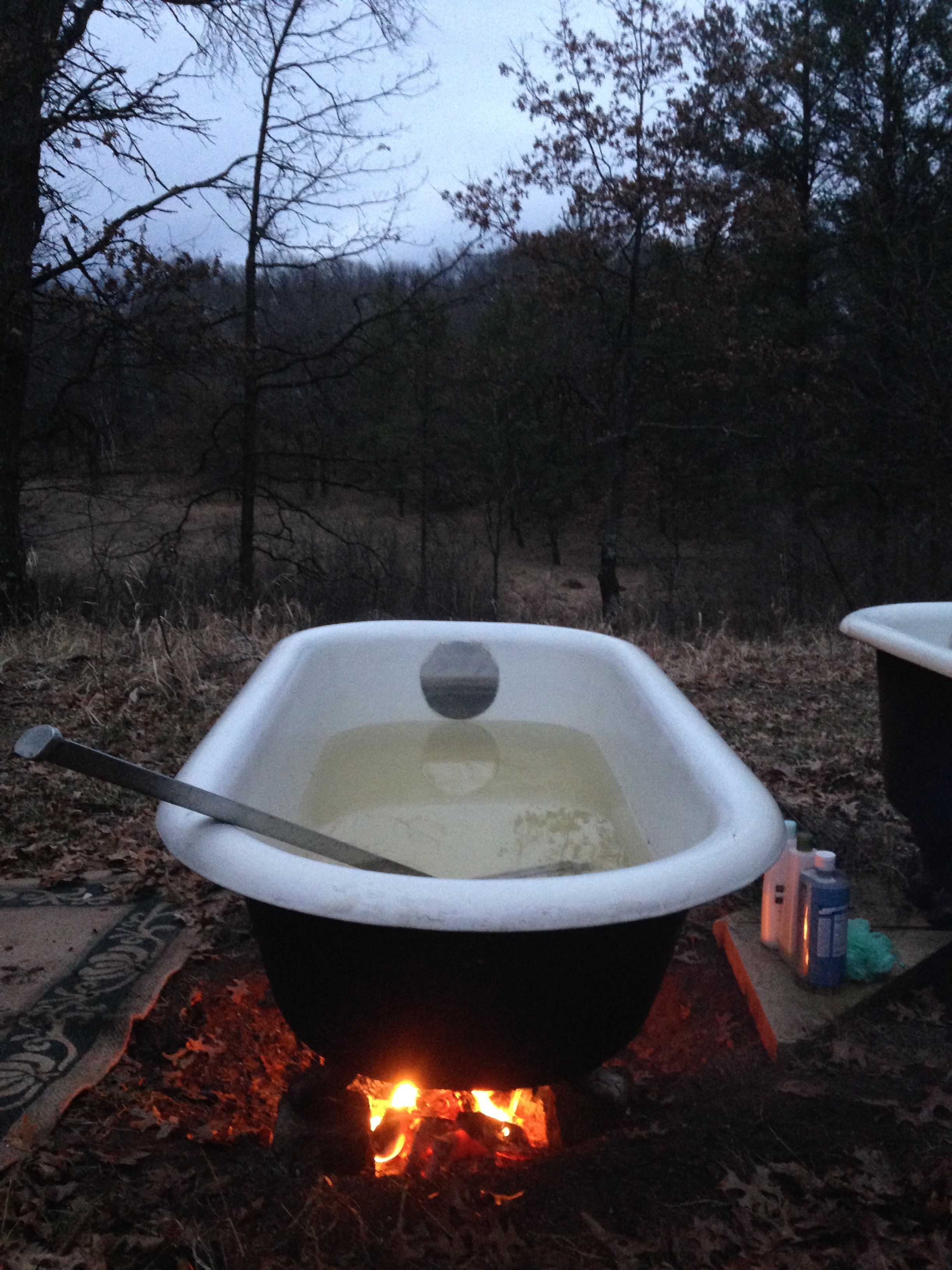
nothing beats sharing a 110 degree soak after a long work day
nothing beats a 110 degree soak after a long work day

.

Thanks for joining us in the adventure!


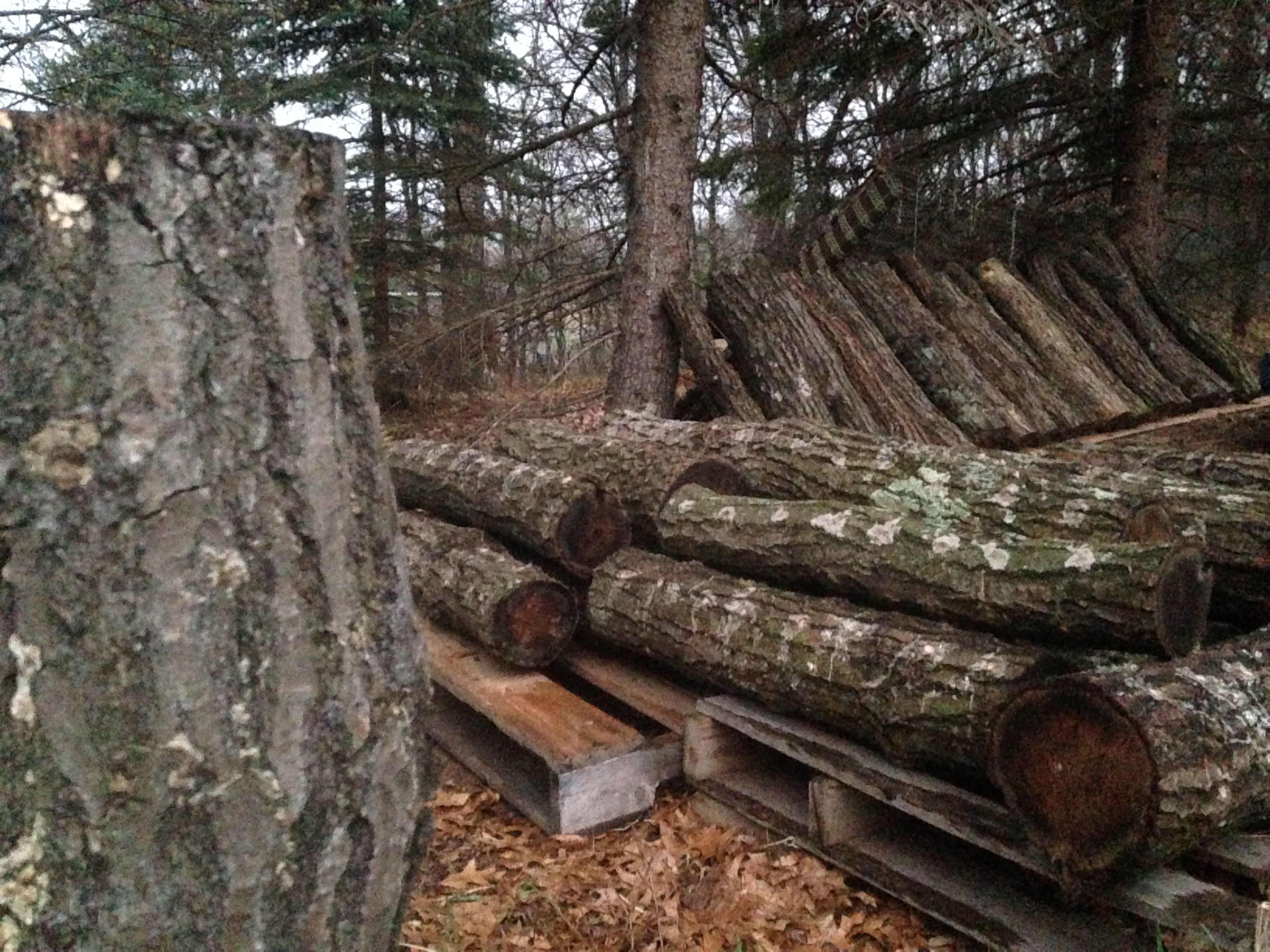
shiitake mushroom inoculated logs

IMG_4351 IMG_4821

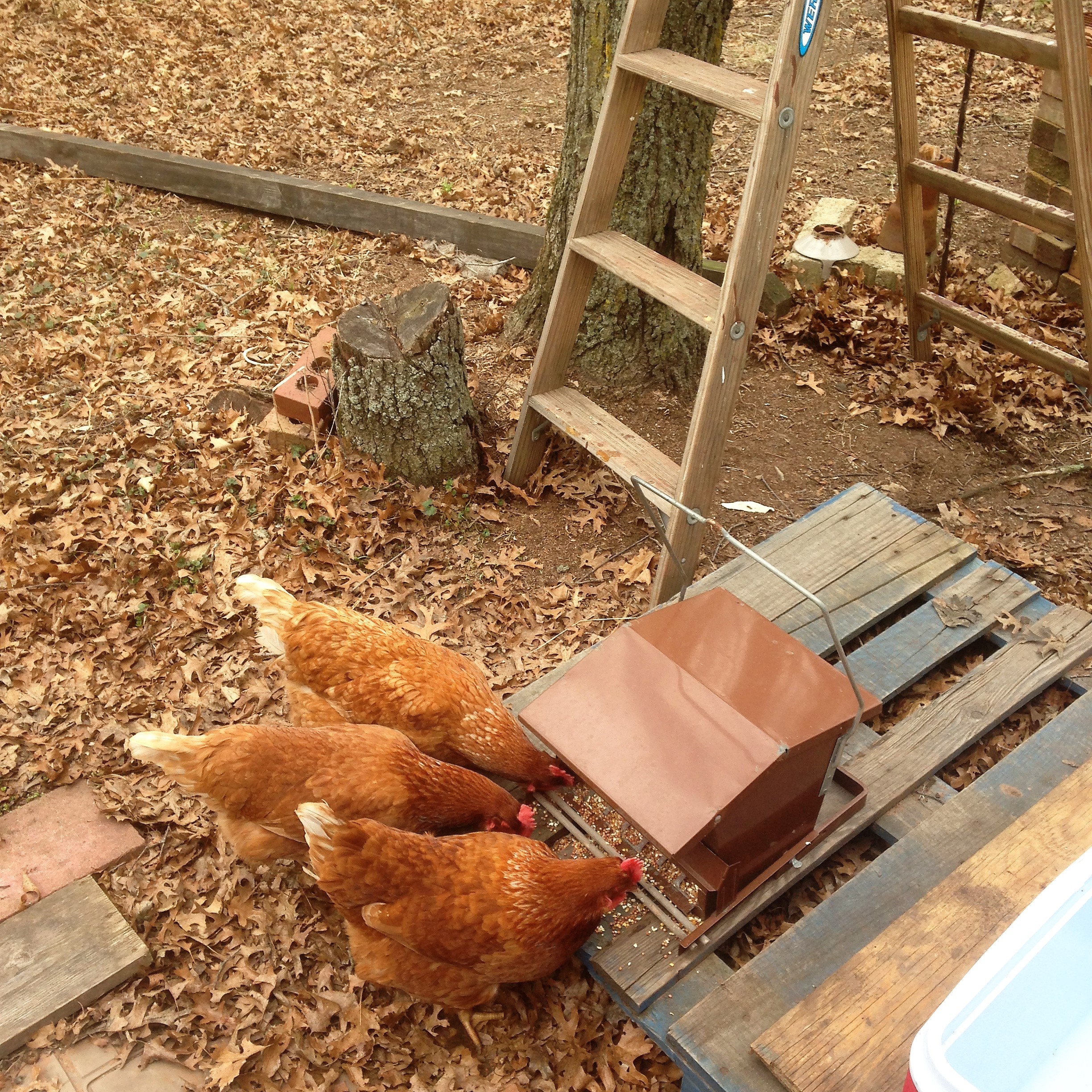
I walked away from the ladder to get hardware to hang the birdfeeder - within a minute these vultures had swooped in
I walked away from the ladder to get hardware to hang the birdfeeder – within a minute these vultures had swooped in


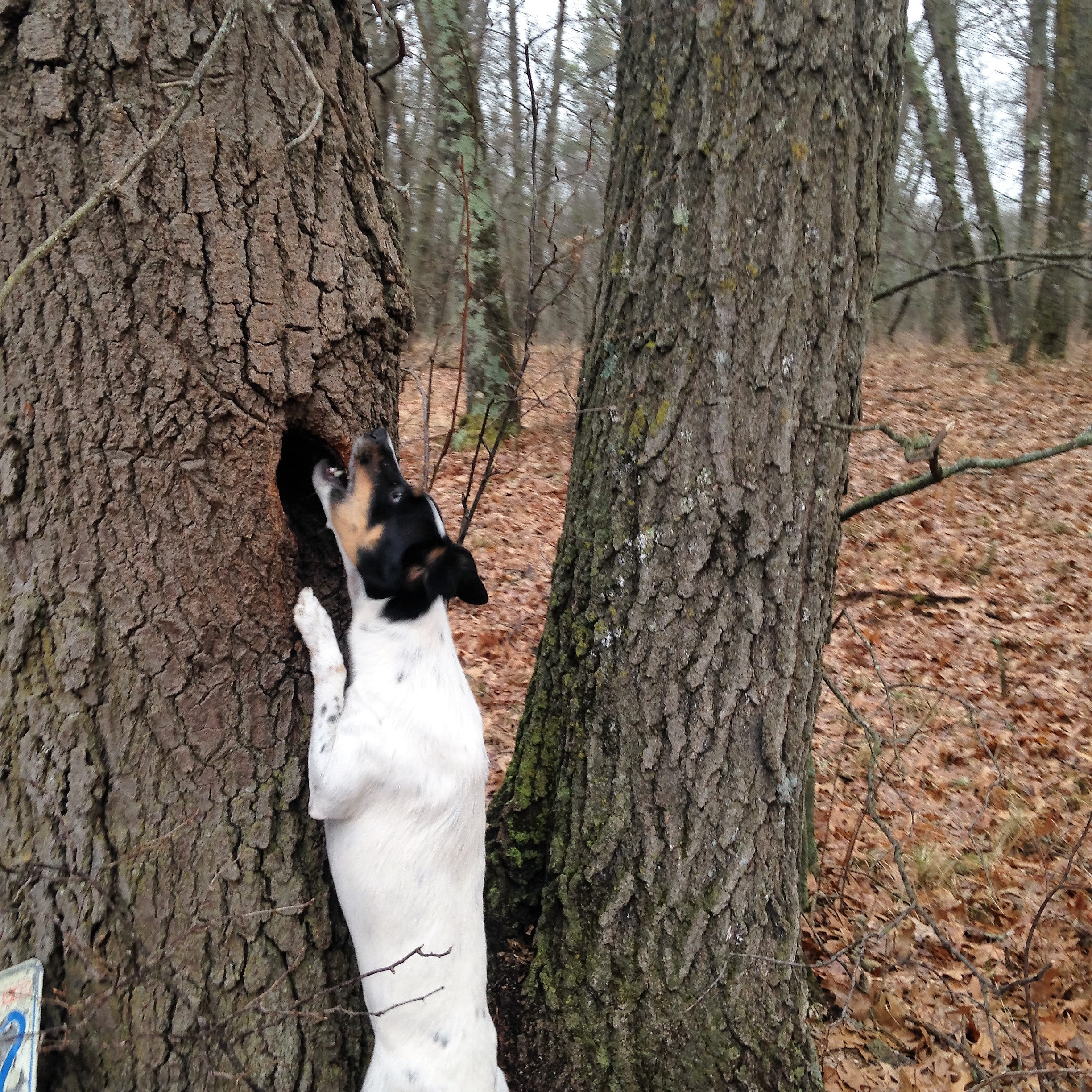
a frustrated Widget tries to chew into the tree where the red squirrel holes up
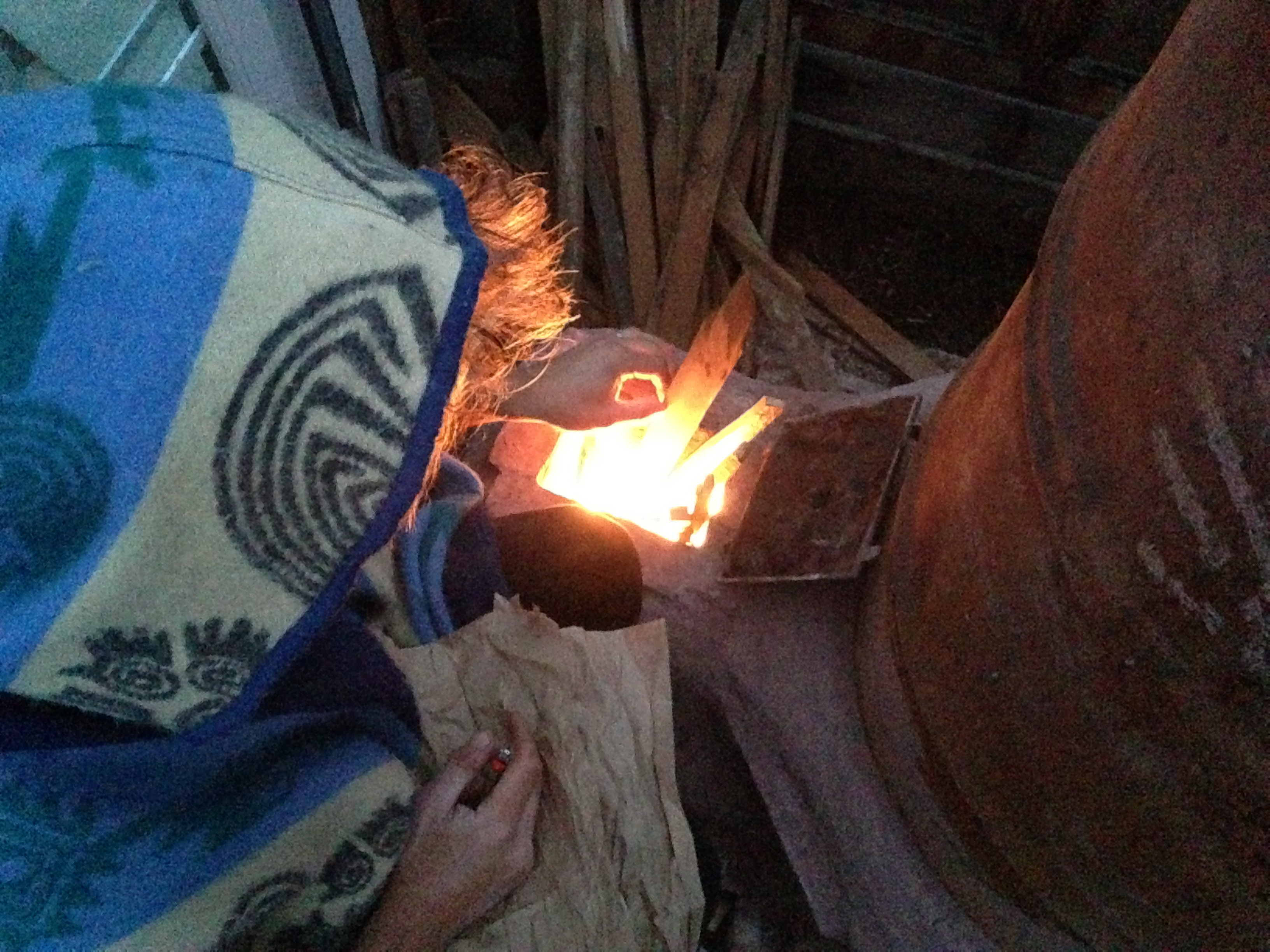
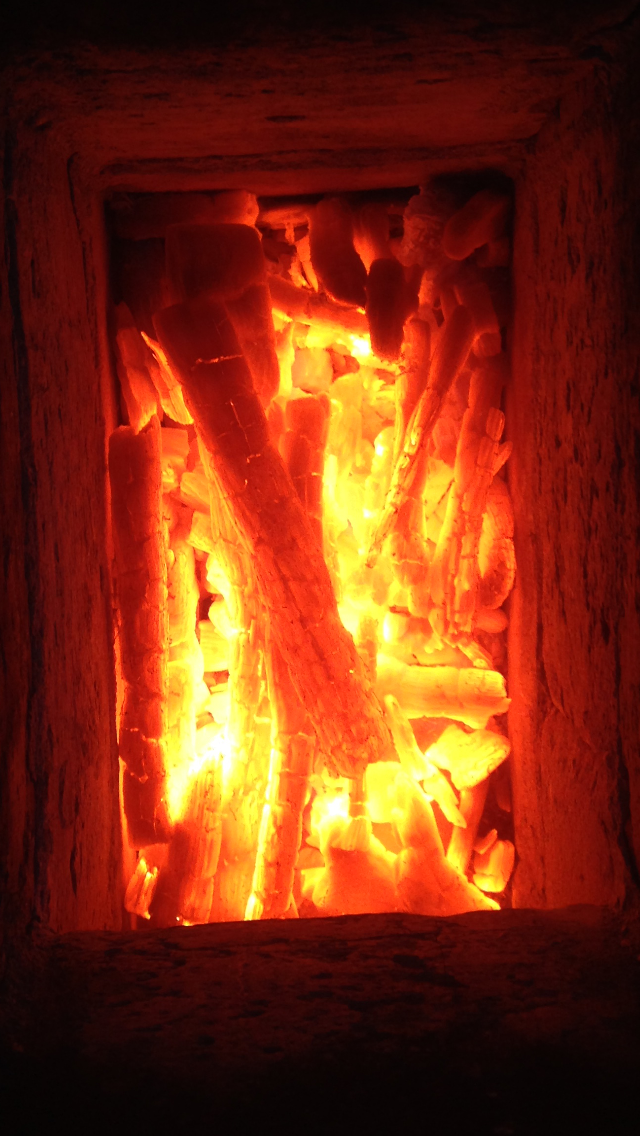
Gabe tending the rocket mass heater fire in the greenhouse by lantern light

IMG_5385

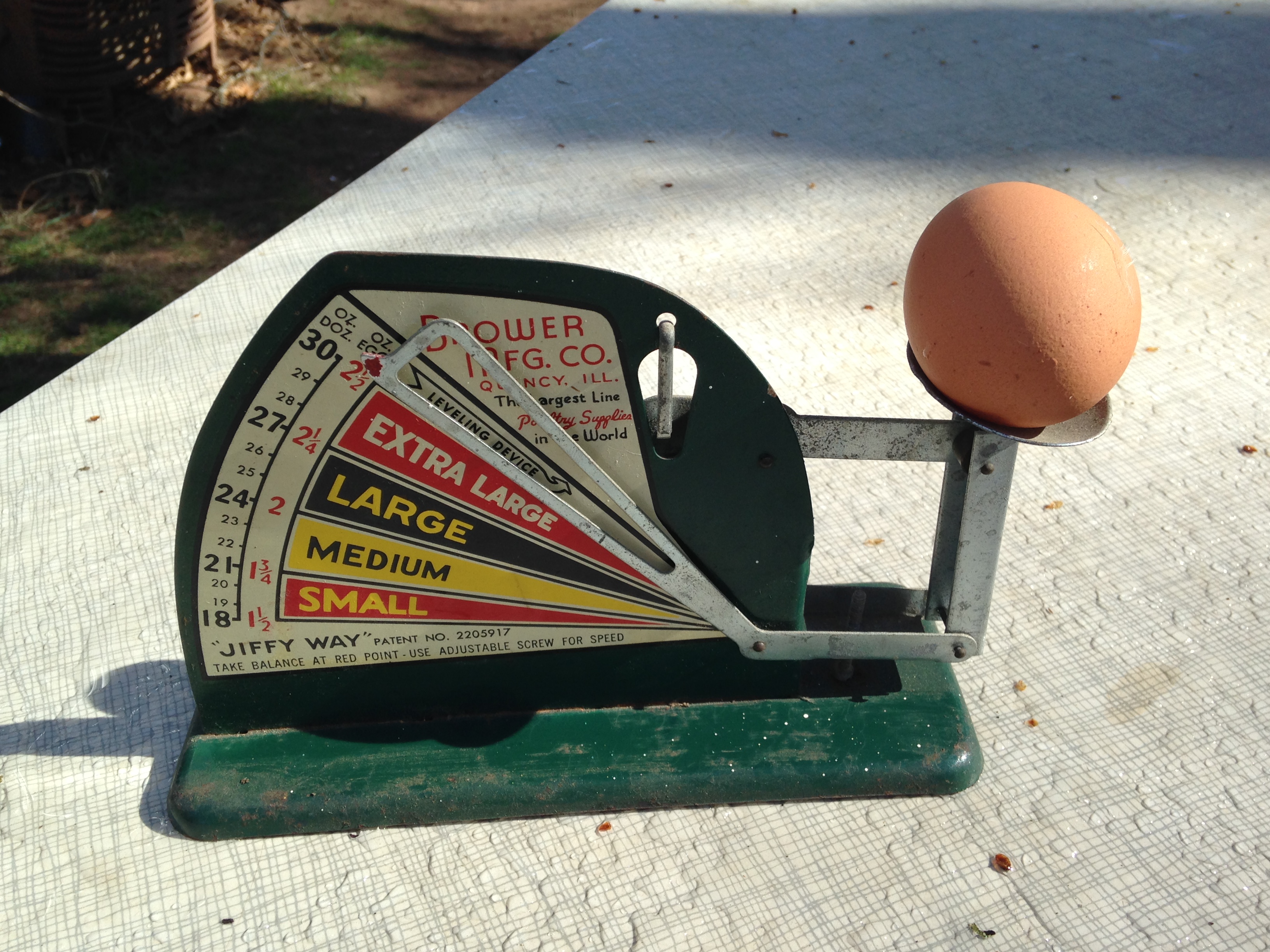
older hends lay less often - but they lay off-the-scale huge eggs!
older hens lay less often – but they lay off-the-scale huge eggs!

IMG_4741

Quest for Fire: A Rocket Mass Heater for the Greenhouse

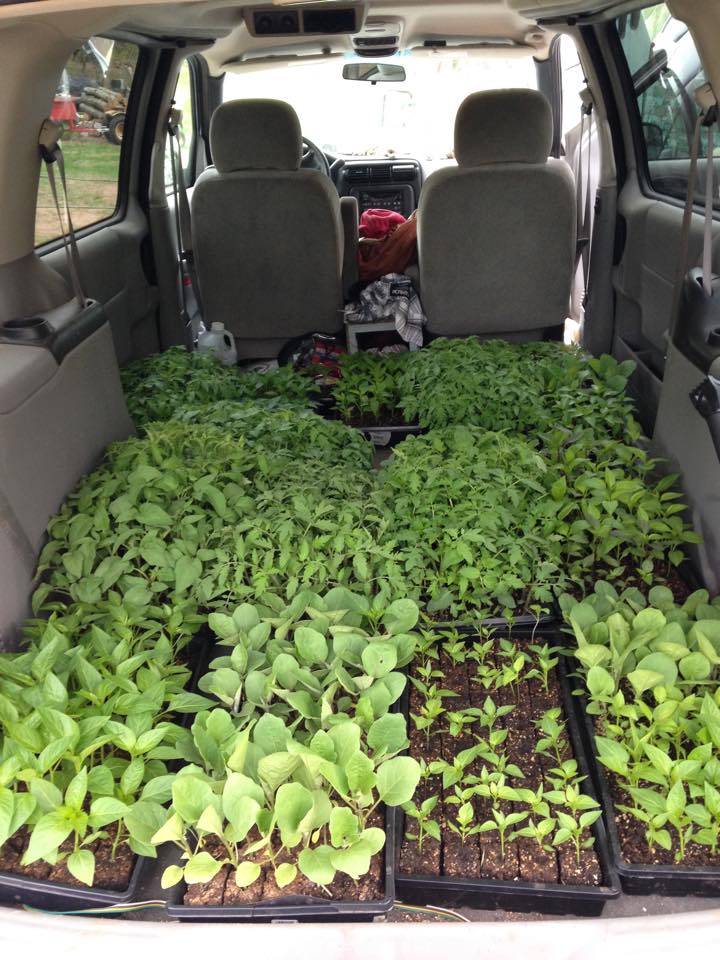
Being off grid (without utility hookups to water, gas, and electricity) is challenging even just for a dwelling –  but even more so for a farm, especially in this climate. In the spring, we have to start our plants indoors, so they will be developed enough to produce before it gets too hot for the cool weather plants in summer, and before the killing frosts of fall take out the heat lovers. They all need to be kept warm day and night, especially when germinating from seeds – but they also need to be under good bright sunlight. The sunlight is great in the greenhouse, which also gets plenty warm most days if it’s not totally cloudy – but greenhouses lose heat quickly after sundown. We solved for this in previous years by nightly driving all the baby plants up to the trailer, where they slept toastily on floor-to-ceiling shelving next to the wood stove.

plus trays on the front passenger seat and foot well.

Then every morning just after dawn, we drove them all back down to the greenhouse for their daily sunshine. We worked out a good two-person method to get it done as efficiently as possible, but it was a time-consuming process – and we couldn’t have the lights on near the plants when they were inside (or they’d get leggy trying to get fed by the artificial lighting). Yeah, it worked … but we needed to come up with something better.

Heating the greenhouse at night was the obvious solution, but it seemed impossible – the plastic covering lost heat so quickly that it would cost us a fortune in propane … and we’d always be fearful that the tank was going to run out in the night, leaving all our crops to freeze to death. And of course our little solar power system was not capable of generating enough electric heat (which is inherently inefficient) to do the job. A wood stove like the one we use in the trailer would require repeated fueling throughout the night, and again, the heat would mostly be going to the roof and then out through the plastic film.

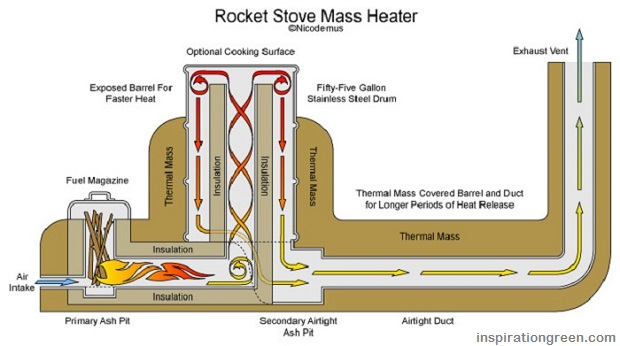
Research led us toward a possible solution – “rocket mass heaters,” which use small amounts of wood burned efficiently at high temperatures to heat up a thermal mass, which then slowly radiates the heat outward for many hours after the fire has gone out.

Rocket-Stove-Mass-Heater

It would still be a challenge to heat the whole greenhouse with this method unless we built a prohibitively large heater, however. Hmmm.

Well, we’d already been experimenting with a technique that Elliot Coleman promotes, using row cover fabric to create a greenhouse-within-a-greenhouse – just putting the plants on the ground and covering  them inside a low tunnel of fabric kept them warmer than the surrounding air, thanks to the day’s heat in the soil. That only got us a few degrees, but it was a crucial difference when temps might be just barely dipping below freezing.

What if we did the same thing atop a thermal mass? It seemed like a winning idea – so we decided to build a heated bench sized for seed trays, and put a cover over them at night to hold heat in.

For a year, we researched and gathered materials for the build – scavenged from garbage and the Free section of Craigslist; two trailer loads of clay from a retired sculptor, stove pipe of various diameters, a 55 gallon drum, river rocks from the neighbor’s pile they’d unearthed when building their house, cement board, and bricks – the best score of all was a huge free load of white “insulative firebricks,” which withstand high heat without heating up much themselves – ideal for our purposes.

IMG_0741

Last fall, after the killing frost had come and the 2015 CSA was over, we got to work, starting to test combustion chamber designs the day after our CSA potluck.

IMG_1120

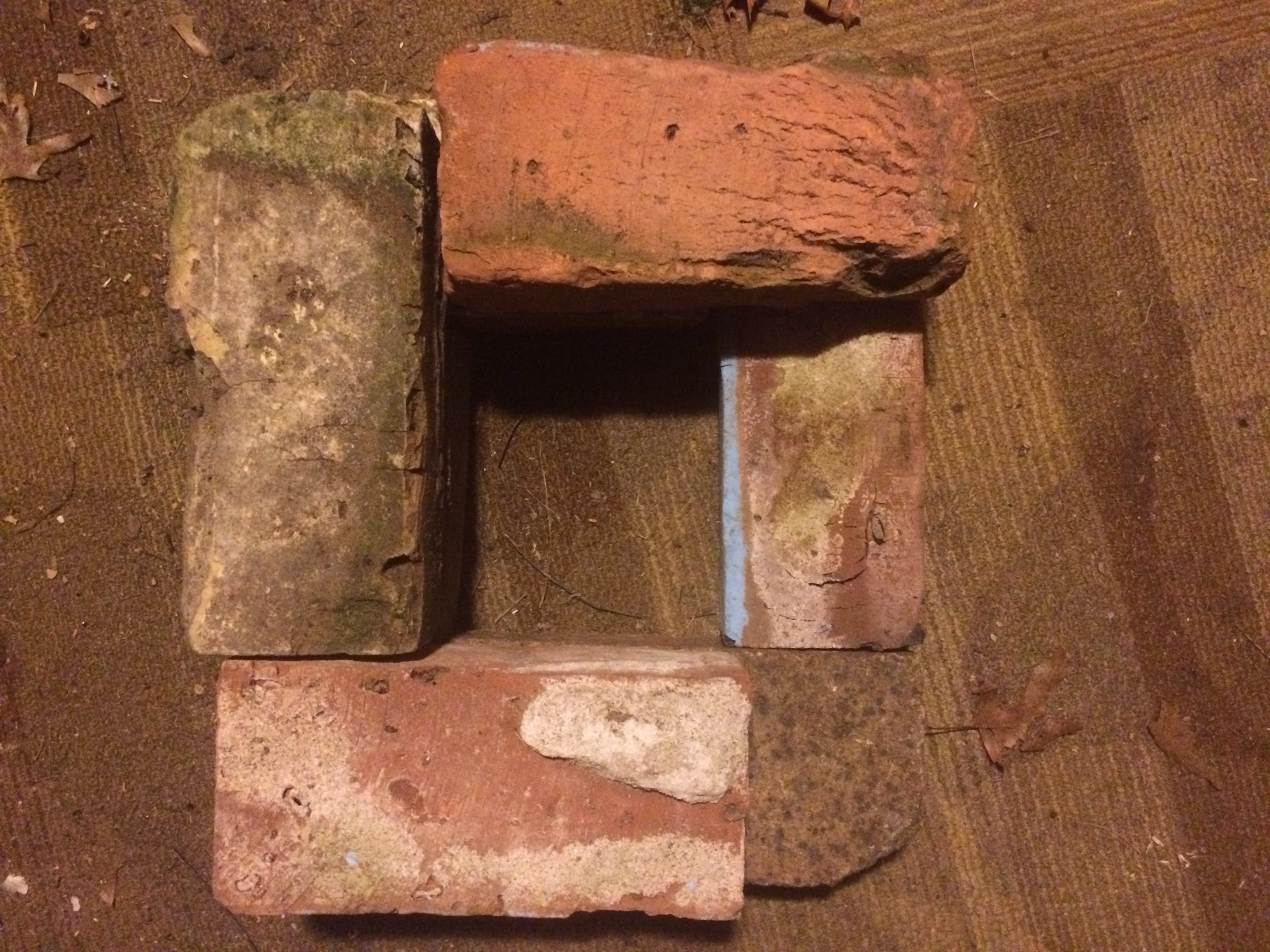
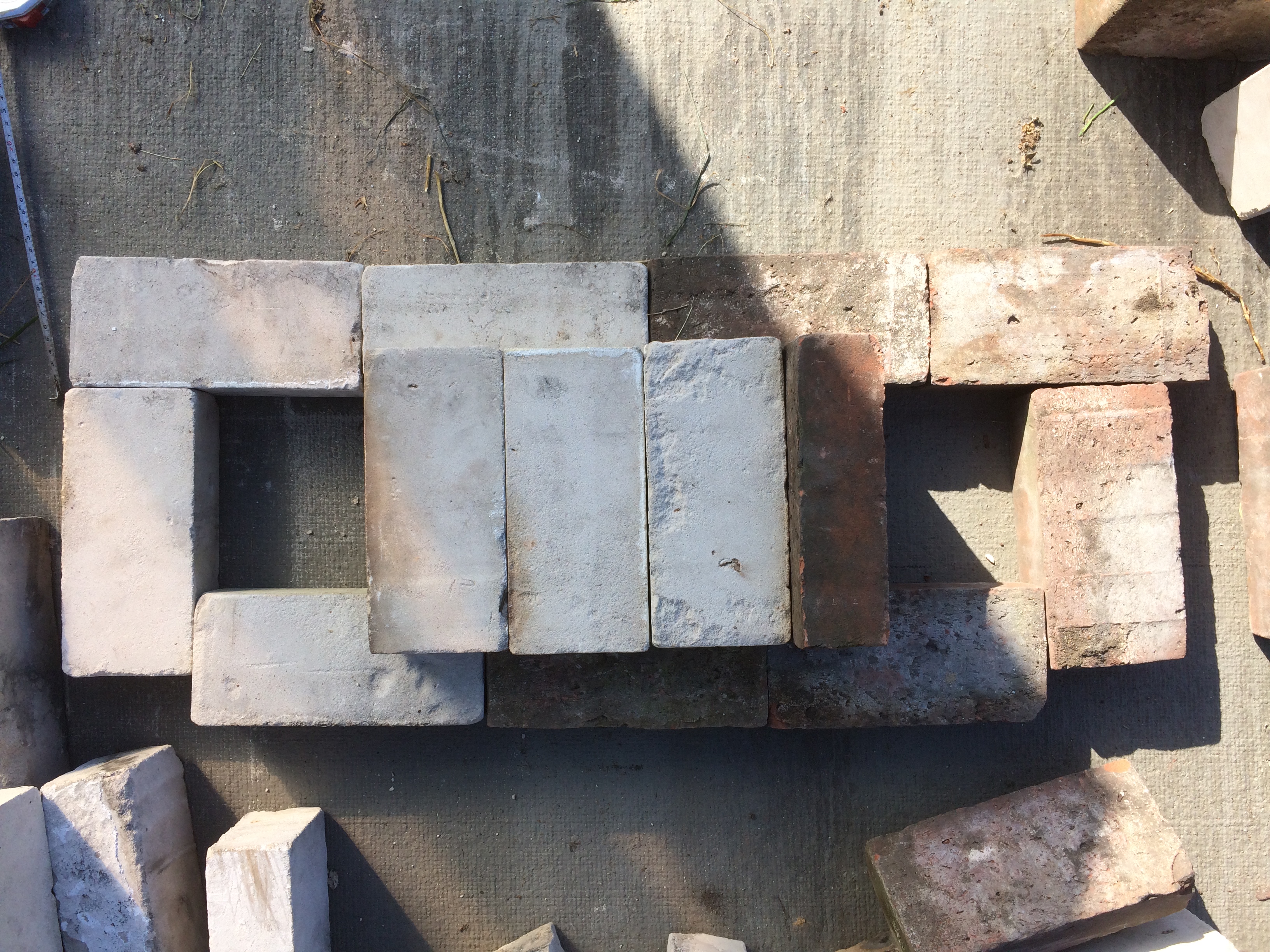
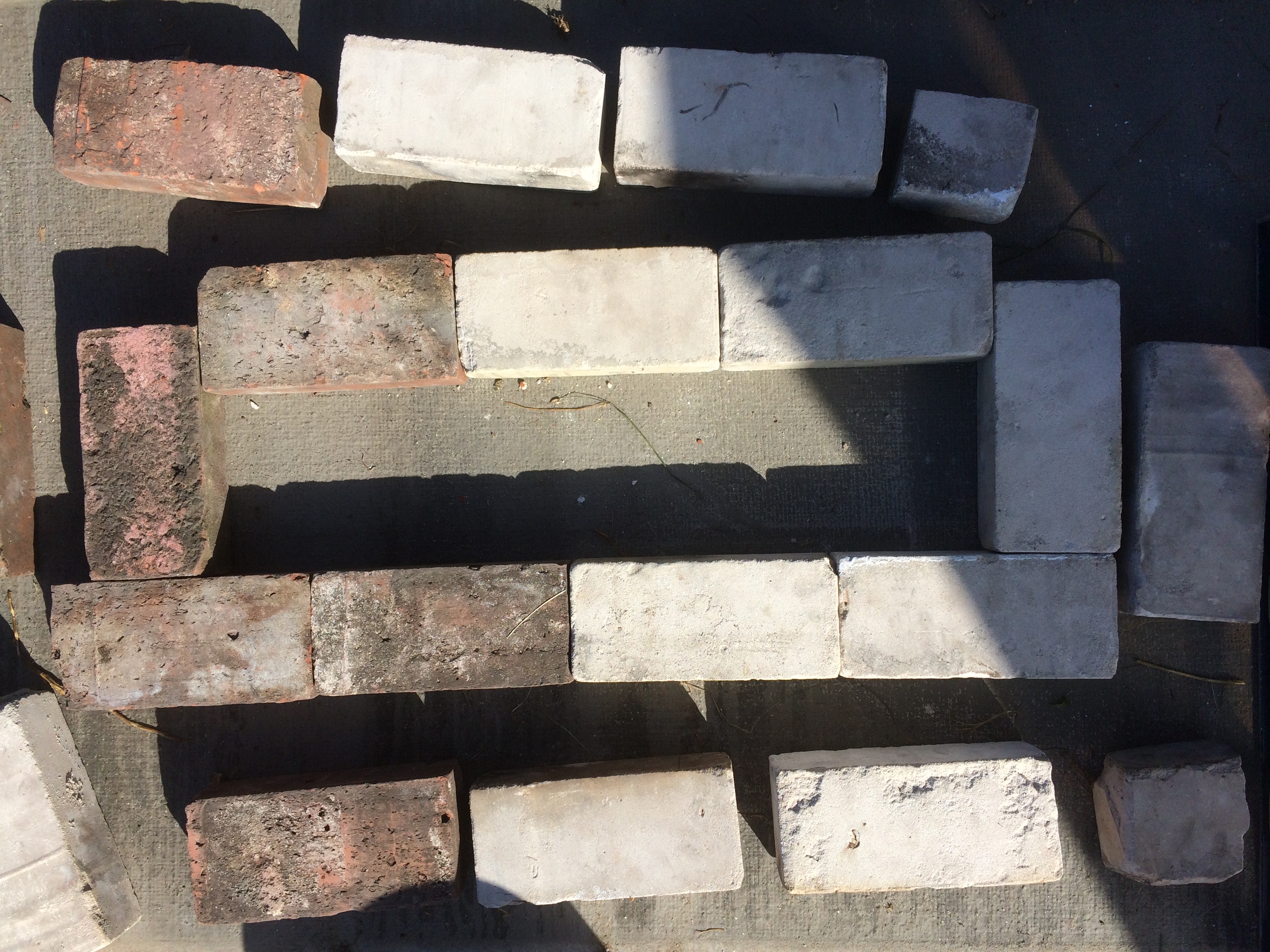
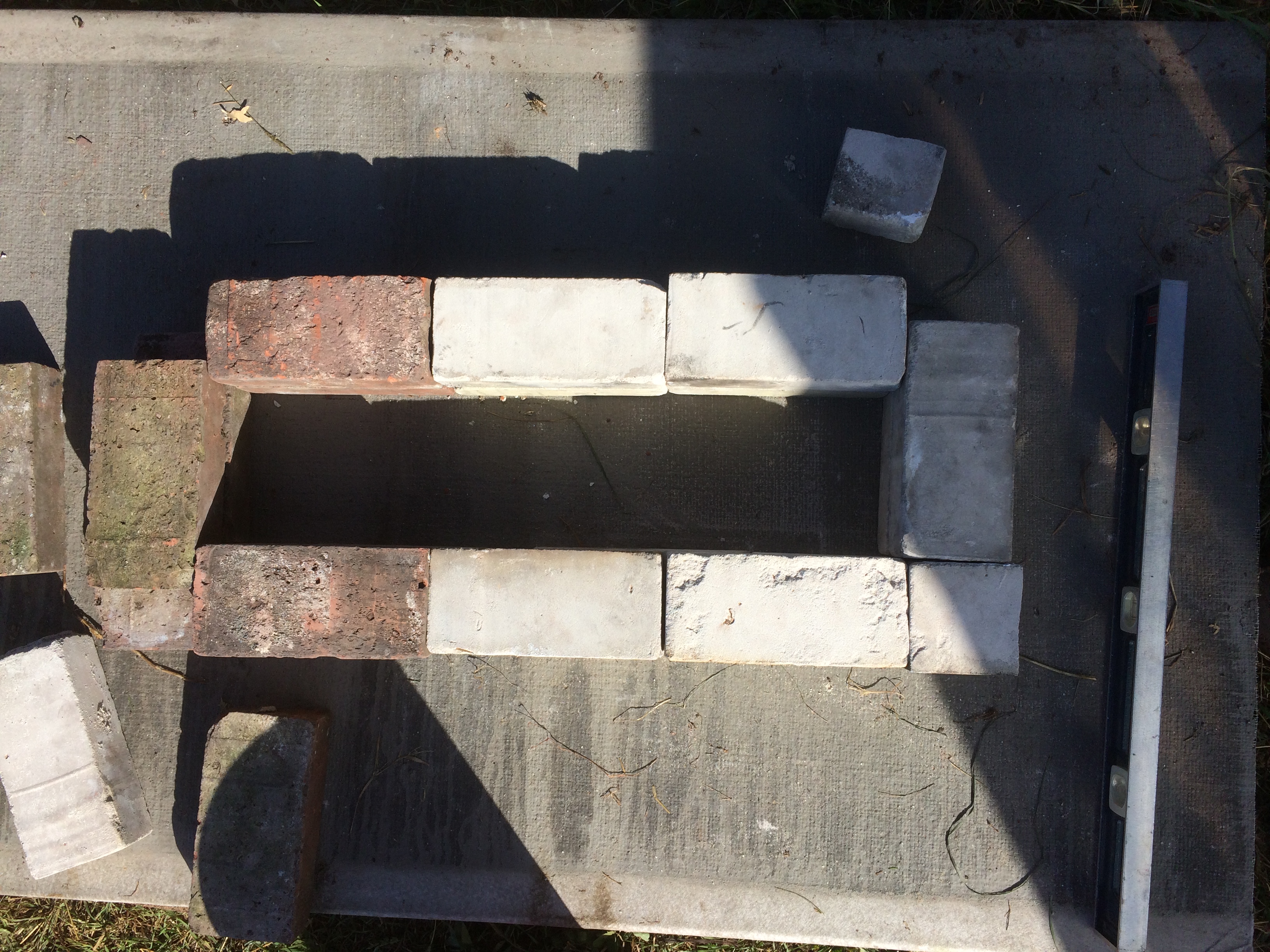
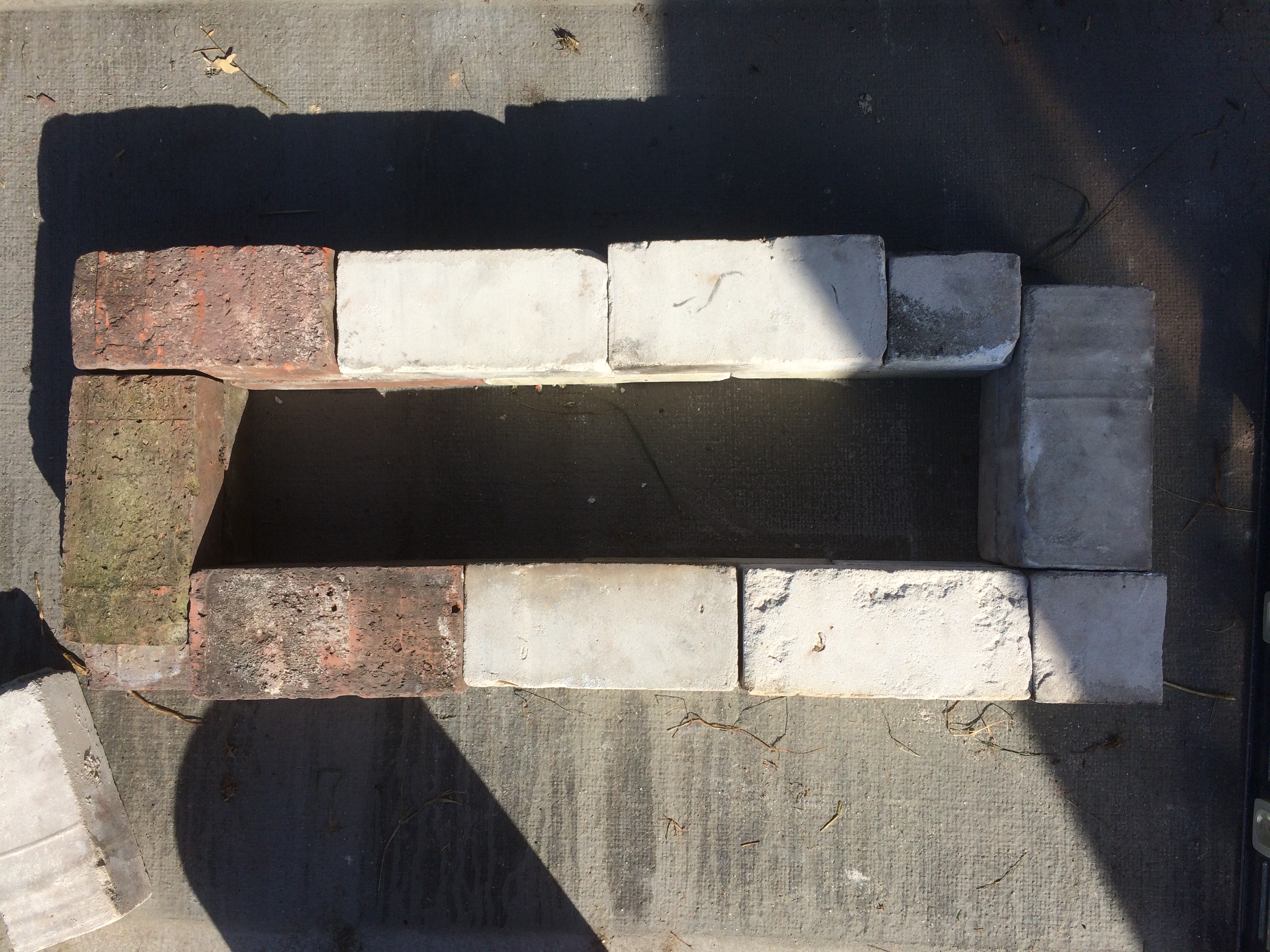
There was a long period of trying out different brick layouts – the proportions of the combustion chamber are crucial to get right – for the rest of the fall, “CSA” ceased to mean “Community Supported Agriculture,” and became ‘Cross Sectional Area” – the entire system had to maintain the same CSA throughout the system, from fuel feed to exhaust, from rectangular tunnels to round pipes. I won’t bore you with all of the proportional rules that had to be followed, but know there was a lot of subtle and annoying math at this stage.

an early mockup, seeing how tall the system would be - and how close we could put it to the curving north all of the greenhouse. (The original plan was for a 8" pipe system, although we switch to a 6" design before building)
an early mockup, seeing how tall the system would be – and how close we could put it to the curving north all of the greenhouse. (The original plan was for a 8″ pipe system, although we switched to a 6″ design before building)


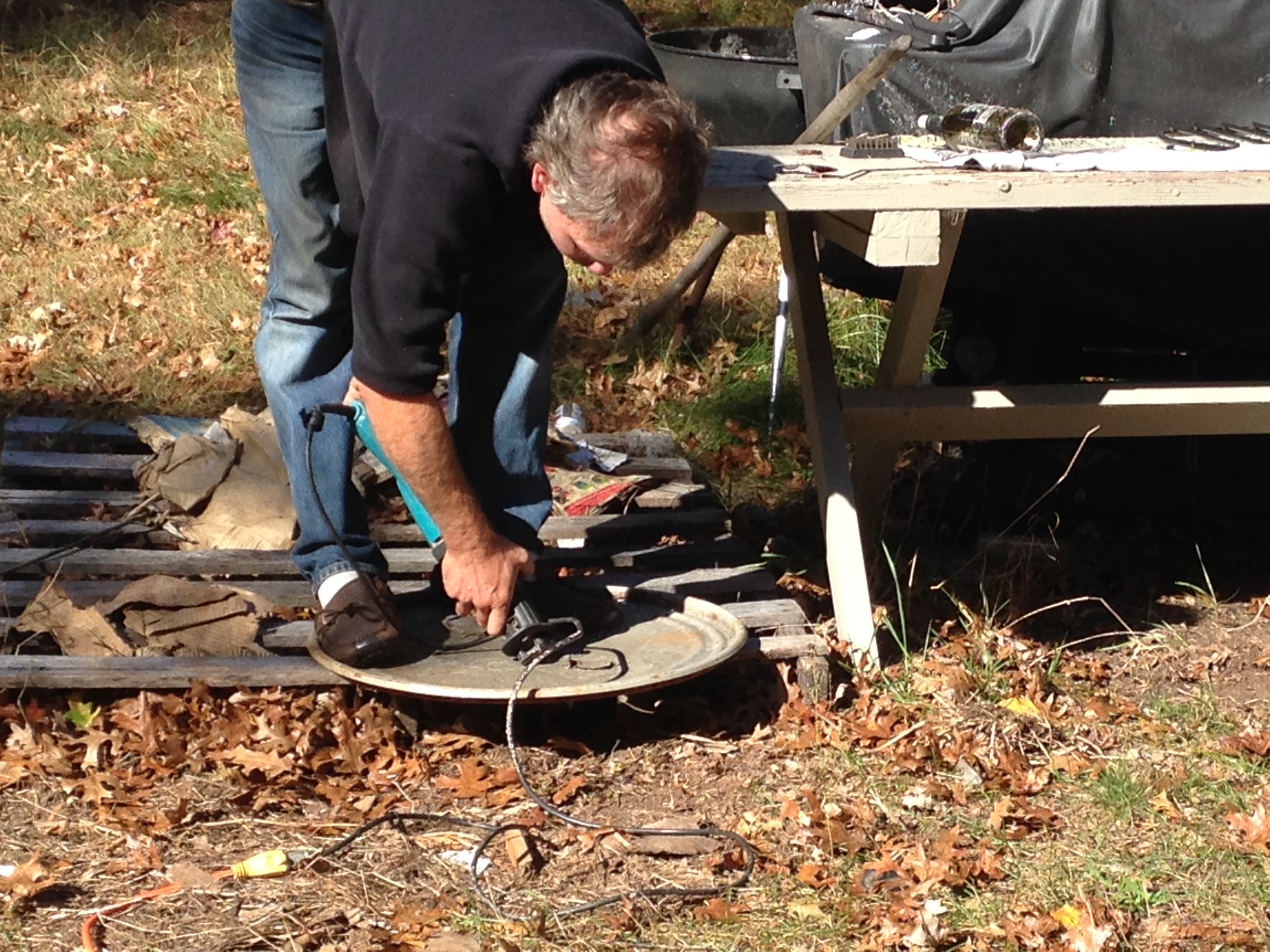
creating a lid for a "pocket rocket" - a way to create intense fire that would burn the paint off the 55-gallon drum
creating a lid for a “pocket rocket” – a way to create intense fire that would burn the paint off the 55-gallon drum
burning the paint off of the 55 gallon drum - so it wouldn't create toxic fumes in the greenhouse later
burning the paint off of the 55 gallon drum – so it wouldn’t create toxic fumes in the greenhouse later
early layout with the larger pipes - determining how many rocks we'd want, how wide it should be for the seed trays, and how deep we'd want to make it,
early layout with the larger pipes – determining how many rocks we’d want, how wide it should be for the seed trays, and how deep we’d want to make it,
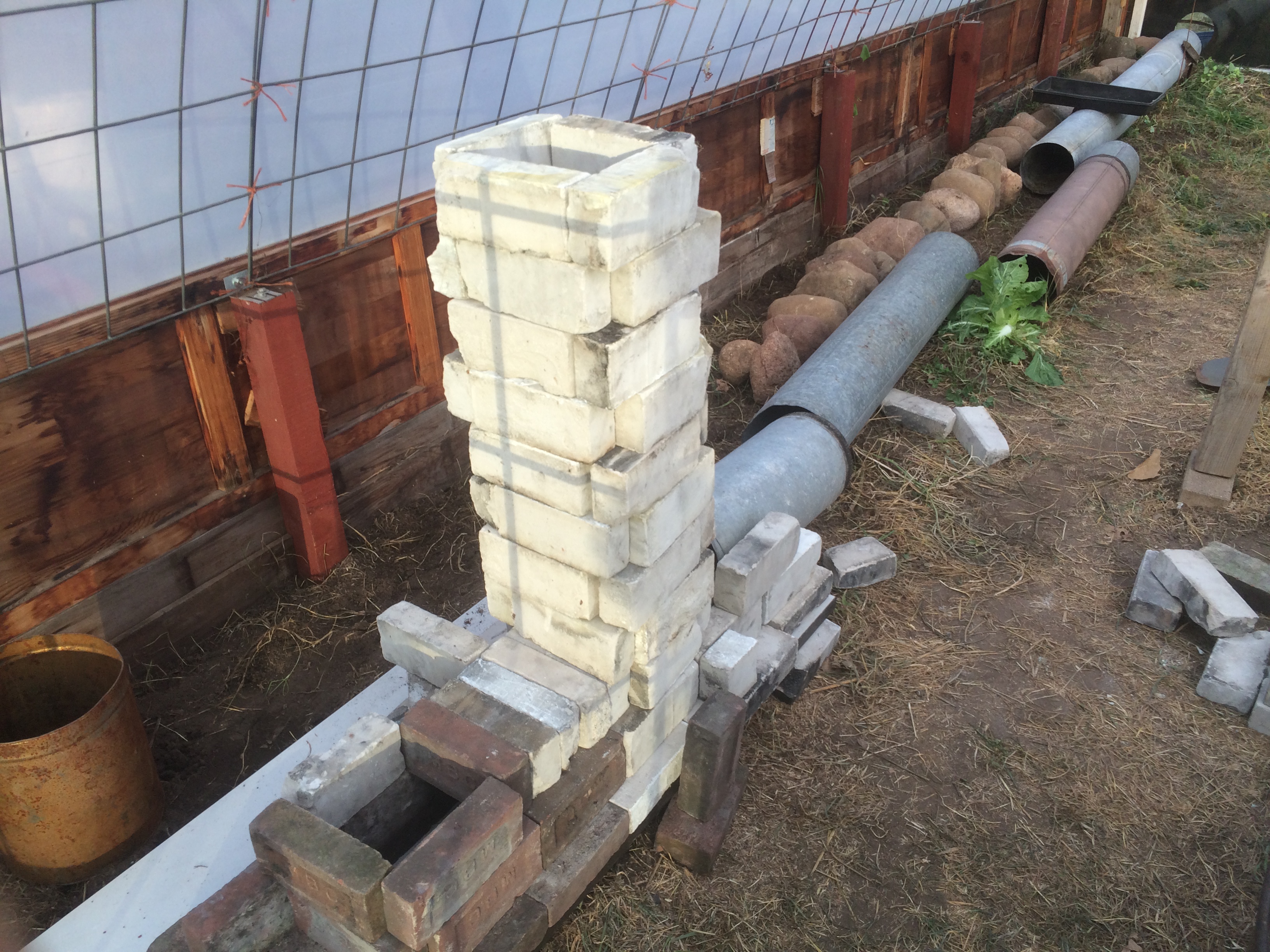
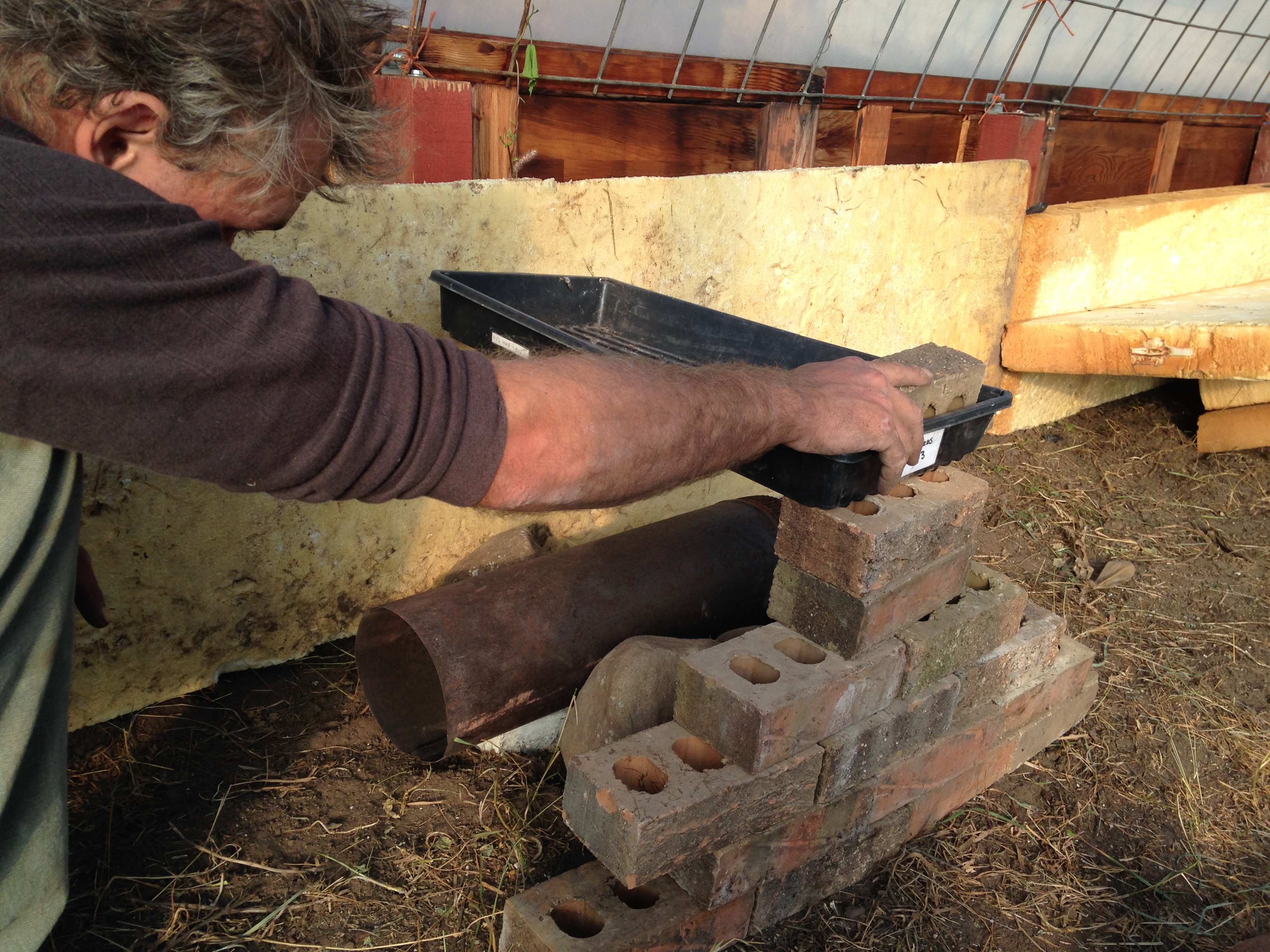
The WWOOFers joked about me playing with my blocks - I had bricks in the trailer that I'd use to try out different configurations for the heat riser ... on edge? flat? how much space inside? It was a lot more complex than I'd thought it would be ...
The WWOOFers joked about me playing with my blocks – I had bricks in the trailer that I’d use to try out different configurations for the heat riser … on edge? flat? how much space inside? It was a lot more complex than I’d thought it would be …
even in bed it was rocket heater worktime


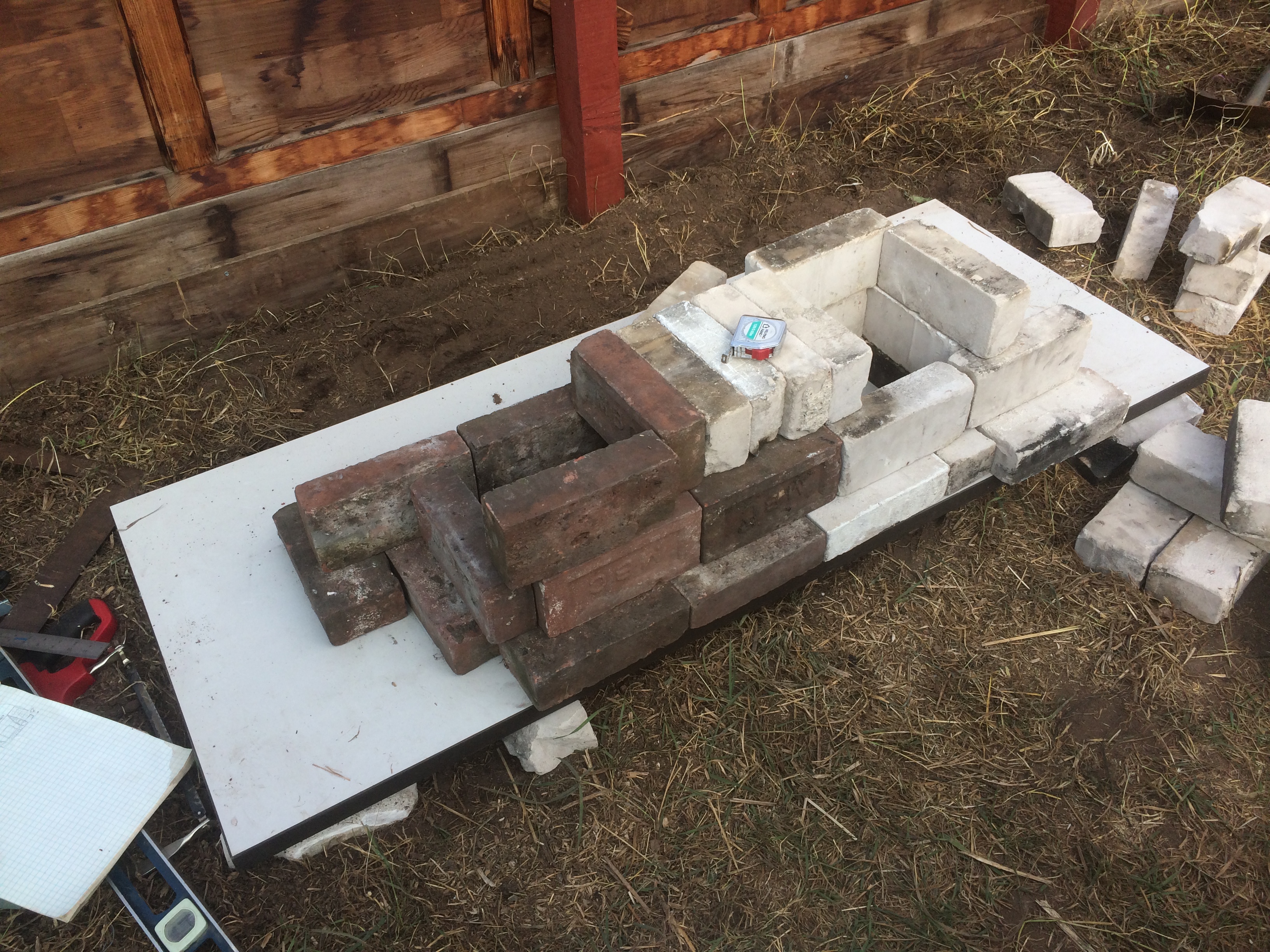
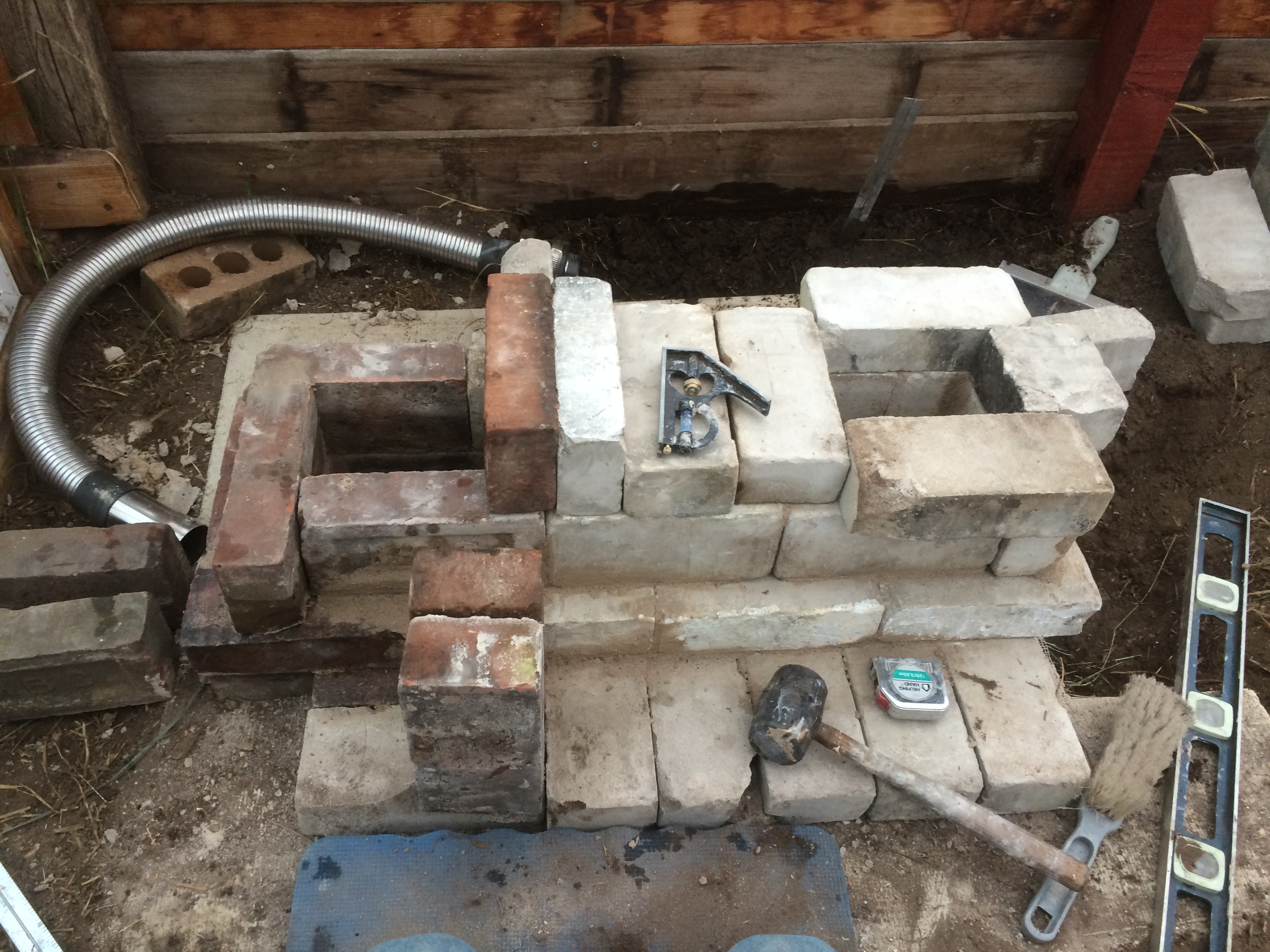
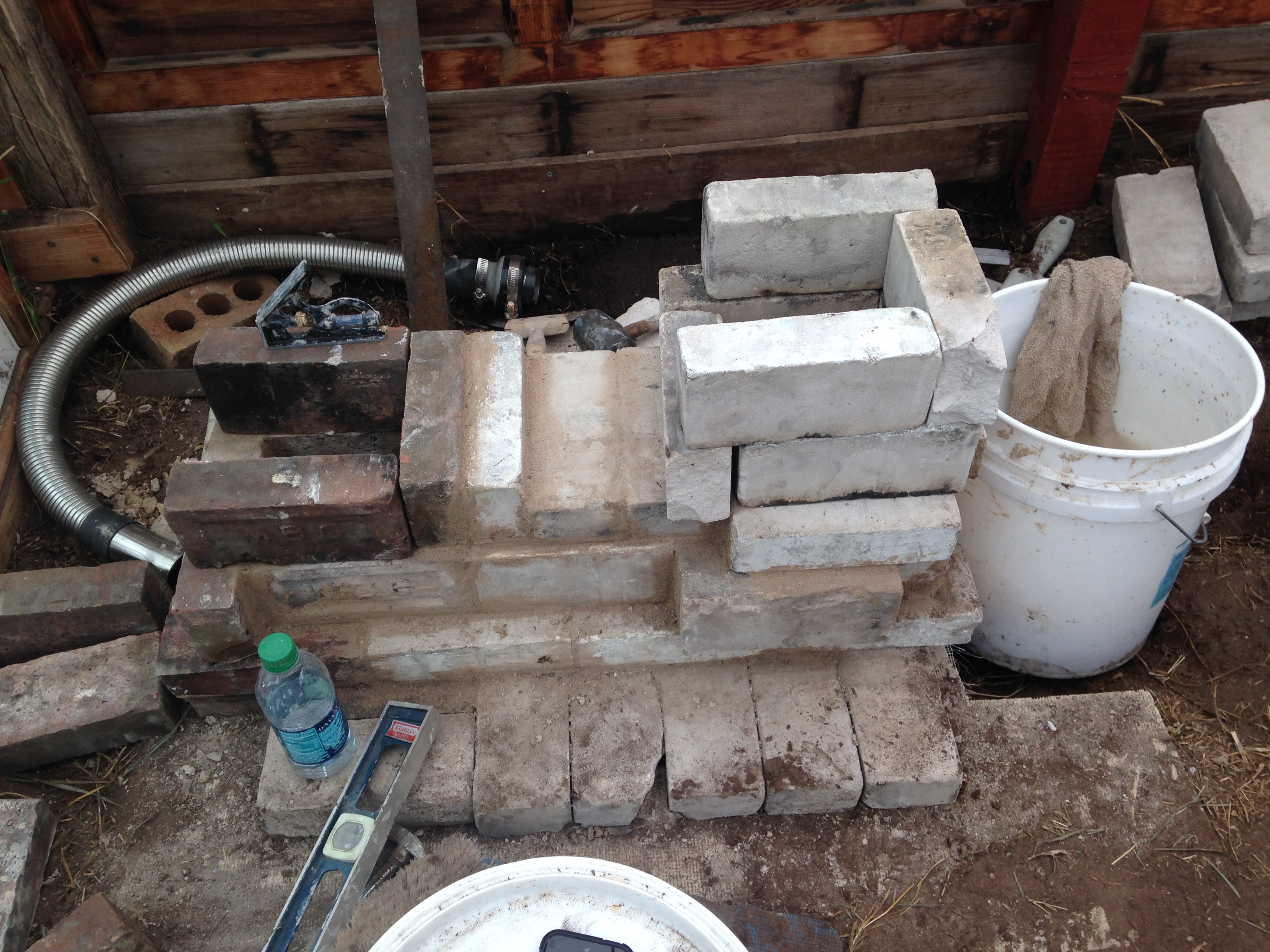
Many variations were tried out and discarded in the design process. The red bricks are used in the fuel feed for their durability, while the softer insulative bricks were used throughout the rest of the combustion system.

IMG_1152 IMG_1153 IMG_1155 IMG_1154

determining bench dimensions. (for awhile we thought we'd use foam insulation but wound up not doing so)
determining bench dimensions. (for awhile we thought we’d use foam insulation but wound up not doing so)


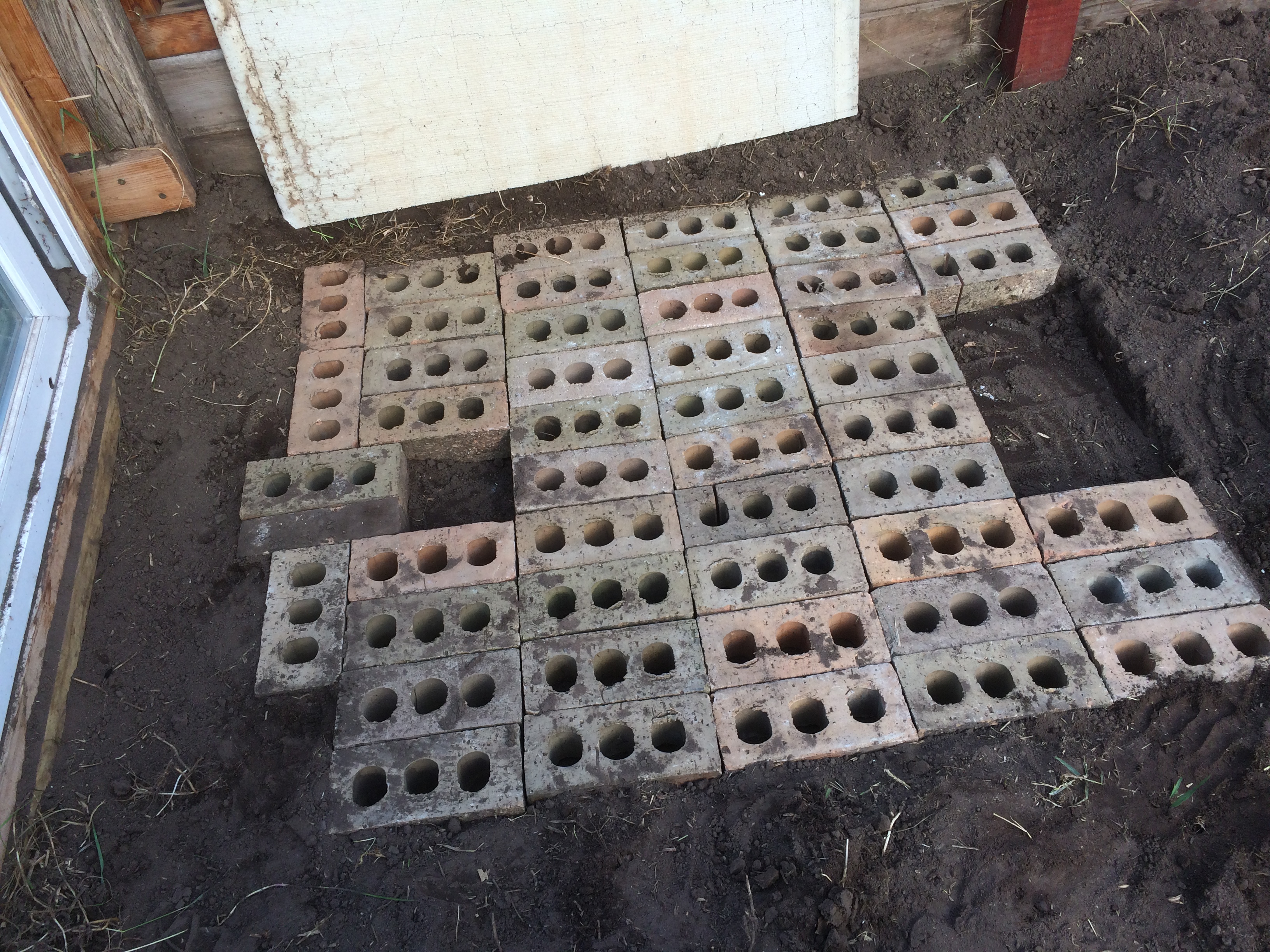
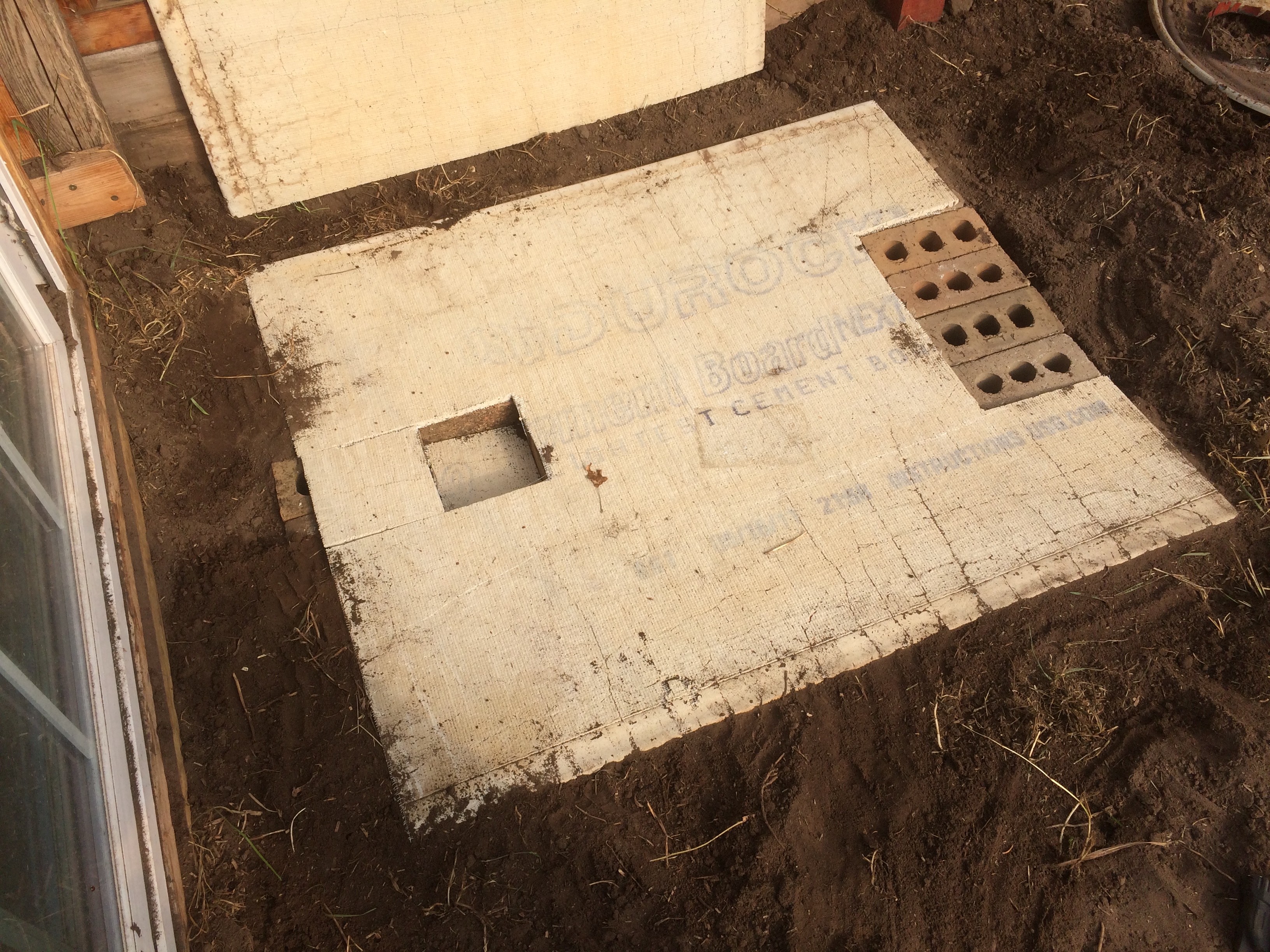
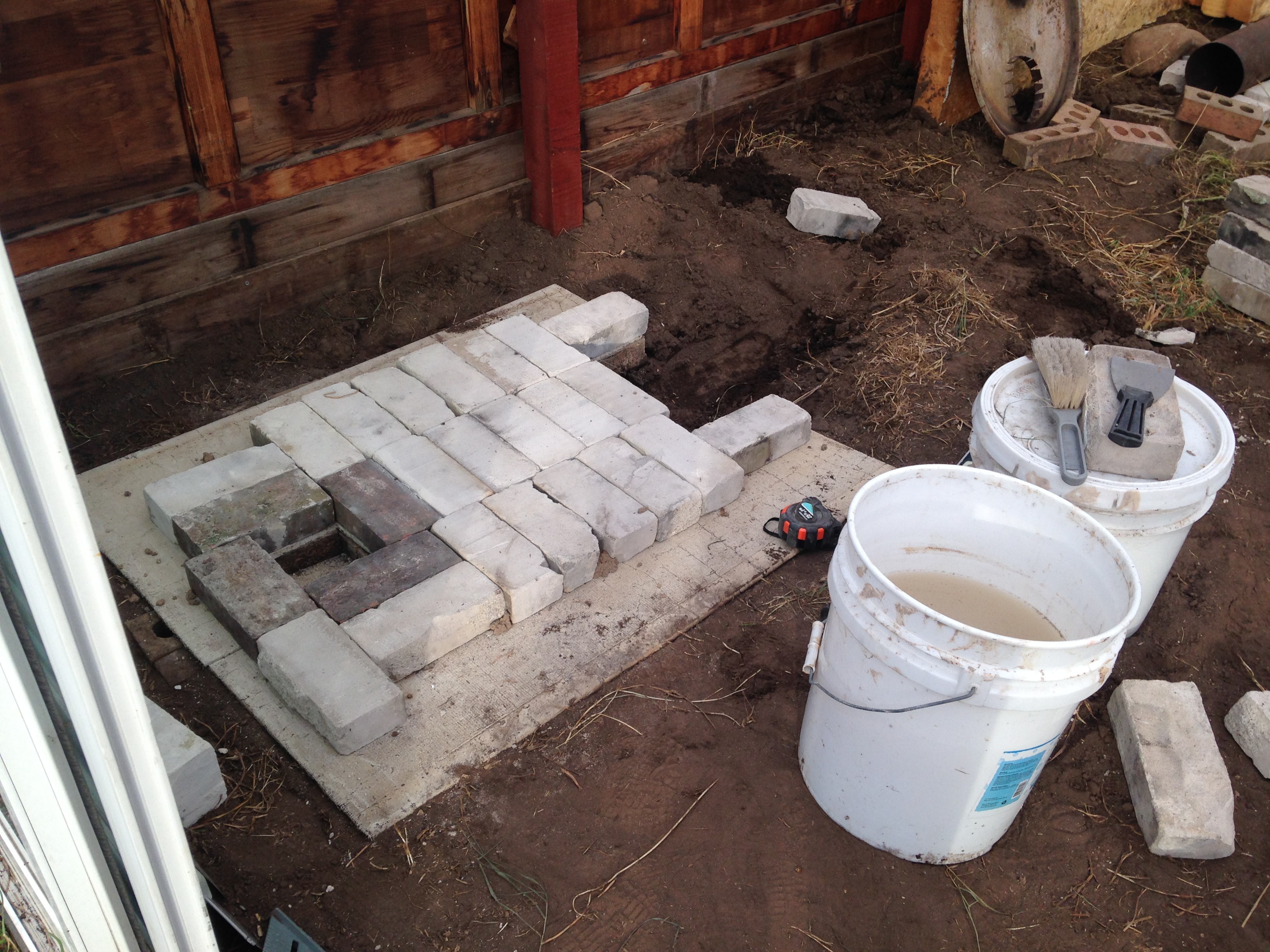
creating the subsurface foundation for the combustion chamber - the air spaces in the bricks add insulation to keep heat where it's wanted - not absorbing into the ground
creating the subsurface foundation for the combustion chamber – the air spaces in the bricks add insulation to keep heat where it’s wanted – not absorbing into the ground


IMG_1178

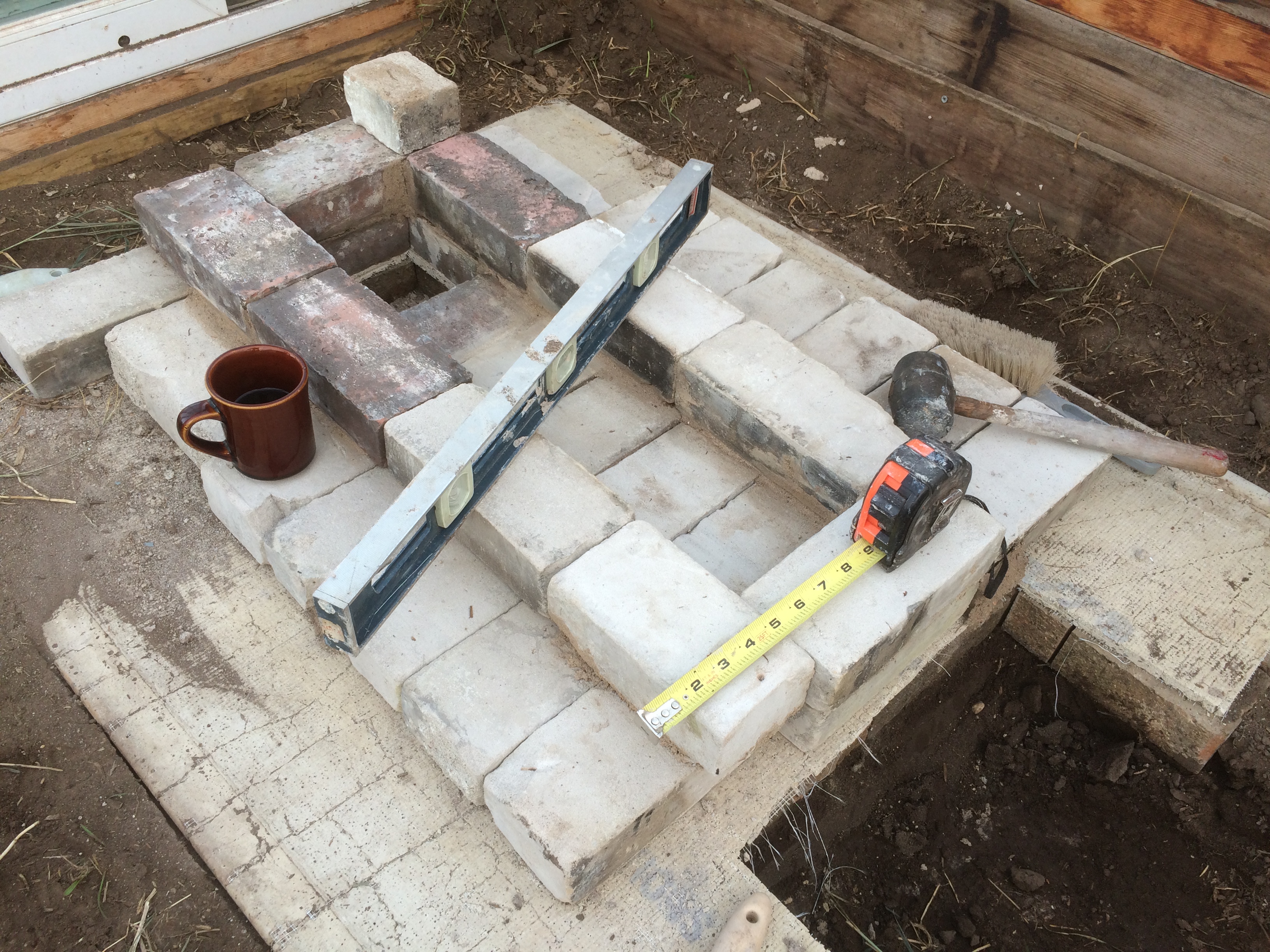
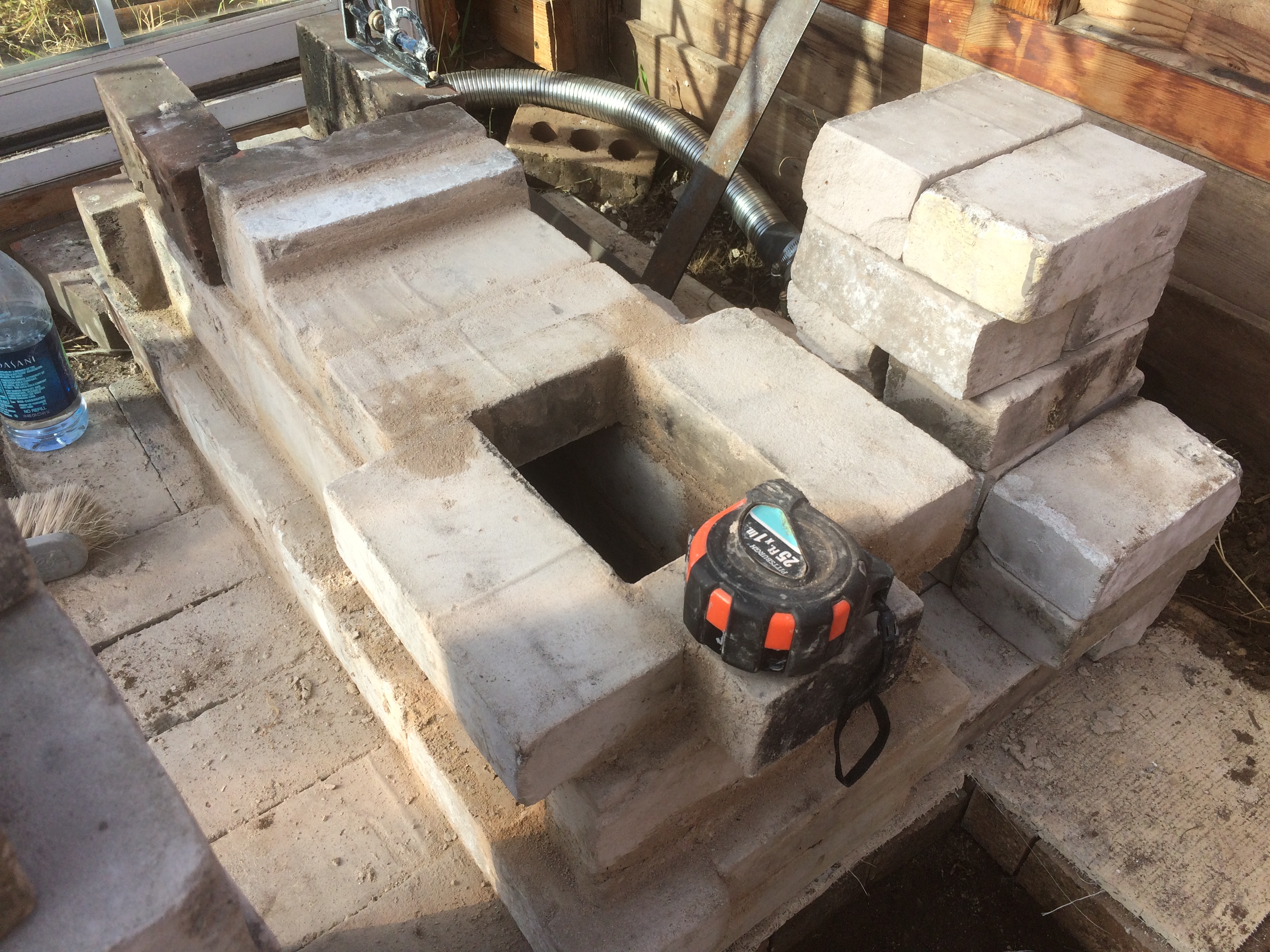
laying the base layer, with pits for ash cleanouts. White bricks insulate against heat loss, keeping temperatures high for the heat riser, where even the smoke will burn up


IMG_2424

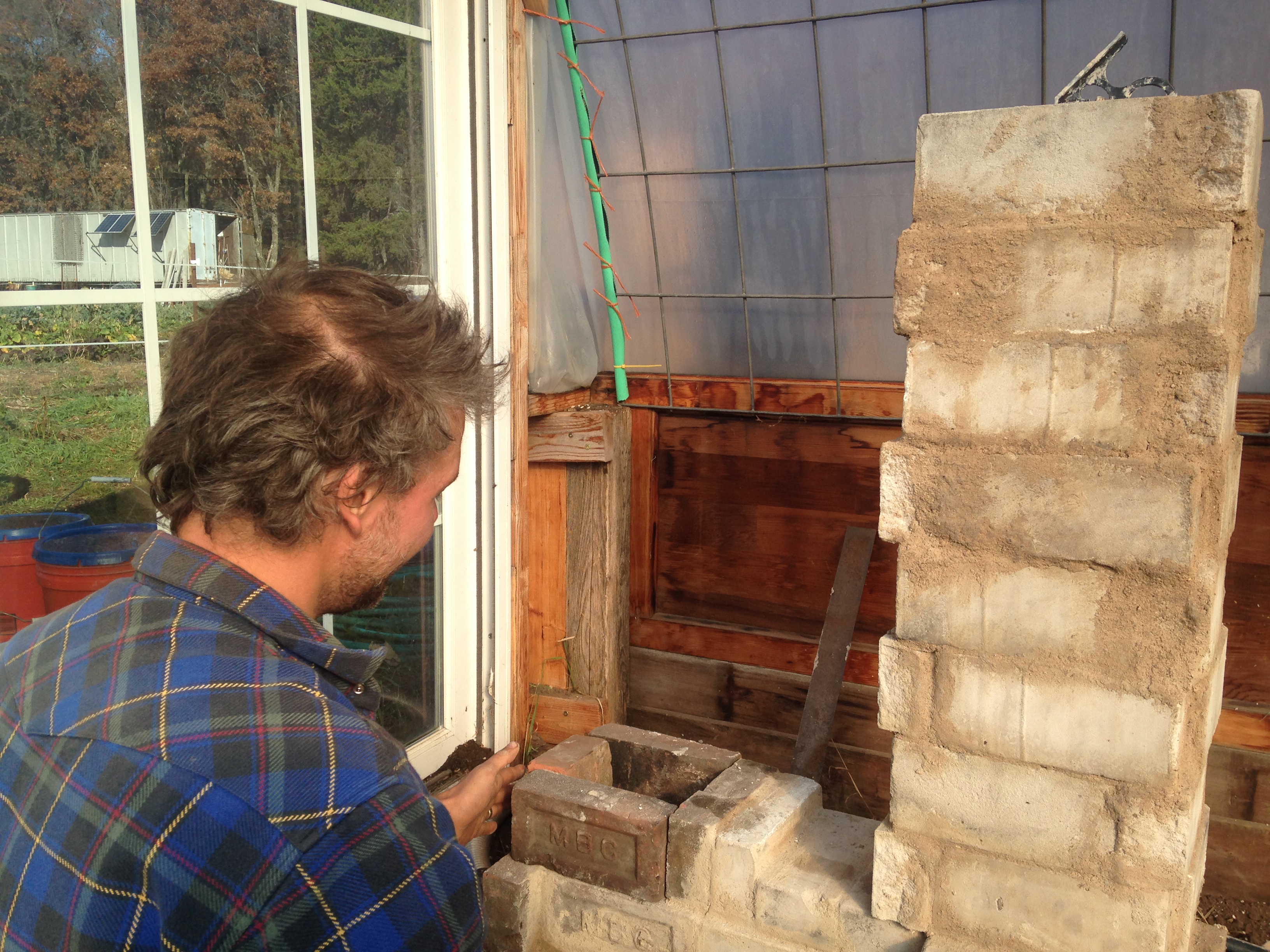
constant vigilance was required to ensure that proper dimensions were maintained in all directions

IMG_1218 IMG_2456

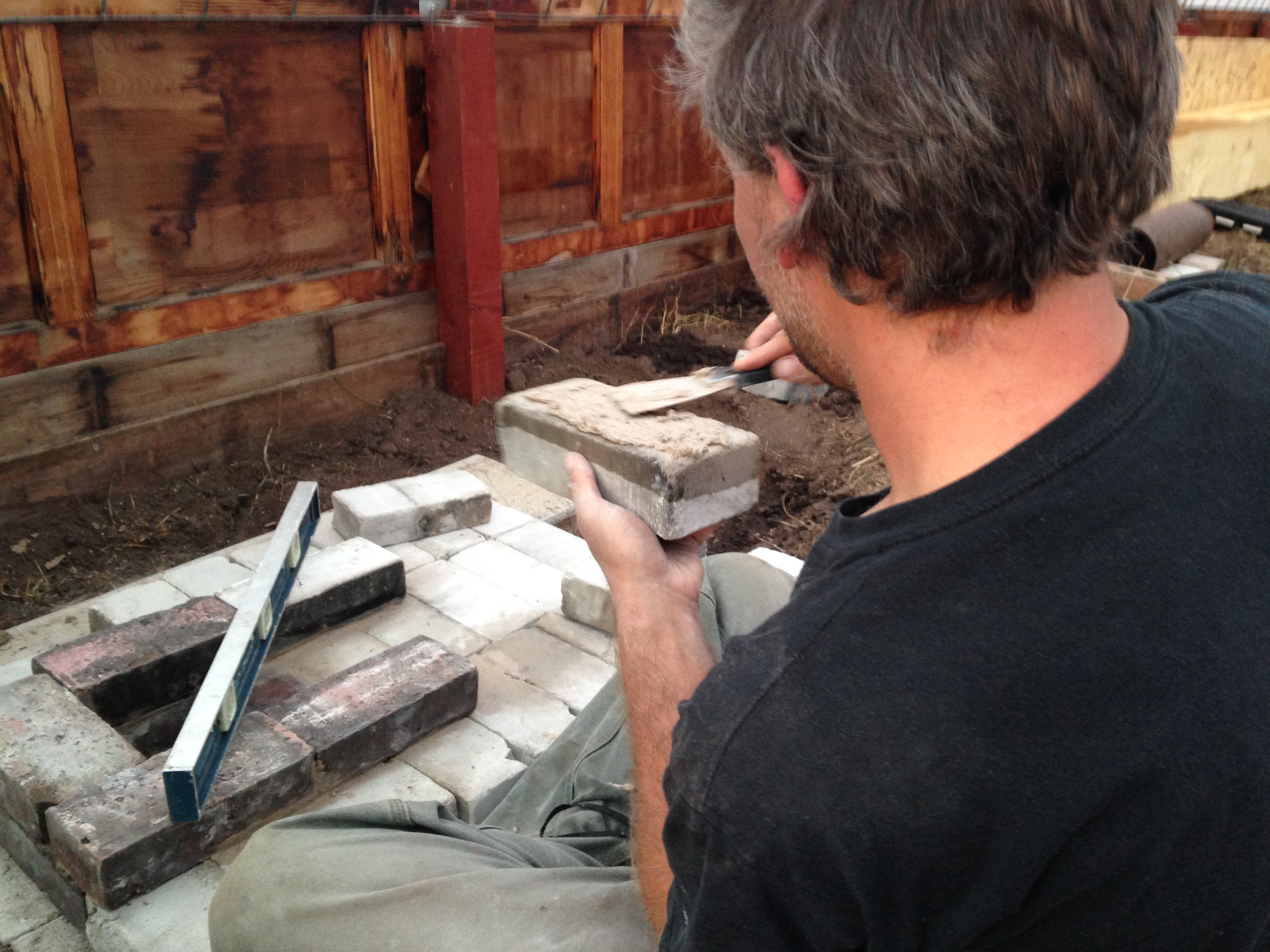
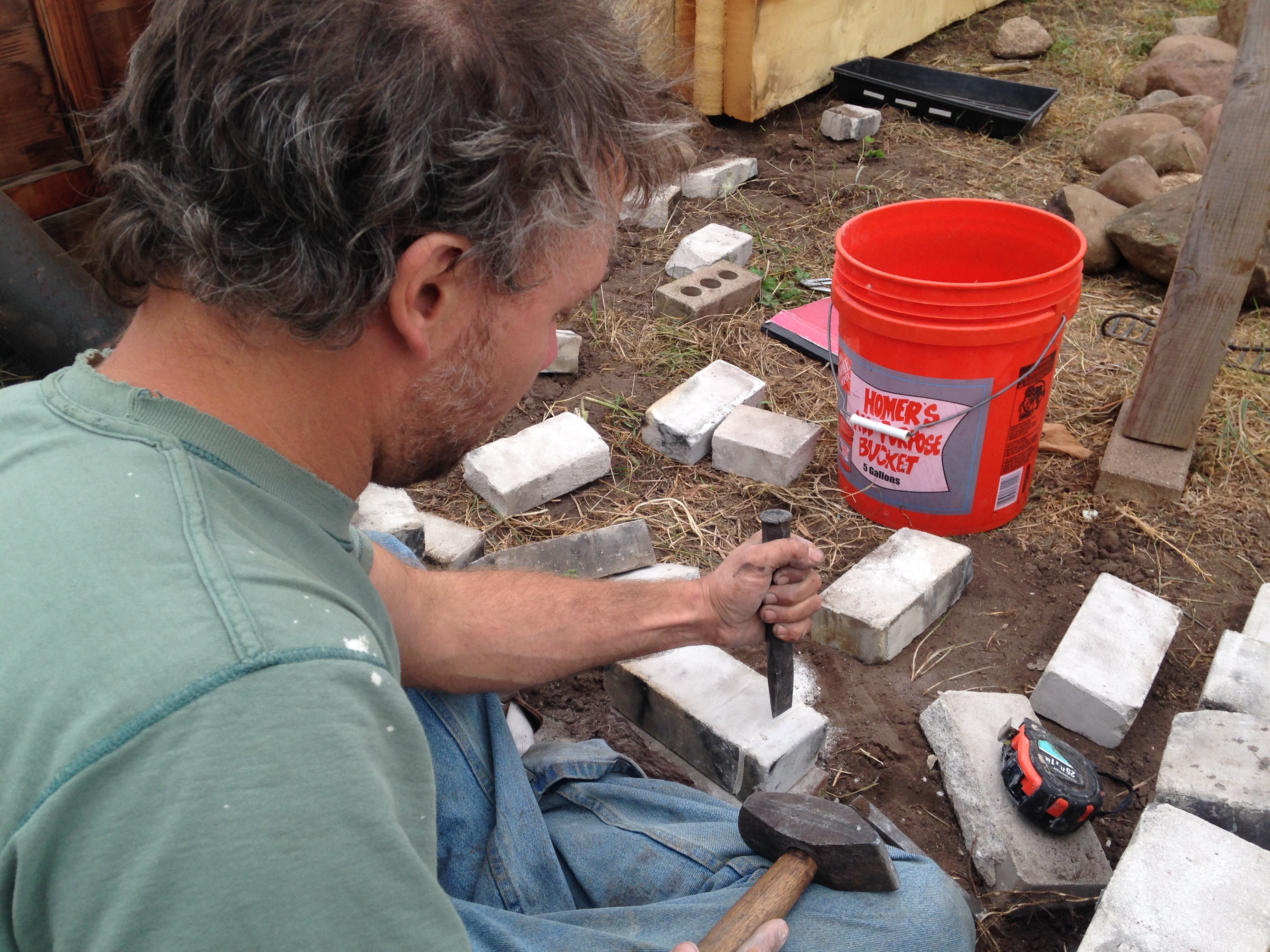
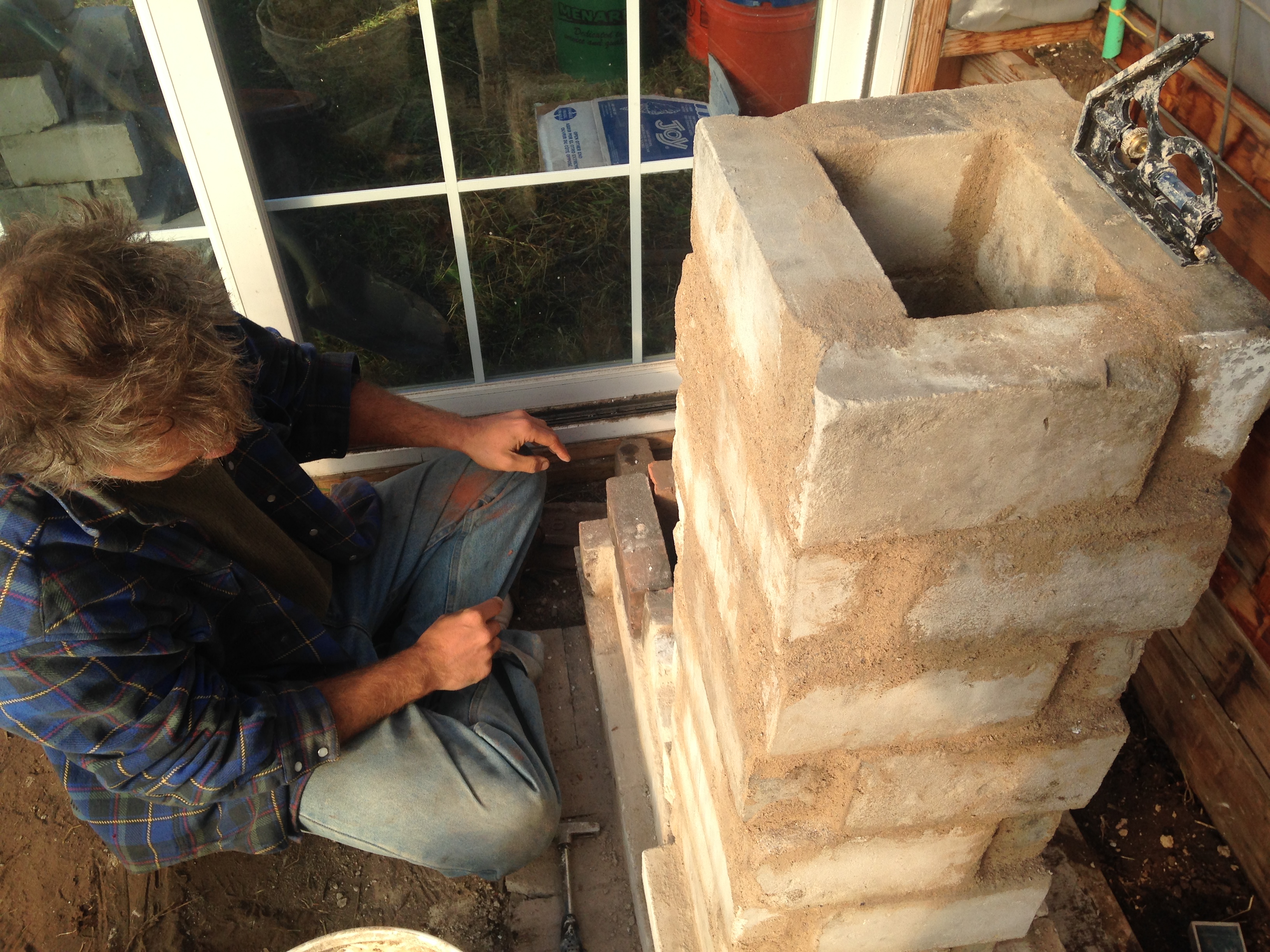
had to learn how to score and split bricks with a chisel to make some of the puzzle fit together

IMG_1230 IMG_2460 IMG_2462

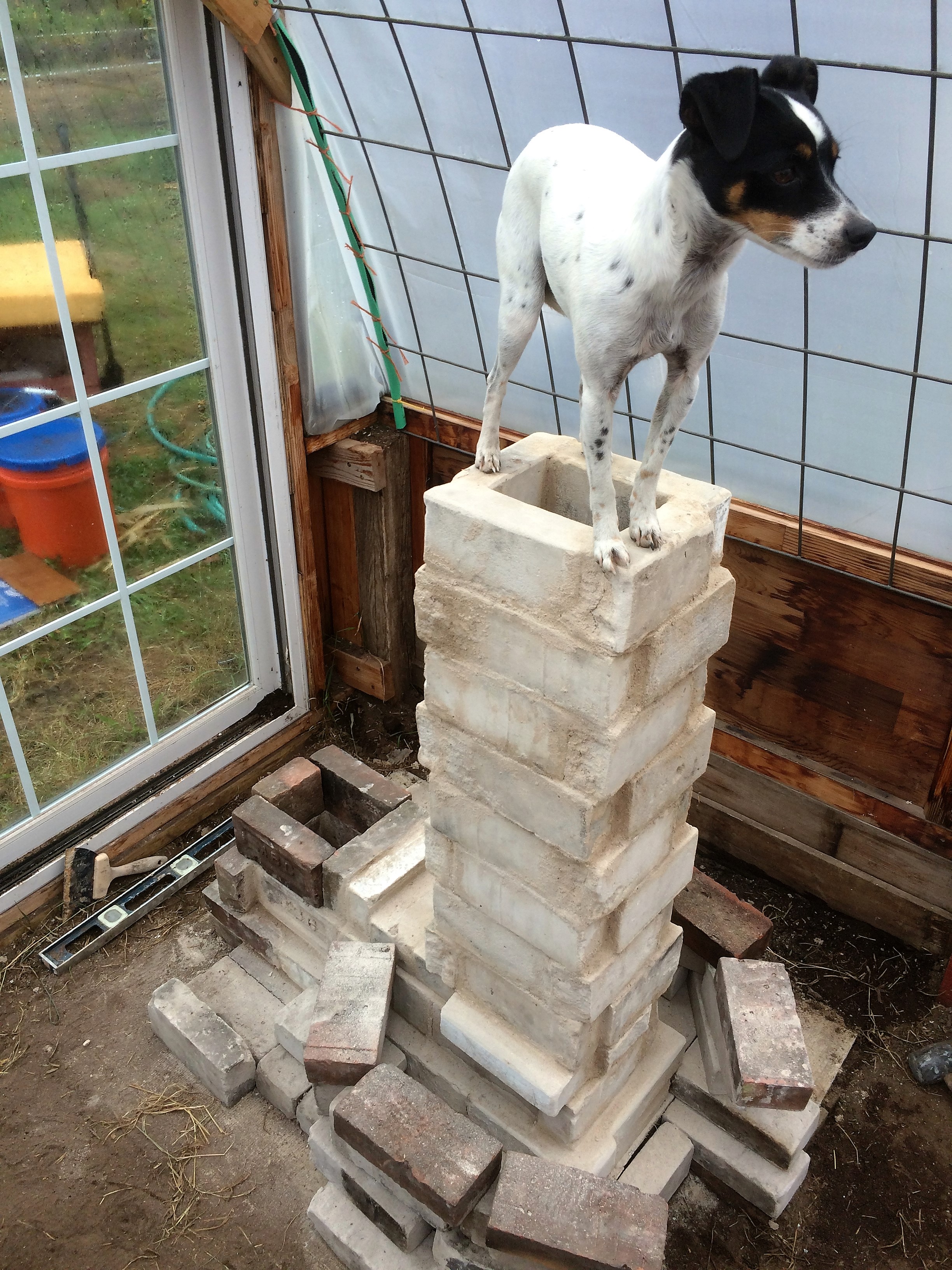
heat riser is Widget-approved

IMG_1239

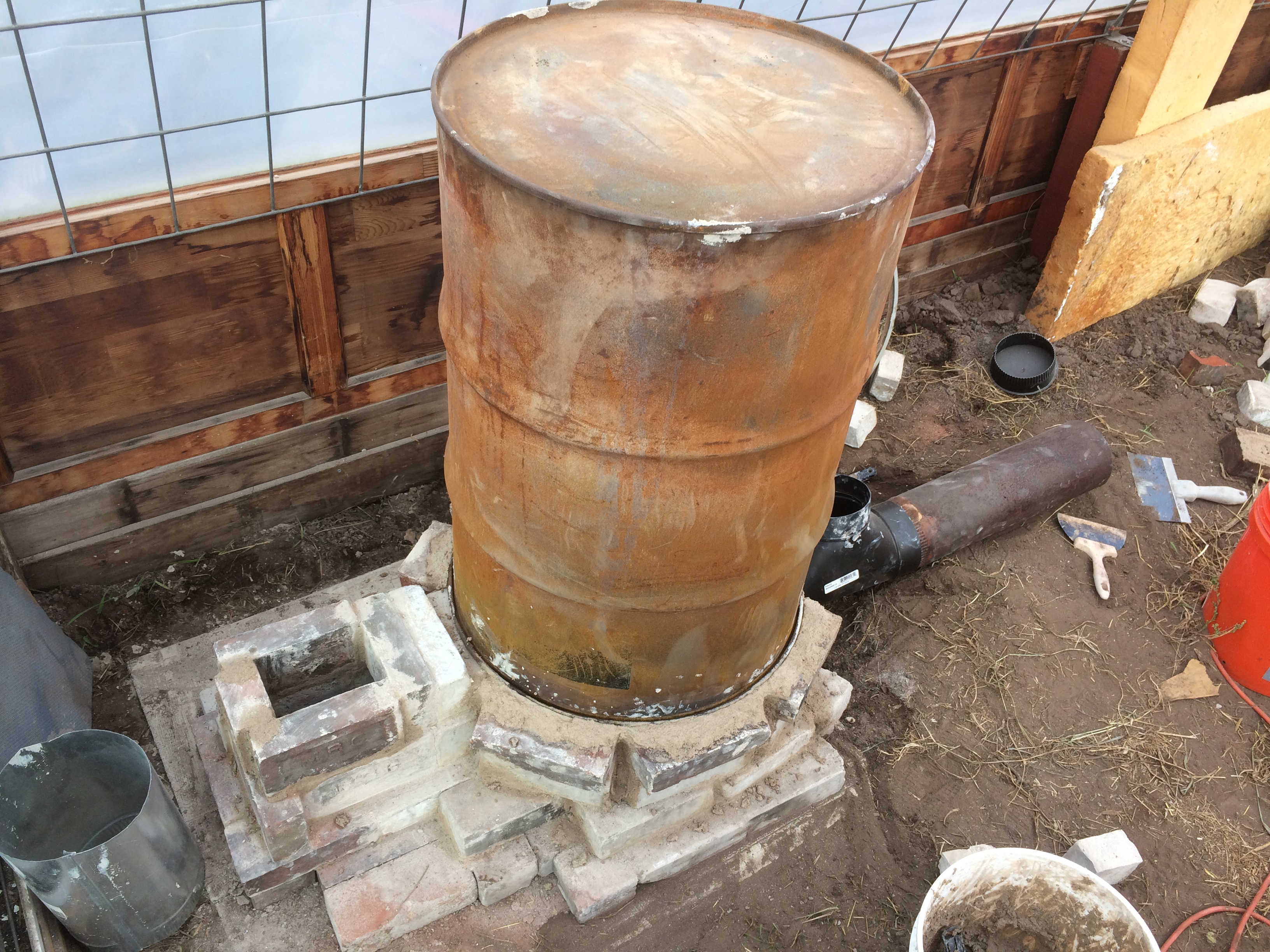
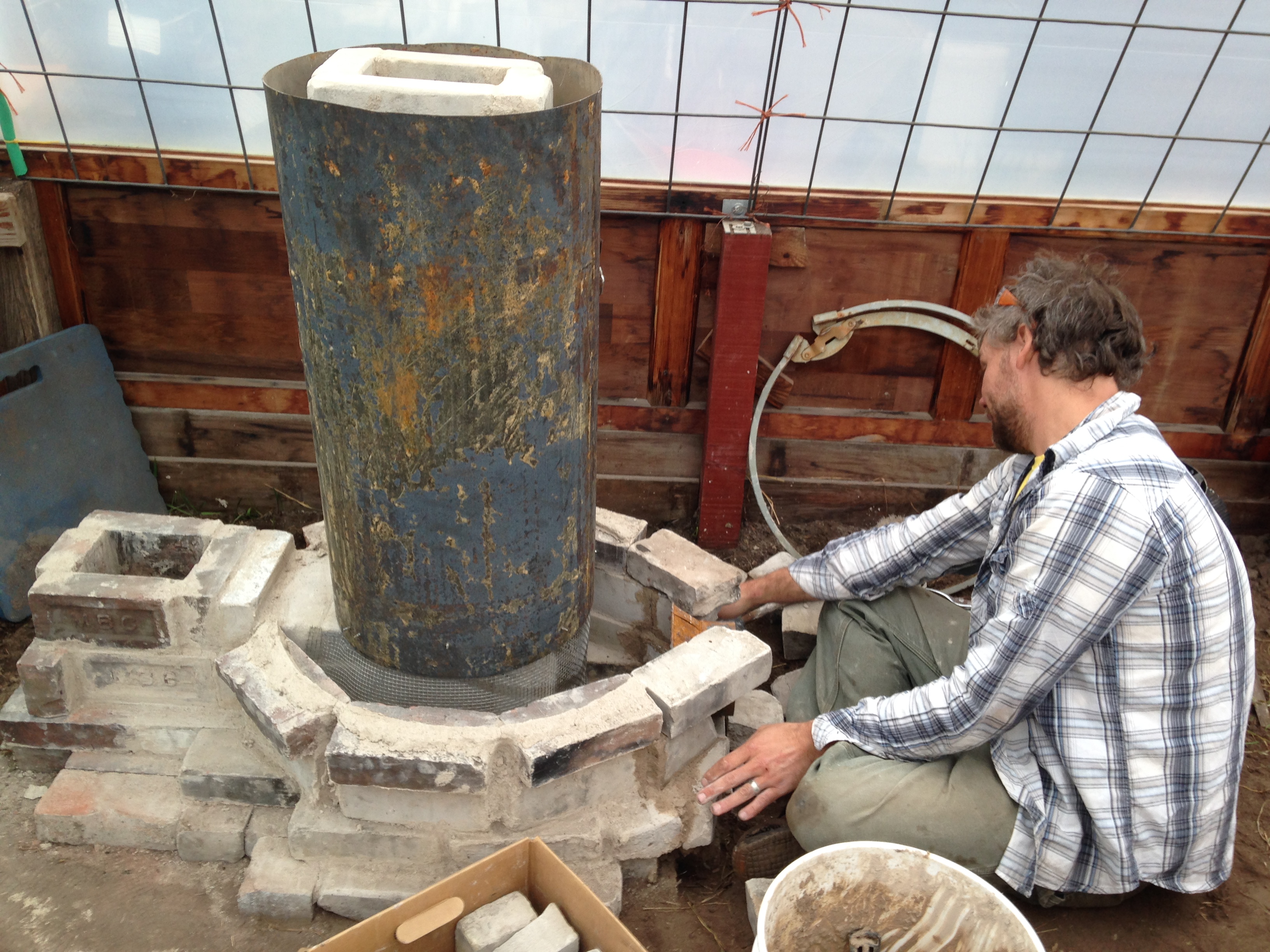
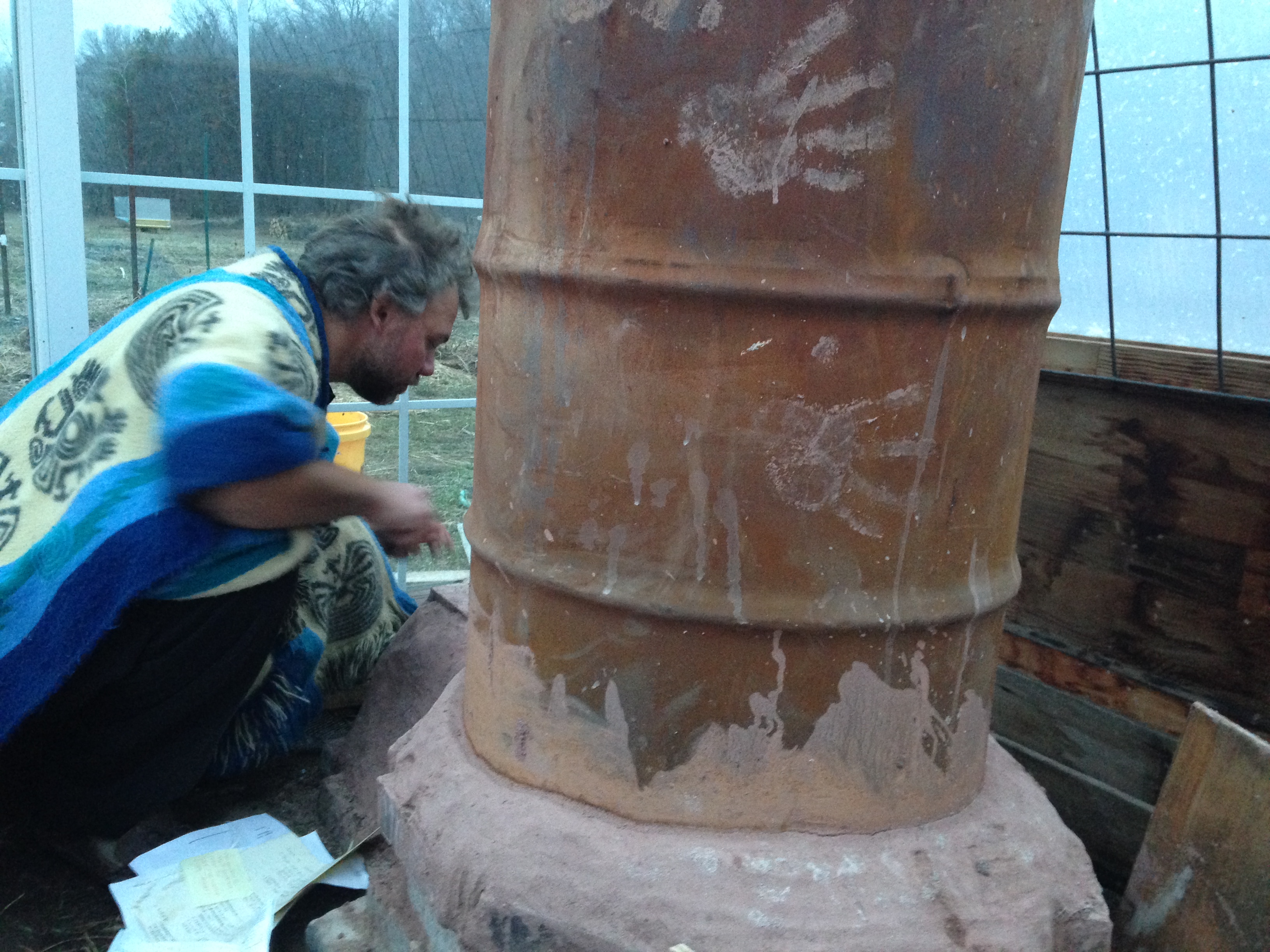
fitting the barrel
fitting the barrel


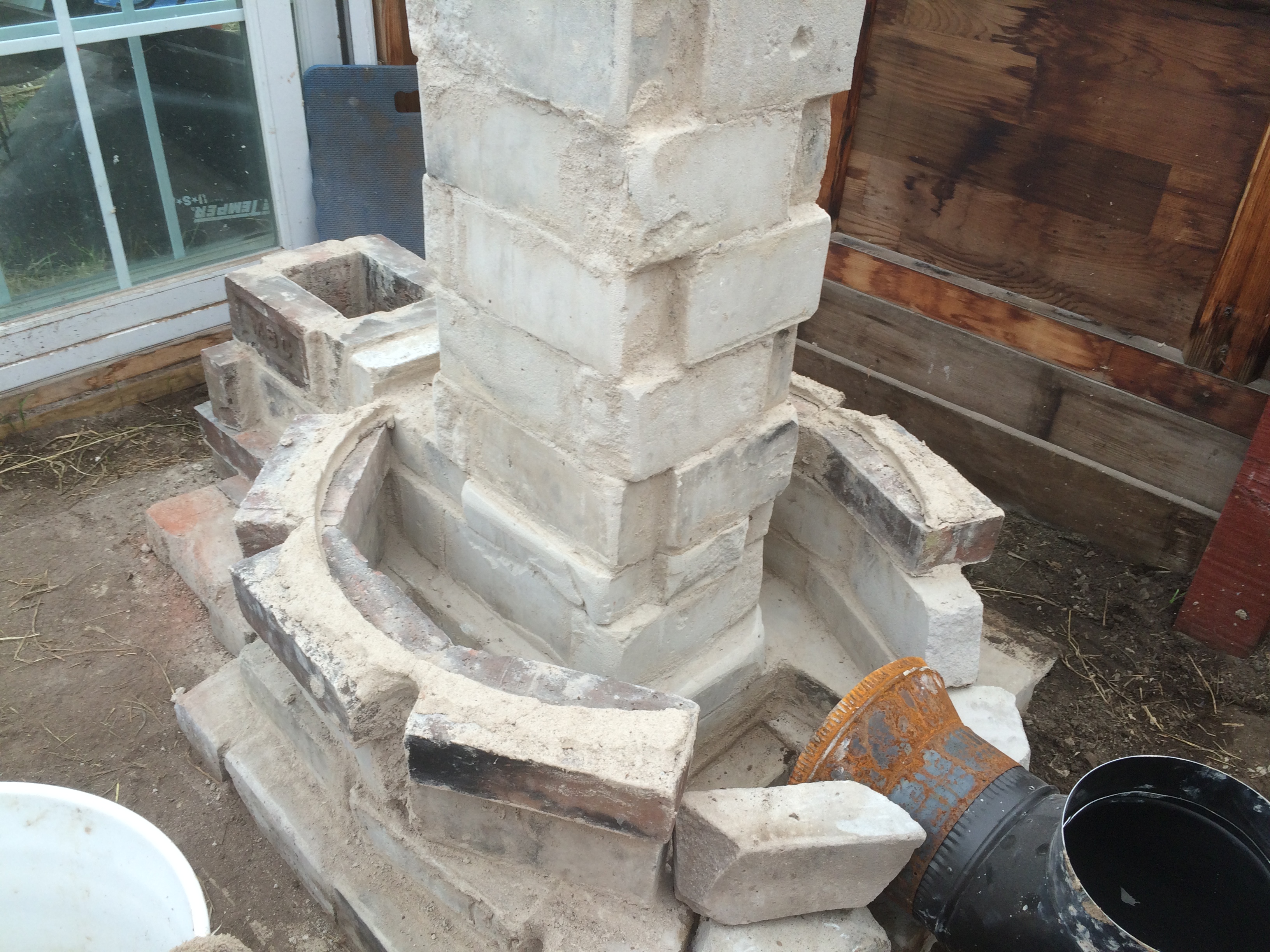
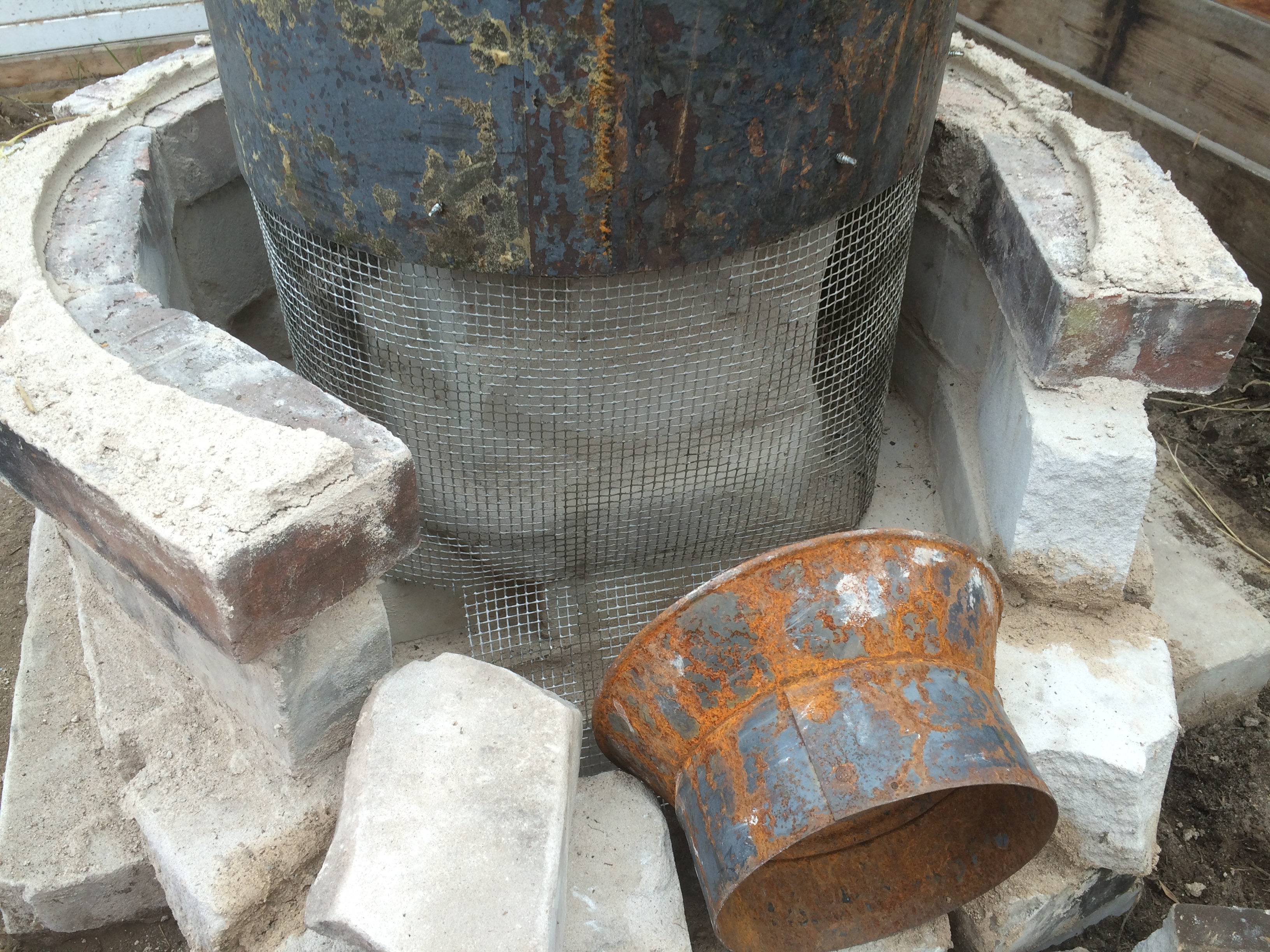
exhaust manifold - where falling gases inside the barrel are channeled into the bench exhaust pipe run
exhaust manifold – where falling gases inside the barrel are channeled into the bench pipe run
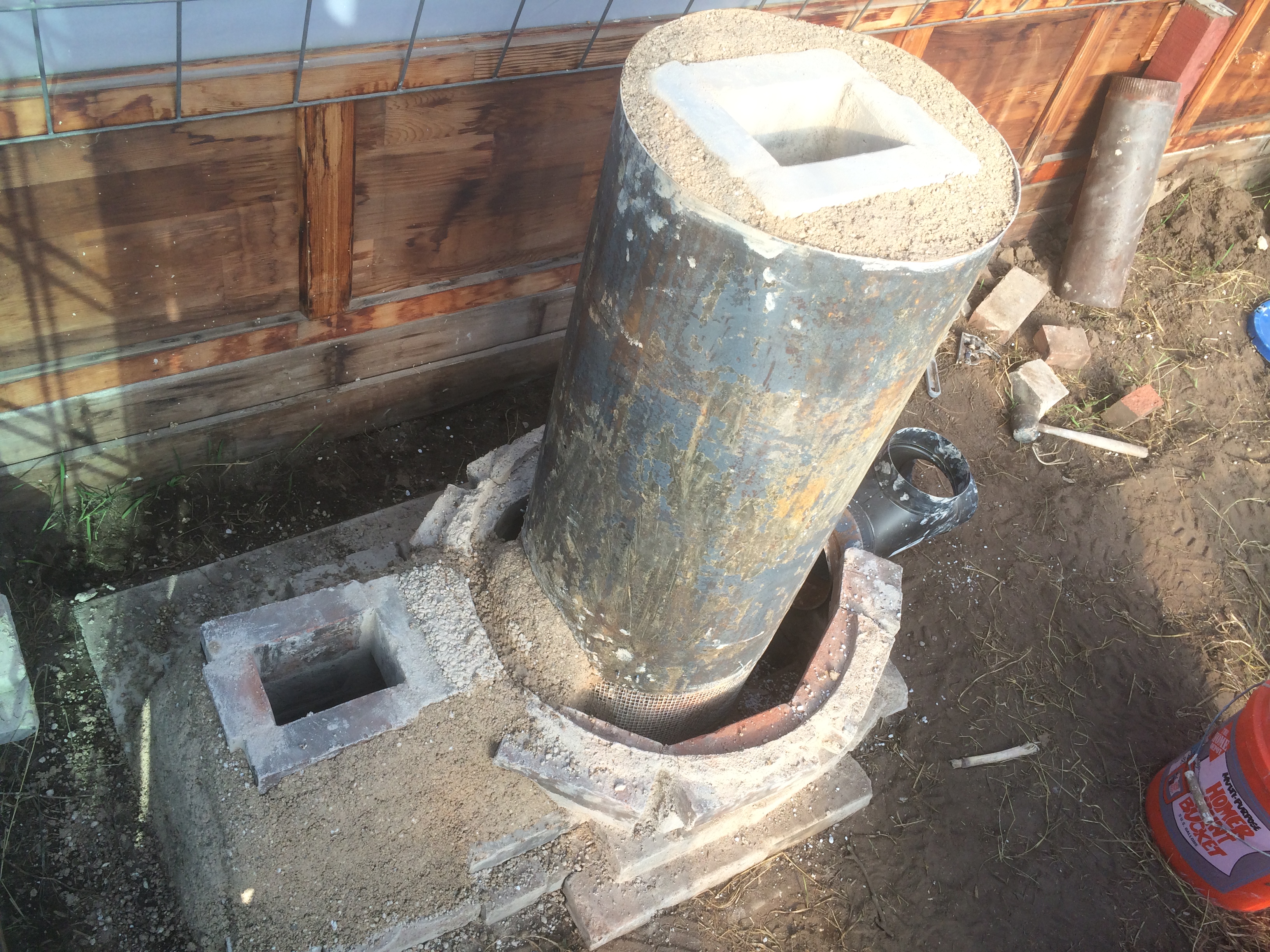
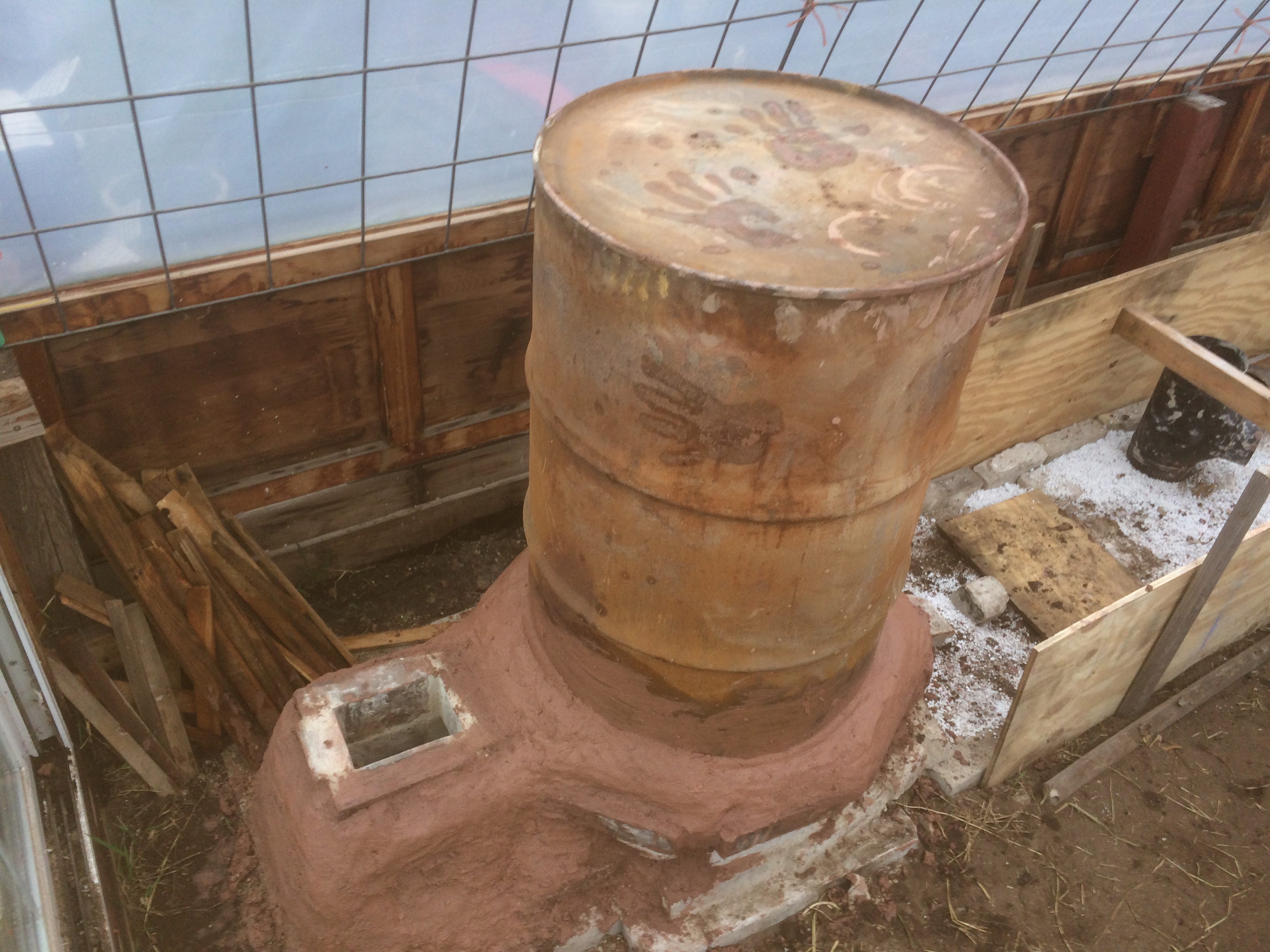
although the heat riser was made of insulative fire brick, I realized it would be even better with more insulation - so I cut apart an old water heater and added it - later filling the space between it and the riser with perlite insulation mixed with clay slip.
although the heat riser was made of insulative fire brick, I realized it would be even better with more insulation – so I cut apart an old water heater and added it – later filling the space between it and the riser with perlite insulation mixed with clay slip.


heat riser insulation finished and capped off with clay

IMG_1591

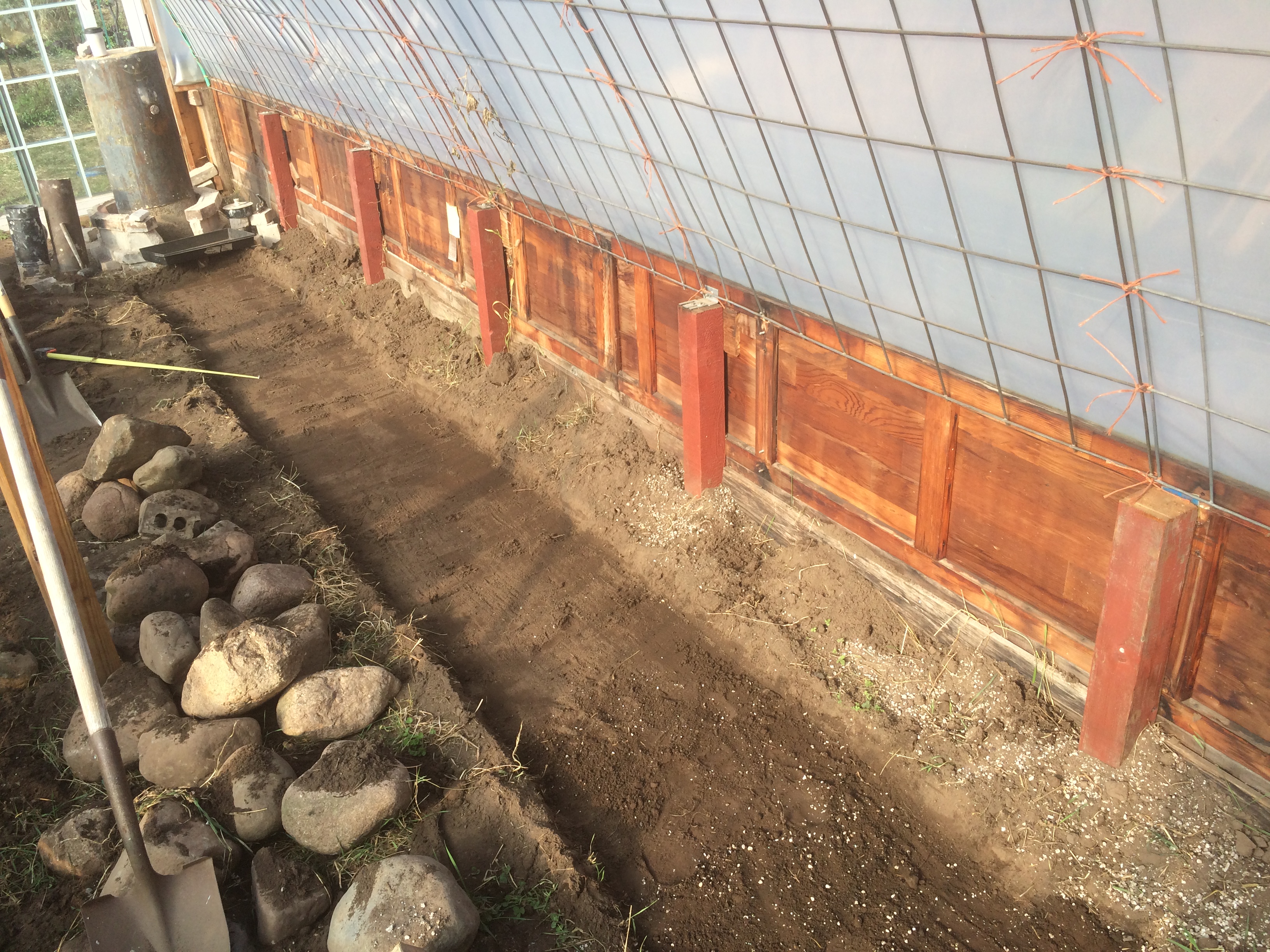
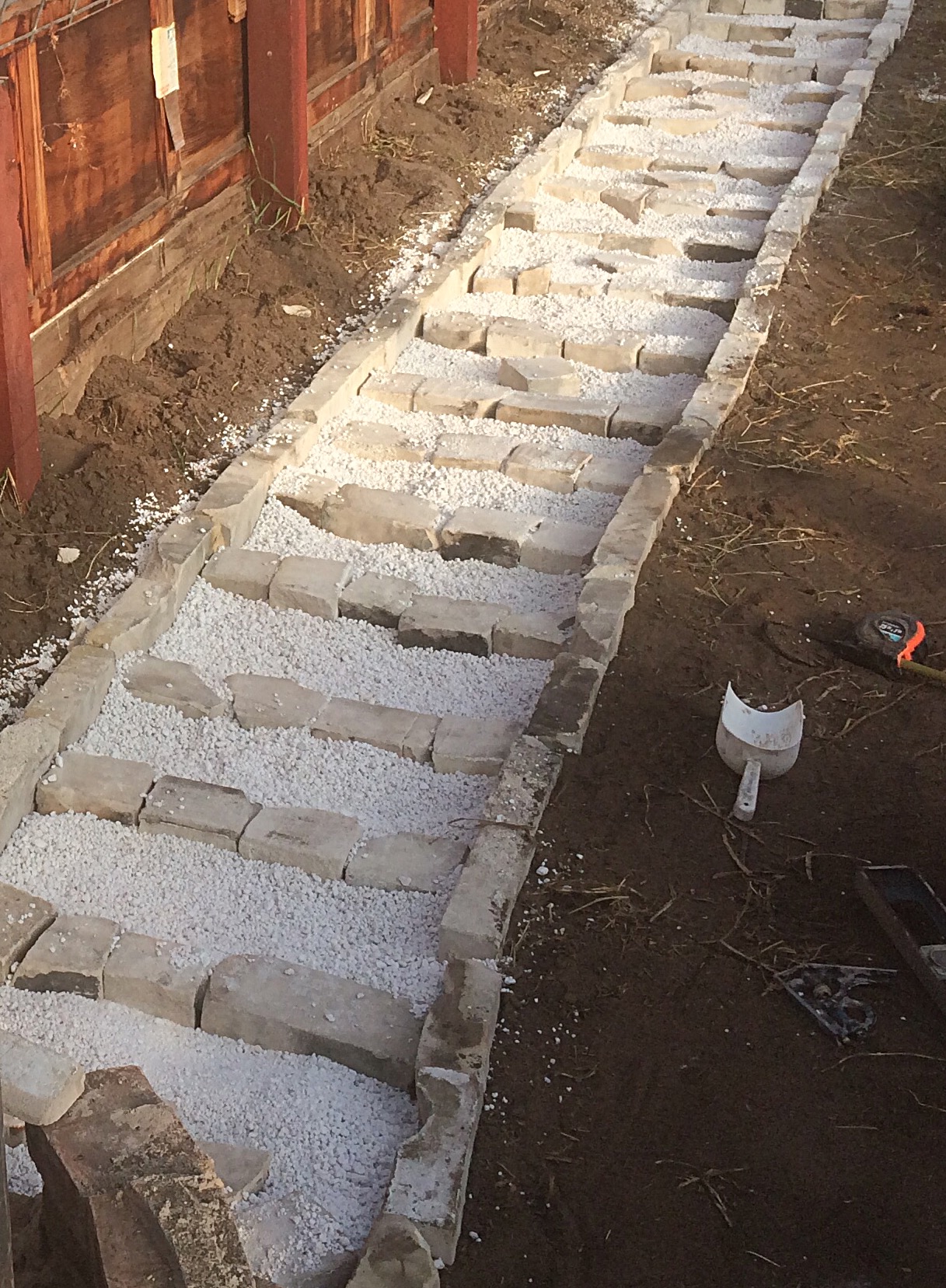
trench for thermal mass foundation/insulation layer
insulative firebricks and perlite to separate the thermal mass from the infinite heat sink of the earth
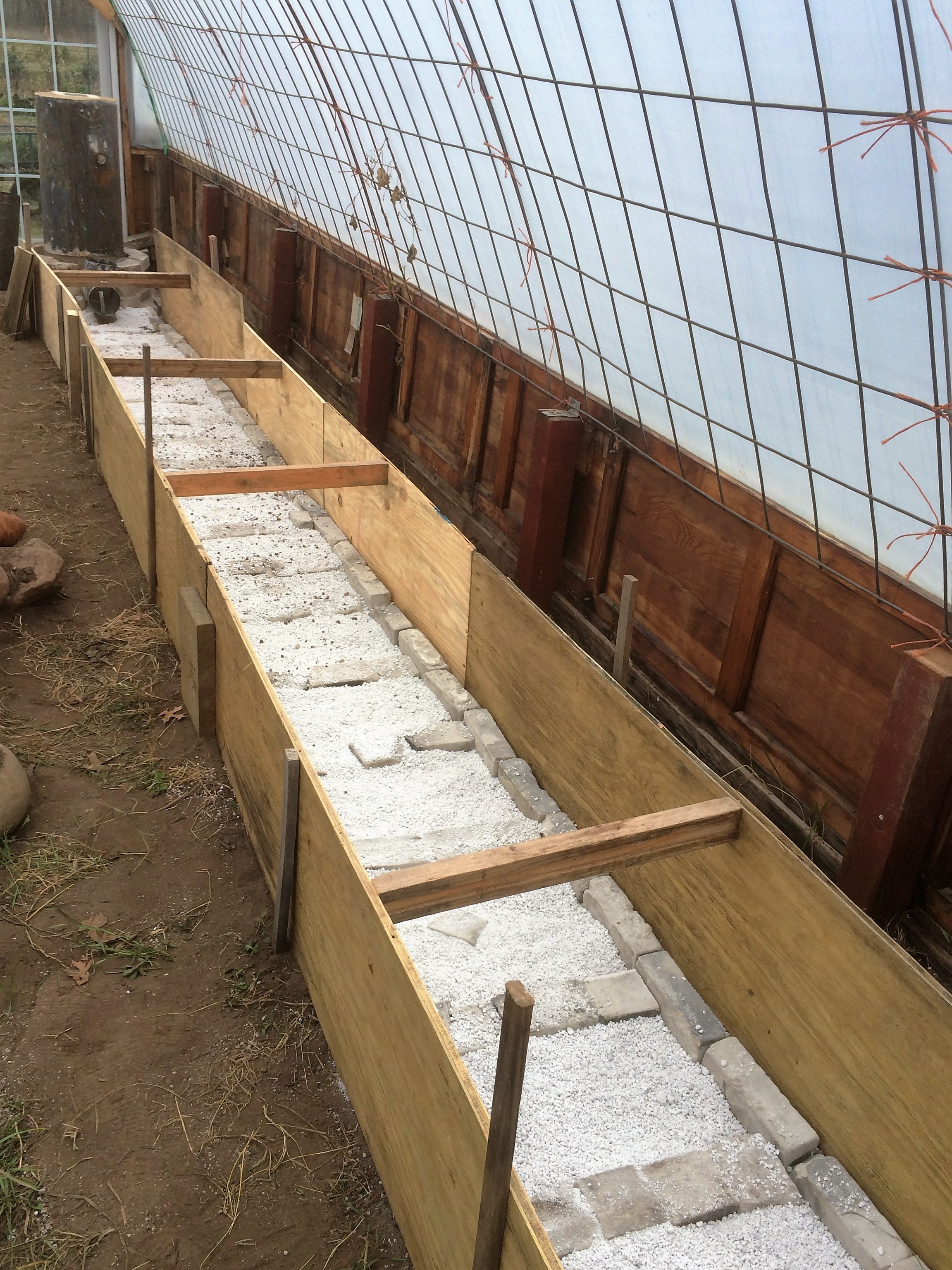
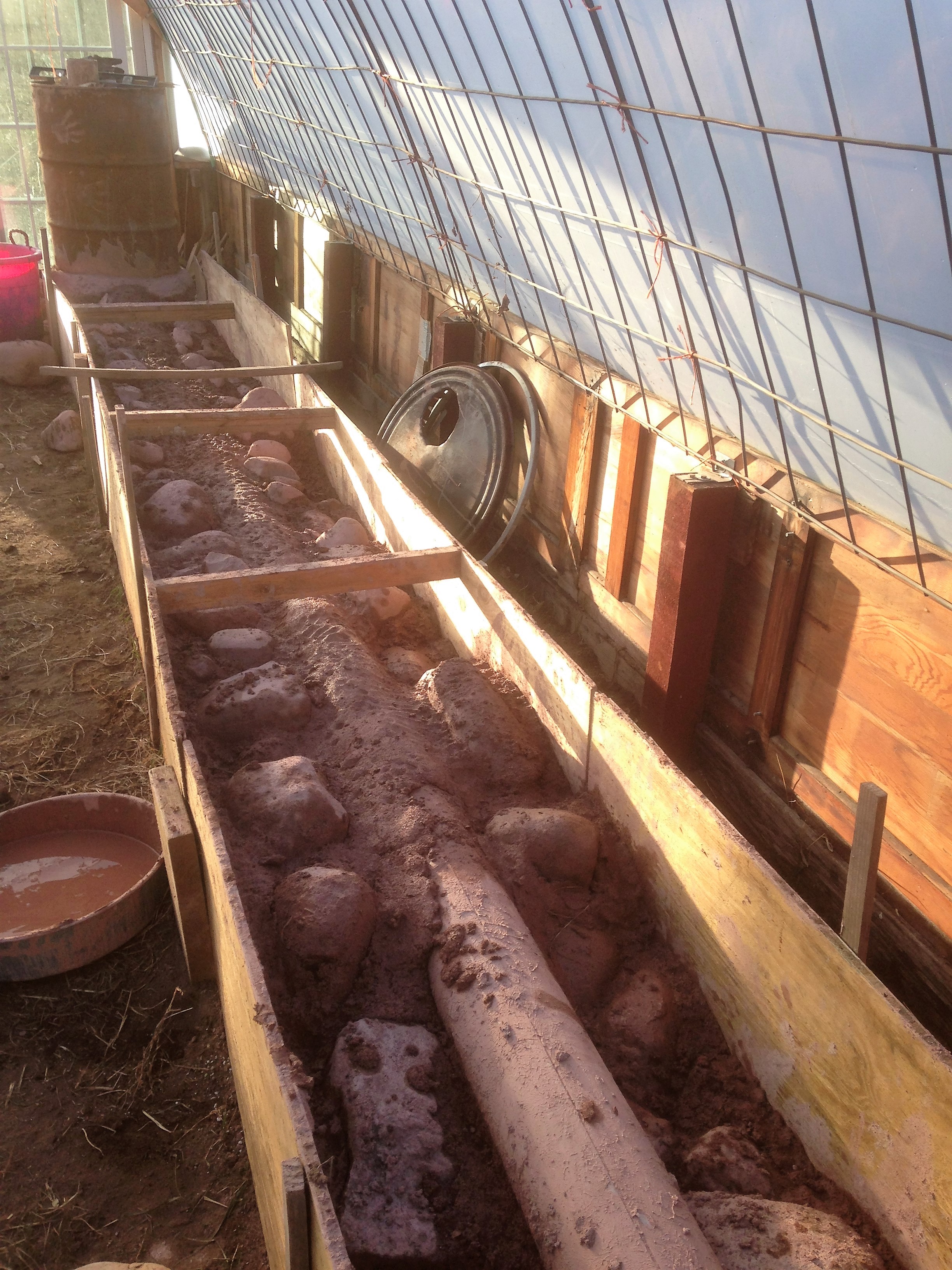
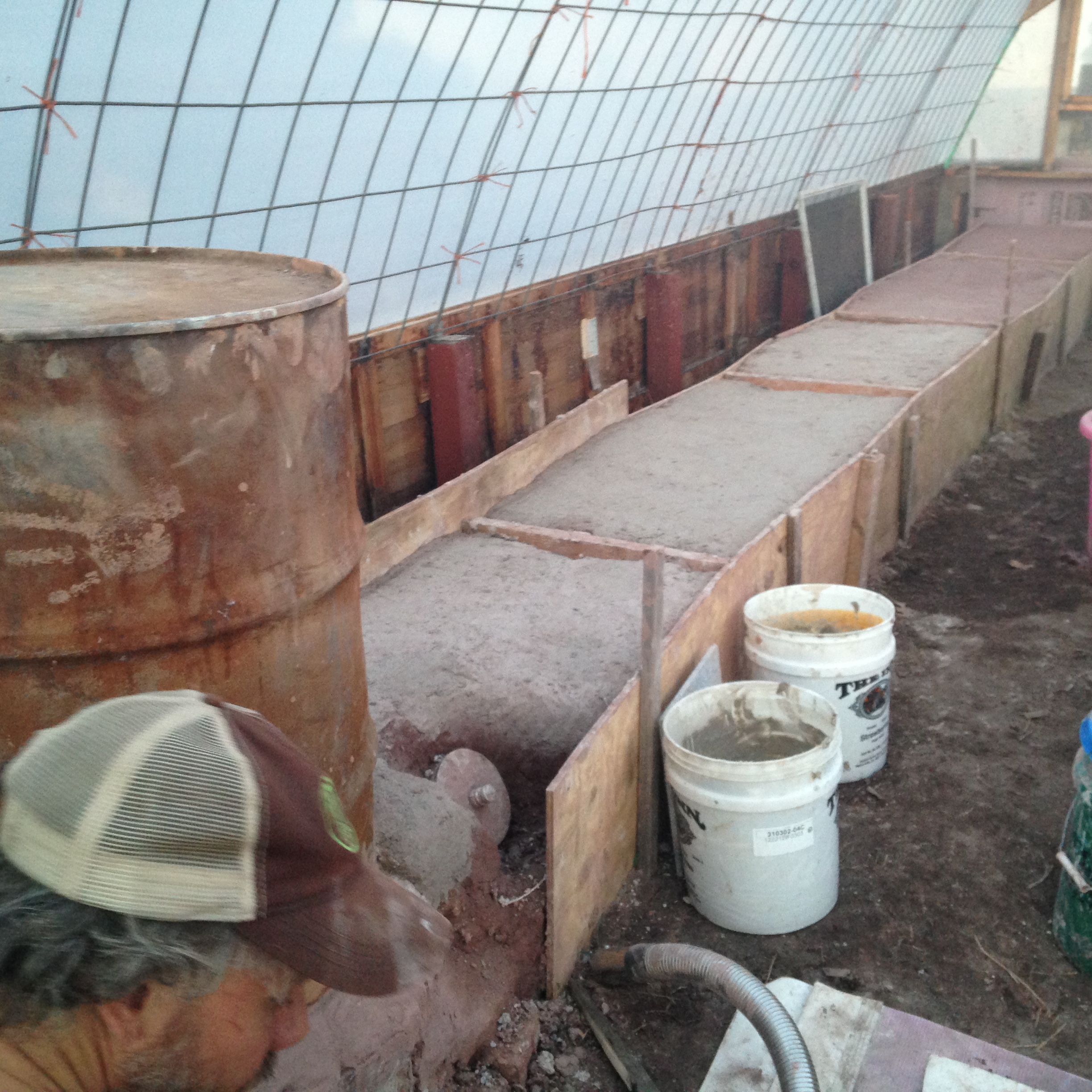
Forms for the thermal mass (they wound up bowing outward some between the internal supports, but not too badly and I like the organic wavy lines that resulted)

IMG_1755

And then winter came, and we hit the road, leaving the wet clay of the combustion chamber to slowly dry out over the wintertime.

When we returned in March, we got to work on the thermal mass bench … which turned out to be a lot more work than we’d bargained for.

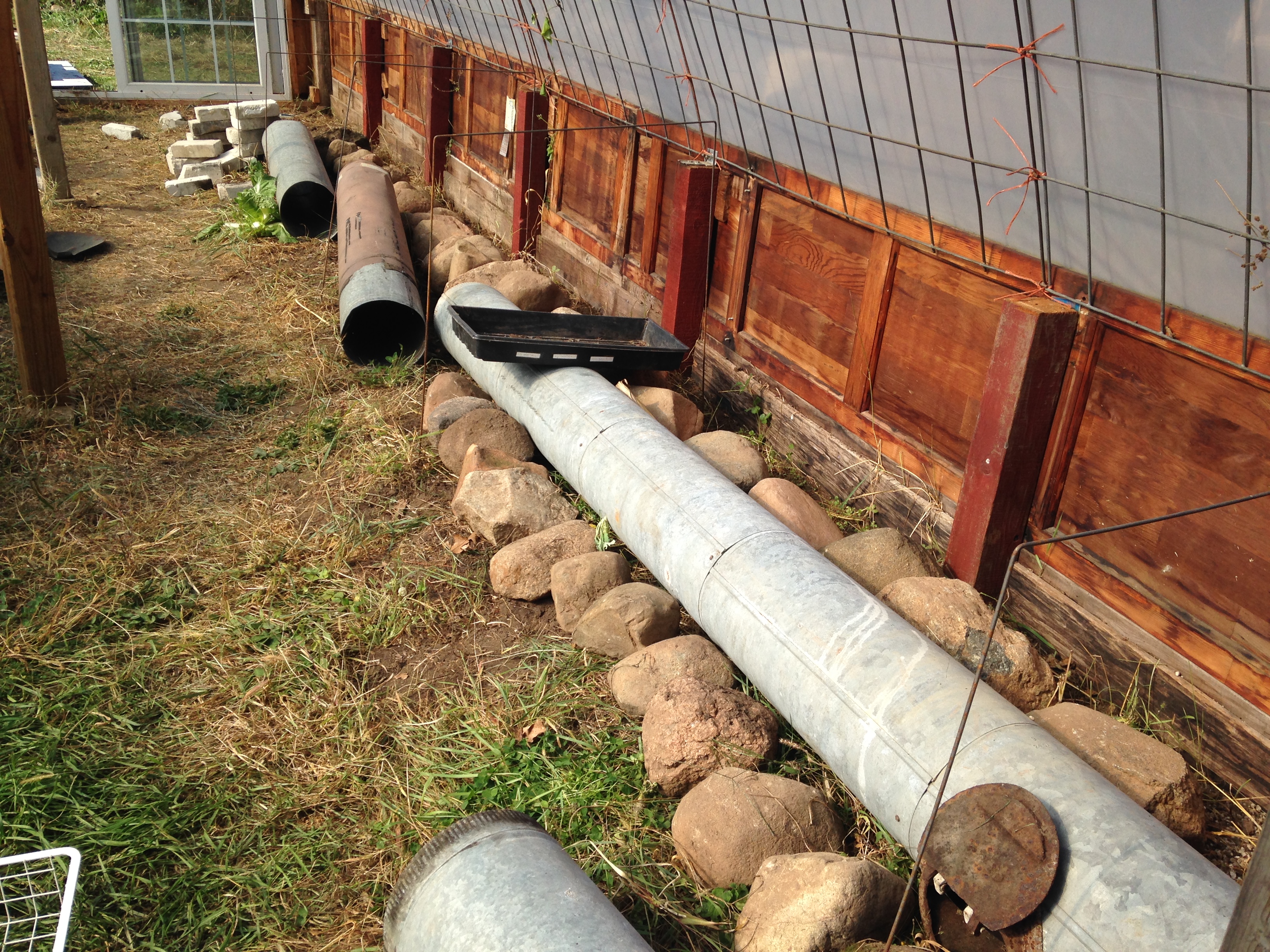
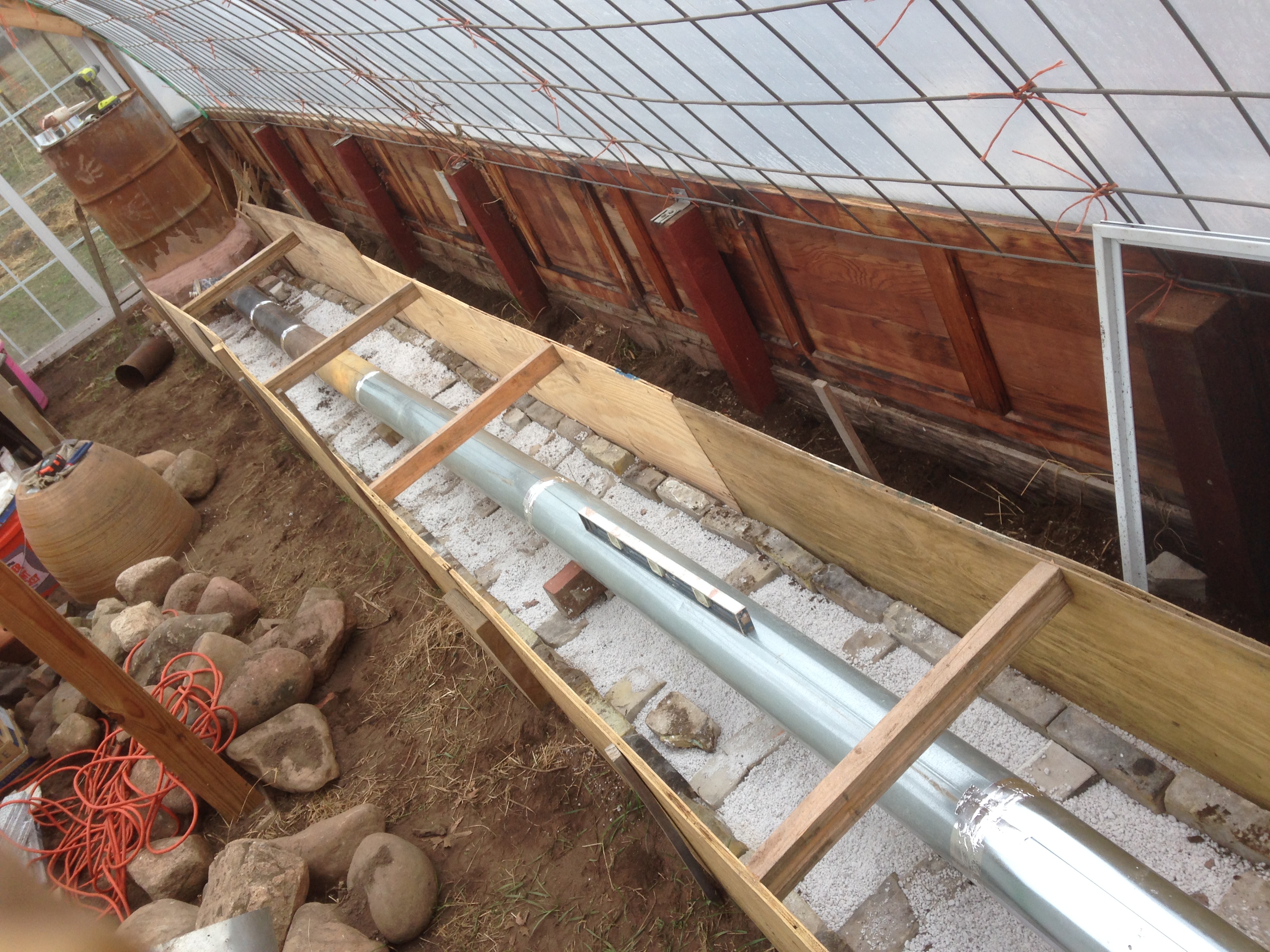
laying out the exhaust ducting, and taping all the joints.


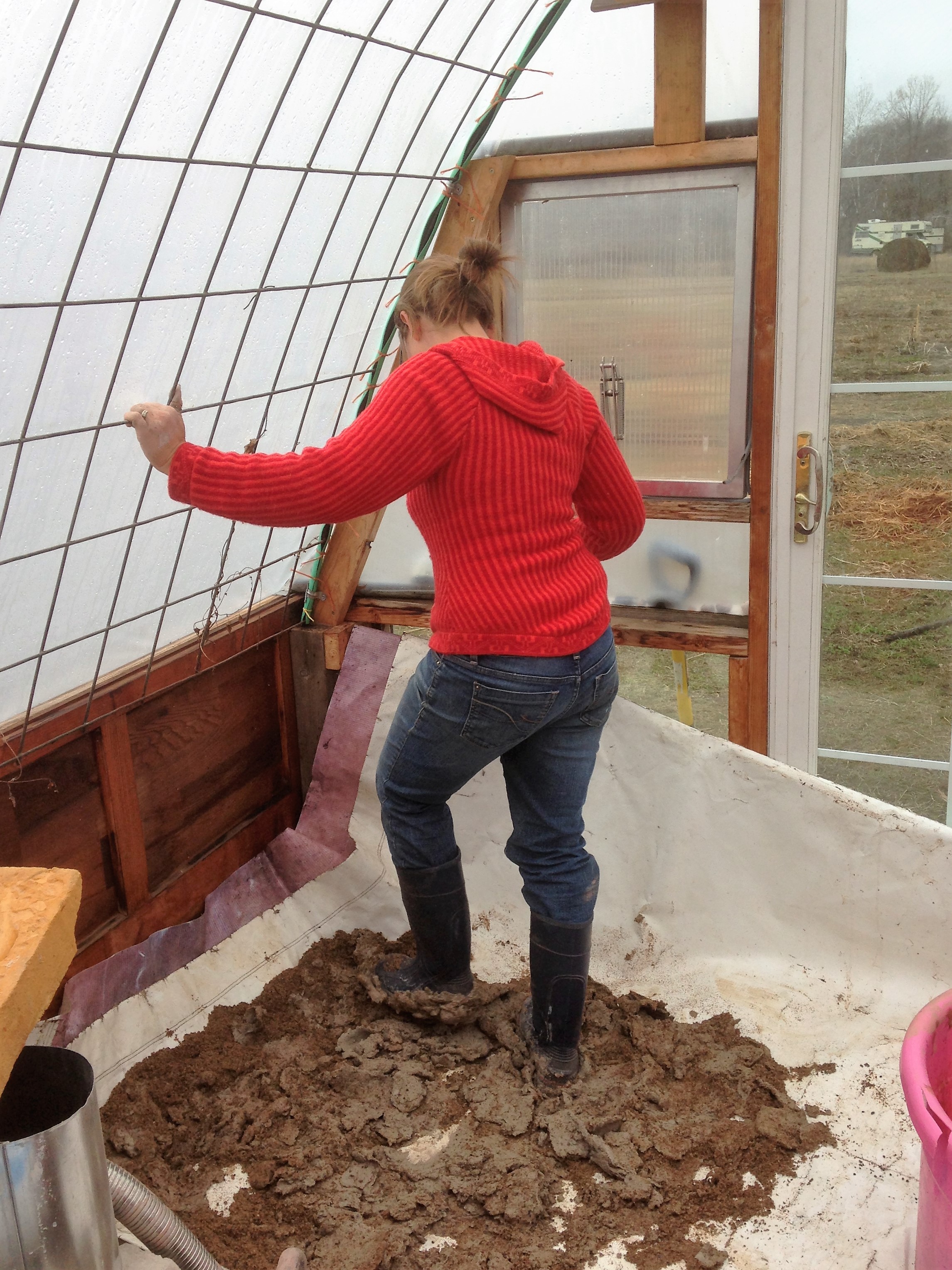
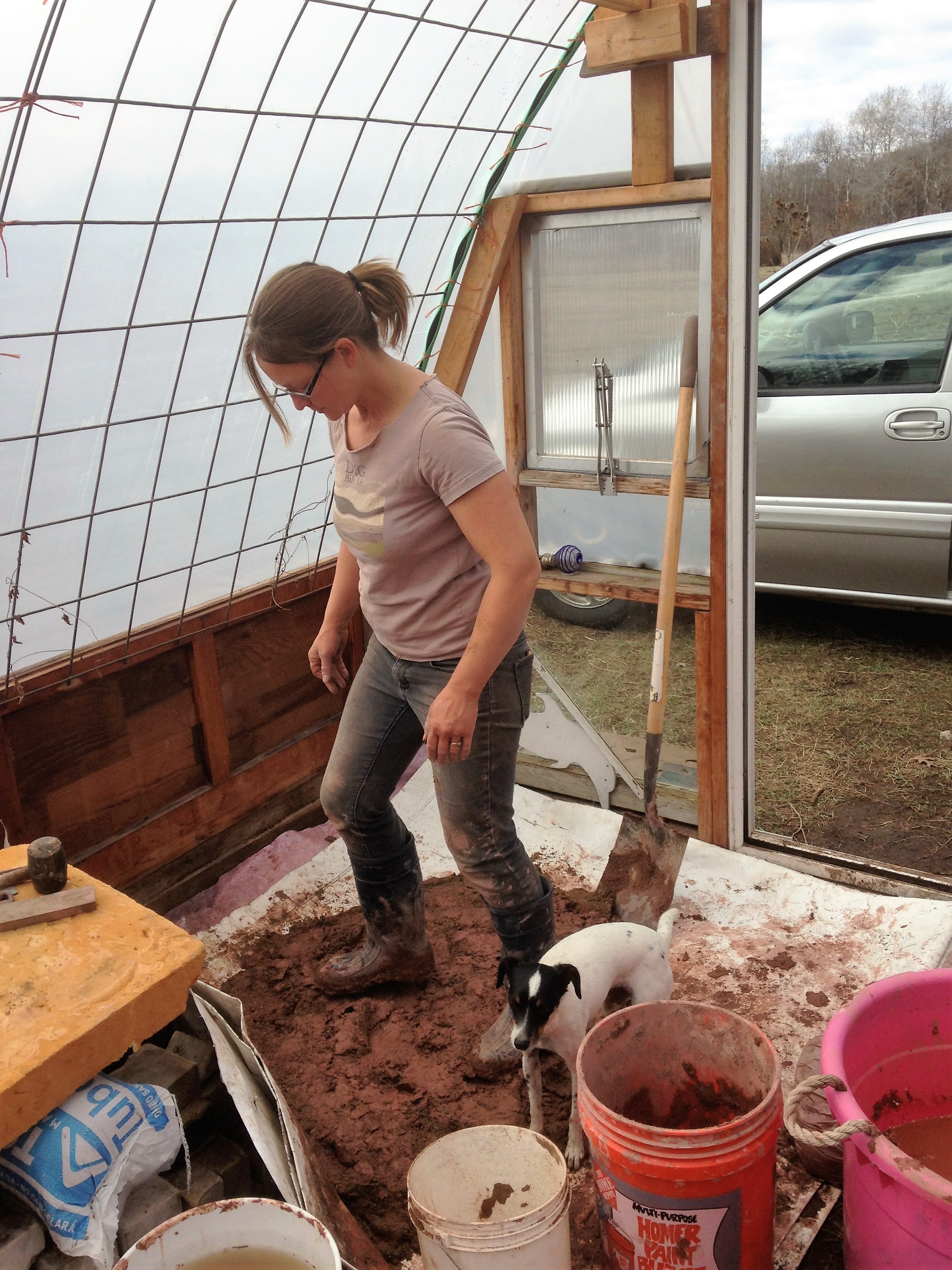
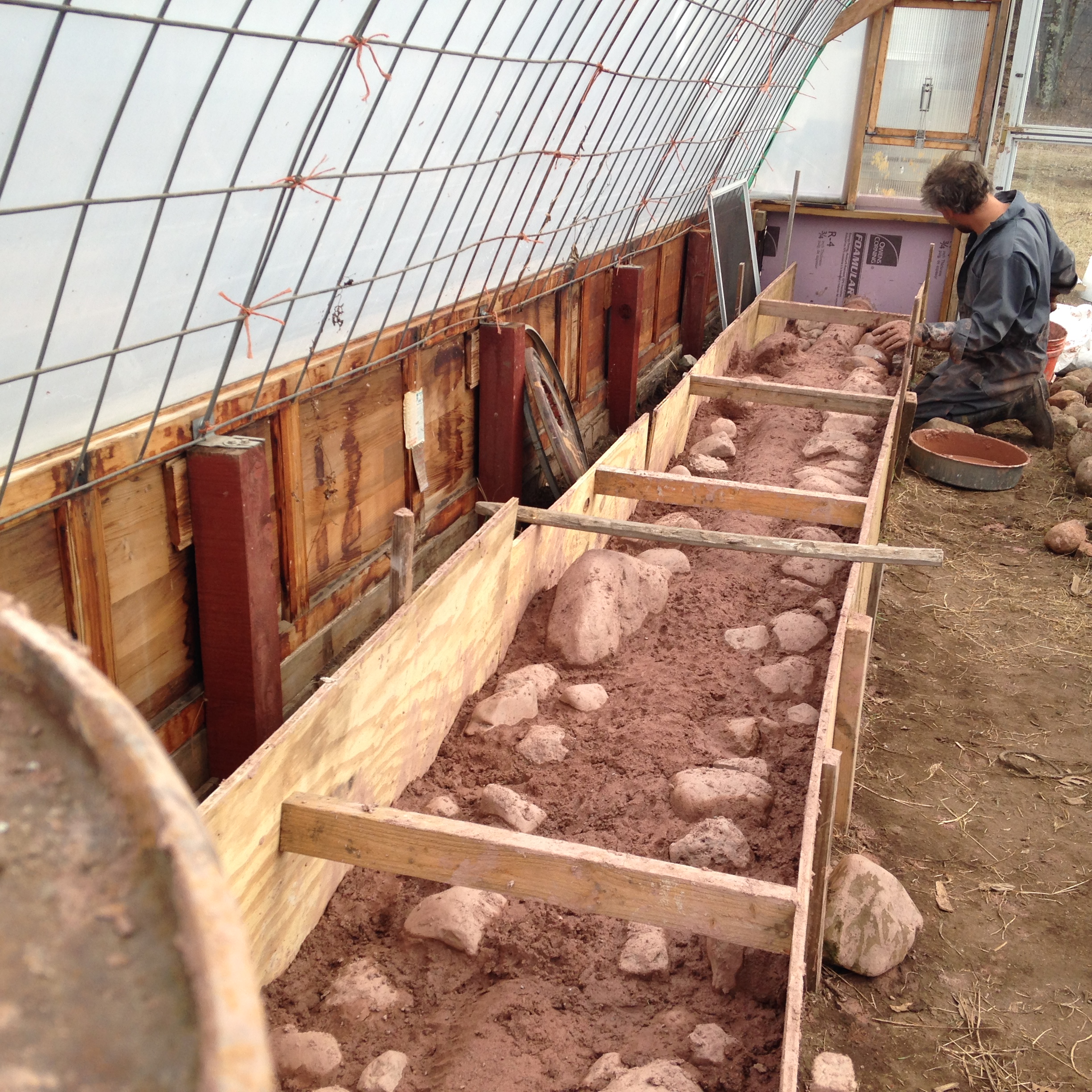
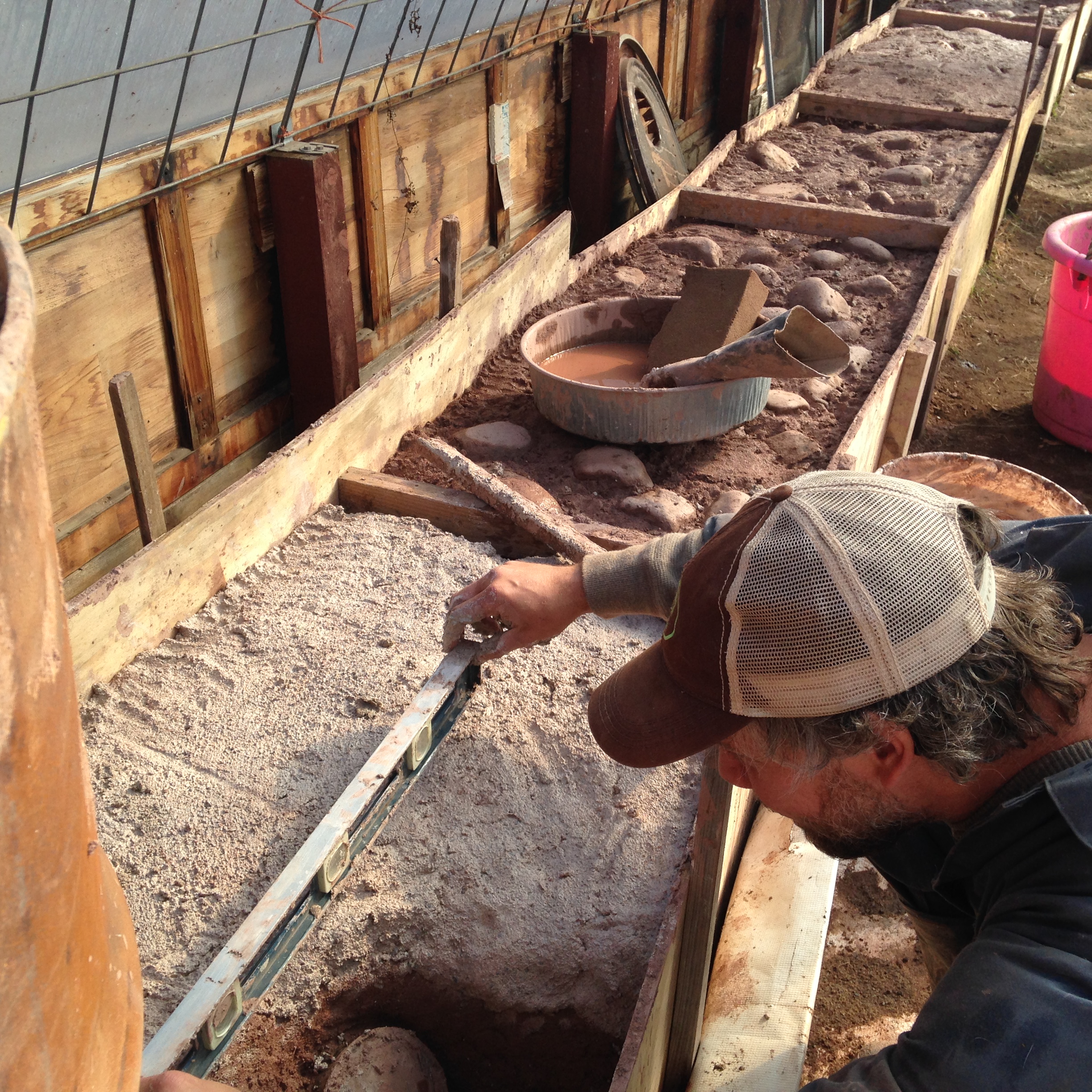
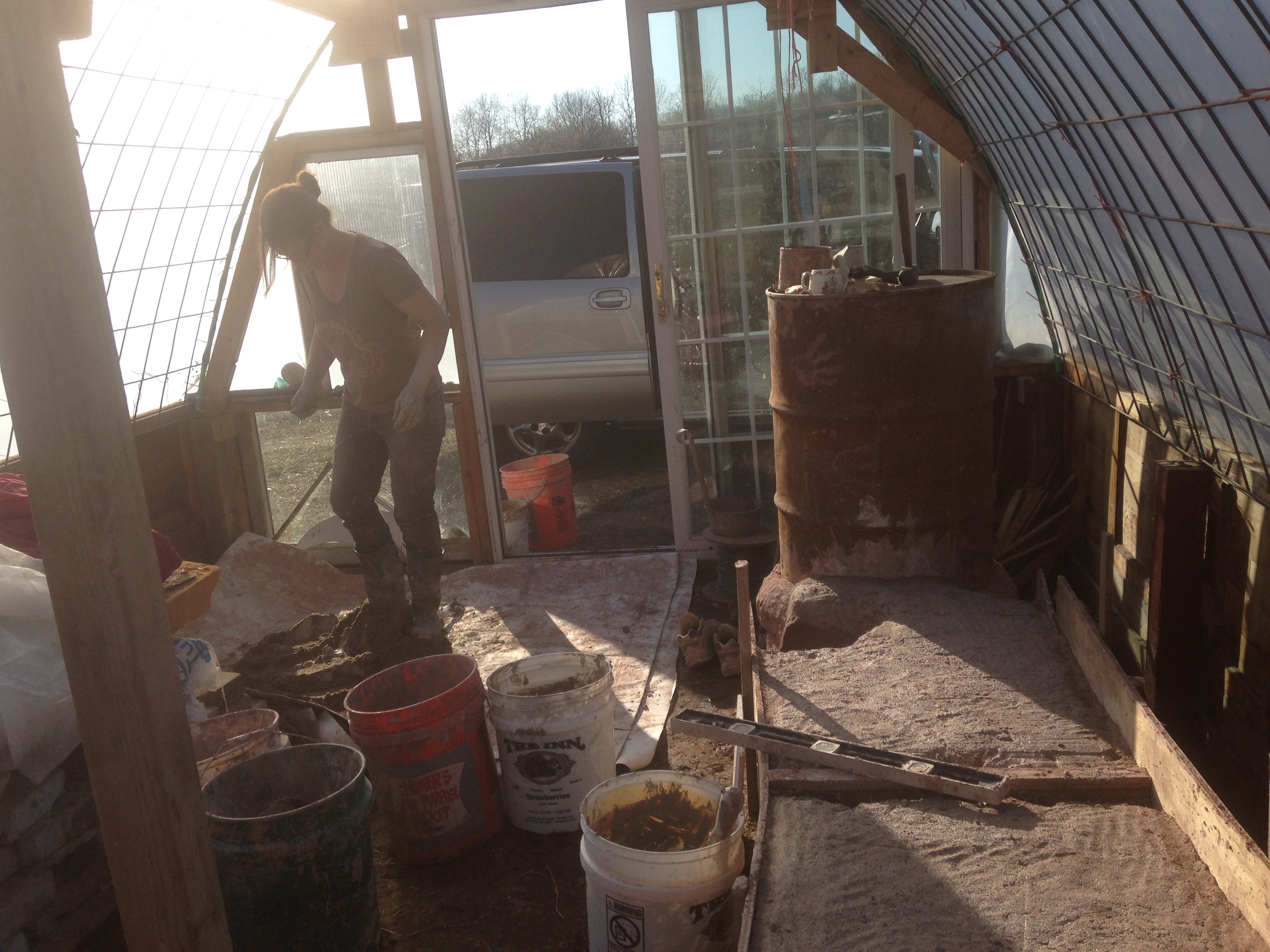
Kristin did all the mixing. ALL of it. We mixed 2 parts sand for every 1 part of clay. We went through at least a full yard of sand (two trailer loads) and almost all of the free clay we'd scored. It took us several solid days to get it all mixed and added to the bench ... Kristin's feet and my hands looked like they'd been to war by the end.
Kristin did all the mixing. ALL of it. We mixed 2 parts sand for every 1 part of clay. We went through at least a full yard of sand (two trailer loads) and almost all of the free clay we’d scored. It took us several solid days to get it all mixed and added to the bench … Kristin’s feet and my hands looked like they’d been to war by the end.


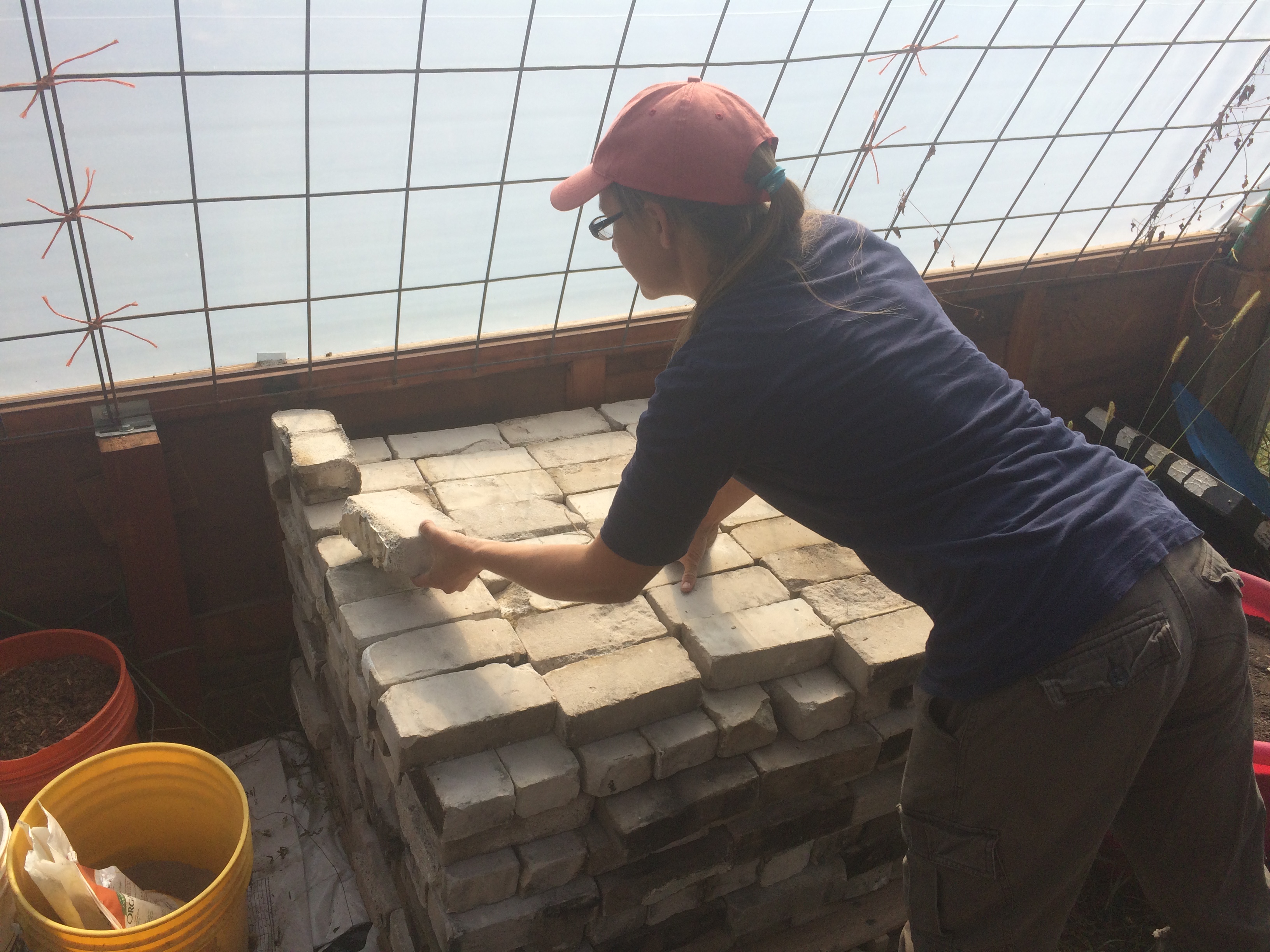
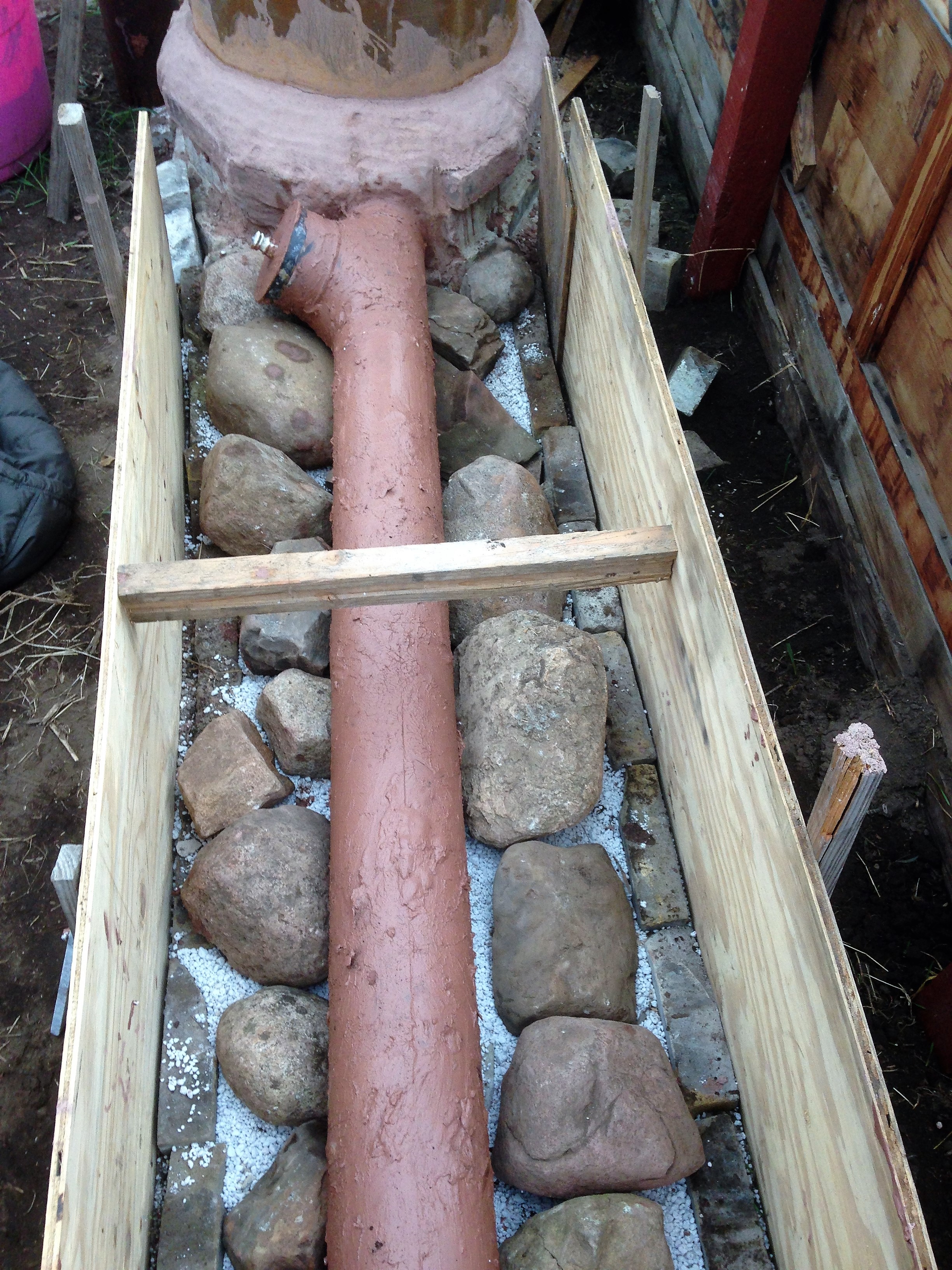
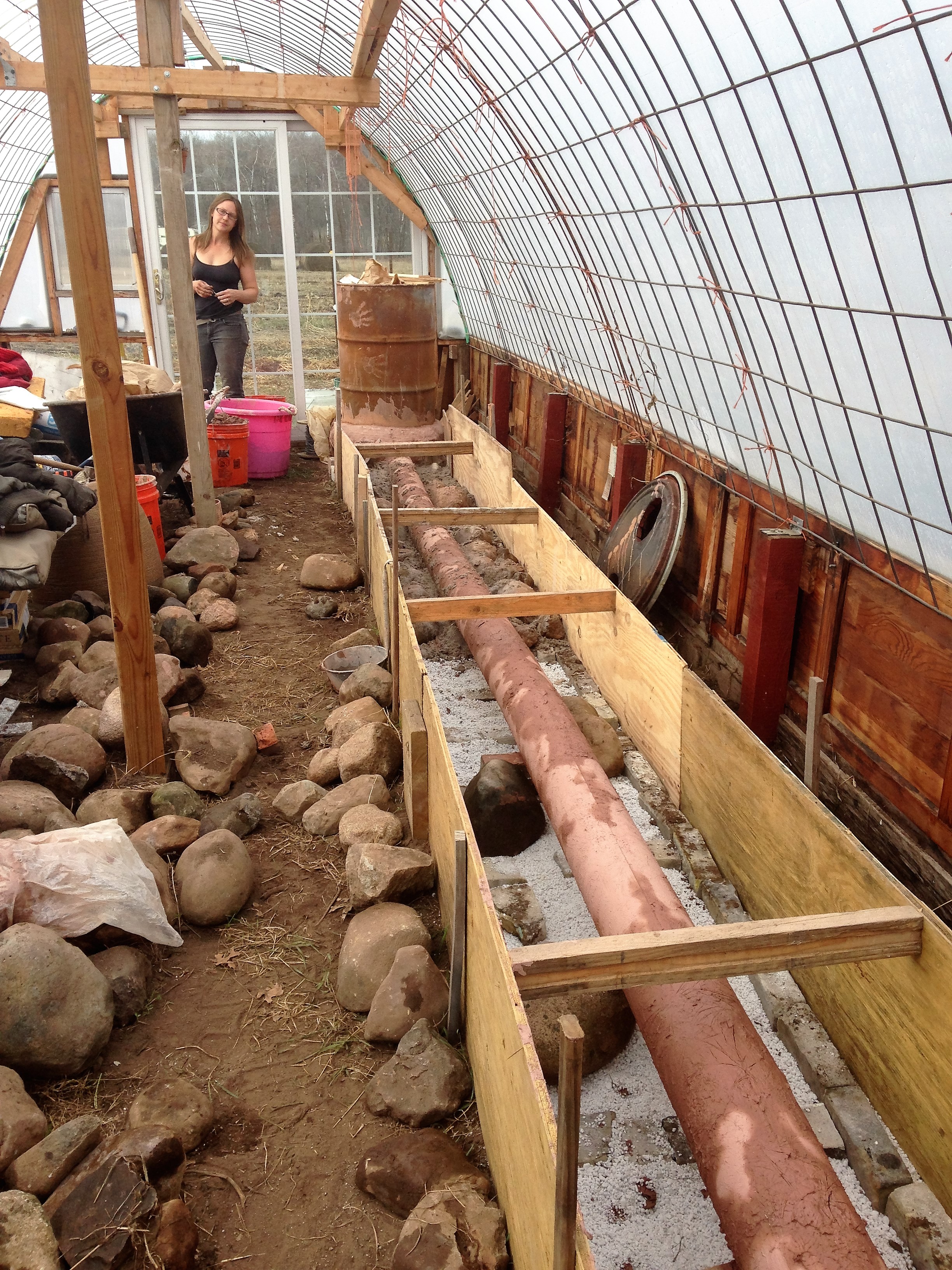
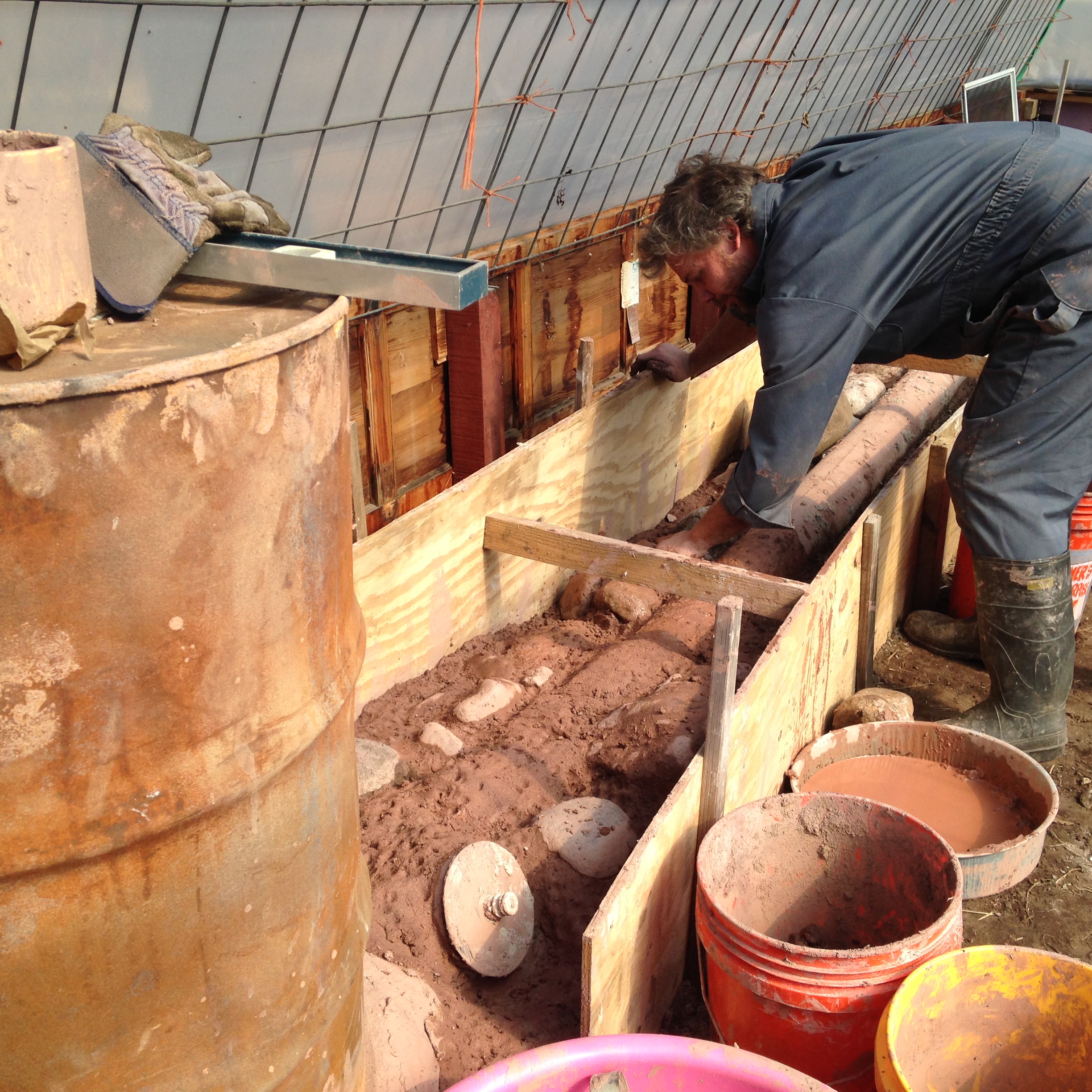
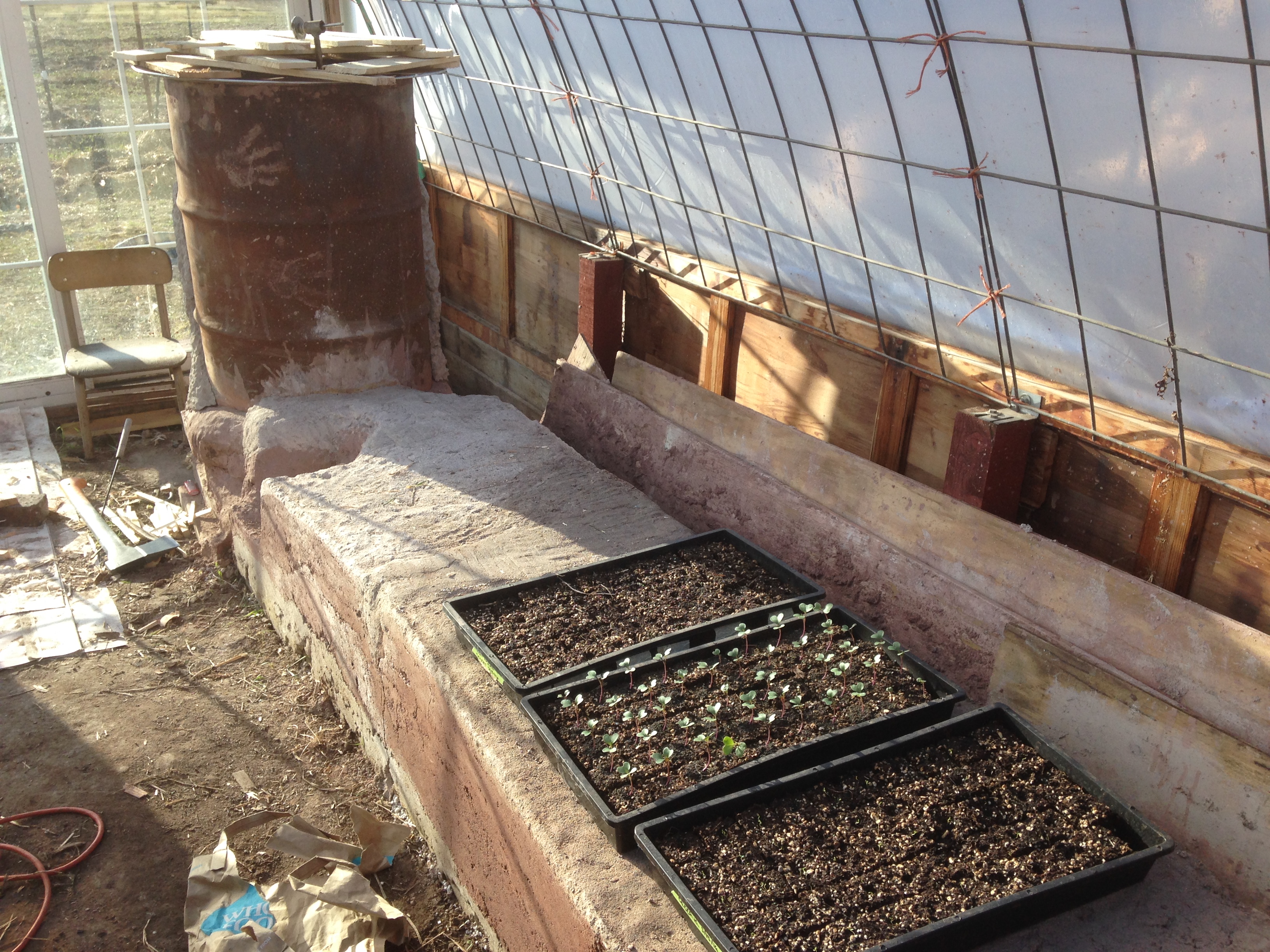
Exhaust duct was coated in clay slip for maximum heat transference. We tried to use as much river rock as we could to save on clay and sand, but it still took an incredible amount to fill the bench (23' long, 14" high, and 24" wide - wider where the forms bowed out)
Exhaust duct was coated in clay slip for maximum heat transference. We tried to use as much river rock as we could to save on clay and sand, but it still took an incredible amount to fill the bench (23′ long, 14″ high, and 24″ wide – wider where the forms bowed out)
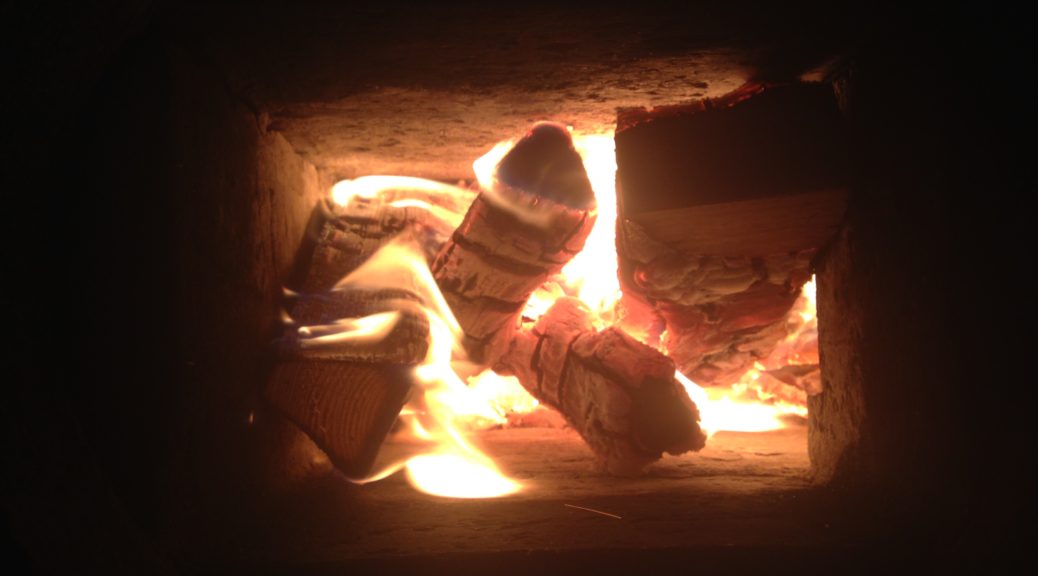
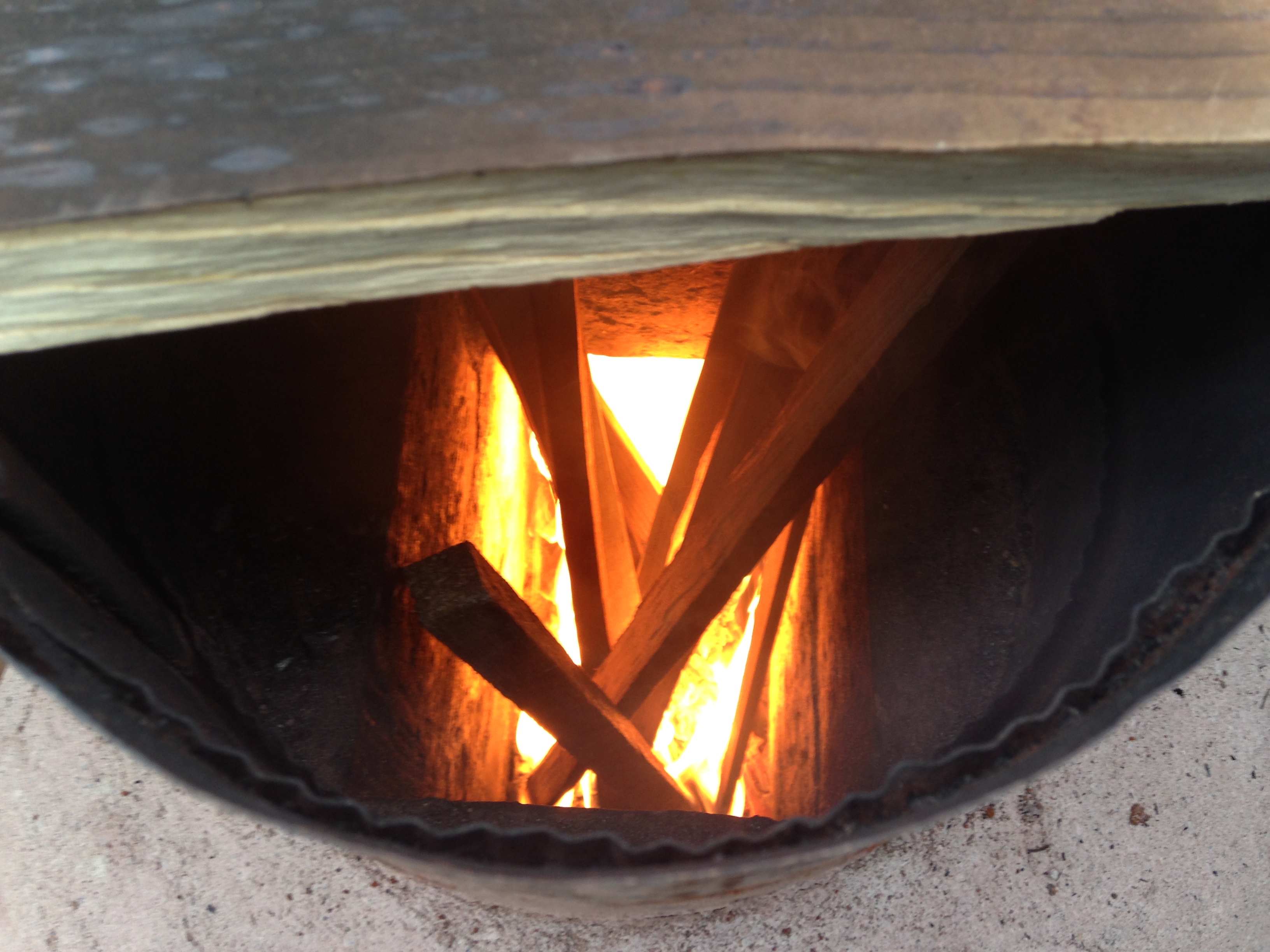
first test fire! It went .. OK. We decided to wait until we had more completed before really testing her out.
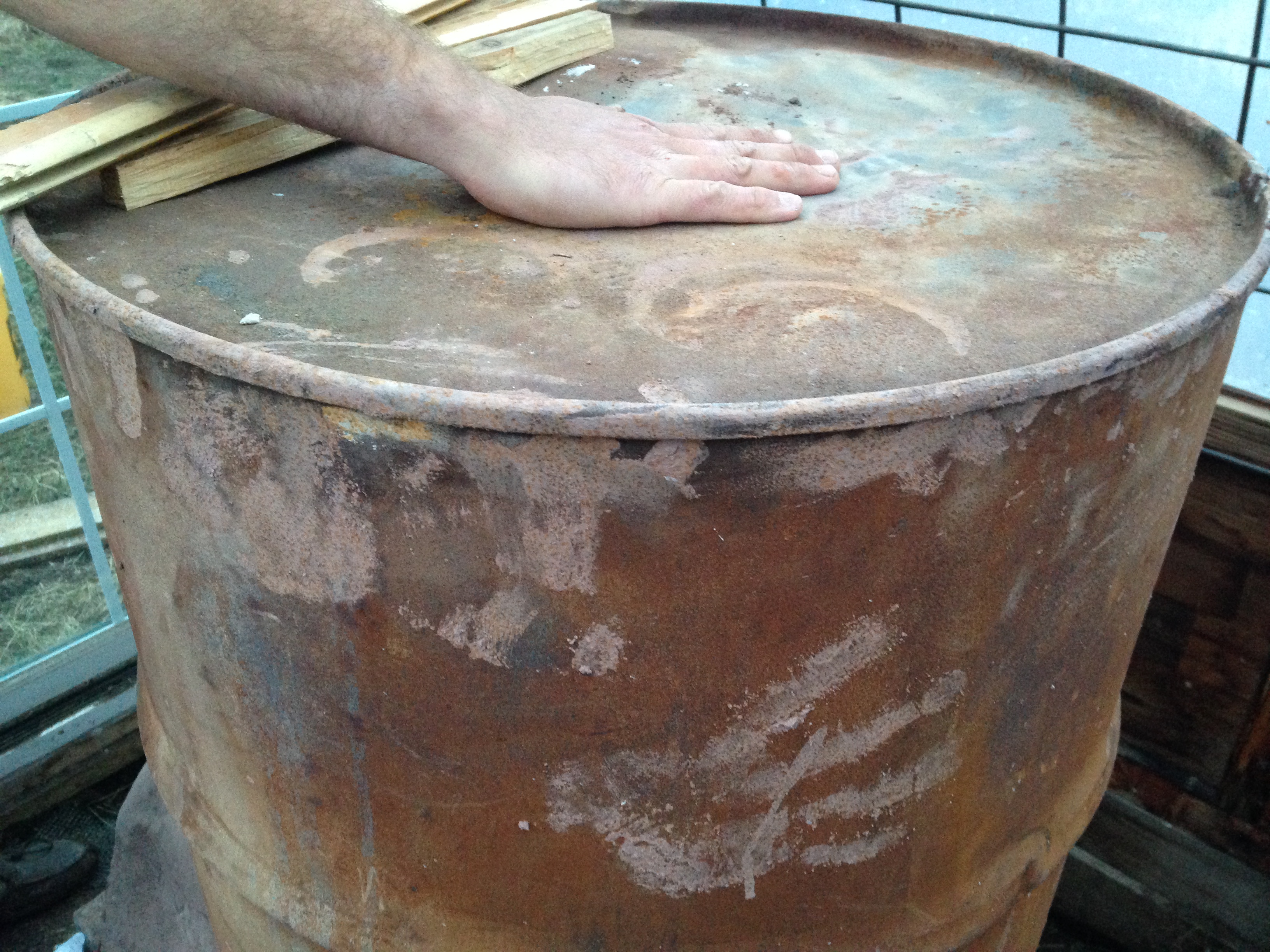
feeling the heat at the top of the riser

IMG_4014

slowly filling the forms with clay/sand mix and rocks. Kristin down at her mixing station.
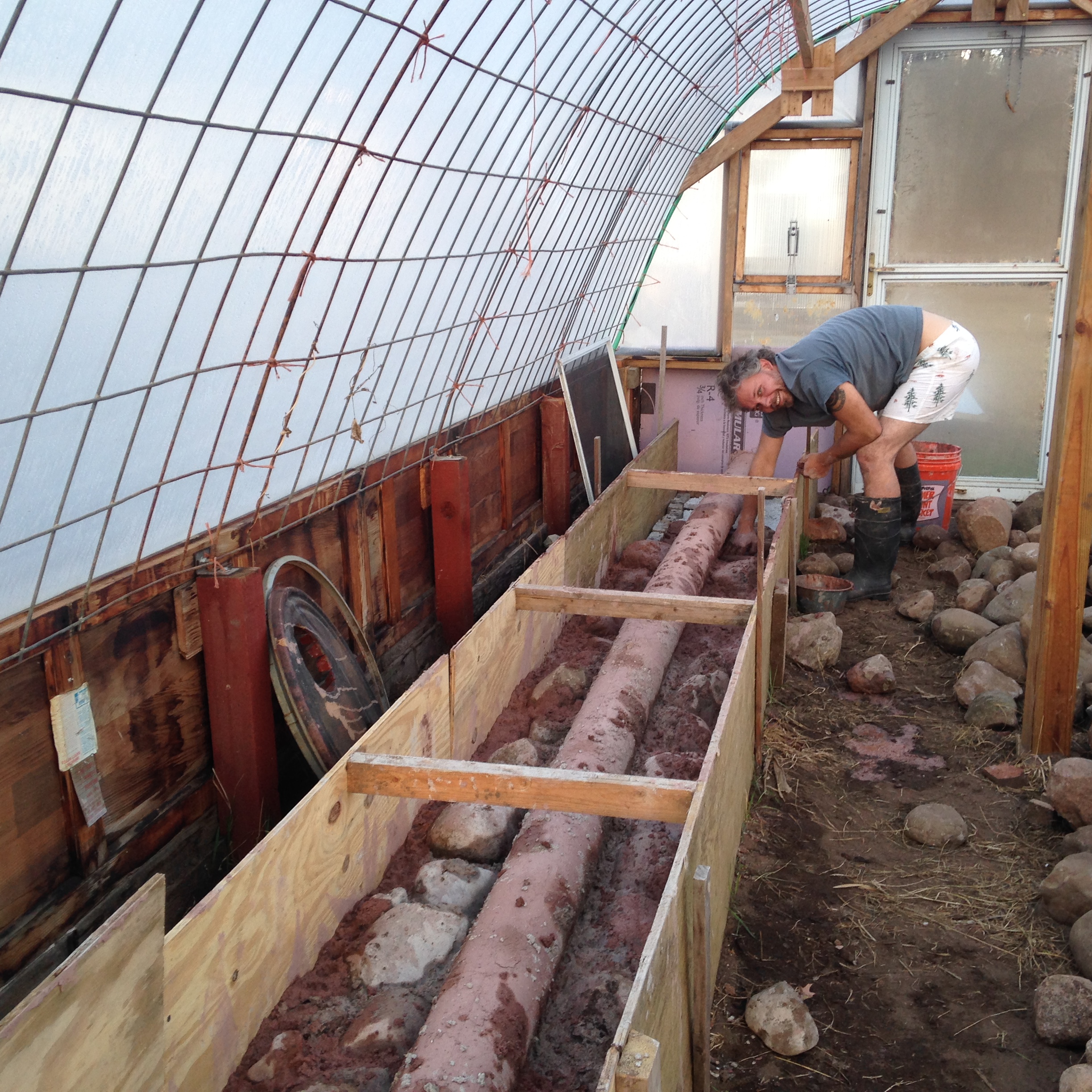
ha ... so it got too hot for pants in the sunny greenhouse
ha … so it got too hot for pants in the sunny greenhouse

IMG_4024

Music was a required tool to help maintain spirits during the tedious mixing process.

IMG_4029

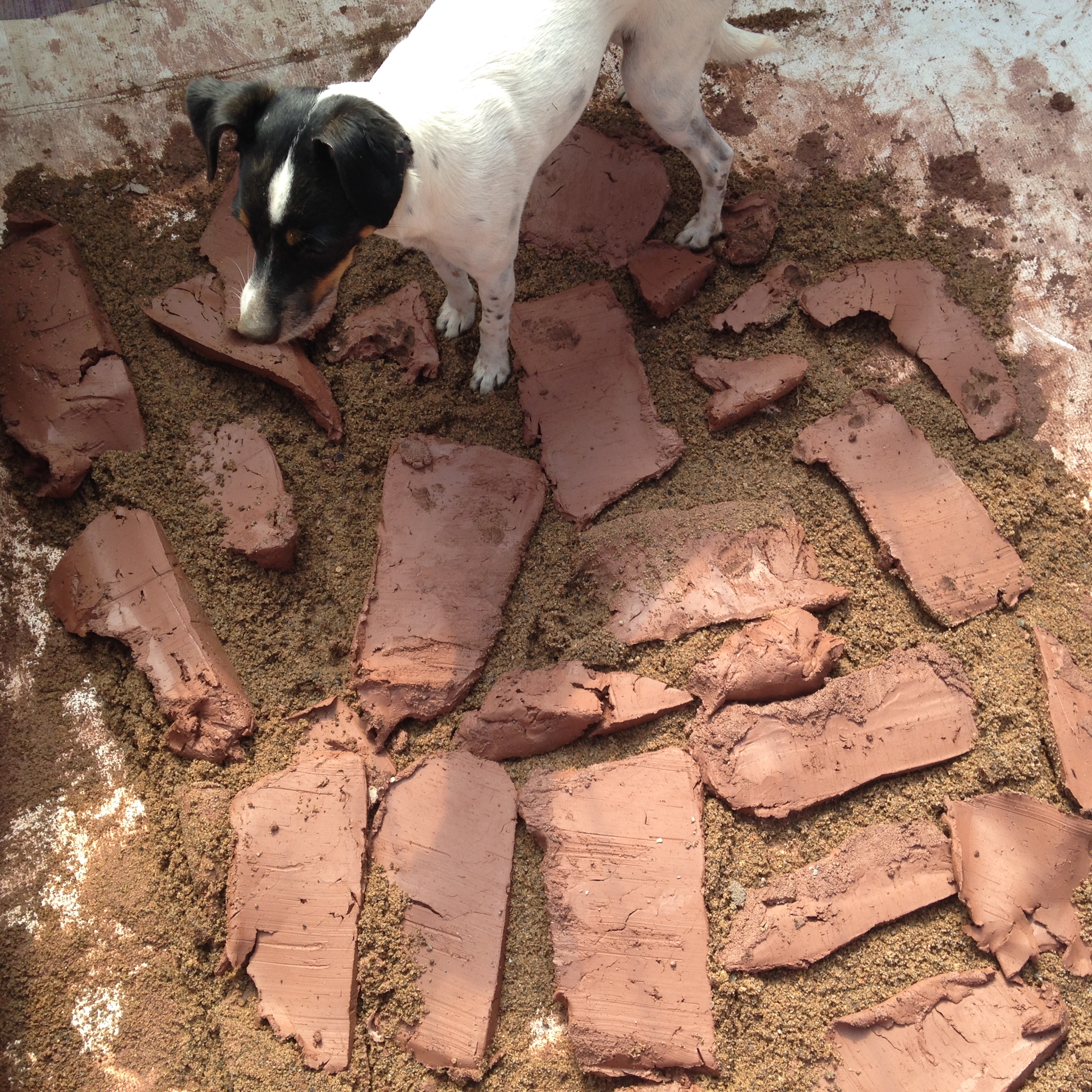
Kristin developed a technique of slicing off slabs of clay and spreading them out on the sand, then topping that with more sand, before starting to stomp and twist.

IMG_4628 IMG_4042

Finally getting to the top layer! The last foot or so seemed to take forever to fill in. (This is still sand/clay mix - but some of the clay was a white instead of red.)
Finally getting to the top layer! The last foot or so seemed to take forever to fill in. (This is still sand/clay mix – but some of the clay was a white instead of red.)
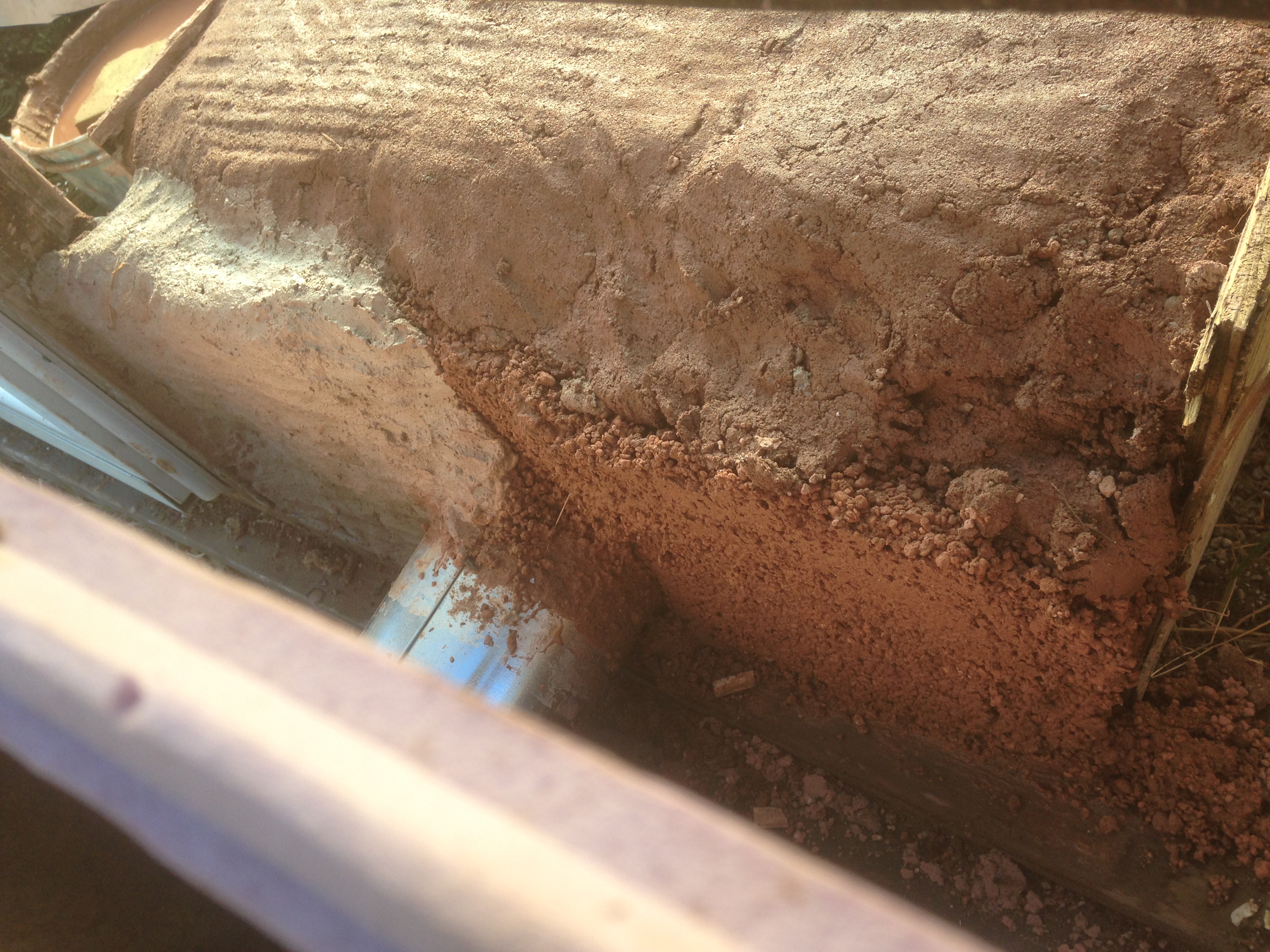
end of the bench before the exit to the chimney - was insulated with perlite/clay mix end cap
end of the bench before the exit to the chimney – was insulated with perlite/clay mix end cap

IMG_4671

Bench completed!! Now to start drying out several tons of wet clay ...
Bench almost completed .. just had to let it set up before removing thos internal braces, and filling in the gaps they left behind. Then it was time to start drying out several tons of wet clay …

IMG_4722

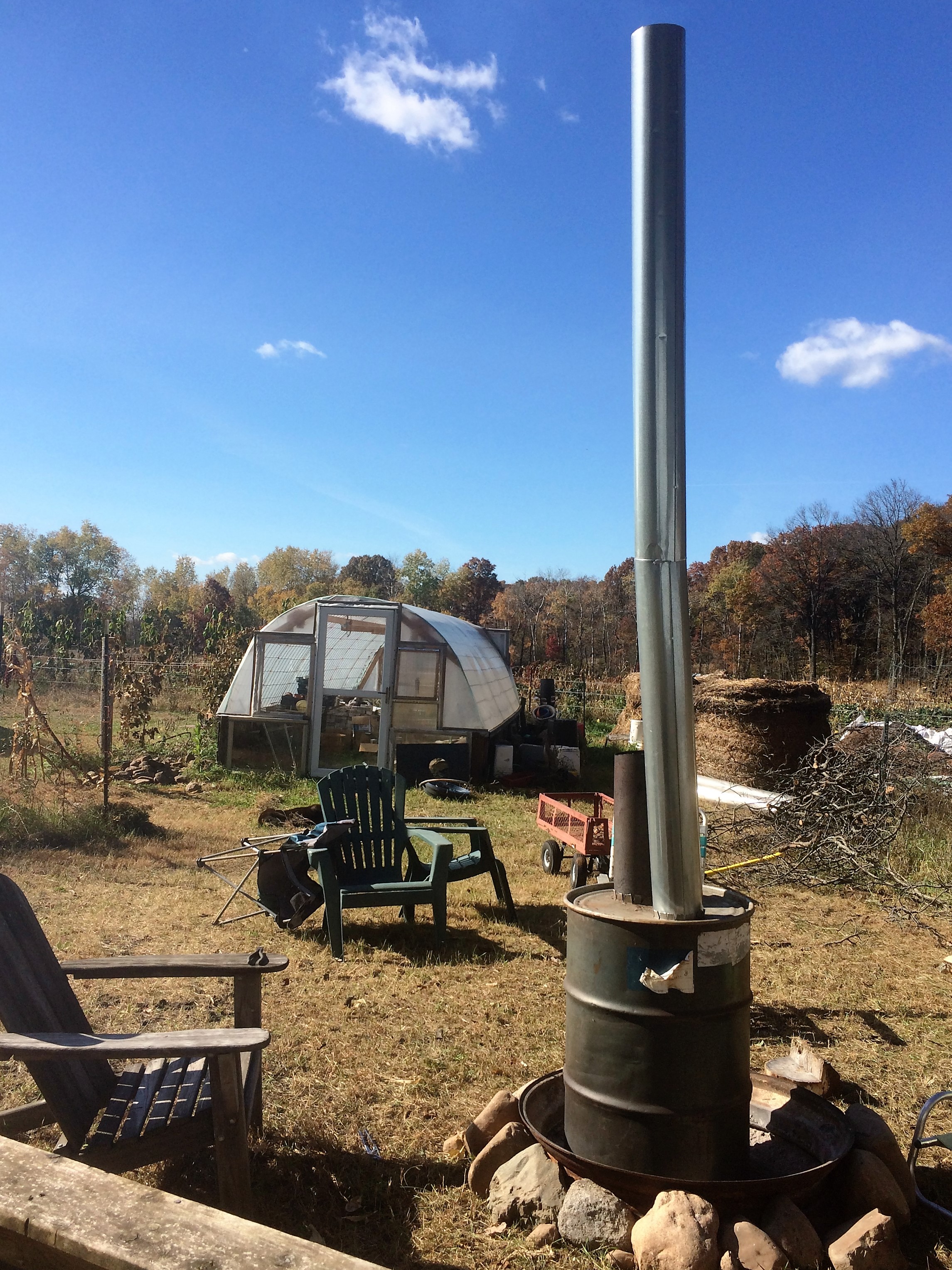
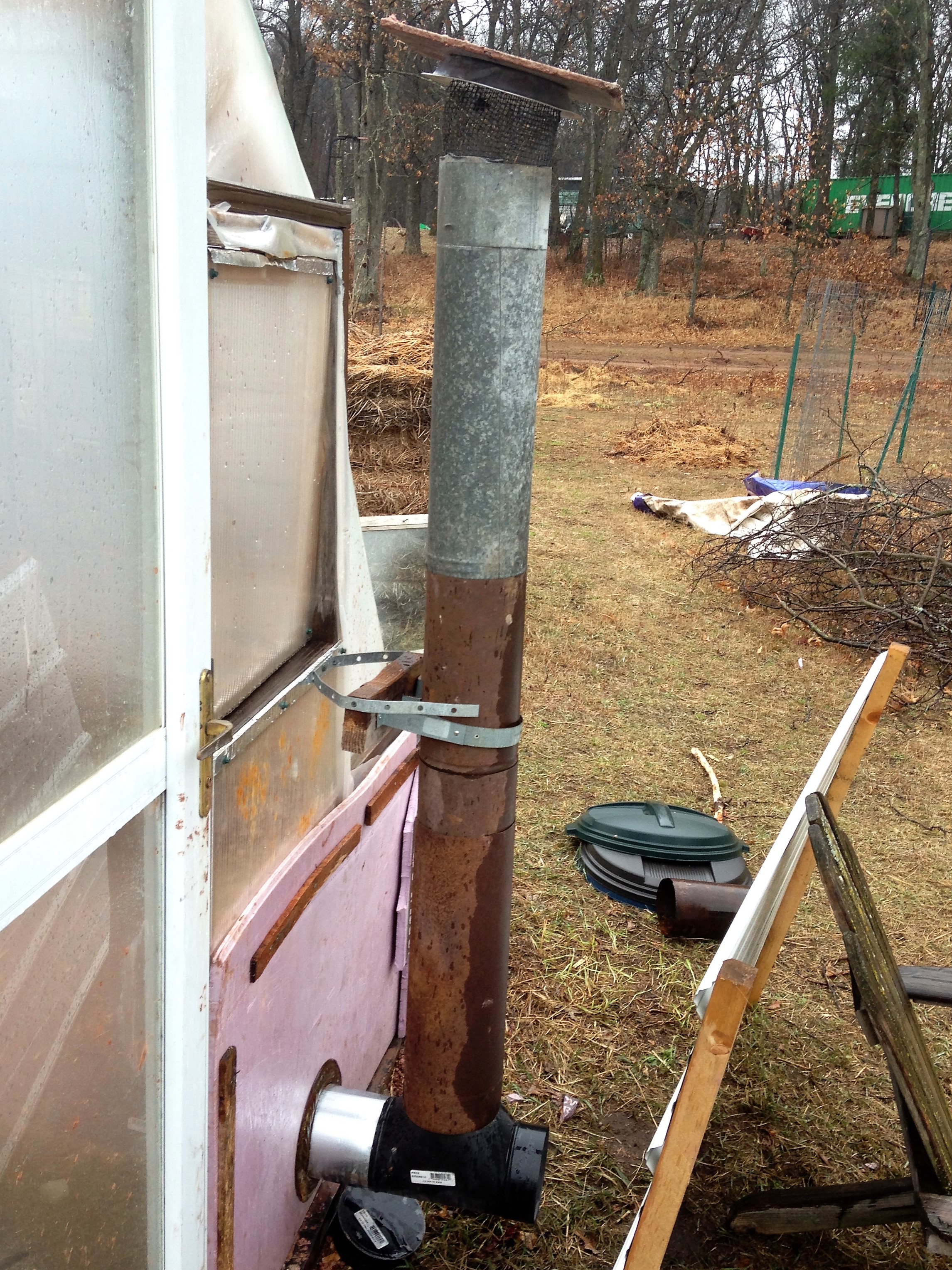
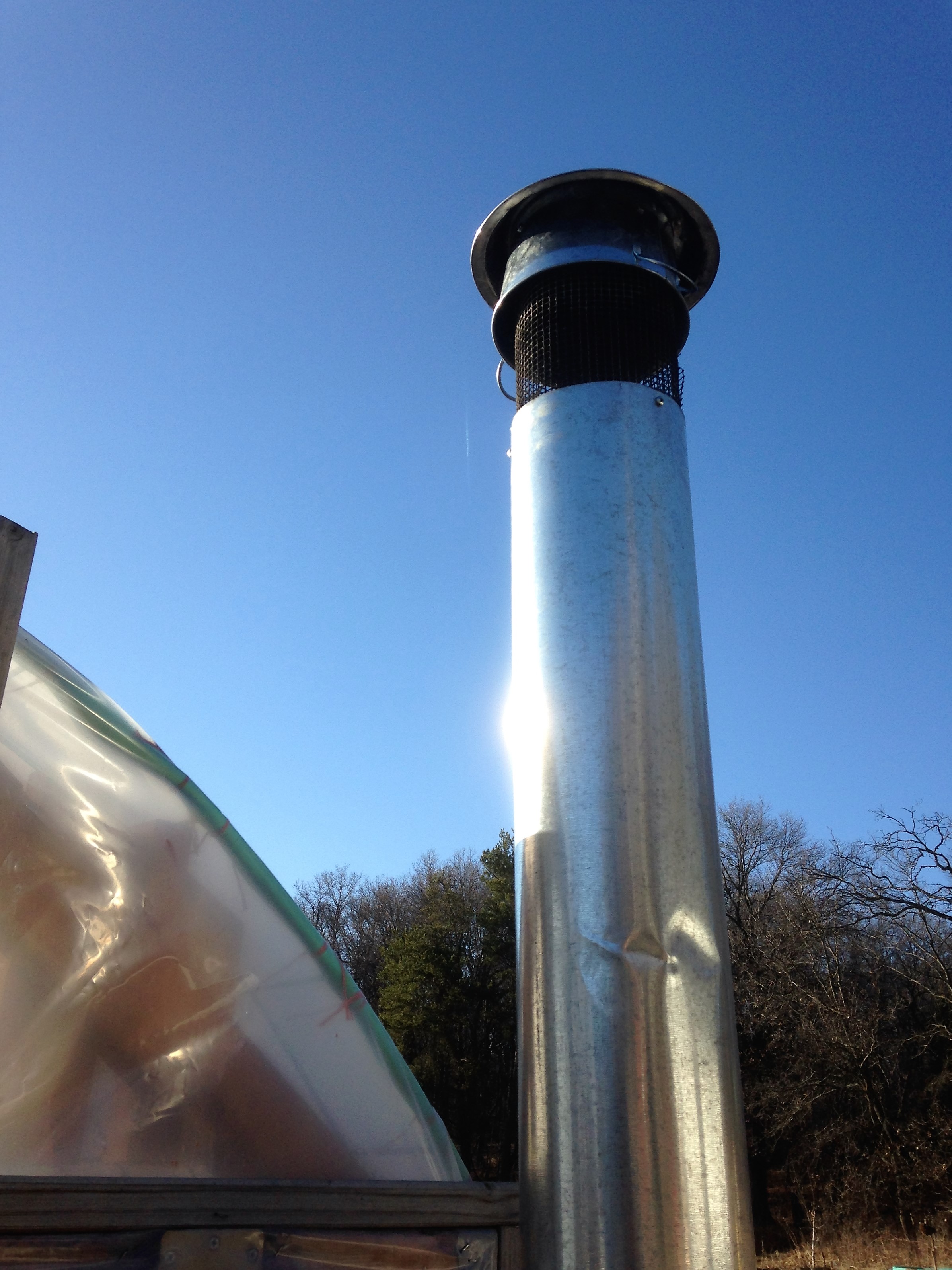
Chimney V1 - uninsulated and rather short. Initial burns couldnt even drive smoke up the pipe - it just pooped out onto the ground through the open cleanout hole at the bottom, because all the heat had ben leached out by the wet, cold clay bench.
Chimney V1 – uninsulated and rather short. Initial burns couldnt even drive smoke up the pipe – it just pooped out onto the ground through the open cleanout hole at the bottom, because all the heat had ben leached out by the wet, cold clay bench.
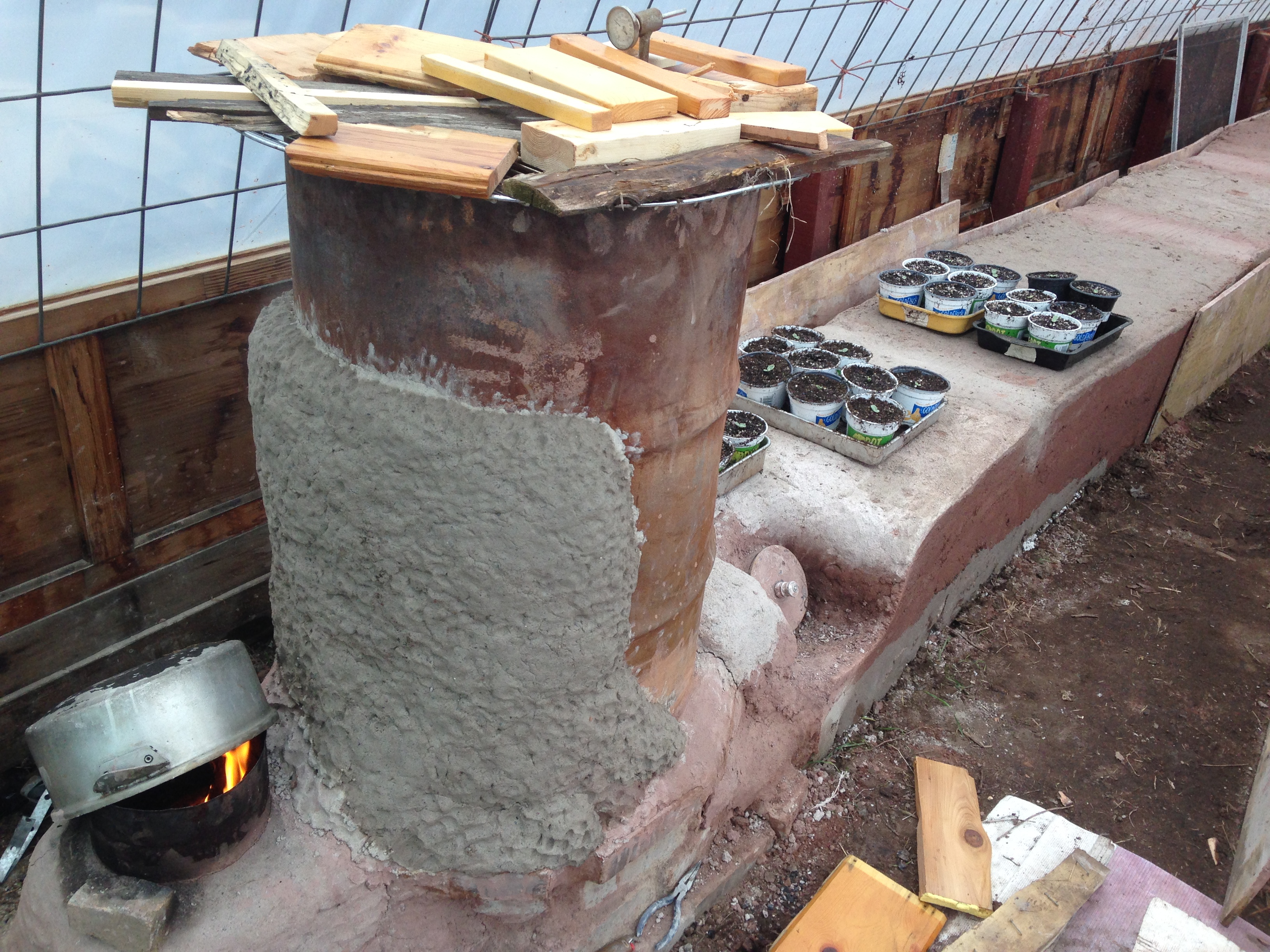
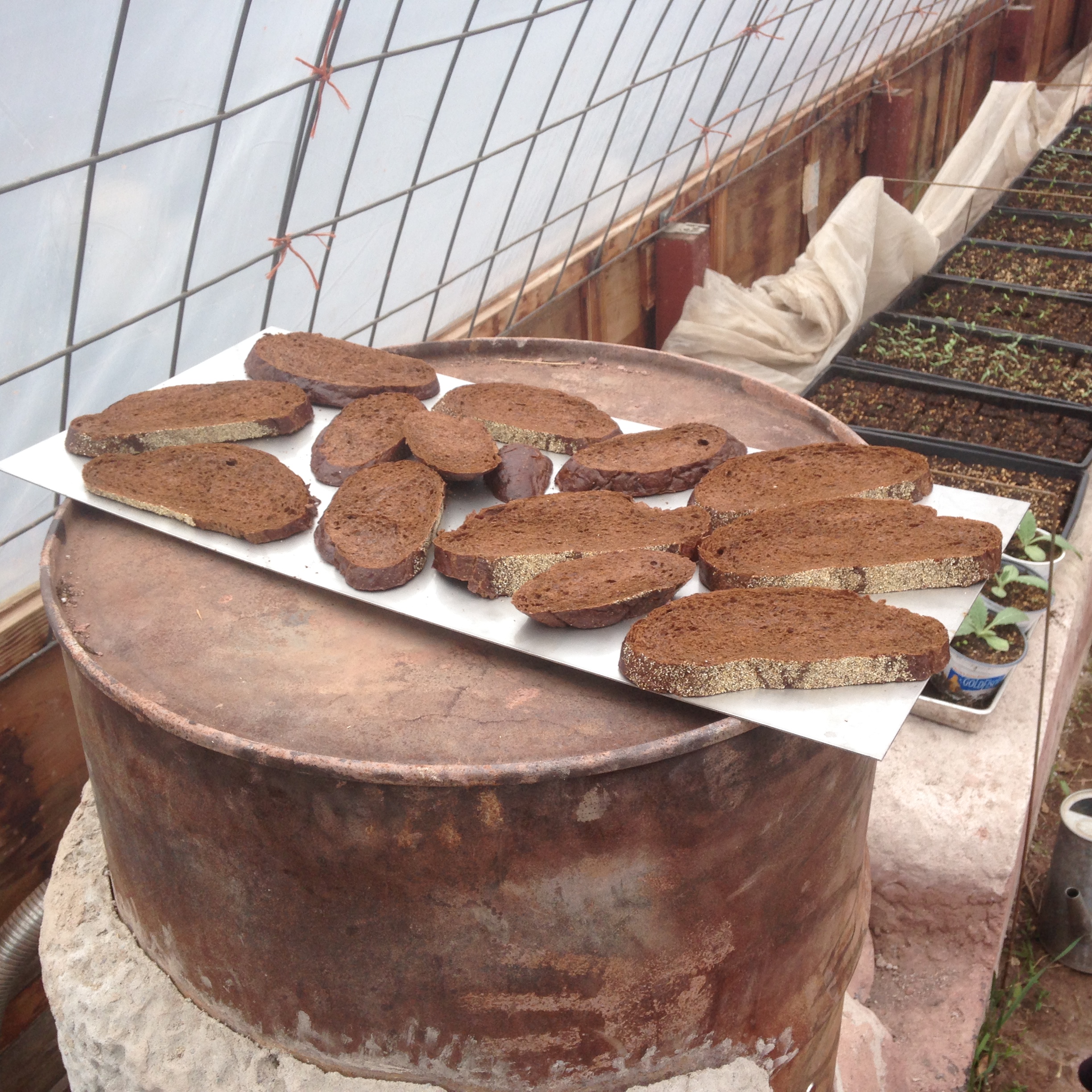
added some thermal mass to the barrel to limit amount of heat lost to radiation off the metal. Using the heat at the top for a wood drying rack. Artichokes enjoying the radiant heat.
Chimney V2 - taller. (I don.t
Chimney V2 – taller. (There doesn’t seem to be a photo of Chimney V3 aka “Paul Baxter” – with insulation and a wind cap courtesy of a nameless donor.)


IMG_4820

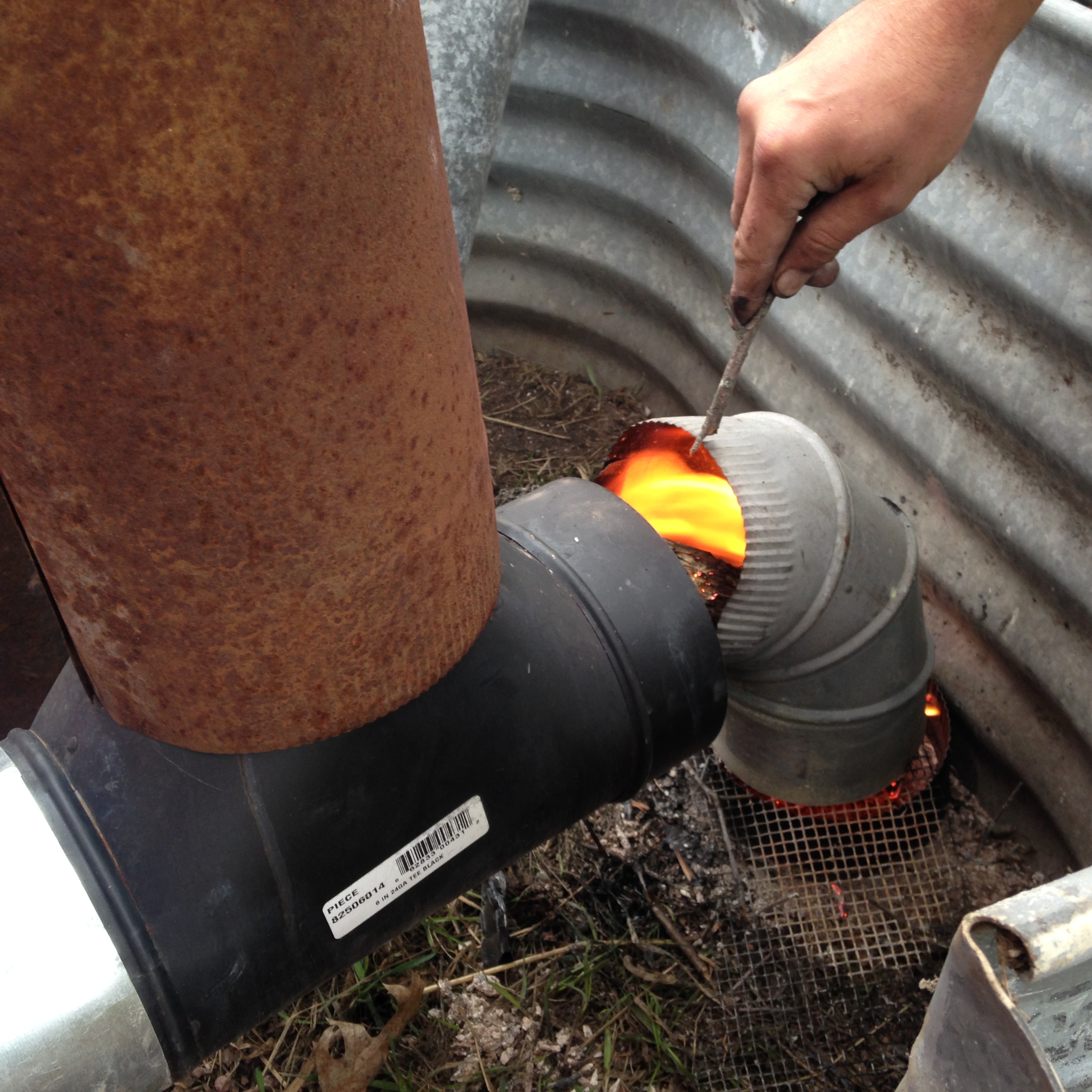
Booster fire! This proved crucial during the bench-drying phase for a fast drafting system with hot, oxygen rich flame - the little fire would be pulled up the chimnet, creating suction on the rest of the system, pulling air through the fire in the combustion chamber. (Now that it is dried out, we only use this to start the system up, to avoid cold air plugging up the system)
Booster fire! This proved crucial during the bench-drying phase for a fast drafting system with hot, oxygen rich flame – the little fire would be pulled up the chimney, creating suction on the rest of the system, pulling air through the fire in the combustion chamber. (Now that it is dried out, we only use this to start the system up,  avoiding a cold air plug)


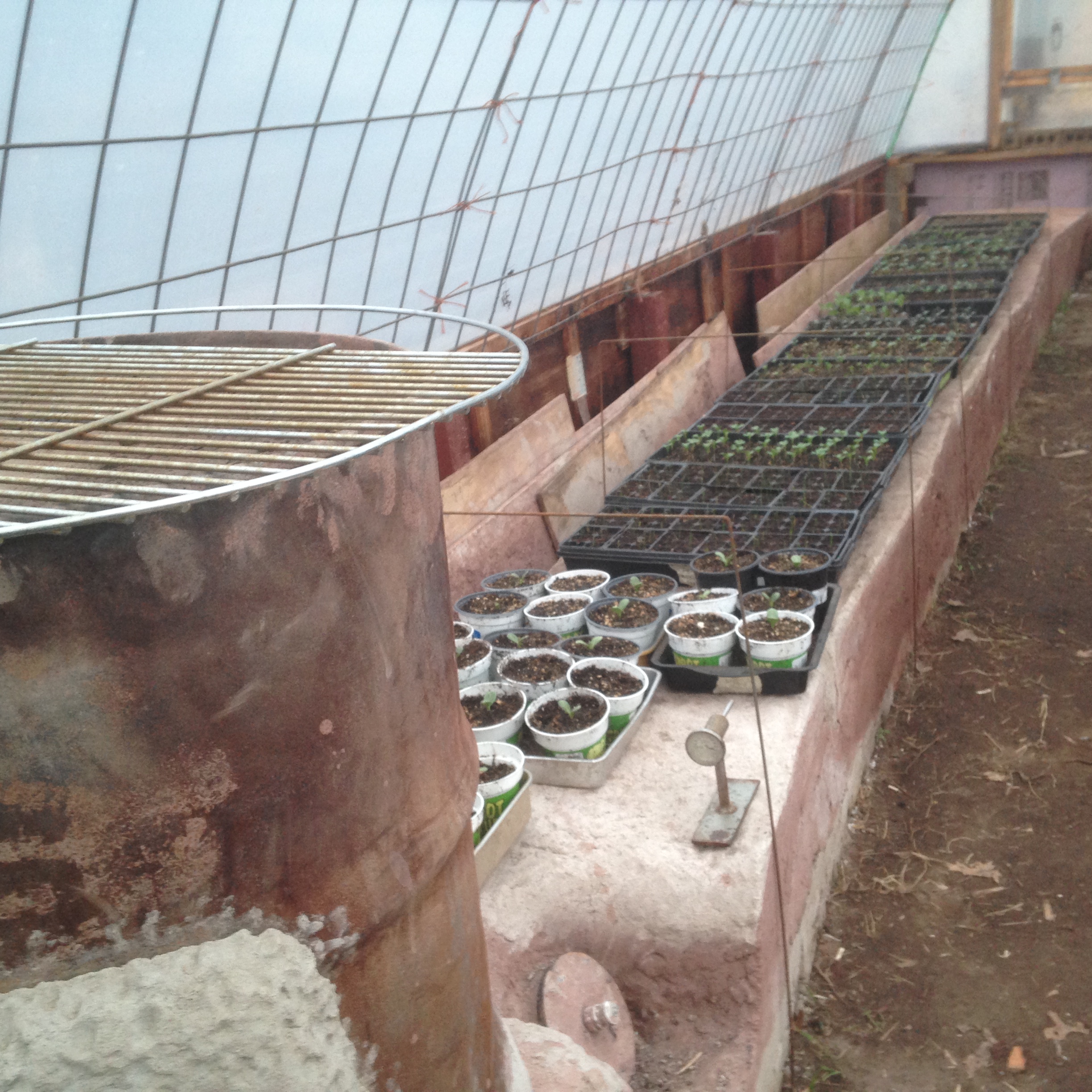
the wickets that support the row cover fabric are visible here (yard sign posts we scavenged)


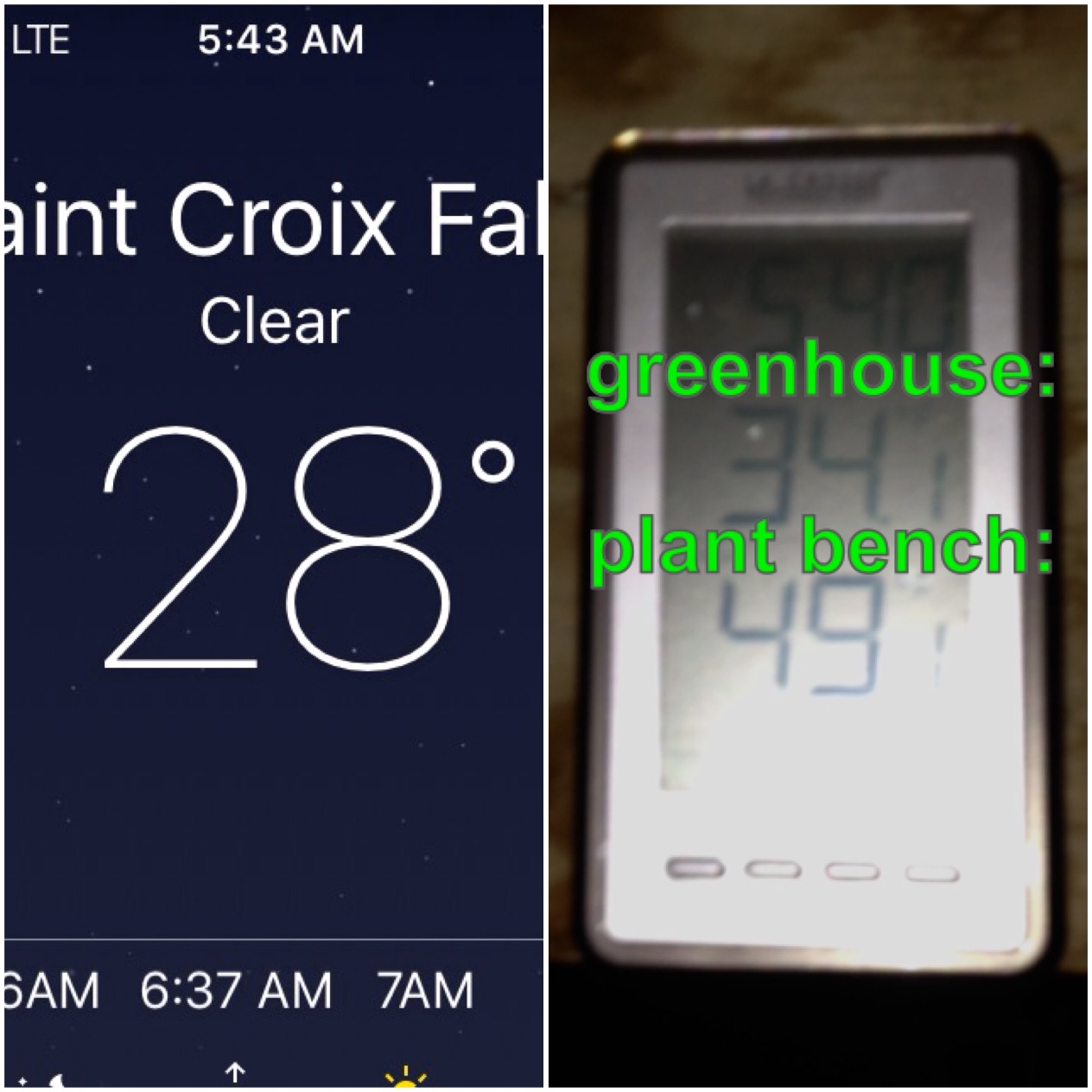
Before the chimney was upgraded further and before the thermal mass was fully dry – it was already working! Temperatures on the plant try bench stayed over 20 degrees warmer than outside, night after night – with no need to tend the fire after bedtime, and zero risk of the heat going out in the night – you can’t stop a warm giant rock from radiating! Plus it was warming the soil itself, and not just the air around the plants – great for happy, healthy root development.

IMG_4941 IMG_4828

IMG_5170
toasting bread for an experiment in making kvass

IMG_5166

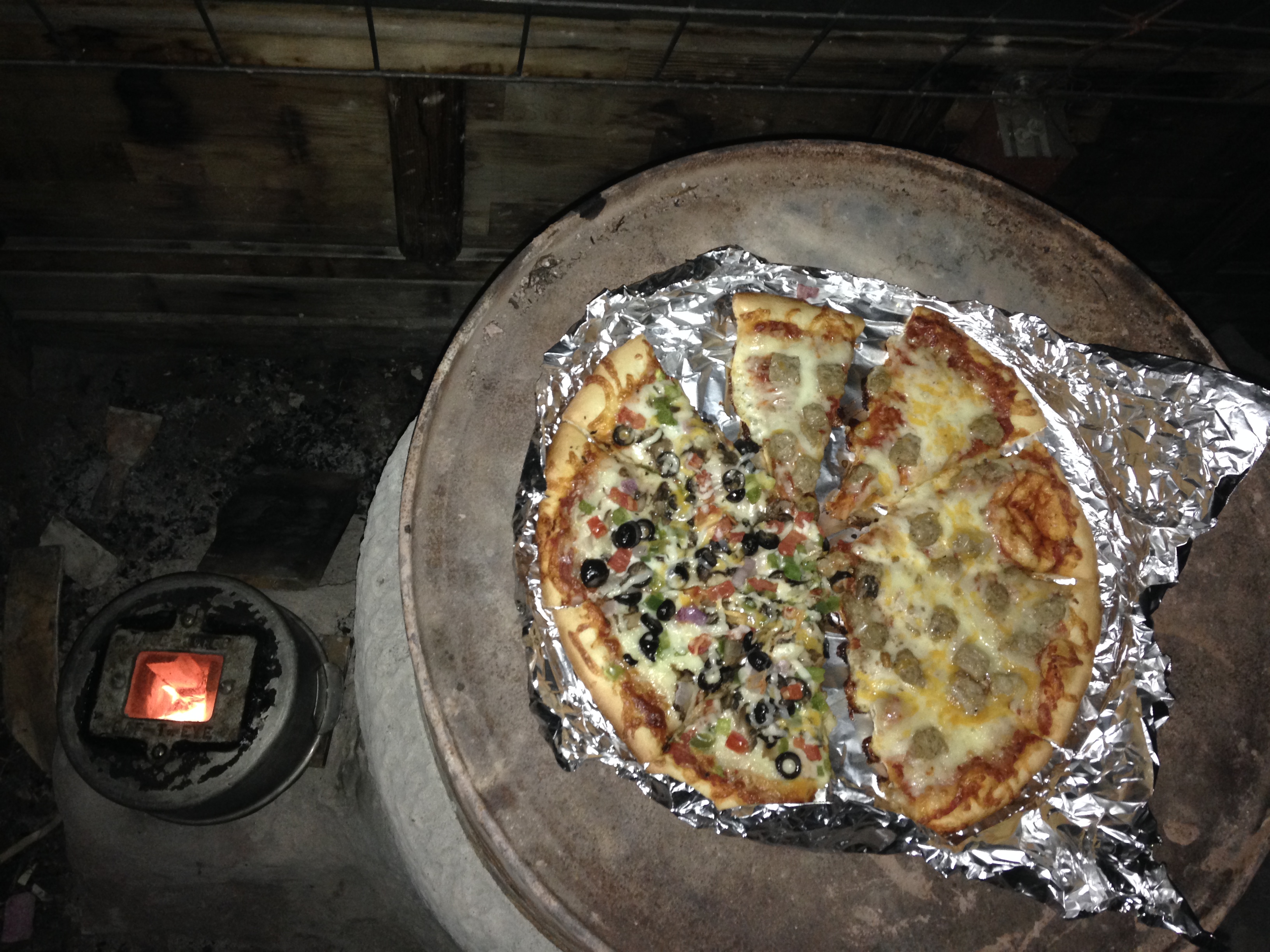
reheating and crisping leftover pizza while firing the mass for the night
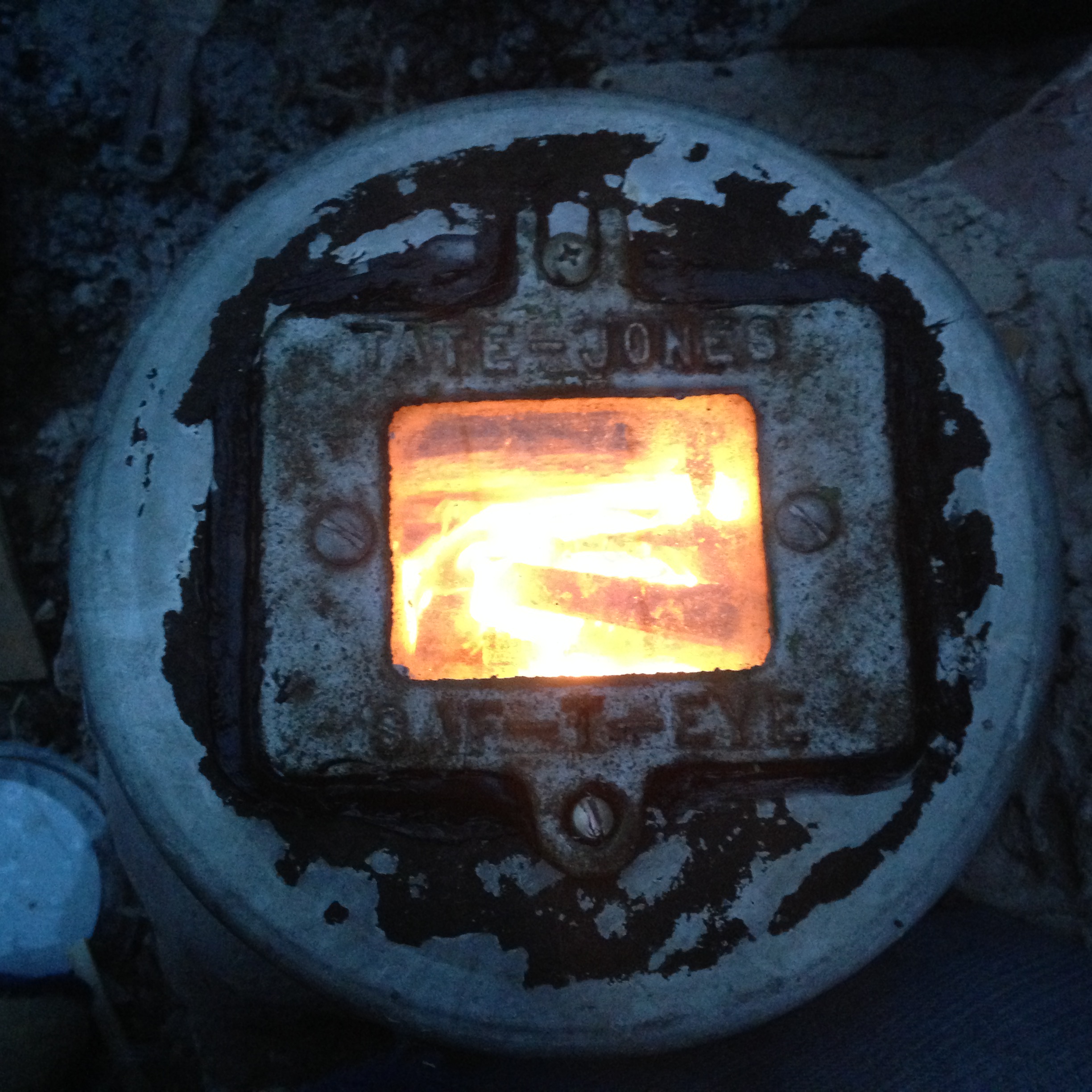
added a blast furnace window to the aluminum pot I use as a lid (saved from a now demolished Ford assembly plant)

IMG_4932 IMG_4936

It’s been a success. In recent nights just below 40 degrees, it kept the hot weather plants happily over 60 all night – maintaining the same 20+ degree heat increase seen at lower temps. It feels great to have it finally done, and really working wonderfully for our needs. It was a lot of work, but it was absolutely worth it. Plus, now we have experience in mass heater construction, so a mass heater in a future home is definitely a possibility …